

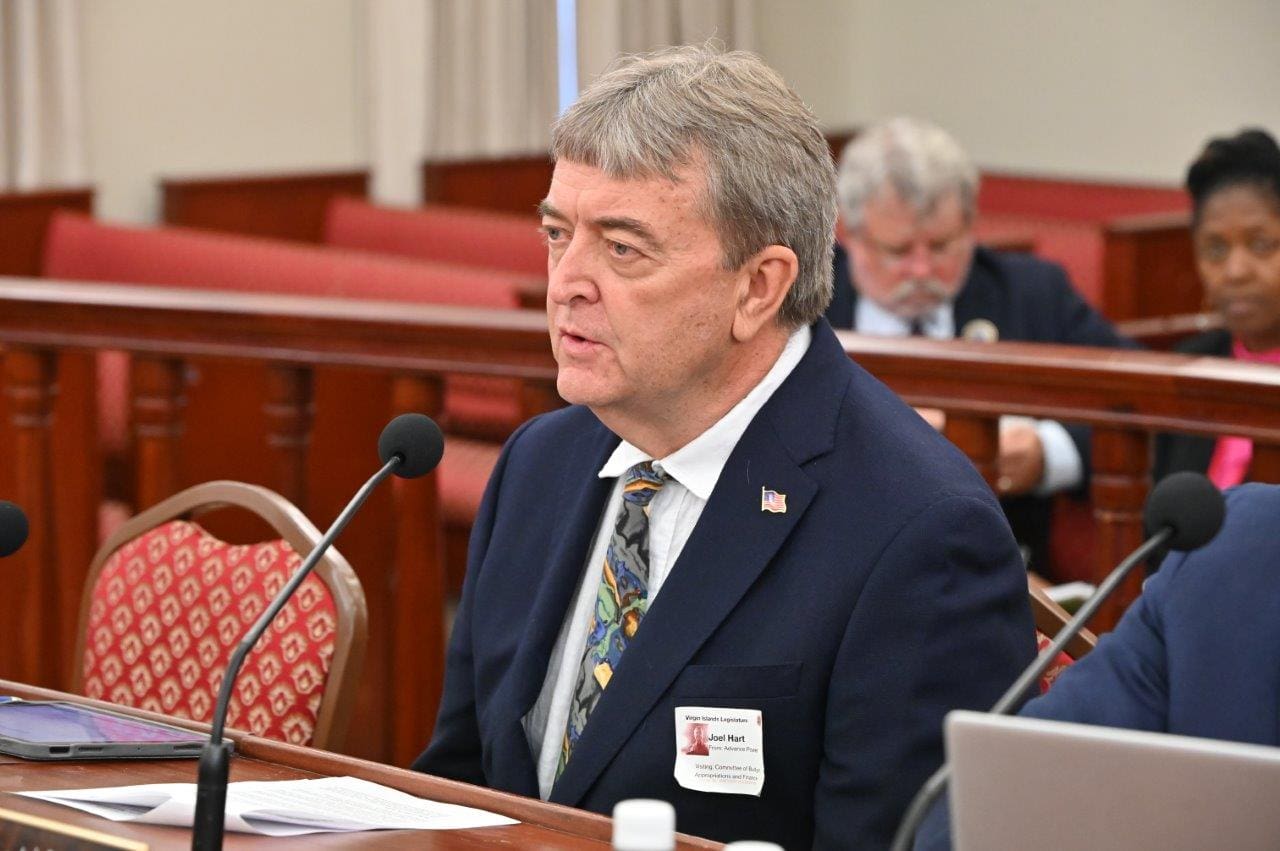
The U.S. Virgin Islands is pushing ahead with plans to reduce reliance on imported fossil fuels and stabilize electricity costs by developing renewable energy infrastructure. Two key pieces of legislation—Bill 35-0300 and Bill 35-0320—were at the forefront of the Senate hearing Monday, where senators and experts debated the benefits, challenges, and solutions associated with the wind farm projects.
Bill 35-0300 seeks approval for a lease agreement between the government of the Virgin Islands and Advanced Power LLC to develop a wind energy facility on St. Thomas. The bill focuses on leasing portions of land in the Frenchman’s Bay Quarter, specifically three portions of parcel number 1A in Estate Bovoni and Frenchman’s Bay, and portions of 1-21 and 1-19. The project includes the construction, operation, and maintenance of wind turbine generators and supporting infrastructure such as maintenance sheds and substations.
Sen. Novelle Francis Jr., who introduced both bills, explained the importance of the wind farm to the island’s energy future. “The Virgin Islands has an opportunity to lead the way in renewable energy by harnessing our natural resources. Wind energy will provide reliable, affordable power while reducing our dependence on oil.”
The wind turbines are also part of a larger microgrid initiative, which aims to increase the island’s energy resilience, particularly during natural disasters. Microgrids can operate independently of the larger power grid, ensuring that critical infrastructure and services remain powered during emergencies.
Advanced Power LLC’s CEO, Joel Hart, spoke during the session about the potential for this project to modernize the territory’s energy infrastructure. “We are committed to delivering a project that not only provides clean energy but also enhances grid reliability and ensures that St. Thomas is better prepared for future storms and outages.”
Similar to Bill 35-0300, Bill 35-0320 proposes a lease agreement for the construction and maintenance of wind turbines on St. Croix. The project will cover several estates, including Estate Cassava Garden, Estate Pearl, and Estate Baron Spot. This initiative, like the one on St. Thomas, is focused on reducing the island’s reliance on imported fossil fuels while supporting a microgrid system to ensure reliable energy.
During the session, Sen. Samuel Carrion raised questions about the long-term benefits for residents. “How soon will the public see the impact of these wind farms on their electricity bills? We’ve had promises in the past, but people need to see real change in their costs.”
In response, Hart emphasized the long-term benefits of the project. “While the initial investment in infrastructure is significant, once the turbines are operational, we expect to see a reduction in energy costs for residents and businesses. Our goal is to provide immediate relief where possible, but the larger financial impact will come as we scale up renewable energy in the coming years.”
While the promise of cleaner, cheaper energy was met with enthusiasm, several senators and community stakeholders raised concerns about the potential environmental impact of the wind farms, particularly on local wildlife. Wind turbines are known to pose risks to birds and other species, and the Virgin Islands’ diverse ecosystems could be affected if the projects are not carefully planned.
Sen. Marvin Blyden highlighted these concerns during the session. “We have a duty to ensure that in our rush to embrace renewable energy, we don’t harm the very environment we’re trying to protect. What safeguards are in place to protect bird populations and other wildlife?”
In response, Hart assured the committee that Advanced Power LLC is committed to conducting a thorough environmental impact assessment. “We will be working closely with local environmental experts and conducting comprehensive studies to ensure that our wind turbines are installed in locations that minimize any potential harm to wildlife. We’re committed to finding solutions that balance energy development with environmental protection.”
Another major concern centered around the financial viability of the projects and how they will be funded. Both bills propose long-term lease agreements allowing Advanced Power LLC to develop and operate the wind farms. While this minimizes upfront costs for the government, the projects will require significant private investment and potential federal grants.
Carrion asked about the financial plan, noting that past renewable energy projects have been hampered by a lack of funding. “We’ve seen great ideas stalled because of money. How do we know these wind farms won’t face the same fate?”
Hart responded with optimism, citing potential federal funding sources and public-private partnerships. “We’re actively pursuing federal grants through the U.S. Department of Energy and other agencies that support renewable energy development in U.S. territories. In addition, our company has secured private investment to ensure that these projects move forward without delay. We’re confident that with the support of the Virgin Islands government, we can bring these projects to completion.”
“These bills are about more than just wind energy. They’re about creating a future where the Virgin Islands is no longer held hostage by volatile oil prices and unreliable energy. They represent a vision of a cleaner, greener future for our islands,” Francis concluded.
Sens. Donna Frett-Gregory, Novelle E. Francis Jr., Dwayne M. DeGraff, Samuel Carrion, Marvin Blyden, Ray Fonseca, Diane T. Capehart, and Carla J. Joseph attended Monday’s meeting.