

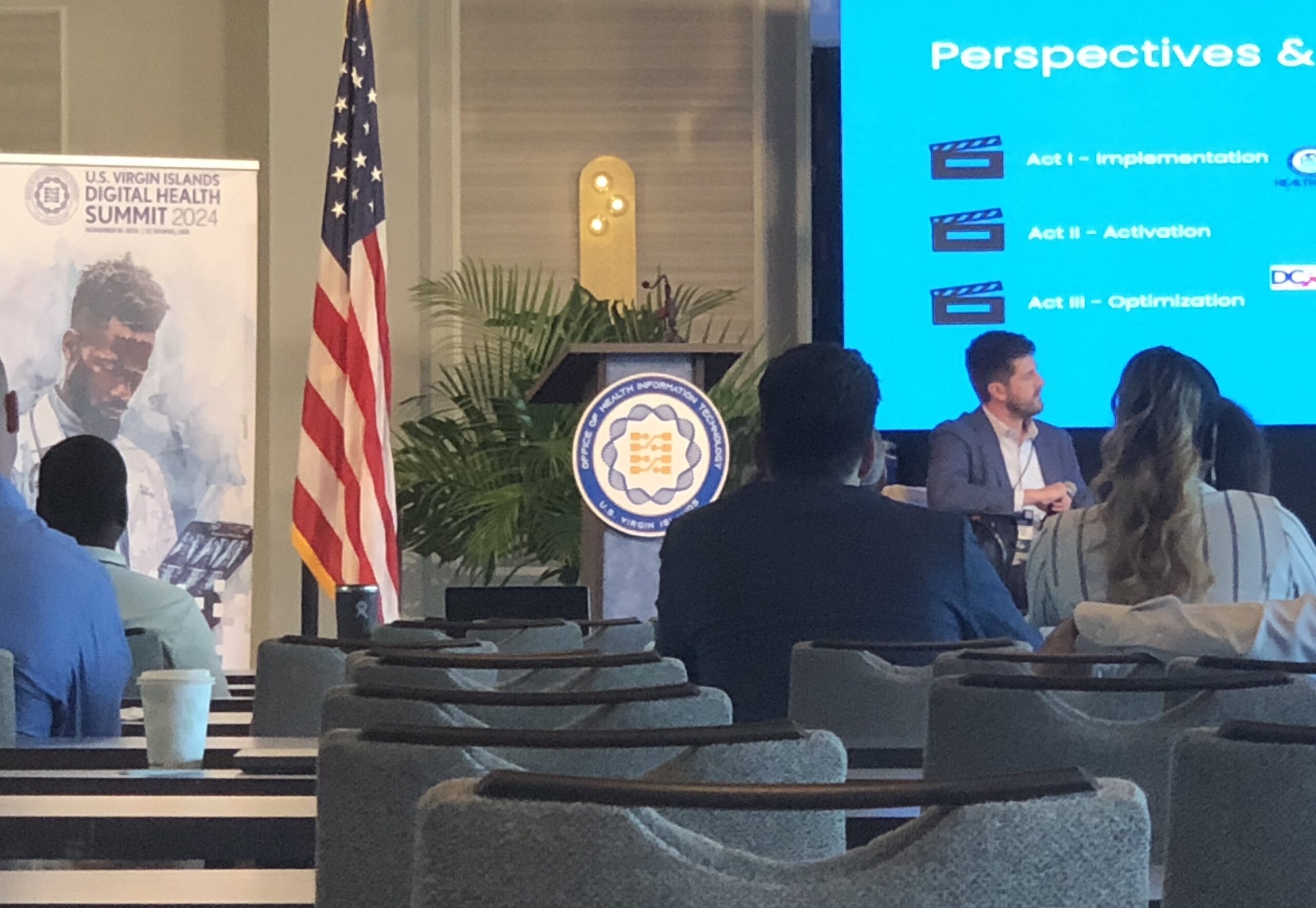
Health care workers from the Virgin Islands and Eastern Caribbean explored digital systems designed to make patient information more accessible at a three-day conference on St. Thomas. Organizers from the Office of Health Information Technology said they wanted to share what they had learned since launching the territory’s Health Information Exchange.
The Westin Resort at Frenchman’s Reef is the setting of the U.S. Virgin Islands Digital Health Summit from Monday through Wednesday. Aside from establishing the health exchange, participants had panel discussions and took part in breakout sessions presenting topics of concern.
“Today, we stand on the cusp of a major milestone,” said former V.I. Health Commissioner Julia Sheen. “This breakthrough initiative will revolutionize the way health care providers in the U.S. Virgin Islands communicate, collaborate and share vital patient information bringing one step closer to truly integrated and seamless across the territory.
“As we move forward, it is clear that how we use technology is no longer an option,” Sheen said.
Since 2022, government officials and health care and information technology professionals have joined the annual summit to learn more about federal guidelines, policies, resources, services, and solutions. It took two years to put the Health Information Exchange components together and make them work, said Health Information Office Director Michelle Francis, who also served as mistress of ceremonies.
“Right now, we’ve got both hospitals, both of our federally qualified health centers building into the system,” Francis said.
Information exchanges have been around for about 20 years, the director said. “Territorial officials spent the past two years making sure security measures were in place. They also worked to make sure the system adhered to federal health care privacy laws,” Francis said.
Among the day two presentations held at the Reef was one on creating public-private partnerships. Dr. Ernest Carter from the Kennedy Krieger Institute described the process of setting up a partnership.
Because government resources can be limited, bringing in the private sector is one way to overcome that hurdle, Carter said. “Public-private partnerships have to help you solve complex problems,” he said.
One of the problems he faced while setting up an exchange system in Maryland was reducing the use of hospital emergency rooms for patient care. “We did that work; four years, four million dollars. Our result was we saved $8,000 per patient that our community health workers work with,” he said.
But he stressed the need for vigilance in working with a partner and making sure the system they help create serves the needs of the hospital, clinic, or health care provider they’re working with.
“The technology’s been around; the benefits of being later in the game are seeing what other states have succeeded at, and quite frankly failed at,” Francis said during a break between sessions. “We can learn from those lessons and build from them.”
Other entities like the Human Services Department and the Health Department are also working to align their systems for use by the exchange. Private sector representatives and communications experts were included in this year’s summit.
Health care and info tech representatives from Jamaica, Nevis, and the British Virgin Islands were also present. “What can we do now to better share data about others in the Caribbean — some of our own relatives in other islands — so we have a better and more accurate picture of the state of health in the Virgin Islands,” the director said.
Tuesday’s afternoon session included a roundtable discussion with members of the 35th Legislature.