

Travelers from the U.S. Virgin Islands are being reminded to avoid packing pork products as a safeguard against the potential spread of African swine fever, a highly contagious disease that is deadly for pigs but not harmful to humans.
African Swine Fever
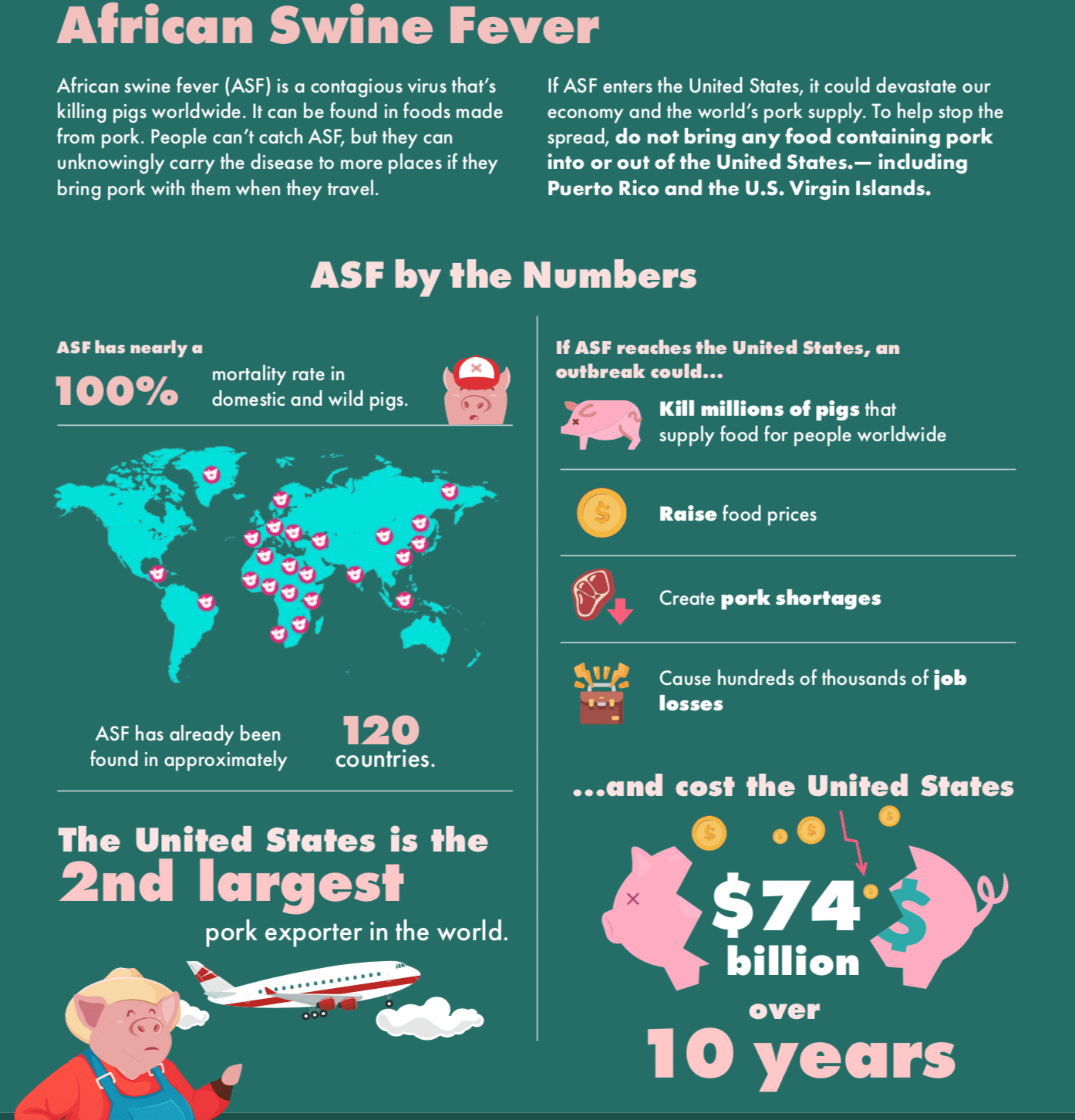
According to information from the United States Agricultural Department, “ASF is a contagious and deadly viral swine disease affecting domestic and feral swine of all ages. While properly prepared pork products are safe to eat, ASF’s deadly nature in swine could result in pork product shortages, disruptions to trade, and economic impacts. There is no treatment or vaccine, so the best way to protect pigs is by prevention.”
On Wednesday, the Source spoke to Fernando Lugo, an agriculturist who has been with the USDA for 23 years, about a protection zone for individuals traveling outside the territory. Lugo emphasized the importance of not transporting pork products to the U.S. mainland while an outbreak of African swine fever continues in the Caribbean region.
Lugo is stationed in the Dominican Republic, where he is positioned to help control the spread of the disease.
“I am in the Dominican Republic, working with African swine fever to control it, eradicate it, and help to prevent it from spreading to the United States and other countries in the region,” Lugo said.
“My main role has been always working with import and export and working with the USDA Animal and Plant Health Inspection Service mission, which safeguards U.S. agriculture from the entry of any pests and diseases to keep our food in our plates ready to go and ready to eat.”
Can Humans Contract African Swine Fever?
ASF cannot be transmitted to humans. But while the virus is not a threat to humans, African swine fever can easily spread among domestic and wild pigs and is often fatal. There is no treatment or vaccine, and ASF poses massive risks to the food supply. Lugo noted that if ASF were to become established in the United States, the effects could lead to millions of swine deaths, pork shortages, and increased food prices.
“People can’t get ASF, but they can play a huge part in how the virus spreads,” according to information online from the USDA. “That’s because it can live for a long time on clothing, shoes, and equipment. It can also spread through garbage feeding, vehicles, contaminated feed or water, infected domestic or wild pigs, and insects.”
Lugo provided additional details about ASF and its potential effects.
“ASF is a highly contagious virus that is currently killing pigs around the world, and it was detected in the Dominican Republic in July 2021,” Lugo said. “ASF is not a danger to human health, but it has devastating effects to the pork industry. If this virus is introduced and spread to the U.S., in a period of time of 10 years economic losses could reach a total of $74 billion,” he warned.
USVI and Puerto Rico Protection Zone
With ASF detected in the Caribbean, the USDA has established strict safeguards aimed at keeping the virus out of the United States, including designating a “protection zone” in 2021 that covers Puerto Rico and the U.S. Virgin Islands.
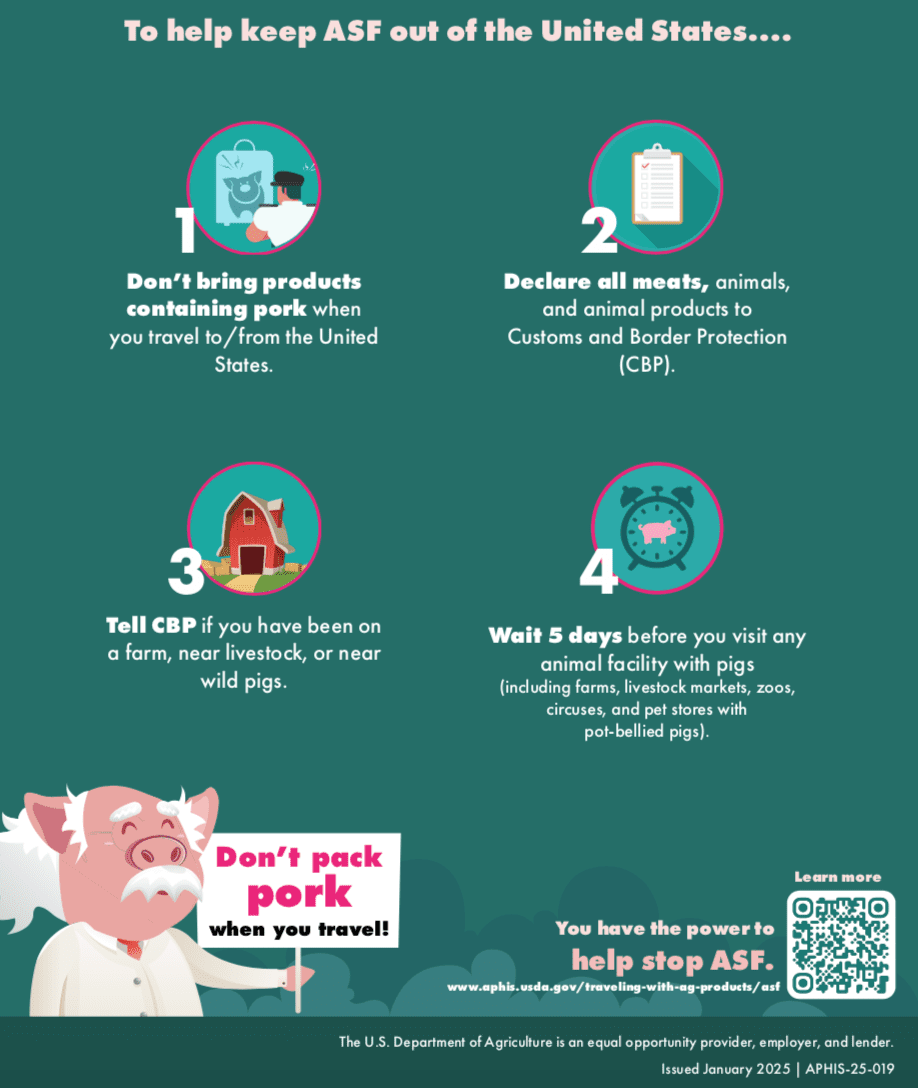
“The USDA issued a federal order to clear Puerto Rico and the U.S. Virgin Islands as a protection zone,” Lugo explained. “That means that the movement of pork and pork products between Puerto Rico and the U.S. Virgin Islands to the U.S. mainland is prohibited. We are encouraging all the passengers during this holiday season that when you travel, please don’t pack or ship any pork products.”
What Travelers Can Expect
Lugo reminded individuals that the protection zone is not a new addition for travelers, and agricultural checks are common at U.S. Customs and Border Protection. He said that individuals across the USVI and Puerto Rico should not expect delays at the territory’s airports.

Lugo advised that travelers simply refrain from packing any pork products and declare any items that may be packed within luggage. He also said that if any traveler visited a pig farm, that information should be shared. While several pork items are allowed, it is ultimately up to the discretion of authorities at airports regarding any food items passing through security.
“Canned pork products may be evaluated on a case-by-case basis but are still risky to travel with,” Lugo cautioned. “If you arrive to the airport, please declare all items to a Customs and Border Patrol officer who’s going to take a final decision if it’s permitted or prohibited. In order to prevent that and prevent the ASF spread, it’s better that you don’t carry it, because all the products that are prohibited are going to be seized at the airport.”
Looking Ahead
ASF remains active in the Dominican Republic, though Lugo said authorities there have made progress.
“The virus is still ongoing,” Lugo acknowledged. “We have a reduction of incidents of ASF in the Dominican Republic, but we still working very hard.”
USDA monitoring for ASF extends beyond the Caribbean.
“ASF was detected this month in Spain, and we keep working very hard to prevent its spread and to safeguard and protect our pork industry,” Lugo indicated.
As holiday travel increases, Lugo said prevention depends heavily on the actions of individual travelers.
By leaving pork products at home, declaring agricultural items, and following guidance from inspectors, travelers from the USVI and Puerto Rico can help keep ASF out of the U.S. pork industry. These measures will contribute to protecting farmers’ livelihoods, stabilizing food prices, and ensuring that holiday gatherings on both the mainland and the islands remain well supplied and safe for years to come.
Click here to view the interview between the Source and Fernando Lugo.