

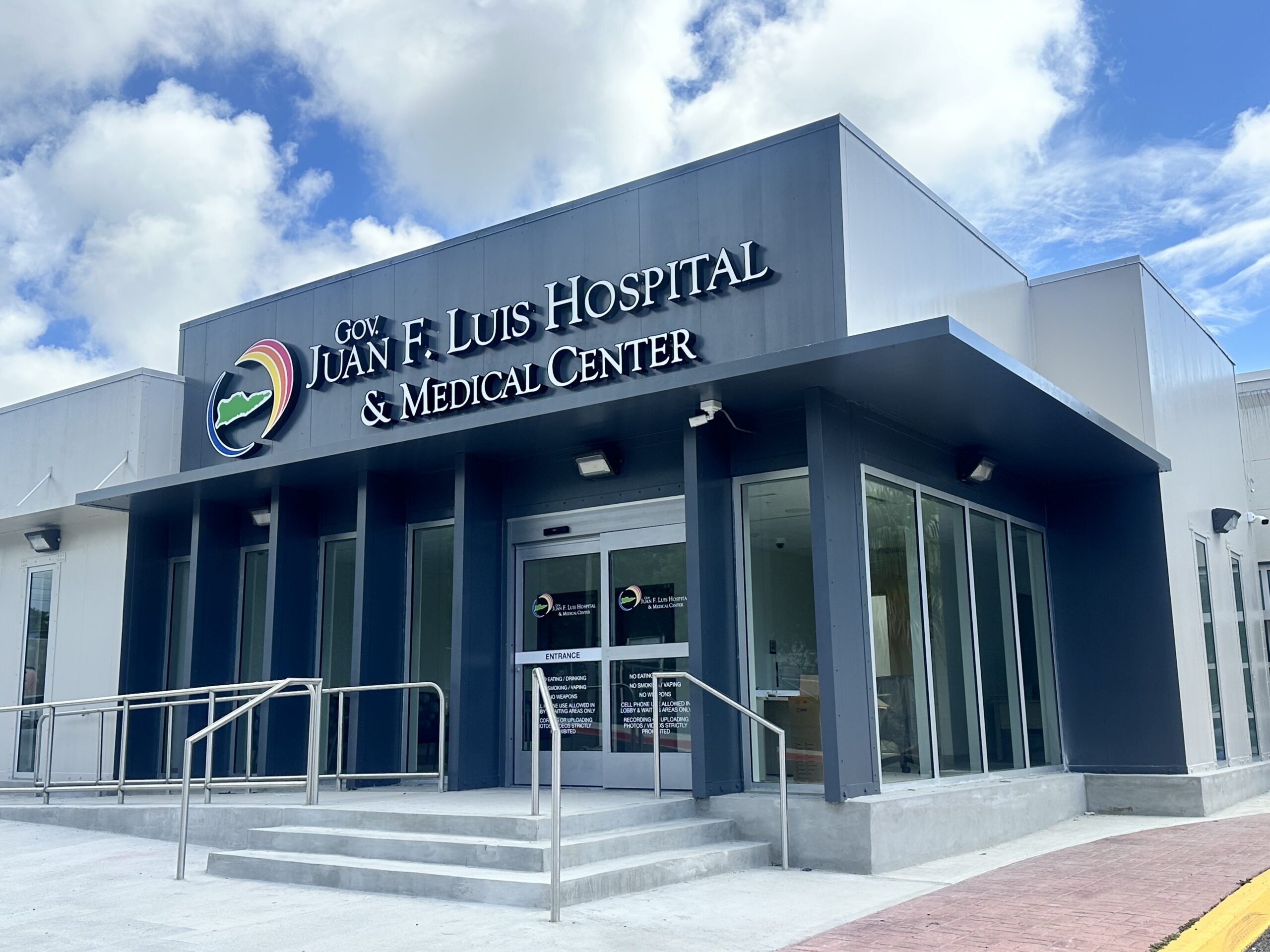
The Centers for Medicare and Medicaid Services is reviewing conditions at the Gov. Juan F. Luis Hospital on St. Croix, multiple sources confirmed, as part of a follow-up survey of the hospital’s hemodialysis capacity and as a response to resurgent community concerns of supply and staff shortages.
Hospital spokesperson Aniah John confirmed the visit in an email to the Source Wednesday and said CMS surveys are a routine part of regulatory oversight.
“They are typically unannounced and occur approximately every three years to ensure ongoing compliance with Medicare Conditions of Participation. As such, these visits are not considered unexpected,” she said. John said JFL is in the midst of the survey, which includes a “revisit” related to the hospital’s hemodialysis program and a recertification survey for the overall medical center.
Dr. Jerry Smith, who chairs the V.I. Government Hospitals and Health Facilities Corporation, said the hemodialysis portion was a scheduled, routine follow-up visit.
“But there were two surveying groups that were not coordinated at all,” he said. “So one group solely dealt with hemodialysis, and the other one came on an unannounced visit because of complaints in the community.”
CMS does not comment on any ongoing or potential investigations, according to a statement the Source received, but Smith said the survey is looking into supplies, procedures, staffing and general operations.
The visit comes days after the Virgin Islands Daily News reported that doctors at the hospital are complaining to administrators that they don’t have the medication and supplies they need to perform even basic operations, forcing them to refer patients for treatment off-island. The hospital has struggled to pay vendors and collect bills, particularly in the wake of a cyberattack which “really took us for a little whirlwind,” Chief Executive Darlene Baptiste told community members in July.
John told the Source this week that Luis is still feeling the effects.
“While billing has resumed, it is not yet fully restored, and we are actively addressing existing backlogs,” she said. “Vendor payments are contingent on available funding; however, we prioritize payments tied to critical operations and maintain open communication with our vendors to limit disruptions to the supply chain.”
John added that the hospital has hired a “revenue cycle enhancement team” to support its operations.
Smith also noted that Luis has seen an uptick in its collections and said Luis had replenished its stocks of medications. On Wednesday, he said, they received an attestation letter certifying that they have “no additional risk of ransomware.”
“So our ability to reconnect all of our external vendors will now commence — most of which has already happened, but there were a few who were still holding back,” he said. “So with that attestation letter in hand, there will be nothing that would prevent fully reconnecting with all of our outside vendors, so it will greatly increase our ability to communicate externally and make operations as smooth as they can be.”
Still, Smith acknowledged that supply issues and arrears existed before the hospital was hit with a cyberattack.
“It would be convenient for me to just say that the hack caused it,” he said. “While it did, maybe, inflame the situation, this situation has been wrong long before the hack. … Probably the reason why we got hacked is because we have this very old, antiquated medical record system — one that does not do a very good job of integrating warehousing and supply management.”
Smith said the GHHFC is working on a memorandum of understanding with a mainland health care organization to help streamline the warehousing and procurement process.