

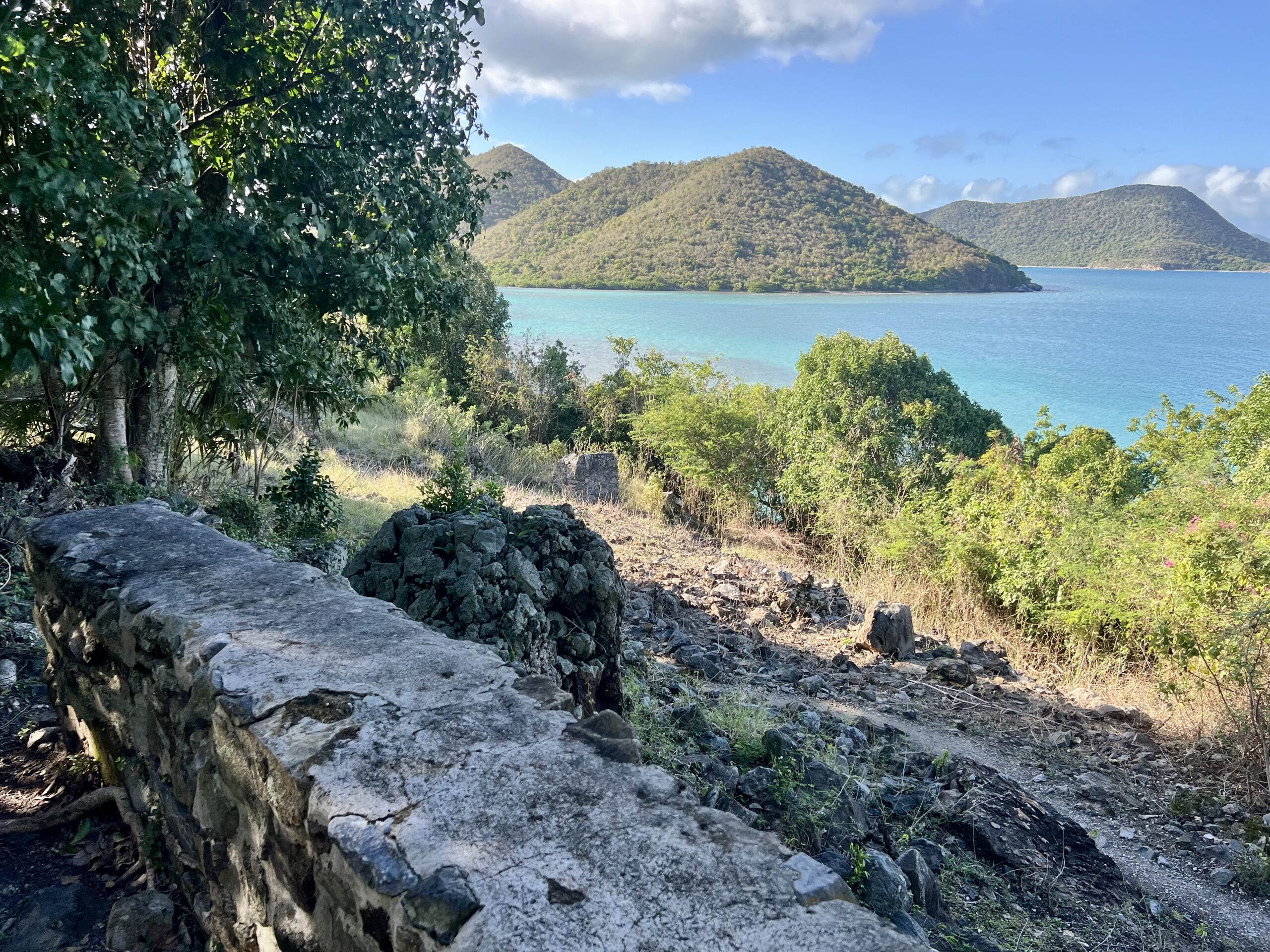
On Feb. 4, visitors to the Virgin Islands National Park noticed that something was missing at Annaberg Plantation, a colonial sugar factory that is one of the most well-known sites within the park.
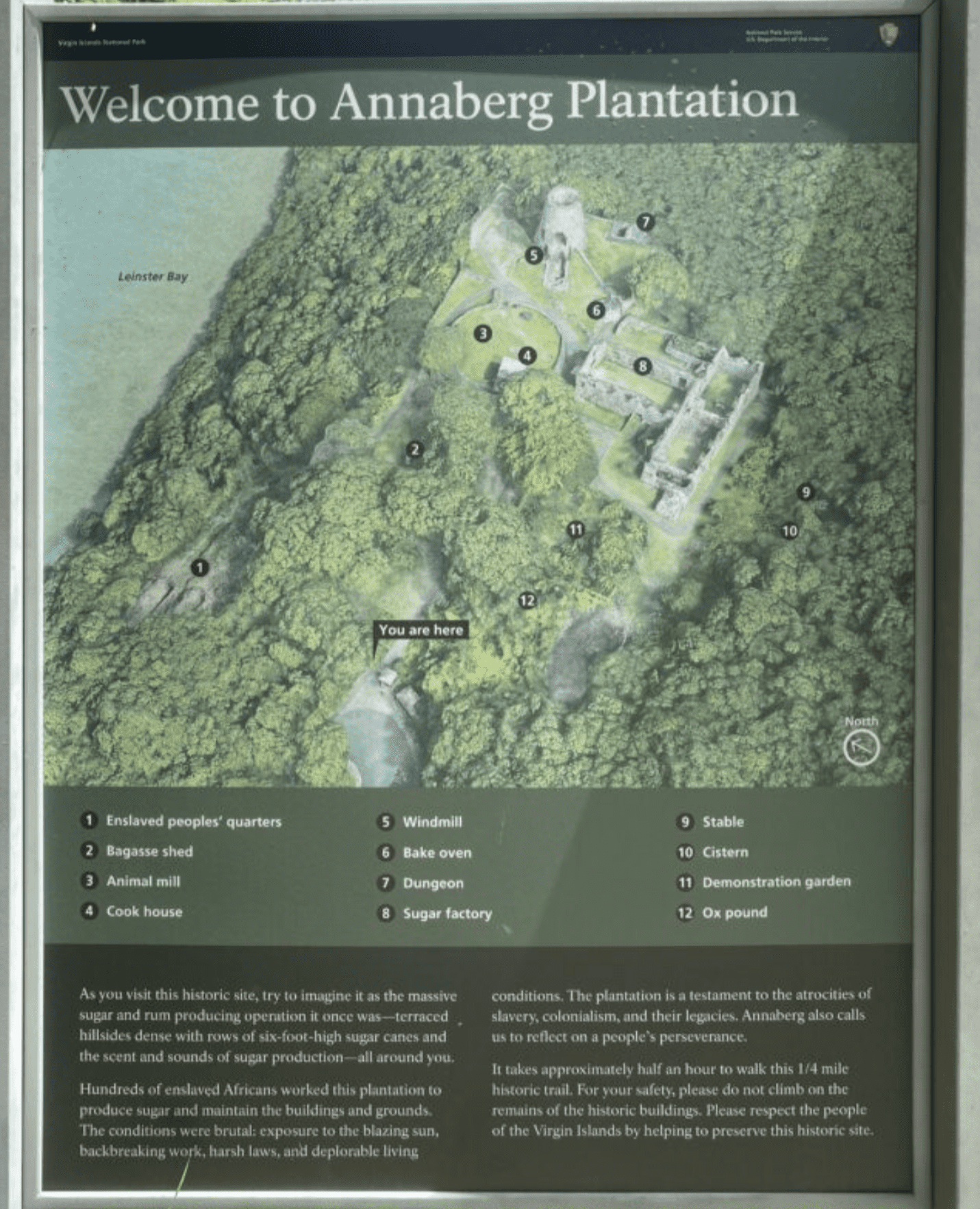
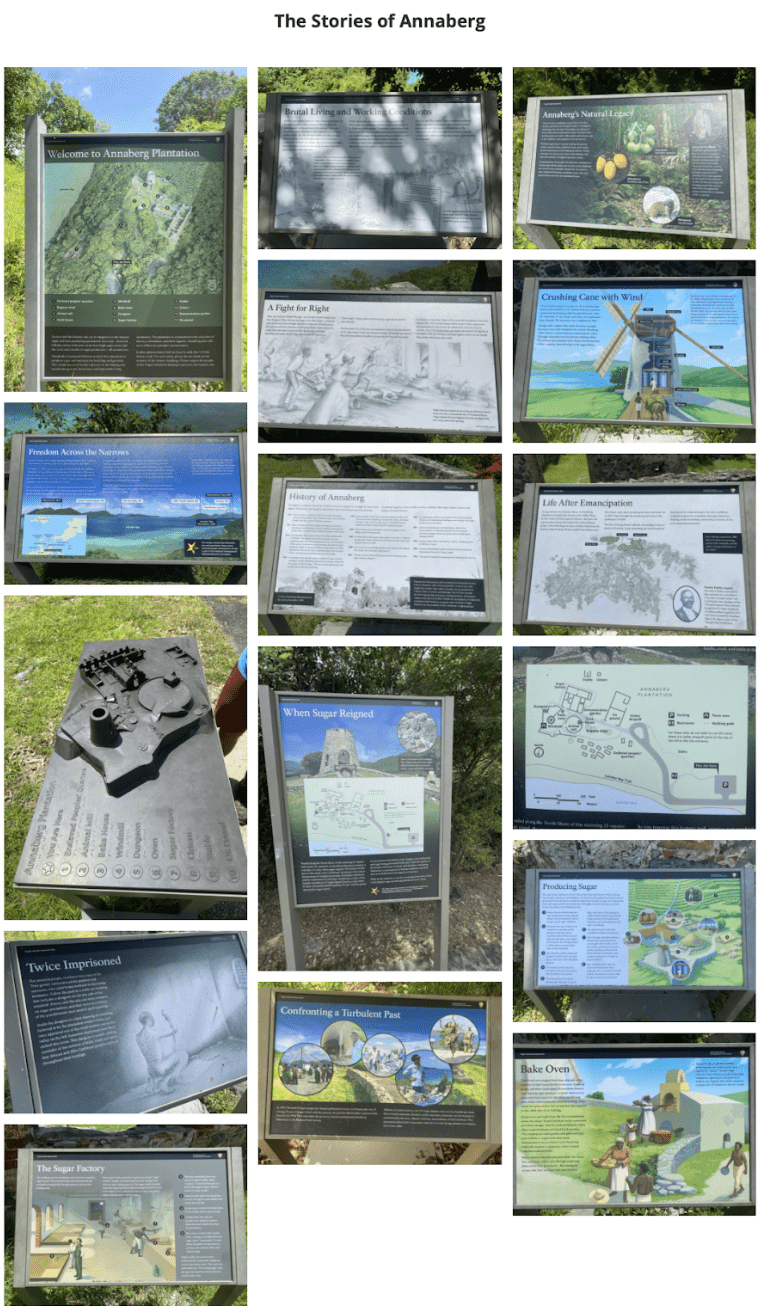
Upon arrival, the first thing visitors see is a “Welcome To Annaberg” sign with a map orienting them to the trail that winds throughout the ruins. Yet on Feb. 4, when visitors reached “Enslaved peoples’ quarters,” the first stop marked on the map, there was nothing there to indicate that they had arrived.
The sign had been removed.
Exactly when it had been removed is not clear. Virgin Islands National Park officials have referred all questions to the Southeast Region NewsMedia desk, and the Source is still awaiting answers to a series of questions emailed last week.
It seems apparent that this sign — as well as at least two others — were removed in response to a March 2025 executive order by the Trump Administration.
Known as “Restoring Truth and Sanity to American History,” President Donald Trump’s executive order directed the Department of Interior to remove any information which is “inappropriately disparaging to Americans past or living” and instead to “focus on the achievements and progress of the American people, or with respect to natural features, the beauty, abundance and grandeur of the American landscape.”
Virgin Islands National Park website)
The Department of the Interior’s order, SO 3431, issued in May 2025, also specifically directed the National Park Service to review and remove any “disparaging” content from Independence National Historic Park in Philadelphia before July 4, when the country celebrates 250 years of independence.
Virgin Islands National Park website)
On Jan. 22, the National Park Service removed panels entitled “The Dirty Business of Slavery” from the President’s House at Independence National Historic Park. The panels provided details about nine people enslaved by George and Martha Washington when they lived in Philadelphia in the 1790s.
The city of Philadelphia sued, and on Monday, Presidents Day, U.S. District Judge Cynthia Rufe ruled that the panels had to be restored in their original condition “while a lawsuit challenging the removal’s legality plays out. She prohibited Trump officials from installing replacements that explain the history differently.”
V.I. Delegate to Congress Stacey Plaskett had issued a press release the previous Friday condemning the removal of the signs from the Virgin Islands National Park. “The erasure of history does not change history — it only ensures we are condemned to repeat it,” she wrote. “The Virgin Islands National Park preserves the history of our ancestors — from the Indigenous peoples who first called these islands home to those who endured enslavement and built our communities through unimaginable hardship.”
“These stories must be told accurately and completely so current and future generations understand where we come from and the lessons we must carry forward,” Plaskett continued. “The removal of these historical markers robs our children and all Americans of the truth they deserve.”
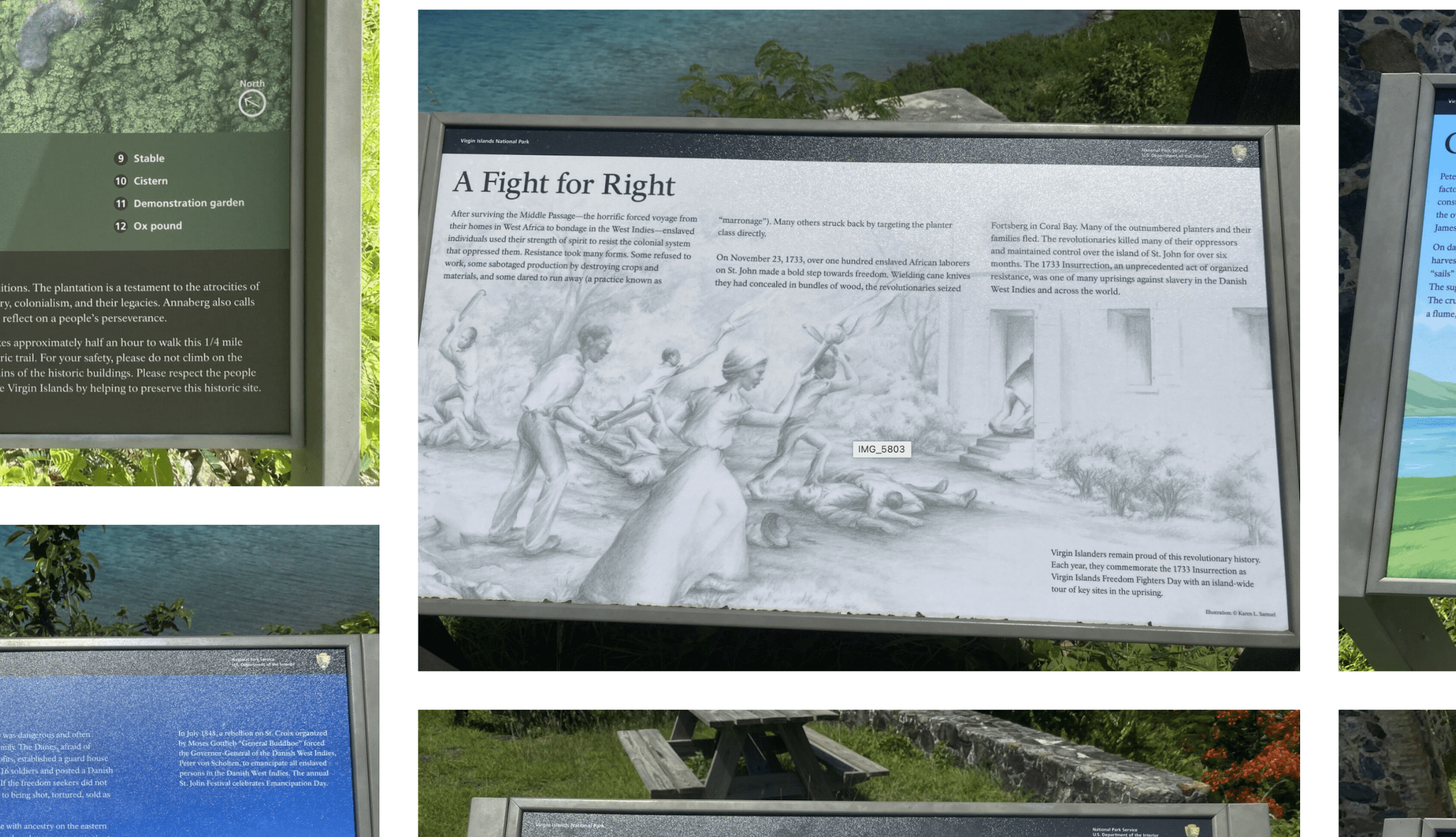
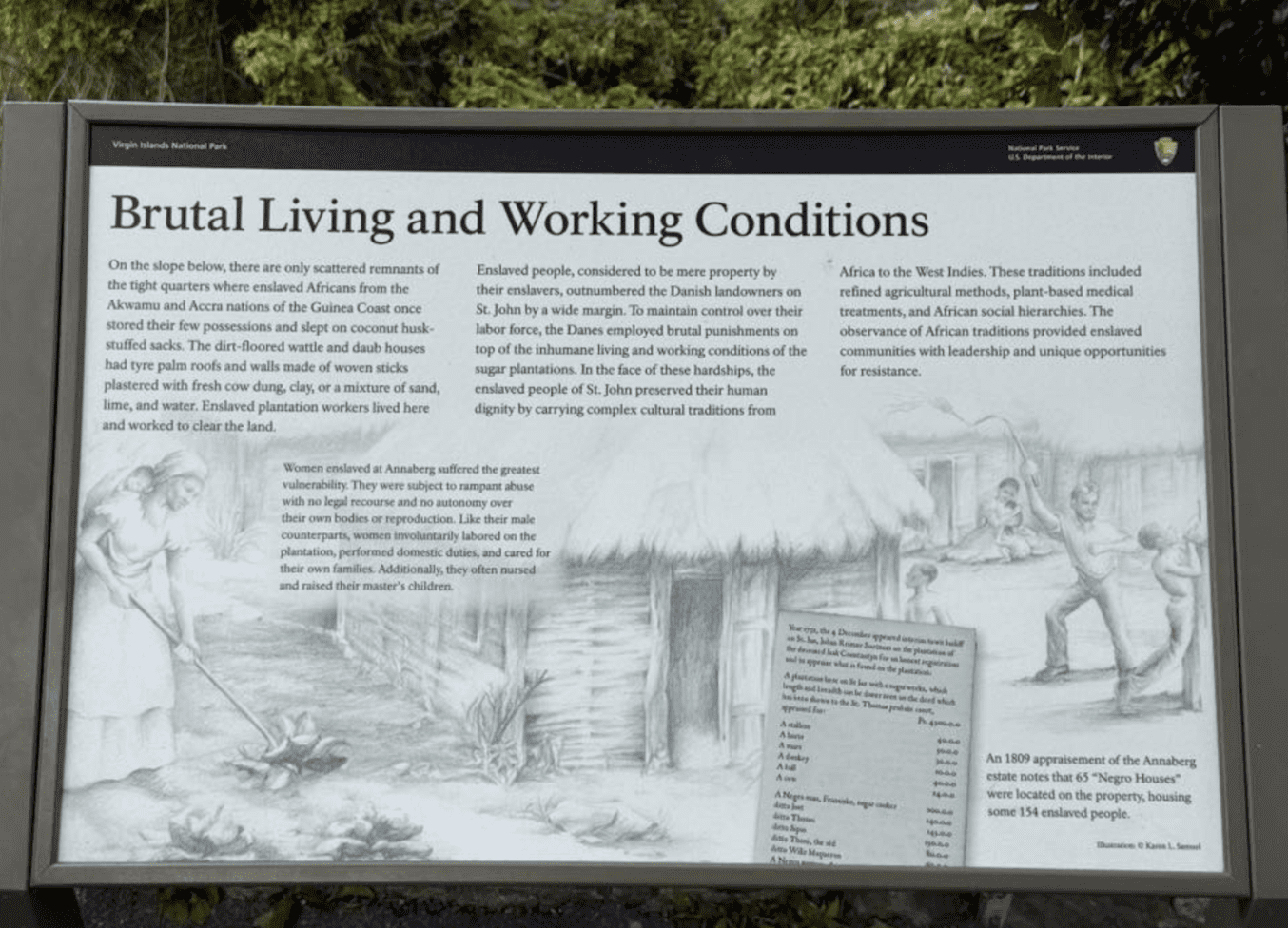
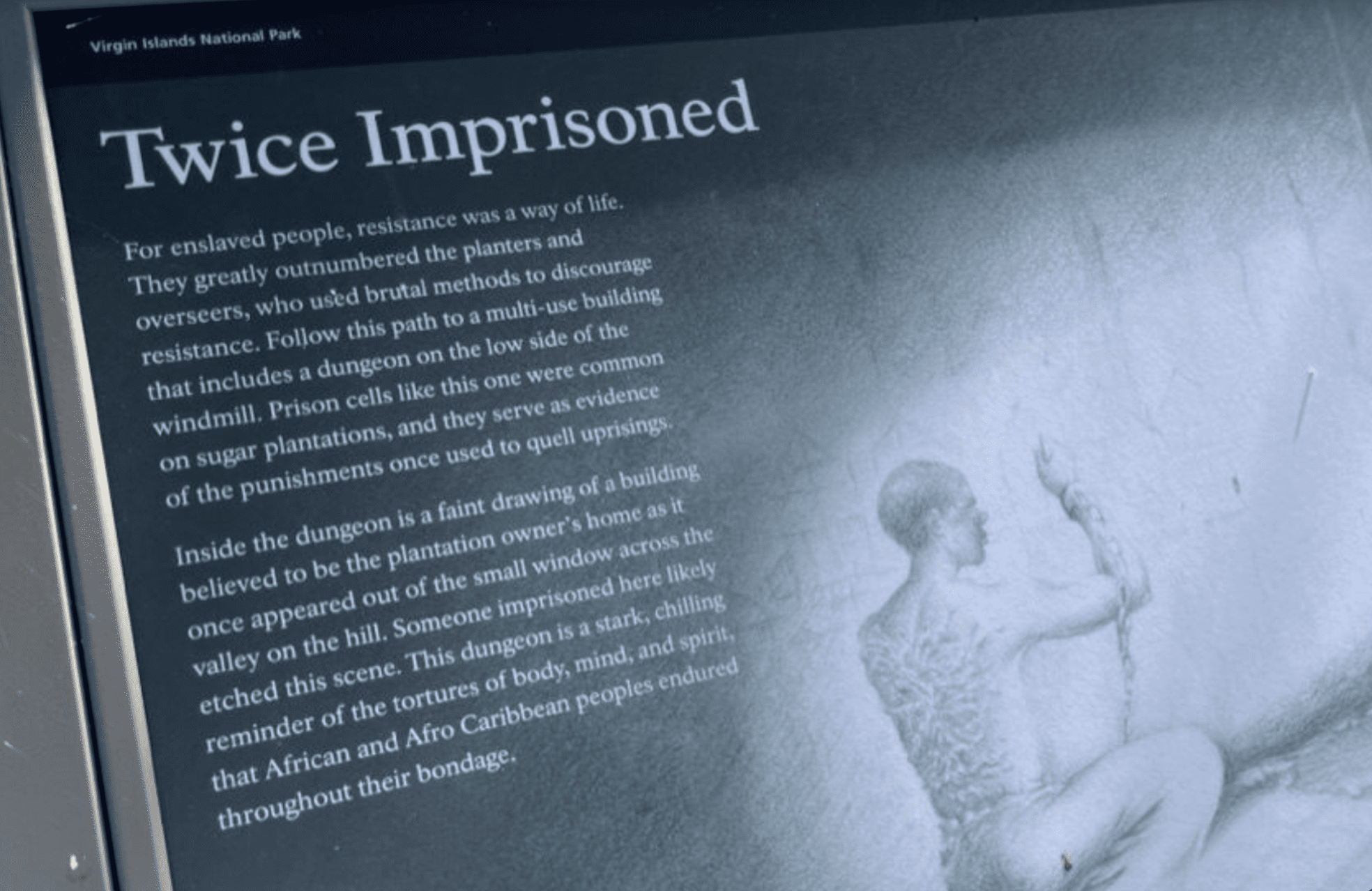
Observers have noticed that three signs are now missing from Annaberg. “Brutal Living” describes the harsh realities faced by the enslaved. “A Fight for Right” recounts the 1733 Insurrection as “an unprecedented act of organized resistance.” “Twice Imprisoned” tells of a drawing found on a prison wall.
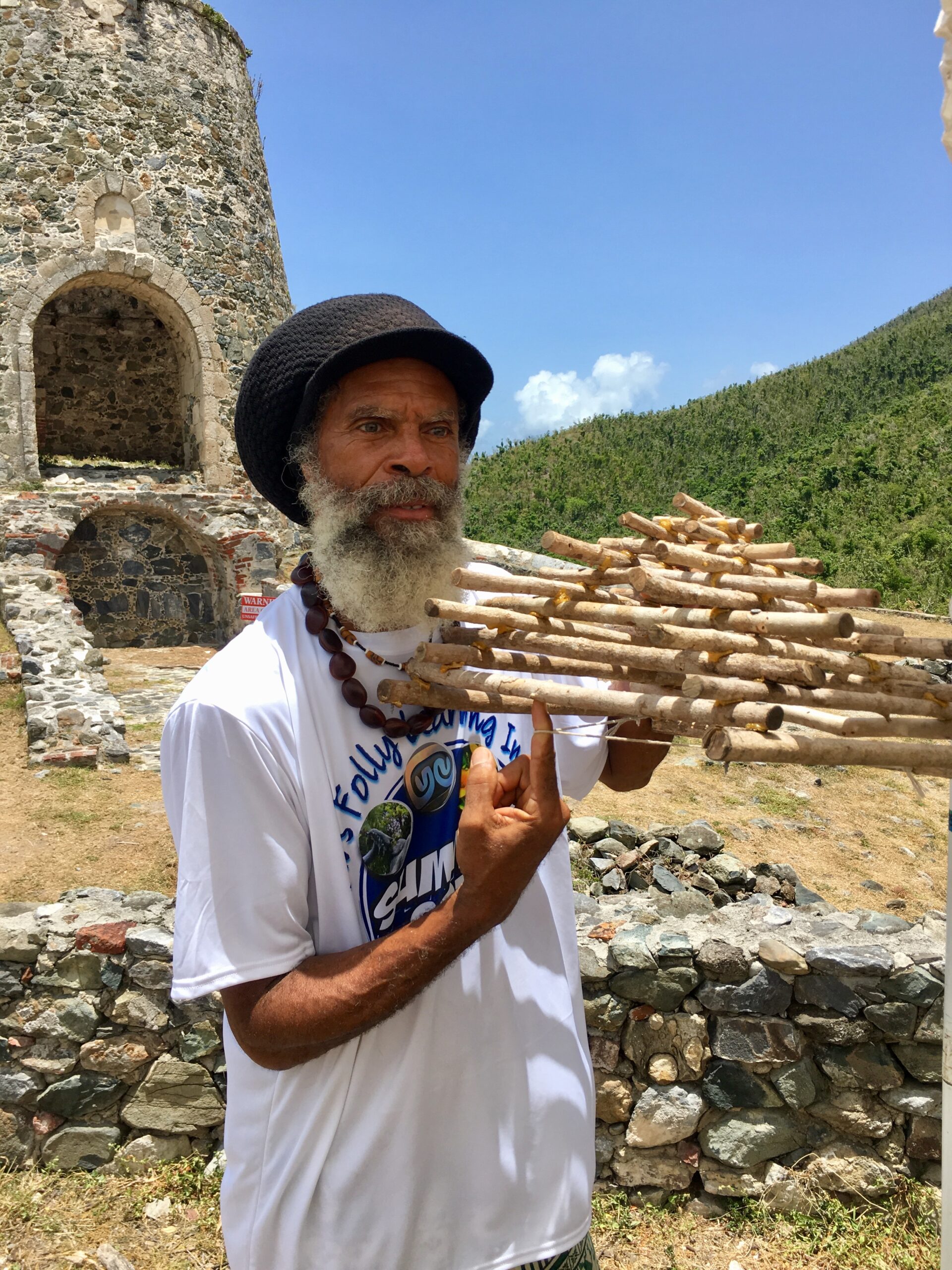
The missing signs at Annaberg are the work of native St. Johnians, including artist Karen Samuel and cultural historian Hadiya Sewer, who collaborated with NPS sign makers to depict conditions of the Danish Colonial period as accurately as possible.
Despite their efforts, Sewer said some of the signs contained explicit errors, and others included “clumsy wording.” Although she worked on several drafts, Sewer said she was not given an opportunity to review the final wording before the signs went into production and were posted.
Sewer wondered whether the removal of the signs was the result of “the federal government cracking down, or something the park was trying to correct.”
“What’s the rationale for taking down these signs?” she asked. “Who were the decision makers? Is there a plan in place to revise them?”
Community activist Lorelei Monsanto challenged the removal of the Annaberg signs in response to Trump’s order, since the period of enslavement “has nothing to do with American history. People do not understand that the Virgin Islands were the Danish West Indies until 1917, when we created a new history as we embarked on becoming American.”
“I believe the NPS has done us a disservice,” Monsanto said. “It is alarming, yet we’ve known it was coming.” She noticed in September 2025 that posters appeared in the park asking visitors to give feedback regarding “any areas that need repair … services that need improvement … or any signs or information that are negative about either past or living Americans.”
Tonia Lovejoy, executive director of the Friends of the Virgin Islands National Park, wrote, “Unfortunately the removal of the signs was not a surprise. We have seen and heard reports of similar actions in Parks across the U.S. as local park staff act on orders from the current Administration.”
She said a website has been created to document signs within parks throughout the nation.
Editor’s Note: This story has been corrected to reflect that the missing signs were first noticed Feb. 4, not Feb. 3.