

At an emergency meeting Wednesday, the V.I. Water and Power Authority governing board directed its management to deliver a plan for emergency temporary generation by April 8, following nearly two weeks of consistent outages on St. Thomas-St. John.
Board Chair Maurice K. Muia said the emergency meeting was called to ensure the board, management, and key stakeholders were aligned on a plan to address ongoing generation failures and bring more stability and resilience to the St. Thomas–St. John district.
“The public is tired,” Muia said during the meeting. “This is too much for everyone to bear.”
Much of the meeting was held in executive session before Executive Director and CEO Karl Knight briefed the board on generation capacity, ongoing repairs, and emergency generation options.
Knight said WAPA has been forced to conduct load shedding not only during peak evening hours but also during the daytime due to a generation shortfall that has at times been as little as 1 megawatt.
“Sometimes it’s as little as a megawatt or two, but we have had to load shed throughout most of the day,” Knight said.
He explained that part of the challenge involves balancing solar generation with traditional units as solar production ramps up in the morning and the system adjusts to changing load demands.
“Part of that has to do with the interplay between the solar farm and how the generators are able to absorb that energy as the solar ramps up during the early morning hours,” Knight said.
Knight said WAPA has expedited repairs to Unit 27 by sending a technician to retrieve critical parts directly rather than waiting for shipping, which would have taken about two weeks. Repairs were expected to begin immediately upon the technician’s return, and Knight said the authority is cautiously optimistic the unit could be restored soon.
“We are cautiously optimistic that we can get that unit back in service by this weekend,” Knight said.
In addition to repairing existing units, Knight said WAPA is pursuing emergency generation options to address the ongoing capacity shortfall.
“We are looking at what we’re calling emergency generation — some smaller units just to help us meet the peak and fix this generation capacity shortfall,” Knight said.
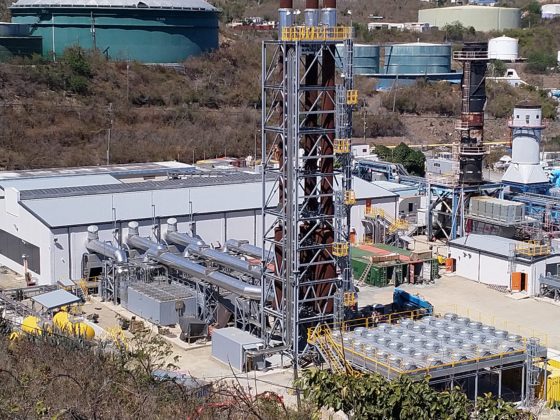
He said one promising option involves placing emergency generation on St. John, which would reduce the amount of power that must be generated on St. Thomas and ease pressure on the Randolph Harley Power Plant.
“Any generation on St. John helps reduce the capacity that we need to generate in the Harley Plant,” Knight said.
The board ultimately directed WAPA management to present a plan from a dedicated team outlining emergency temporary generation for the St. Thomas–St. John district by April 8.
“We’re working on two fronts — restoring units and securing emergency generation — and by the 8th we should have a clear plan of action,” Knight said.
The emergency meeting comes as rotational outages continue across both districts. On Tuesday, one of the Randolph Harley Power Plant’s aging generators, Unit 15, tripped again just one day after being returned to service, causing a districtwide interruption. WAPA said additional mechanical defects were identified and crews are continuing repairs while also working to restore Unit 27, which officials have said represents the fastest path to restoring generating capacity.
Until sufficient capacity is restored, outages are expected to continue, particularly during peak usage periods between midmorning and late evening.
The ongoing outages come as the territory continues work toward replacing its aging power infrastructure through a FEMA-funded prudent replacement initiative, which includes rebuilding the Randolph Harley Plant on St. Thomas and the Richmond Plant on St. Croix. The broader contract needed to move the project into its next phase — including the installation of temporary generation — is still being negotiated between the Public Finance Authority and the Office of Disaster Recovery.
Government officials said negotiations are in the final stages, but no timeline has been announced for when the contract will be finalized.
Gov. Albert Bryan Jr. said during his weekly press briefing that the territory’s response is focused on repairing existing units and bringing additional generation online, rather than pursuing an emergency declaration. He said an emergency declaration is typically used to unlock funding or bypass procurement, and neither is currently limiting the territory’s response.
Bryan said he had hoped to see improvements earlier in the week, but more realistically by the end of the week.