

The Senate Rules and Judiciary Committee on Thursday advanced a resolution urging the federal government to modernize the Caribbean Basin Initiative, a U.S. trade program that provides duty-free access to certain Caribbean exports, and to treat the U.S. Virgin Islands as a strategic partner in regional trade and development.
In a unanimous 7–0 vote, senators approved Bill 36-0194, calling on Congress and the Office of the U.S. Trade Representative to update the initiative before its 2030 expiration. Supporters said the measure seeks to leverage the territory’s position outside the U.S. customs zone to attract jobs, expand trade, and strengthen ties with neighboring Caribbean countries.
Bill sponsor Sen. Angel Bolques Jr. said the resolution is aimed at long‑term economic growth, not just technical trade changes.
“This is a measure that is not just about modernizing a trade policy, but also positioning the Virgin Islands for long‑term economic strength, regional leadership and global competitiveness,” Bolques told colleagues.
He said the territory’s dual identity is central to that effort.
“We are both part of the United States of America and deeply connected to our Caribbean region. This dual identity is not just a limitation, it is our greatest economic advantage,” he said.
Bolques said updating the Caribbean Basin Initiative and more formally engaging the USVI in how it is administered could help position the territory as a transshipment hub while expanding opportunities in logistics, energy and digital industries.
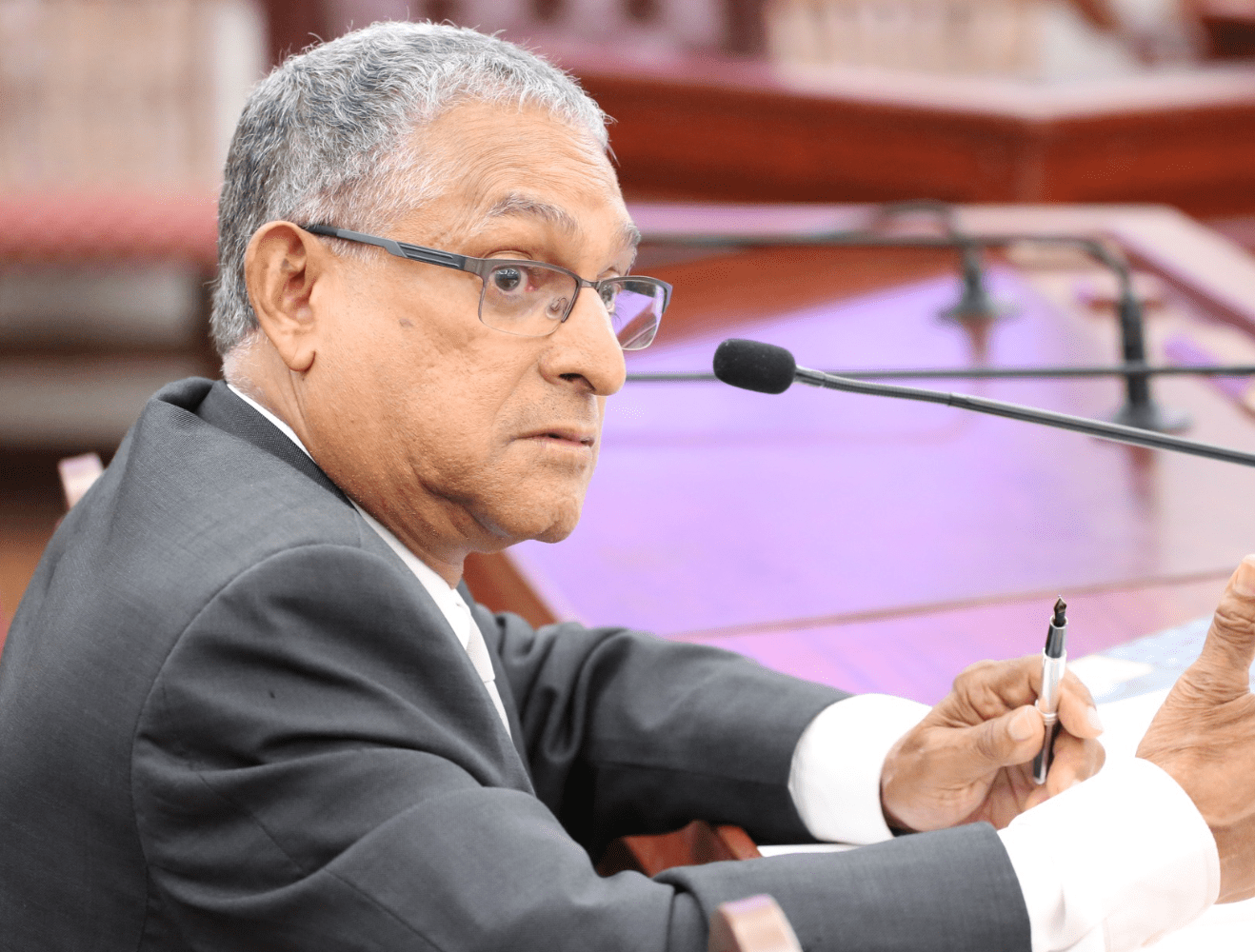
The committee heard testimony from attorney David A. Bornn, a Virgin Island native and trade adviser, who described the Virgin Islands as occupying a “truly unique” position in the Caribbean economy.
Bornn said the territory is part of the United States but remains outside the U.S. customs zone under the 1917 Treaty of Cession and subsequent federal law, operating its own 6% customs duty on imports.
“The USVI, while being part of the United States of America, is outside of the United States customs zone … The USVI imposes a flat 6% customs duty on all items entering the USVI customs zone,” he told senators.
That structure, he said, places the territory in a different position from Caribbean nations covered by the Caribbean Basin Initiative, particularly as U.S. tariff levels have risen above the 3.5% rate those countries expected.
He also pointed to a U.S. Trade Representative proposal that would have imposed a $1 million port entry fee on certain Chinese-built vessels entering U.S. ports, while exempting some ships calling at the Virgin Islands under specific conditions. Although the proposal has been paused, Bornn said it has raised concerns about future shipping costs for Eastern Caribbean exporters.
Bornn said the territory could benefit by serving as a processing and logistics point for goods entering the U.S. market, using its customs status to reduce costs for regional exporters. He said products processed in the Virgin Islands and then shipped to the mainland could qualify for duty-free entry under existing rules.
He called the opportunity a “sleeping giant of a benefit” for both the Virgin Islands and its Caribbean neighbors.
Committee Chair Sen. Carla J. Joseph, and co‑sponsor of the bill, said part of her motivation was concern that the territory is not always “at the table” when regional trade and funding issues are discussed. She noted that the Virgin Islands typically receives about $6 million a year in rum‑related federal revenues, but argued the territory has not been getting its full “fair share” and is sometimes overlooked in decisions affecting the wider Caribbean.
Bornn emphasized that the Caribbean Basin Initiative is limited to non‑U.S. Caribbean countries and that the rum revenues are governed by a separate formula. But he said the resolution is designed to ensure the Virgin Islands is included when federal agencies work with CBI partners and to prompt them to highlight USVI programs and advantages in those discussions.
“What this bill seeks to do is to raise our hand and say, ‘Hey, we are a U.S. territory within the region that you’re trying to reach,’” he said, adding that agencies such as the U.S. Department of Commerce, Department of the Treasury and the U.S. Trade Representative should be encouraged to highlight Virgin Islands programs when working with Caribbean governments.
Before the final vote, senators adopted Amendment 36-724, clarifying how the Virgin Islands’ customs status could strengthen its role as a transshipment hub under federal law. The amendment was approved without objection.
All seven committee members voted in favor of the amended resolution. Bill 36-0194, which urges Congress and the Office of the U.S. Trade Representative to expand and modernize the Caribbean Basin Initiative “to further support economic growth and development in the Virgin Islands and the wider Caribbean region,” was favorably reported out of committee and will be forwarded to the full Legislature for further action.