

Editor’s Note: After publication, hearing examiner Jed JohnHope contacted the Source to state that he was not given an opportunity to respond on the record to concerns raised during Tuesday’s PSC meeting regarding billing and travel expenses connected to the ferry rate investigation. The Source also did not reach out to JohnHope for comment prior to publication and apologizes for the omission. JohnHope’s statement is now included in the article below.
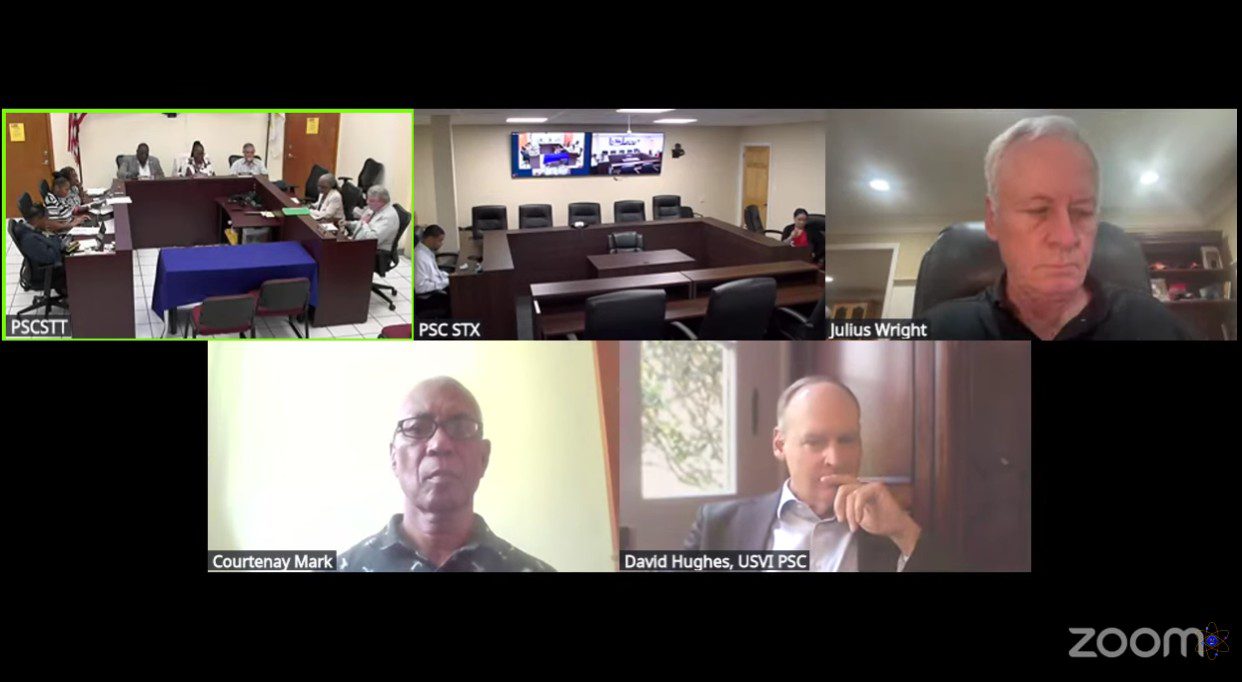
Members of the V.I. Public Services Commission tabled a vote to collect assessment costs Tuesday after an attorney representing two ferry companies claimed that the hearing examiner conducting the ferries’ rate investigation had billed her clients for tens of thousands in “excessive” fees.
The PSC tapped Jed JohnHope to review ferry rates in late 2024. Tuesday’s meeting came several months after a public hearing in Cruz Bay to gather community input on proposed fee hikes, which can be found on the PSC’s website. Attorney Maria Tankenson Hodge, who represented Varlack Ventures and Transportation Services of St. John during Tuesday’s hearing, said JohnHope charged her clients $400 per hour in addition to booking an $800 room “at what must be the most expensive hotel in the Virgin Islands” after attending the public hearing in February on St. John.
In total, Hodge said the companies were also billed approximately $80,000 for eight days of work last month.
“The concern that we have is that these two small family businesses are being assessed these massive amounts with what appears to be little scrutiny of the time that would be reasonable to perform these services,” she said. “And additionally these costs — these charges — are for travel that we submit are excessive.”
At PSC Chair David Hughes’s suggestion, the dispute was referred to the commission’s executive director, Sandra Setorie.
“I don’t have a problem with challenging the billings,” he said, but “it’s not done before the commission. It’s a function of our executive director’s administrative responsibility to manage hearing examiners.”
In a call with the Source Wednesday, JohnHope said several statements made during the hearing were inaccurate, including suggestions that he rented a vehicle during proceedings on St. John. JohnHope said he did not rent a car and noted that certain travel-related expenses — including lodging tied to the February public hearing on St. John — had been pre-approved through PSC administrative channels. He said the overnight stay became necessary after a hearing day that began around 7 a.m. and stretched until roughly 10 p.m. According to JohnHope, the hotel room itself was approximately $710 before taxes, bringing the total to roughly $800 — rates he noted are not uncommon on St. John during peak season.
After the discussion Tuesday, Hodge also put forward during the PSC meeting an emergency petition to implement a temporary $0.75 fuel surcharge, citing the rising costs of fuel caused by the War and Iran and ongoing closure of the Strait of Hormuz. Commissioners initially appeared open to the idea, but a vote on the request was tabled until June after Hughes questioned the number of boats in operation by the companies.
“The reason I bring this up is that the ferryboats have asked for a consideration for fuel, and I believe it’s the case that, for a very long period of time — and maybe still — you’re being compensated for assets that you’re legally obligated under the rate base to provide that you are not providing,” he said. “So you’re being overcompensated.”
Hughes said that such a conclusion would almost certainly be included in JohnHope’s rate report. When JohnHope presented his initial findings, he recommended denying any proposed rate increase.
“There are boats that have been outside of the territory for … almost 10 years, that are being compensated for,” he said. “There are boats that have been retired — they’re being compensated for. And the way that the Legislature seems to have structured the agreement, or the enabling statute, compensates the ferry companies for boats that they did not buy.”
JohnHope’s main recommendations included spinning off the Charlotte Amalie to Cruz Bay ferry route — which he said accounts for only three percent of ferry traffic — to gain a clearer understanding of passenger data and fuel costs.
“It’s nonsensical that the ferry companies own — jointly own — the ticketing apparatus, which makes it impossible to verify ridership and revenue,” he said before recommending that the commission audits payroll and staffing, fuel consumption and vessel disposition. “The numbers were not very transparent.”