

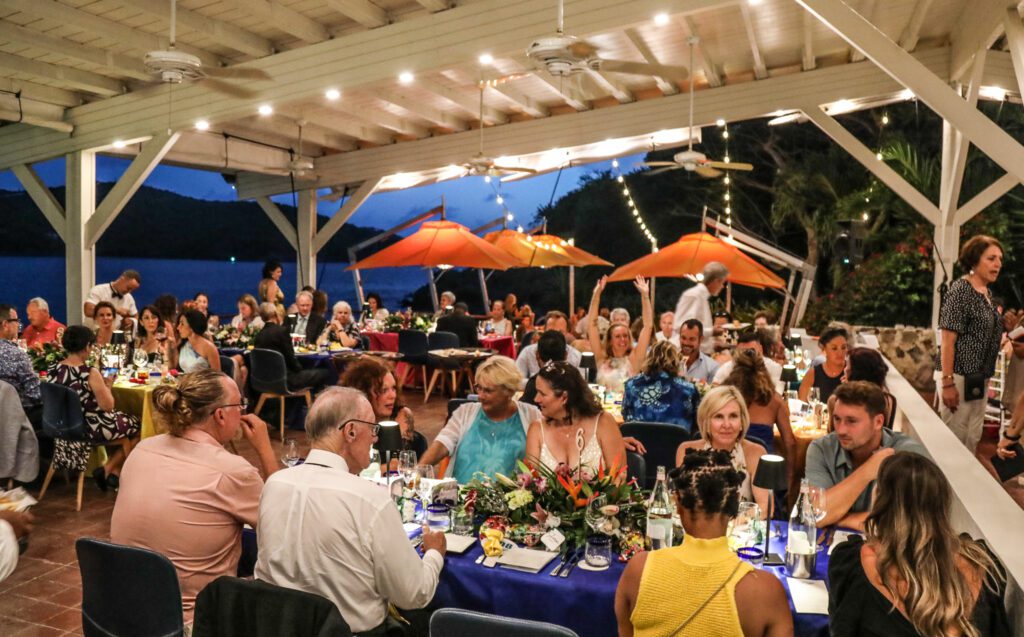
There was a moment Saturday night at Oceana Restaurant & Bistro when the stories began to stack on top of each other.
A dog rescued from a collapsing building in St. Louis and lowered down a ladder from a third-story window. A once-unwanted island puppy now sleeping on a couch somewhere in the mainland United States. A cat carried nervously through TSA by a volunteer traveler who may never even see the animal again after landing. A giant transport operation involving customs clearances, overnight boarding in Puerto Rico, and rescue partners converging “like Spider-Man,” as one organizer described it, from multiple states to meet dogs arriving from St. Thomas.
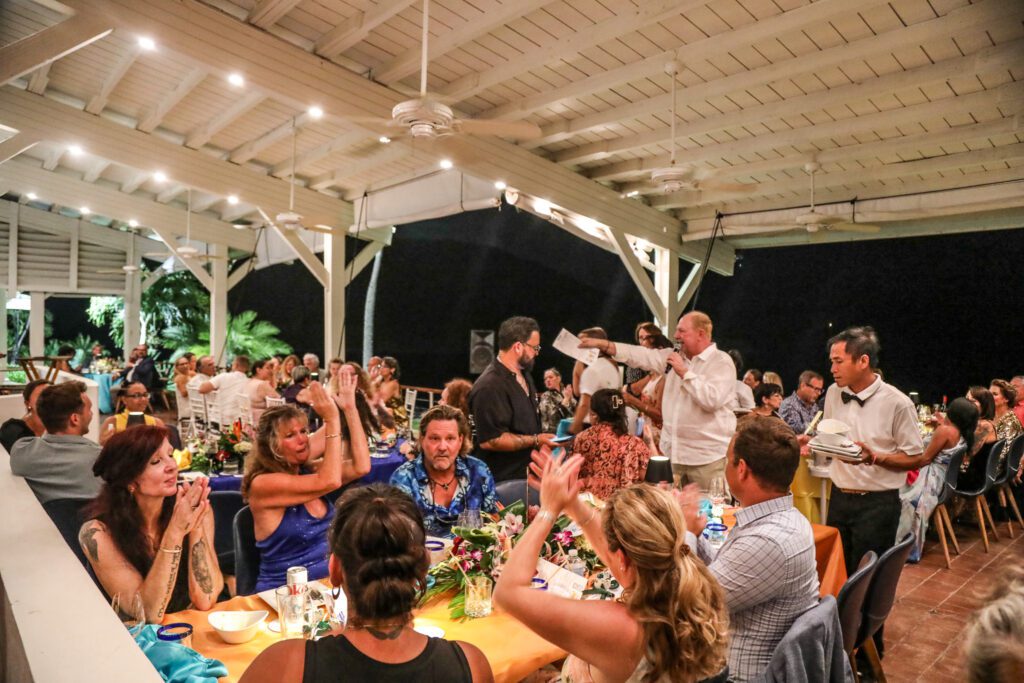
And at the center of all of it was the first-ever Pets With Wings Gala, held Saturday evening overlooking the water at Oceana — an elegant fundraiser built around an increasingly urgent reality: there are simply more homeless animals on St. Thomas than there are homes to take them in.
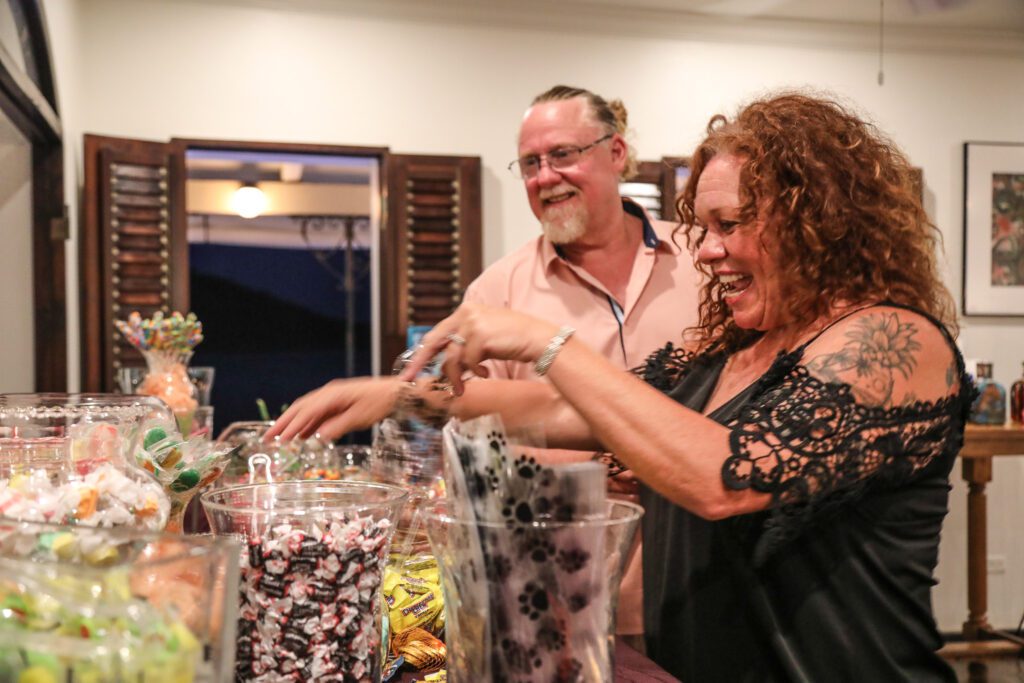
For a first-year event, the response itself reflected just how deeply the mission has resonated across the community. The gala sold out with nearly 130 guests in attendance, bringing together rescue volunteers, foster families, veterinarians, donors, rescue partners, and longtime animal advocates for an evening focused not only on fundraising, but on the enormous network of people required to move island animals toward second chances.
“We’re flying animals out almost every day,” said Pets With Wings Treasurer Annette Zachman during the event. “Most of the smaller animals travel under the seat of the plane. The bigger dogs sometimes have to wait a little longer, which means foster care, medical care, transport coordination — all of it costs money. But there are so many passionate animal-loving people here who keep this going.”
The evening marked a milestone for the organization, which celebrated its two-year anniversary as an independent nonprofit after previously operating under the Humane Society of St. Thomas-St. John. In remarks to guests, President Rhea Vasconcellos reflected on how quickly the rescue effort had grown from placing “two or three dogs” in its earliest days into a fully volunteer-run organization now responsible for transporting hundreds of animals to rescue partners and adoptive homes throughout the mainland United States.
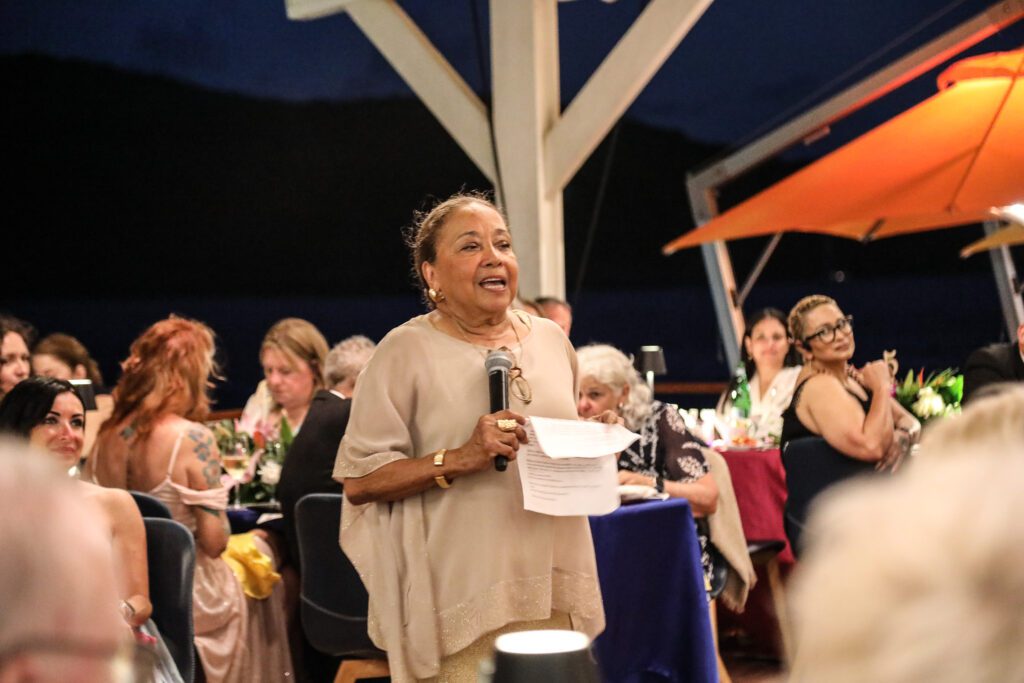
Since becoming an independent nonprofit in 2024, Vasconcellos said Pets With Wings has helped transport approximately 950 animals off-island — including more than 600 from the Humane Society of St. Thomas, over 200 from the Kitten Fight Club rescue network, and additional animals from private fosters and community rescues.
The work itself is staggering in scale.
According to figures included in the gala program, a single large transport carrying up to 25 dogs can cost between $10,000 and $15,000, not including ground transportation costs that can add another $4,000 to $6,000. Those transports often involve dogs flying first to Puerto Rico, clearing customs, staying overnight, boarding cargo flights through Amerijet to Miami or New Jersey, and then being driven north in specially equipped rescue vans to shelters and foster networks across the country.
“It’s kind of like Spider-Man,” Zachman laughed. “Everybody’s coming at different angles and then meeting to pick up the animals.”
Inside Oceana, however, the tone of the night balanced urgency with celebration. Guests arrived to a red carpet cocktail hour overlooking the harbor before moving into a transformed dining room featuring floral installations, silent auction displays, live music, paddle raises, and speeches honoring the volunteers, rescue partners, veterinarians, foster families, and travelers who make the organization function almost entirely through donated labor and coordination.
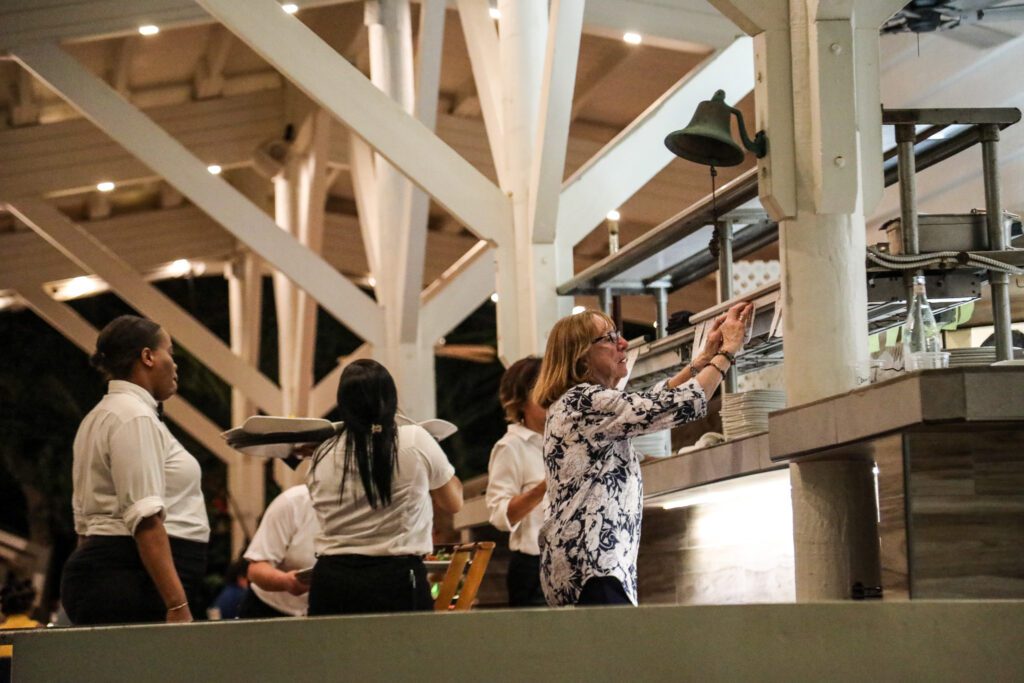
For Oceana owner Patricia LaCorte, who donated the venue and closed the restaurant for the evening, the gala became deeply personal.
“I was aware of Pets With Wings before, but you’re not really aware until you see what it takes,” she said. “The orchestration, the flights, customs, the rescues waiting on the other side — it’s mind boggling.”
LaCorte became closely involved with the organization while trying to help secure transport for a large dog named Mafolie, which she not only rescued, but fostered until she found her forever home away. That experience, she said, changed her understanding of the rescue process entirely.
“I thought to myself, I really want to support this organization,” she said. “And so here we are.”
That support network now stretches far beyond the Virgin Islands.
Saturday’s gala brought together rescue partners from multiple mainland organizations, including Stray Rescue of St. Louis and Midwest Small Breed Rescue in Michigan — groups that have collectively helped relocate hundreds of Virgin Islands animals over the last decade.
Cassady Caldwell of Stray Rescue of St. Louis said her organization alone has taken in more than 1,000 animals from the Virgin Islands over the years.
“Every shelter everywhere is completely overrun with animals,” Caldwell said. “But St. Louis has really developed a soft spot for the island babies.”
Cynthia Tewes, executive director of Midwest Small Breed Rescue, said her rescue has partnered with Virgin Islands transport efforts for roughly 10 years, frequently traveling to the territory herself and bringing back multiple dogs at a time.
“There’s just not enough people here to adopt the amount of animals that are here,” she said. “So we have to give them a chance.”
Much of that work also depends on travelers — ordinary people willing to escort animals on commercial flights. Melissa King, who coordinates feline transports for Pets With Wings while also operating the Kitten Fight Club rescue network, said she has personally helped relocate hundreds of cats since first volunteering in 2020.
“I realized the cats were getting left behind,” King said. “And I basically threw a fit and said, ‘This isn’t fair. Why aren’t we sending cats at the same rate as dogs?’”
Today, Pets With Wings works with approximately 15 rescue partners specifically for feline placements, including organizations in Chicago, Washington D.C., and elsewhere that specialize entirely in cat rescue.
Throughout the evening, speakers repeatedly emphasized that the organization remains entirely volunteer-driven — with no paid salaries, no office, and few permanent resources beyond community support and an enormous network of fosters, rescue coordinators, transporters, and donors.
“We have no salaries, no office, no vehicles,” Vasconcellos told attendees. “Every dollar goes directly toward transporting animals.”
Still, even amid the gala atmosphere, organizers acknowledged the deeper challenge facing the territory: overpopulation, limited housing options for pets, and the continuing need for spay and neuter programs across the islands.
“There’s just not enough room,” Zachman said plainly. “People really need to spay and neuter their animals. Otherwise, it never stops.”
And yet by the end of the evening — as guests bid on artwork, island stays, jewelry, dining experiences, and rescue fundraisers donated by businesses and supporters throughout the Virgin Islands community — the feeling inside Oceana was not despair.
It was momentum, created by a restaurant full of people determined to keep finding flights, fosters, homes, and second chances for animals that, without organizations like Pets With Wings, might never have had one at all.