

Nearly two years after lawmakers created the Virgin Islands Bureau of School Construction and Maintenance to address decades of deteriorating school facilities, the agency says it still lacks the funding needed to move beyond emergency repairs, leaving hundreds of maintenance requests unresolved across the territory.
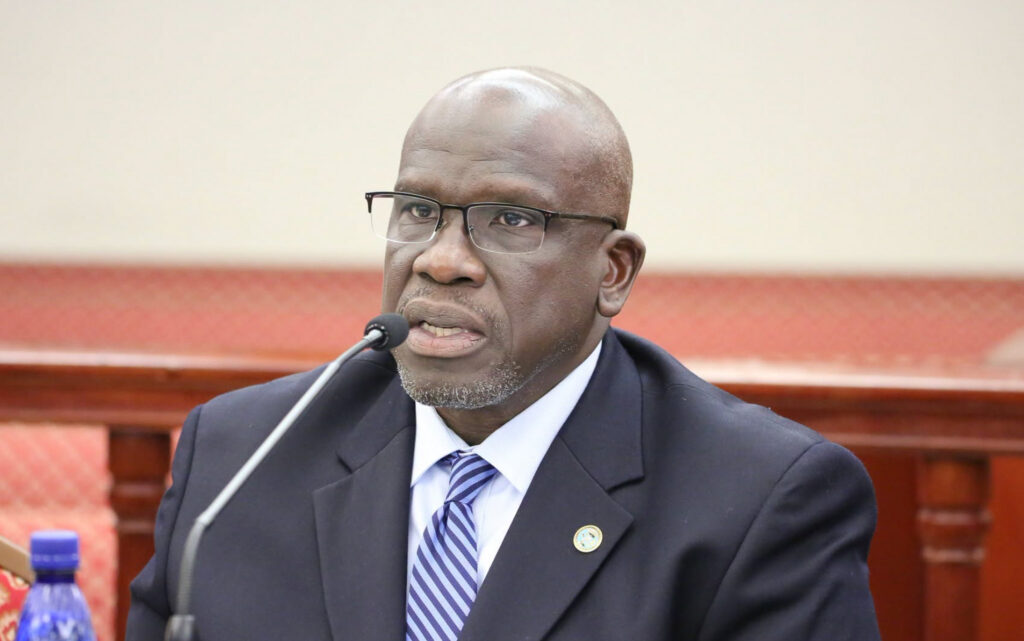
Testifying before the 36th Legislature’s Committee on Budget, Appropriations and Finance on Tuesday, Executive Director Craig Benjamin said the bureau received $3 million instead of the $5 million annual capital allocation envisioned under the law that created the agency. As a result, approximately 85% of the bureau’s maintenance funding has gone toward emergency repairs rather than preventative maintenance, increasing the likelihood of more costly failures.
Created under Act 8717 to manage school construction, renovations, repairs and maintenance, the bureau oversees more than 46 public school and educational facilities totaling about 3 million square feet across St. Thomas, St. John and St. Croix.
Benjamin said the bureau was created amid long-standing maintenance and infrastructure challenges.
“We were inheriting decades of deferred maintenance, aging facilities, and significant funding challenges,” he told lawmakers, adding that many public school facilities require sustained investment and long-term planning to provide “safe, healthy, modern and functional learning environments.”
Since its creation, the bureau has overseen more than $40 million in infrastructure investments, including capital improvements, American Rescue Plan-funded projects, maintenance services and summer readiness work.
Benjamin said the bureau spent about $6.7 million during fiscal year 2026 on maintenance and facility improvements, including air-conditioning repairs, electrical upgrades, roof repairs, plumbing work, mold remediation and security improvements at schools such as Charlotte Amalie High School, Ivanna Eudora Kean High School, Bertha C. Boschulte Middle School and Educational Complex High School.
Benjamin said many public school buildings are decades old and continue to face aging roofs, unreliable air-conditioning systems, plumbing and electrical problems, mold and other environmental concerns. Because of limited resources, he said, the bureau’s maintenance dollars are largely directed toward emergency health and safety repairs rather than long-term improvements.
Funding constraints, Benjamin said, continue to present significant operational challenges for the bureau. Under Act 8717, the agency is supposed to receive at least $5 million annually through a dedicated capital fund for school maintenance, separate from its general fund budget for salaries and personnel. In fiscal year 2026, however, the bureau received only $3 million, creating a $2 million shortfall.
Benjamin said the bureau currently employs 70 people and has eight vacant positions, and that limited staffing continues to affect its ability to perform maintenance services in-house, resulting in greater reliance on outside contractors.
Benjamin also said the bureau has been unable to establish a permanent home base for maintenance operations, particularly on St. Croix, limiting its ability to centralize tools and staff.
Chief Financial Officer Dr. Charmaine Mayers said the bureau was appropriated $1 million in capital funds — $500,000 for each district — to develop warehouse space, but the money has not yet been used. She said the bureau has been unable to secure suitable space on St. Croix and is only now beginning to build out a facility on St. Thomas.
Benjamin said summer maintenance projects were delayed after previous funding sources were exhausted and access to remaining settlement funds was not authorized until legislation was passed in June. Once funding became available, the bureau issued nearly $2.1 million in purchase orders for repairs and improvements across both districts.
Lawmakers questioned the bureau about its backlog of maintenance requests and whether the agency has enough capacity to address school needs.
Benjamin said schools submitted nearly 1,400 work orders through the bureau’s maintenance tracking system during fiscal year 2026, with about 890 completed. He said emergency repairs affecting health and safety are prioritized, while routine requests are addressed as resources become available.
Sen. Kenneth L. Gittens questioned why hundreds of work orders remained open.
Assistant Manager of School Facilities Antoine Magras said many outstanding requests require specialized workers, equipment or materials the bureau does not have.
Magras said the bureau does not have a welder despite receiving welding-related work orders and that funding shortages prevent some repairs from being completed. He told lawmakers he has sometimes bought materials out of his own pocket “because I’m here for the children.”
Committee Chair Sen. Novelle E. Francis Jr. responded that government employees should not have to spend personal money to maintain public schools.
The bureau is requesting $10,986,415 for fiscal year 2027, including $5,986,415 in general fund support for personnel and benefits and $5 million through the capital fund. Benjamin said the general fund portion only covers personnel and fringe benefits and does not include supplies, equipment, maintenance operations or contractual services.
Benjamin also said industry benchmarks indicate the territory should spend about $9.7 million annually on preventative and routine maintenance alone, excluding salaries, emergency repairs and major capital projects.
Some senators questioned whether the bureau should remain a separate agency.
Gittens said he may push to return school maintenance responsibilities to the Department of Education, citing unfinished work, open maintenance requests and continued infrastructure concerns.
Other lawmakers argued the bureau’s challenges are largely the result of years of underfunding rather than poor performance.
Sen. Avery L. Lewis Fonseca said he does not support dissolving the agency and instead believes it needs stable funding and time to address the backlog. He added that “WAPA is the problem,” pointing to days-long water outages and looming electrical interruptions that he said are undermining conditions in the schools.
Benjamin concluded his testimony by asking lawmakers for continued support, saying the bureau has spent its first two years building its organizational and operational foundation while tackling decades of deferred maintenance but needs consistent funding to make lasting improvements.
“Our students cannot afford additional delays,” Benjamin told senators, adding that lasting improvements require “stability, continuity, and sustained commitment.”