

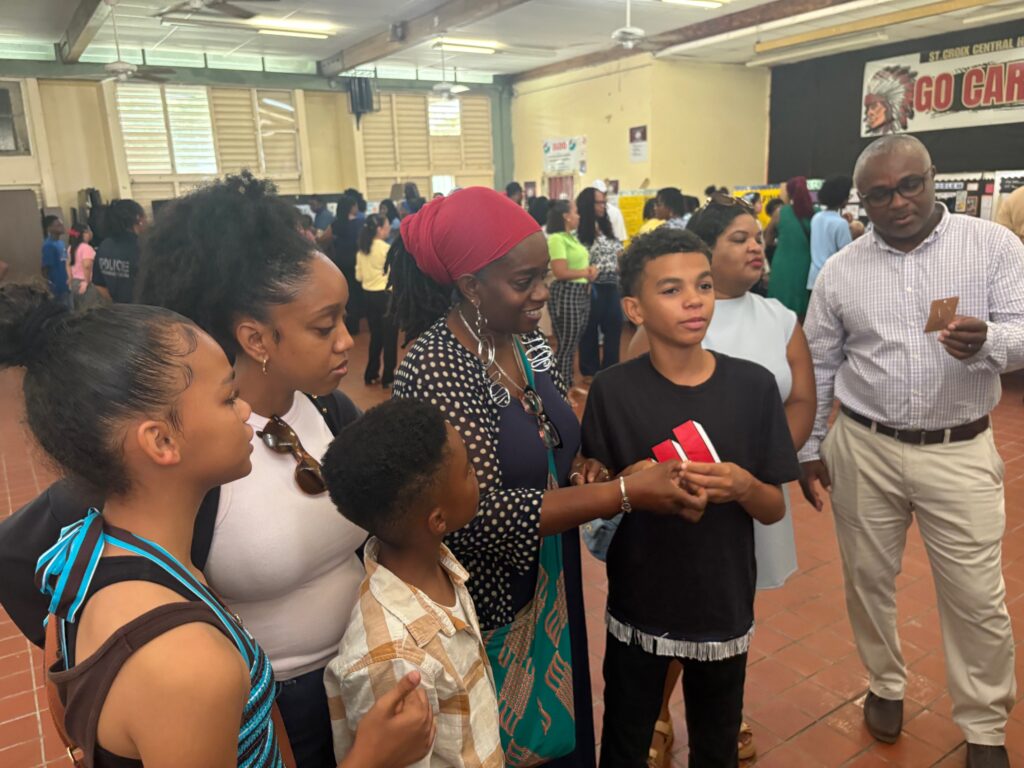
Students from across St. Croix spent the past four weeks exploring science, technology, engineering, mathematics, financial literacy, communication, and genealogy through hands-on research projects presented during the annual STEM Summer Program showcase on Thursday at St. Croix Central High School’s Cafeteria.
Serving students in grades 6 through 12, the program gives participants the opportunity to work alongside educators while tackling real-world issues affecting the Virgin Islands and beyond.
“This program has been a long-standing program in our community,” said Joanne Lewis, science coordinator for the St. Croix District and one of the program coordinators. “We’re showing the connections between our subject areas with science. Students are learning engineering, communication, financial literacy, and genetic genealogy while conducting research that informs the community.”
One student research team focused on the invasive lionfish population threatening Caribbean coral reefs. Team member Xaire Simmons explained that the group surveyed approximately 180 community members over four days to better understand public knowledge and attitudes toward lionfish.
The survey examined demographics, awareness of the invasive species, willingness to consume lionfish, and common misconceptions surrounding the fish.
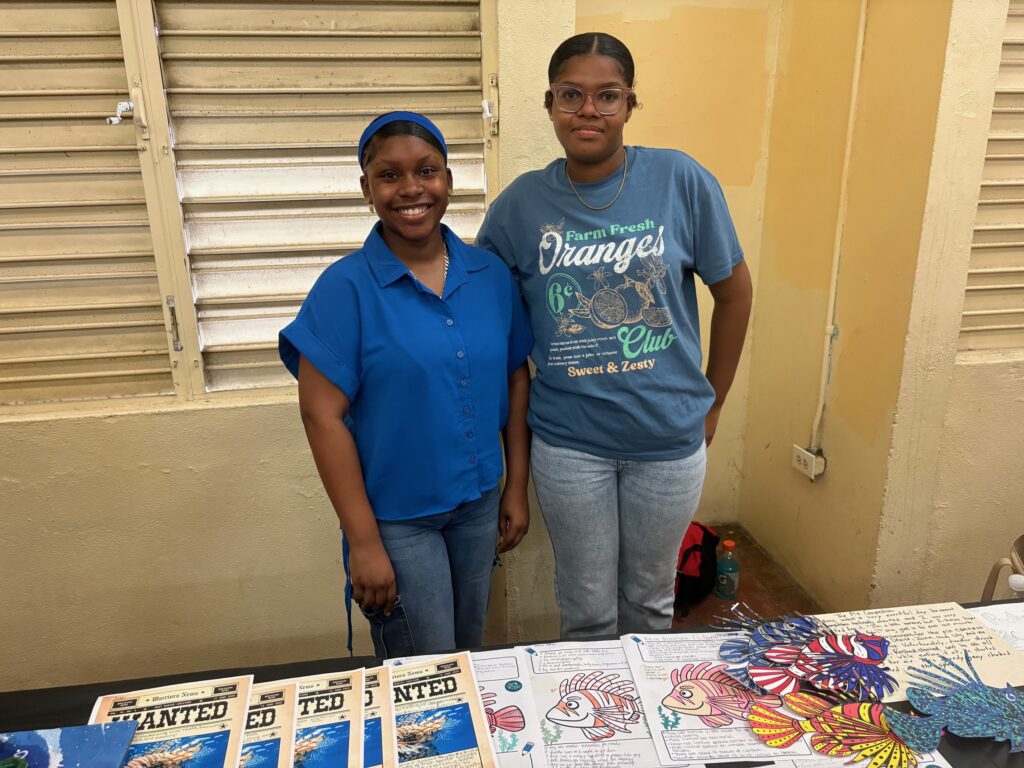
“A lot of people think lionfish are poisonous, but that’s not the case,” Simmons explained. “They’re venomous because their spines can inject venom, but once those spines are removed, they’re safe to eat like any other fish.”
Researchers said increasing lionfish consumption could help reduce pressure on native fish populations while helping control the invasive species that continues to damage local reef ecosystems.
Other students approached the issue from a culinary perspective by designing restaurant menus featuring lionfish dishes to encourage consumers to view the species as a sustainable seafood option. Their creations included lionfish ceviche, coconut lionfish dishes, blackened lionfish, and lionfish cakes.
One student group even created a humorous “Wanted” poster depicting the invasive lionfish as a criminal wanted for trespassing, first-degree murder, and cannibalism—a reference to the species’ destructive impact on marine ecosystems.
Another group explored genetic genealogy, helping students understand family history, DNA, inherited traits, and ancestry.
English teacher Regina Keels, one of the instructors, said the lessons extend well beyond science.
“I think what we’re really preparing them for is the real world,” Keels said. “When I teach my students, I tell them they’re not just 13 or 14 years old. They’re our future doctors, educators, engineers, and leaders. It’s important to help them understand where they come from and how that connects to science.”
Students participated in field trips to Frederiksted, Fort Frederik, and local libraries where they learned how historical documents—including newspapers, books, and records—can help trace family histories. They also created family trees, self-portraits, poetry, and presentations exploring their identities and inherited traits.
Communication students combined science and creativity by producing poetry, photography, and storytelling projects centered on genealogy and family history.
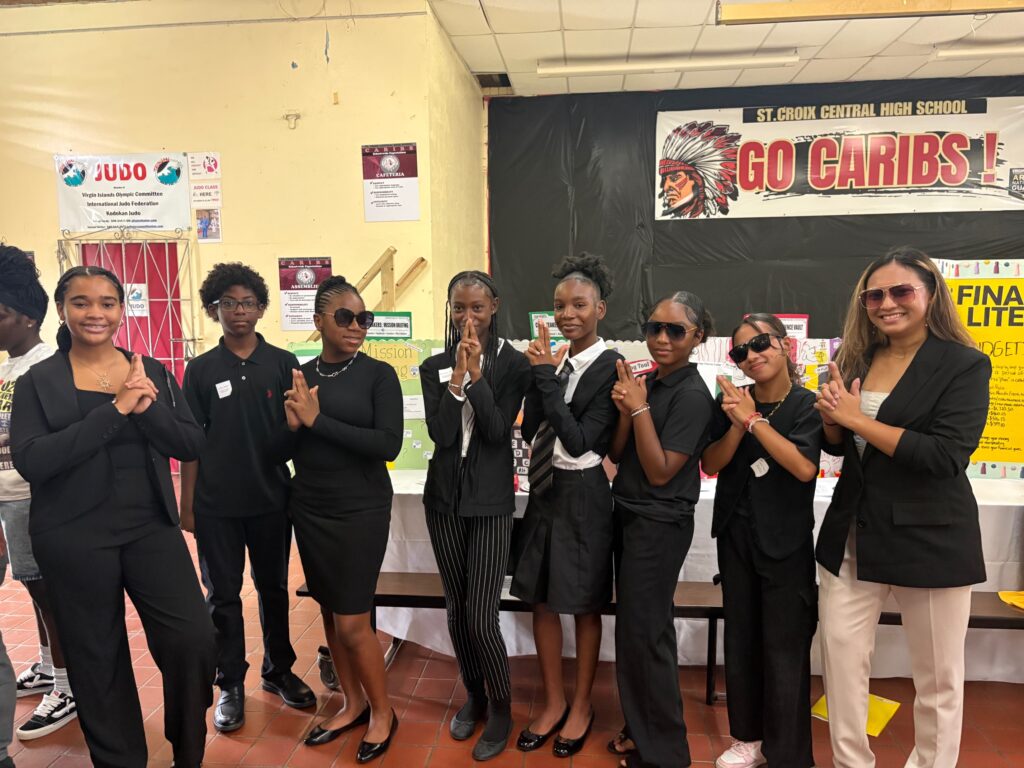
Technology students examined the science of encryption by comparing different coding systems, including Caesar Cipher and Vigenère Cipher. Their project investigated how increasing encryption complexity affects communication systems by measuring speed, accuracy, error rates, usability, and security.
Instructor Amaya Saret said students first learned to encrypt and decrypt messages manually before transitioning to digital coding.
“I wanted them to understand how encryption works before they actually start coding,” Saret said. “In this generation, students often jump straight into technology and artificial intelligence, but it’s important to understand the concepts first.”
Saret said students initially questioned why they were attending academic sessions during their summer break but quickly embraced the experience.
“They would tell me, ‘Miss, it’s summer,'” she said. “But it’s important to keep your brain functioning during the break so when August comes, you’re ready for school.”
Another engineering group designed and tested a do-it-yourself water filtration system paired with a solar oven. Using gravel, sand, charcoal, rocks, and recycled materials, students attempted to improve muddy water quality before using solar heat to further treat it.
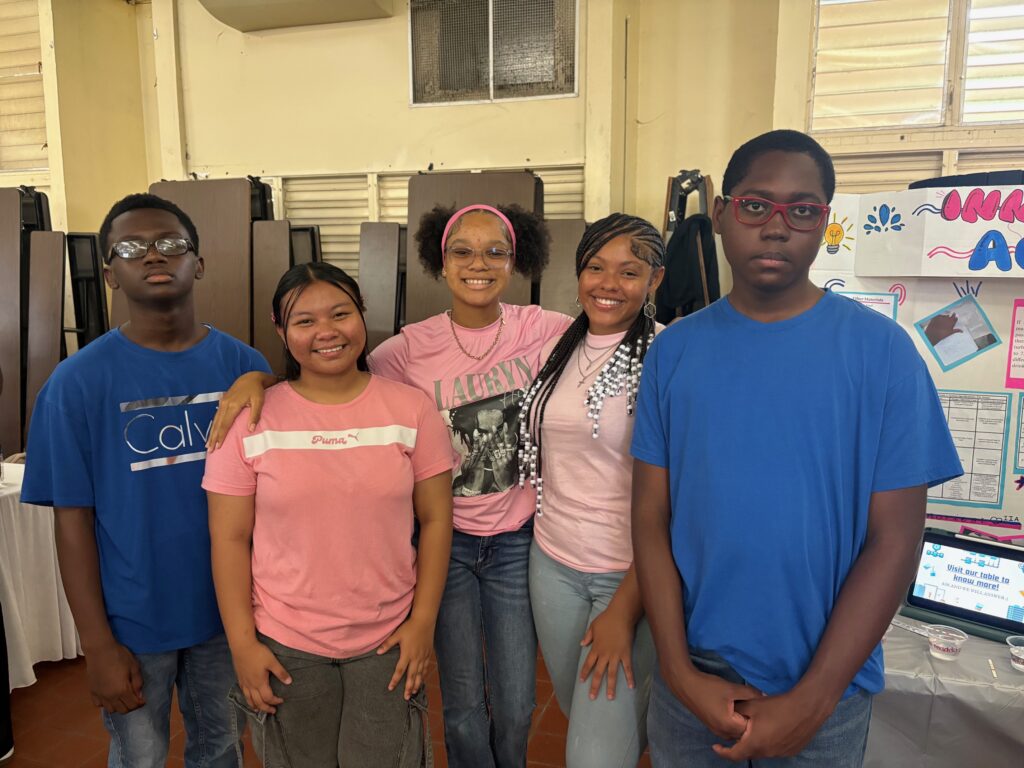
Although the filtration system successfully removed large particles and improved water clarity, the solar oven did not significantly change the water’s pH level.
Students concluded that while the project demonstrated effective physical filtration, additional treatment would be necessary before the water could be considered suitable for drinking.
Throughout the showcase, students presented their findings, defended their research, and answered questions from attendees, demonstrating both scientific understanding and public speaking skills developed during the four-week program.
Lewis said expanding the program to include junior high students has allowed younger learners to begin building research skills earlier while exposing them to careers in science, technology, engineering, and mathematics.
By combining research with local issues, history, technology, and community engagement, organizers hope the STEM Summer Program continues inspiring the next generation of scientists, engineers, educators, and innovators throughout the Virgin Islands.