

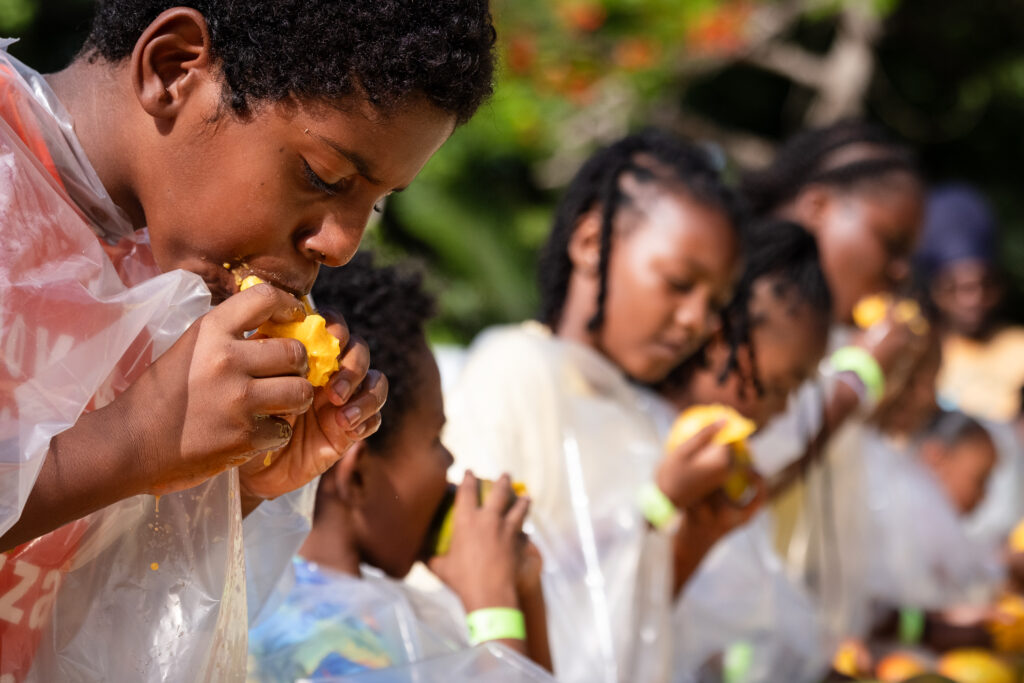
St. Croix’s fiercest fruit eating competition returned Sunday during the 30th annual Mango Melee, an annual, day-long fundraiser for the St. George Village Botanical Garden filled with food, exhibits, local vendors and activities for all ages.
In the leadup to the afternoon’s well-attended children and adult mango eating contests, attendees had the opportunity to meet animals, visit Children’s Museum pop-up stations and frequent booths from more than a hundred local food and craft vendors while taking in the local fauna that covers the botanical garden’s 16 acres. SGVBG Executive Director Sarah Brady said Mango Melee and the botanical garden’s holiday lights event in December help keep the historic property open to the community year-round.

In addition to “literally keeping the lights on,” the proceeds support maintenance, restoration work and educational programming. Brady said the botanical garden recently refurbished the site’s 200-year-old blacksmith shop — which will hold demonstrations twice a week for the public — and they just hired a full-time education coordinator.
“There’s so much that we’re doing right now. It’s hard to put it into words,” she said at the end of Sunday’s event. “Our nursery is open every Saturday of the year from 9-1. We have so many things we’re doing with signage to try to increase the visibility of the garden and enhance that visitor experience… making it so that when you’re walking through, there’s context to where you are.”
By 4 p.m., most attendees Sunday found themselves arrayed around a long table topped with bowls full of mangos.
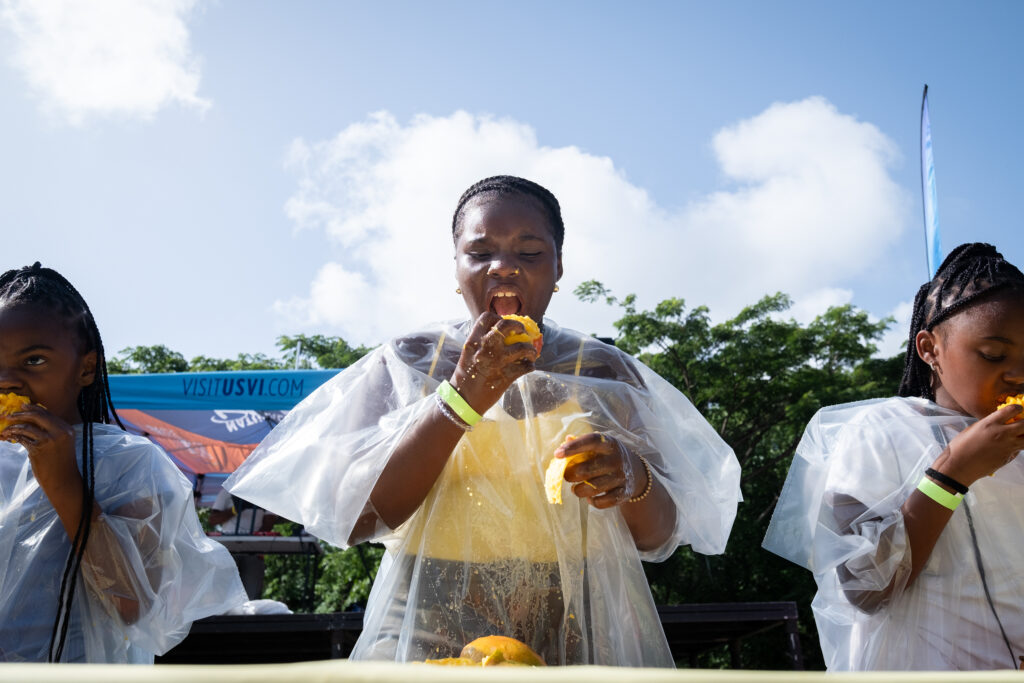
The fruit eating contest began with a 12-and-under group. Arianna Sage, 12, swept the competition for the third year in a row, defending her title in what would be her last year competing in the children’s section. Speaking to the Source afterward, she outlined the training regimen that helped her secure victory three years running.
“I go to camp at Sejah Farm, and they have mangos and local food. So I basically practice eating mangos over there,” she said. During the competition itself, Sage said she doesn’t let herself get distracted by her opponents. “I’m looking at my plate. I look at my plate, and like the only times I look around at my competitors are if I’m finished.”
Sage’s aunt, Grace Henry, said her family is “very proud” to have a champion in the family, and she noted Sage’s “determination and will to get it done.”
“And she never disappoints us,” Henry said.
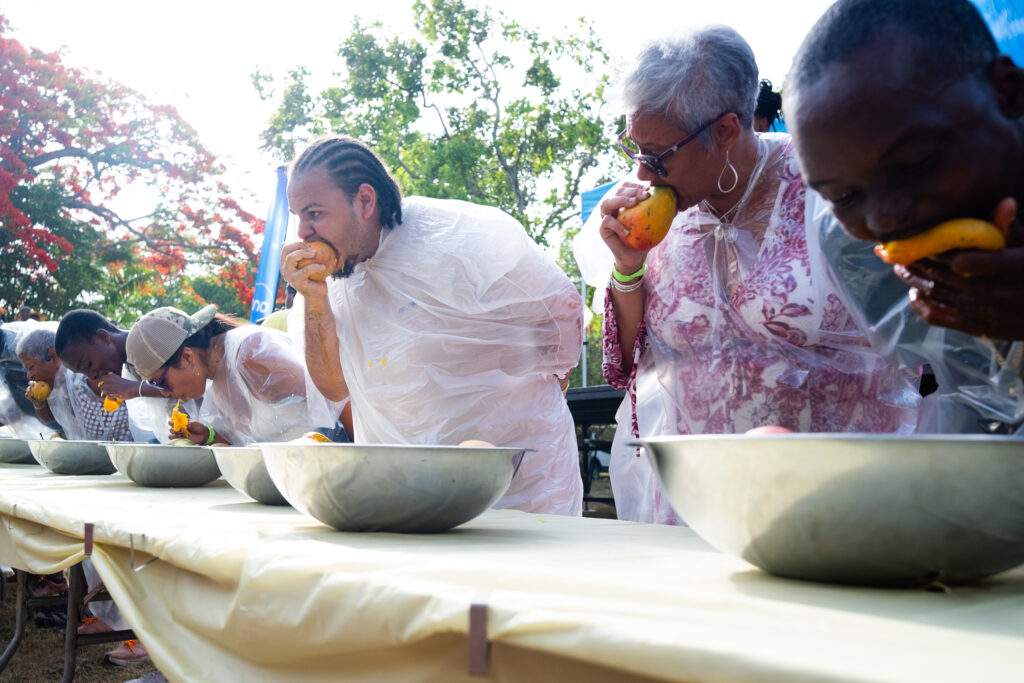
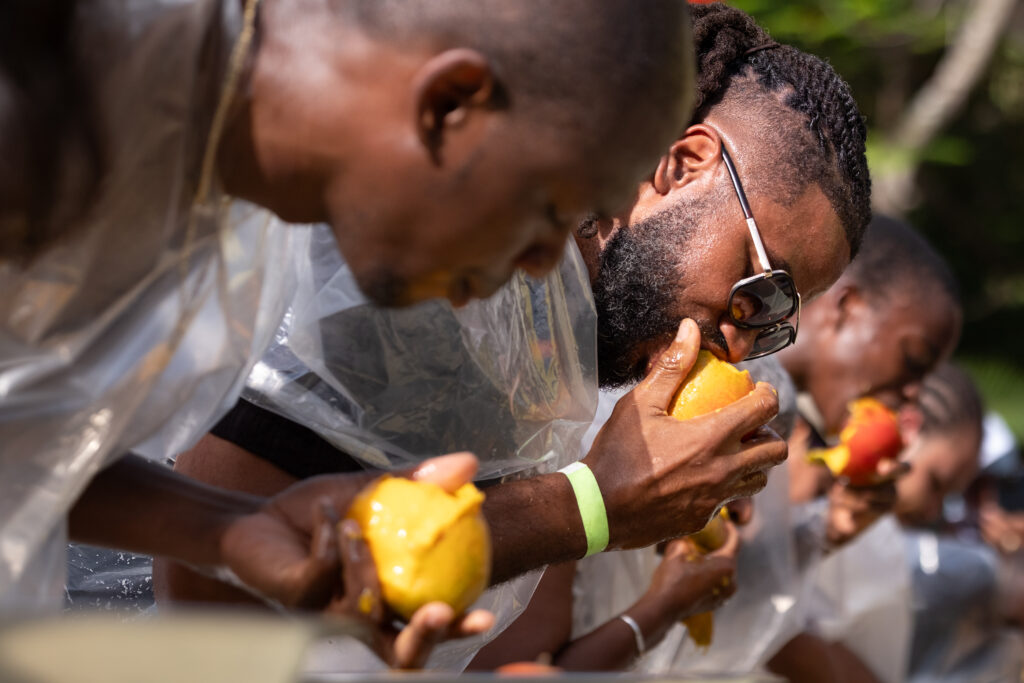
First place in the adults’ competition went to Sy’Koi Gilbert, who said he came in sixth place last year. Gilbert credited his fingernails for helping him dispatch mangos with speed and ease, and his victory Sunday was the result of strategy and training.
“I actually was practicing by freezing mangos in the fridge,” he told the Source shortly after his win. “So when I take them out, I eat them hard because mostly mangos be hard when you eat them. So I trained myself by eating the frozen mangos — like right out of the fridge — to eat them, so my belly could handle if they were like hard or frozen or defrosted.”
Gilbert said this year’s competition mangos were “pretty ripe.”
With the mangos eaten, the crowds dispersed, but Brady and SGVBG board vice president Mary Ann Mahoney told the Source that the St. George Village Botanical Garden has plenty of reasons for people to come back and visit.
“There’s a lot of ethnobotanical knowledge here… what these plants were used for and how they got here,” Brady said, pointing out a tea bush garden planted with help from a grant from FirstBank. “We’re working on getting signage in place to talk about why bush tea is important — and the cultural significance to it — and really putting that broad lens on where we are.”
On the conservation front, Brady said a number of plants growing at the botanical garden are listed on the International Union for the Conservation of Nature’s “red list” for endangered species.
“I mean there is real conservation work happening here,” she said. “We have our herbarium, which is a six-thousand-plus specimen collection, which we’re digitizing right now” with help from the VI Department of Planning and Natural Resources, she said.
Membership grants access to the botanical garden 364 days a year as well as access to 380 other botanical gardens and arboretum institutions nationwide through the American Horticultural Society’s reciprocal admission program.