

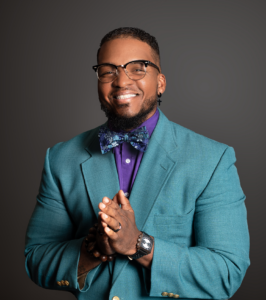
 In his bi-weekly column, Langley Shazor speaks to issues important to men within the territory.
I will never forget when one of my engineering colleagues told me that I “embodied the phrase ‘be so good they can’t ignore you.’” Unlike my counterparts, who all had engineering degrees, I worked my way into that department from the receptionist position through customer service. What gained the attention of management was my
critical thinking ability, problem-solving, analytical and technical prowess, and ability to
communicate effectively. At each position that I moved into, I brought value and
enhanced the process. The proven track record of success overrode the lack of formal
education.
We all possess skills, talents, knowledge, and have corresponding interests. The issue
is that we sometimes point those traits in the wrong direction, using them for destruction
or personal gain instead of for positivity and impact. I can recall, during one of my
attempts at a college education, two of the most brilliant people I have ever met were
“dope boys.” If they had been categorized by their intelligence and “area of expertise,”
one would have been a chemist and the other a mathematician. Both could do complex
equations, conversions, and computations in their heads, but where they shined was
how they applied them to economics. Sitting with them was like being in a doctorate-level lecture and I always wondered why they were so disenfranchised with pursuing a
degree or, at the very least, empowering others for change.
I mention them because they were not the last people to have so much ability, but felt as
though the doors would always remain shut. We all know people that make us scratch
our heads, baffled at why that elusive “meant for more” hasn’t come to fruition. Whether
it is because of a record, upbringing, environment, race, socioeconomic status, etc.,
many of us, especially men, don’t believe things will ever change in our favor. Our
collective experience at the macro level would suggest this: no one wants us at the
table, and if we can get in the room, we are relegated to a chair in the corner. I grew up
in a place where that was the reality, but I didn’t let that hinder my personal growth. This
led to my professional growth in several sectors, ultimately breaking glass ceilings and
barriers that a multitude of “isms” worked feverishly to prevent my presence.
In an age where who you know can get you in the door or keep it shut, performance is
still the great equalizer. If your merit, character and worth ethic weren’t considered
when you were offered a position, and you are not qualified, the truth will surely be
revealed. On the other side of that coin, if you didn’t possess the right last name or had
the right network, the abovementioned traits will be exactly what qualifies you above
your peers. You may even be the person who replaces the charlatan that plagiarized
their way into a role. They may not want you, they may not even like you, but they won’t
be able to deny the value you bring. Always remember that they don’t have to like you
to respect you, and they don’t have to want you to need what you have to offer.
Many men, especially those of African descent, play into the hands of the victim
mentally too easily and too often. We justify inactivity by our inability to progress because
“the man is keeping me down.” Though there is some truth to external opposition, most
of the impediment is internal. For many of us, our inactivity is based on our inability to
take accountability. It is not our fault that we didn’t do well in a school we seldom
attended. It is not our fault that we can’t keep a job that we constantly call out sick for. It
is not our fault that we can’t get hired for opportunities that we appear to interview for in
clothes we wear to the club. It is not our fault that we decline positions that we believe don’t pay enough when we have neither a work history nor an education. It is not our fault we didn’t start the business that required us to get out of the street and into our studies.
The traditional education path is not for everyone, me included. However, there are a
myriad of other ways to improve yourself: books, webinars, seminars, workshops,
vocational classes, specialized certifications, etc. We always have a choice, and we first
must acknowledge that we could be making a different one. Then we must make a
different one. We are living in a time where there is no lack of available information, only
a lack of discipline. When you invest in yourself, you will see a positive return. Whether
you walk into someone else’s boardroom or create your own, when you become the
best version of yourself, you also become someone that will not be ignored.
Langley “Casual-Word” Shazor is a poet, author, publisher, entrepreneur, public
speaking coach, podcast host, and pastor who is an advocate for youth and men. His
goal is to enlighten, empower, and liberate those who are silenced, marginalized, and
enslaved to self-destructive thoughts and behaviors.
Visit thecasualword.com.