

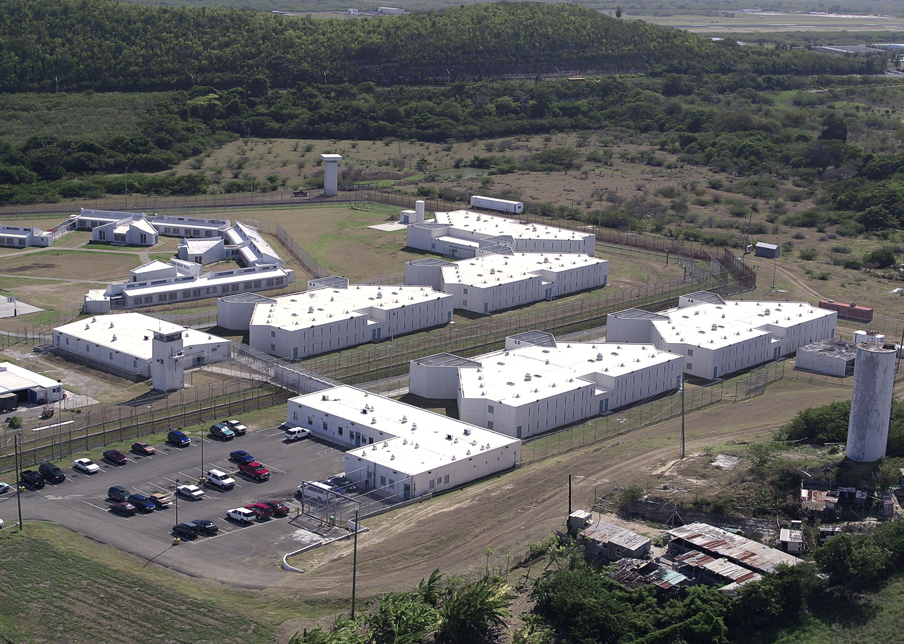
Attorneys for the V.I. Corrections Bureau and the U.S. Justice Department together asked a federal judge this week to terminate part of a settlement agreement pertaining to medical care at St. Croix’s John A. Bell Adult Correctional Facility, in what attorneys for the territory hope will become a model for whittling away at court-mandated oversight.
The U.S. Justice Department began investigating unconstitutional conditions at the facility — formerly known as Golden Grove Prison — nearly four decades ago. The territory reached a settlement agreement with the United States in 2013.
According to a status report filed on Nov. 7 and prepared by lead monitor Kenneth Ray, medical provisions of the agreement were assessed independently of those relating to mental health and suicide prevention in October for the first time “because several provisions do not pertain specifically to Medical compliance and doing so is an unreasonable barrier to compliance progress for each area.”
That separation put the facility at 95 percent compliance with medical provisions, according to the monitor’s report. In the joint motion filed on Wednesday, attorney William Lunsford — representing the territory — wrote that both parties and the monitor inspected John A. Bell this week and agreed that all of the medical care provisions are in substantial compliance.
“No other portion of the Settlement Agreement has yet reflected this level of compliance,” Lunsford wrote, adding that the parties were optimistic that all other provisions will move in that direction.
The motion only addressed medical provisions, but Lunsford said in court Thursday that the territory hopes the termination can be a model to close out other sections over the coming months as more come into compliance — allowing the Corrections Bureau to focus on areas of concern.
According to a slideshow he presented to U.S. District Judge Wilma Lewis, the territory aims to terminate sections related to the sexual abuse of prisoners, the use of physical restraints on prisoners, the handling of prisoner complaints and administrative investigations by Dec. 30. Sections on fire safety, environmental health, training and mental health would follow.
Lewis acknowledged Thursday that both parties were in agreement but said she will take time to consider the motion.
“We want to make sure that we wrap this up and we wrap it up well,” she said, stressing the last word.
Though the facility made strides in providing medical care to incarcerated people, the provision of mental healthcare remains “significantly hindered” by staff shortages, according to the monitor’s report.
“This shortage has remained a major impediment to compliance with many mental health-related provisions of the agreement and has resulted in a system that struggles to meet the needs of this vulnerable population,” the report stated.
The report also called for progress in mitigating contraband, which saw “significant fluctuations” between 2019 and July 2024. The number of items seized this year peaked at 216 — a 217.6 percent increase over last year and the highest number recorded in the observed period. Cellphones were by far the most frequently seized items, followed by drugs, other electronics, weapons, and drug paraphernalia.
The report noted a “significant gap in meeting the required search frequencies across all units,” — or a shortfall of more than 7,104 searches over a six-month period.
Lunsford said in a call with The Source on Friday there was no evidence that the level of contraband entering the prison was increasing.
“What the evidence is, is that our staff is doing an amazing job. They’re doing a better job of seizing contraband,” he said. “So in any prison system — it doesn’t matter where you are — you only know about contraband to the extent you’re capturing it and identifying it for certain.”
Territory Avoids Sanctions for Late Payment
Lewis said at the beginning of Thursday’s status conference that she would not sanction the territory for a 10-day payment delay to the court-appointed monitor.
The conference came two weeks after Lewis ordered the territory to provide proof that they paid the monitor for the second time this year. In a Nov. 6 filing, Lewis wrote that the territory’s response should include the dates on which each invoice was received, due, and paid — or provide an explanation for any failures to make timely payments.
The territory responded on Monday and stated that they timely paid the monitor in June, July and September. The delayed August payment was “due primarily to an unexpected revenue shortfall,” according to a letter from Finance Commissioner Kevin McCurdy.
“Initial revenue projections for this fiscal year were higher than the actual revenues collected, creating a significant gap between anticipated funds and those available for disbursement,” McCurdy wrote. “Compounding this shortfall, the IRS recently extended tax filing and payment deadlines from September and October to February. This change, intended to support local businesses and residents after Tropical Storm Ernesto, has further delayed the flow of anticipated tax revenues.”
Earlier this year, Ray suspended monitoring after a similar delay in payment for work performed in January, February and March. The territory has missed payment deadlines several times over the course of the decades-old consent decree. According to a 2014 order — entered after the territory’s second failure to make timely payments — noncompliance carries a $250 fine for each day a payment is late.
Though she stopped short of imposing sanctions on Thursday, Lewis told representatives for the territory not to “assume next time that the court will be as forgiving.” Moving forward, Lewis said she will require the territory to regularly submit proof of payment.