

Sailing from Guadeloupe on his second voyage to the Americas, Christopher Columbus’ 17-ship fleet arrived at Salt River Bay on Nov. 14, 1493. Upon his arrival he anchored his ships off the reefs of the bay and ordered his men, including a Black man, to explore a small Kalinago (Island Caribs) village on the west of the bay and “hold speech to find out what the (inhabitants) were.” During his excursion at Salt River Bay, he claimed St. Croix as a Spanish possession.
While at the bay, his men encountered natives (Kalinagos) where a confrontation took place between the Spanish explorers and natives in a canoe, resulting in the injury and deaths of several natives and Europeans, according to historians. Then, Columbus sailed north that afternoon toward what he called the “myriad islands,” which reminded him of Saint Ursula and her legendary 11,000 virgins. He named the islands Virgin Islands, including the British Virgin Islands. Columbus called St. Thomas “Santa Ana” after the mother of the Virgin and called the large and secure harbor “Serredurra or Serraturra,” meaning keyhole, because of its protective shape.
On Nov. 15, 1493, Columbus arrived at St. Thomas and few days later, on Nov. 18, he left for Puerto Rico and Hispaniola where he had left 39 men six months before. There is a reason why I said what I said above, for the reading audience to have an understanding that indigenous and African people were in these islands way before Columbus sailed to the Americas.
Columbus himself said in his journal that “Black-skinned people” had come from the southeast in boats, trading in gold-tipped spears. It was the natives of Hispaniola (Indians) that told Columbus about the Africans trading with them.
In March, I was invited by our local Public Broadcasting System station to be part of a panel discussion titled “Screenings of ‘We are Taino’” for Virgin Islands History Month.
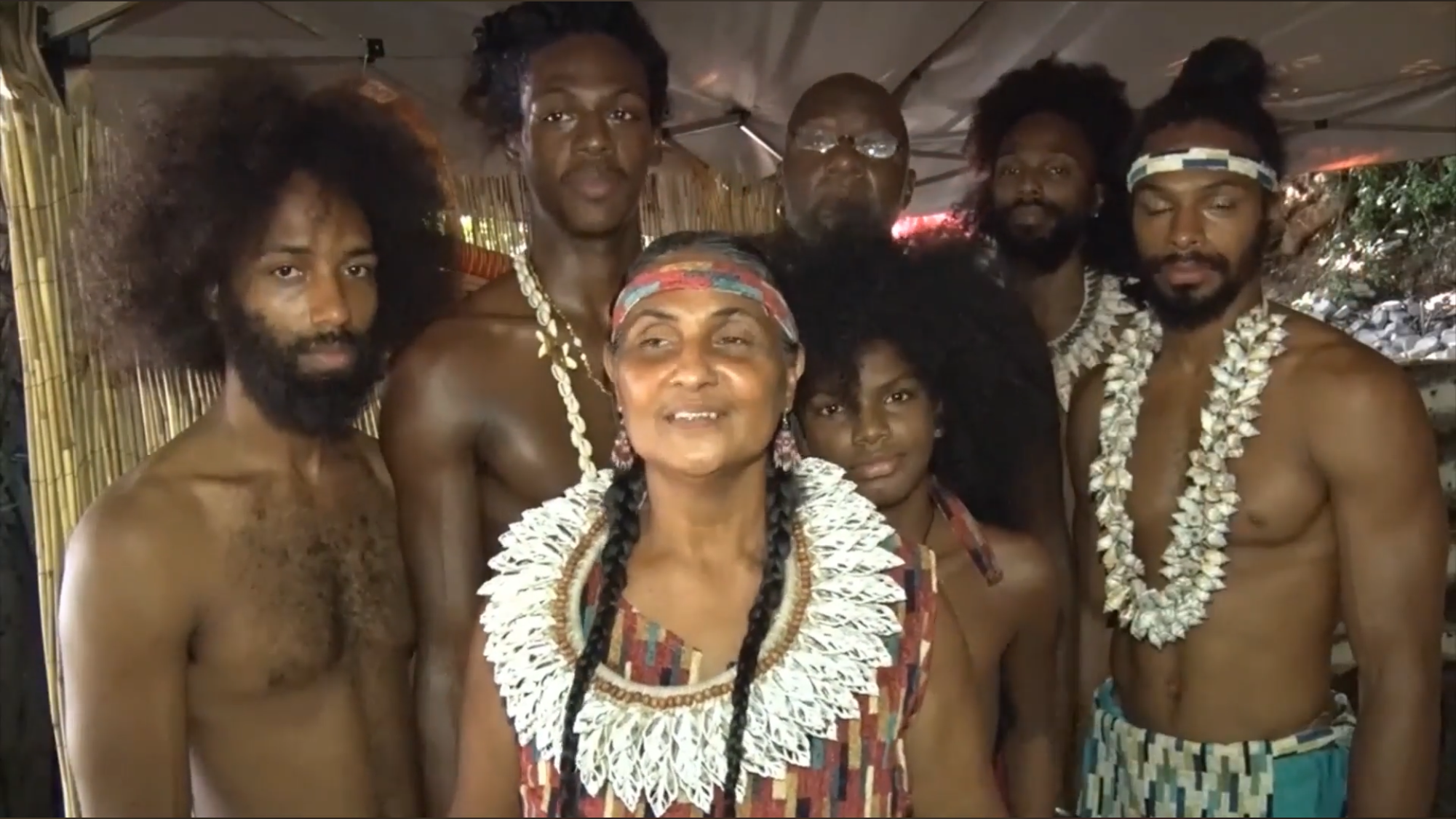
Emmanuel Phillips and Maekiaphan Phillips and I discussed briefly the history of Taino in the Virgin Islands and how they trace their family history back to Taino ancestors. Emmanuel and his mother, Maekiaphan, are native Virgin Islanders who spoke in the documentary of how they became a tribe, or nation, in the Virgin Islands. The documentary was produced by Firelight Media, which partnered with Pacific Islanders in Communications, Black Public Media and Latino Public Broadcasting.
Firelight Media partnered with WTJX/PBS to bring the documentary to the people of the Virgin Islands and the world. This will be a two-part series where I discuss briefly the history of the Amerindians in the Virgin Islands, specifically in the northern Virgin Islands and wider Caribbean archipelago. However, the island of St. Croix is well known for its pre-Columbian sites. Ay Ay, which means “Land of Rivers” or “The River,” is a Taino word. St. Croix is also known as Cibuquiera, meaning “Stony Land,” by the Kalinago people or “Island Caribs.”
St. Croix is probably the only island in the Caribbean that has two native indigenous names. Believe me, that speaks volumes to the history of the Virgin Islands. I have not yet come across any native names for the islands of St. John and St. Thomas. These islands were inhabited by the indigenous people of the Americas. St. Thomas was named after an English captain who claimed to discover the island supposed to have been “Thomma.”
He named the island after himself, calling it “St. Thomas,” according to Johan Lorentz Carstens (1705-1747), a Danish planter. His book is titled En Almindelig Beskrivelse om Alle de Danske, Americanske eller West-Jndisks Ey-Lande. In fact, when the Danes arrived on St. Thomas in 1671 or earlier, there were Black people living there. St. Thomas was originally a pirates’ outpost before the Danes took possession. Carstens made note in his book that, “Not only did those pirates take the few American Black women whom they found on the island as their mistresses, but they also carried Negro women there from other places, and with them they lived and had offspring.”
Historian Waldemar Westergaard (1882-1963) mentioned in his notes that the Danes were charged with establishing the West India Company in 1671, and with that the responsibility to also convert the Indians (indigenous people) on St. Thomas. According to Westergaard, there were only two or three Indians found on the island. One was known as John Indian, and a large fraction of his tribe was finally punished by the loss of a leg for his attempts to run away.
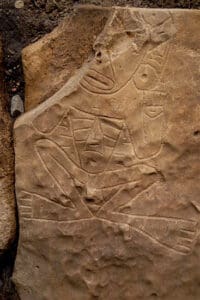
Believe me, this kind of Virgin Islands history is not taught in our school system. Most archaeologists agree the migrations of Amerindians to the Caribbean region started from 5000 B.C. to 4000 B.C. According to archaeologist Irving Rouse, around 5000 B.C. the Archaic Age people — various ethnically distinct groups — migrated north from the Orinoco delta in South America to the southerly islands of the Caribbean archipelago.
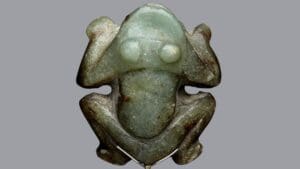
The National Museum of Denmark)
These people continued to move northward and westward through the Lesser Antilles, carrying themselves as far as Ay Ay (St. Croix), Las Virgenes, Culebra, Bike (Vieques) and Boriquen (Puerto Rico) about 2000 B.C. However, there was another group of people (Indians) that migrated earlier from Central America by way of the Yucatan and Cuba. These were the Taino people that dominated the Greater Antilles.
At the time of Columbus’ arrival to the Greater Antilles, scholars of different viewpoints estimated the Taino population to be at 550,000, with 60,000 in Puerto Rico, Jamaica, and Cuba each, and 350,000 in Hispaniola. As a child in school, we were taught about the Arawak, Caribs and Taino Indians. There are no such things as Arawak or Caribs Indians.
In Part 2 of this series on the indigenous people of the Virgin Islands, I will briefly mention Arawak and Caribs and how the names came about and pre-Columbian sites, particularly on St. Thomas, Water Island, St. John and Hassel Island.
— Olasee Davis is a bush professor who lectures and writes about the culture, history, ecology and environment of the Virgin Islands when he is not leading hiking tours of the wild places and spaces of St. Croix and beyond.