

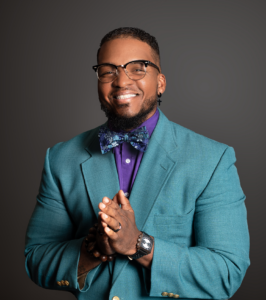
 In his biweekly column, Langley Shazor speaks to issues important to men within the territory.
When we started talking about manhood last year, the goal was never to blame men for what they had become. The goal was to help us see what we had inherited and decide what was still worth carrying. The Myth Cracker Series pulled back the layers on ideas that sounded noble but quietly suffocated us. We faced the lies that told us real men do not need help, that our worth lives in our wallets, that leadership means dominance, that we must always have the answers, and that fatherhood ends when the bills are paid.
For many, that conversation was uncomfortable but necessary. We cracked myths that had been passed down like scripture, only to find that they were built more on fear than on faith. They were rules meant to protect us from vulnerability, but they ended up keeping us from connection. The work we began in those essays was demolition, pulling down the walls that kept us from becoming whole. But breaking something down is only half the story. The next step is building something better in its place.
That is what this new series, Breaking the Cycle, is about. It is not about pointing fingers or reliving pain. It is about reconstruction. It is about learning to live differently after unlearning what almost destroyed us. It is about healing the places those myths damaged, not just in our minds but in our relationships, our leadership, and our sense of self. The myths may have been cracked, but the rebuilding requires honesty, patience, and daily practice.
Many men know the exhaustion of trying to live up to outdated definitions of strength. We learned early that to be a man was to endure, to fix, to provide, and to never fall apart. When that became impossible, we did what men are taught to do best, we hid. We learned to perform stability even when peace was missing. We smiled through confusion. We numbed through pressure. We got good at functioning and terrible at feeling. By the time life demanded something deeper from us, we had already learned how to survive without connection.
That survival mode became a cycle, a loop of pride, fear, and silence passed from father to son. We loved in limited ways because that was all we saw. We led from control because it was safer than admitting we were unsure. We provided as a substitute for presence because we thought that was enough. Each of us became a mirror of what we were taught until someone decided to see differently. Breaking that cycle is not rebellion against our fathers. It is redemption for them and for ourselves.
To move from myth to manhood, we first have to confront the grief that comes with unlearning. There is loss in realizing that some of what shaped us was not true. There is sadness in recognizing that the men who raised us often did the best they could with what they had. There is frustration in discovering that we carried pain that did not belong to us but still lived in us. Healing requires us to acknowledge that the cycle is not just external, it lives in our behaviors, our responses, our fears, and our relationships. Breaking it starts when we stop pretending those patterns do not exist.
The truth is that real manhood does not begin with achievement. It begins with awareness. Awareness of who you are, what you believe, and why. Awareness of the places that still hurt and the ones that need forgiveness. Awareness of how your presence affects the people around you. Awareness is what separates boys from men, and men from leaders. Once you see the pattern, you can change it. You can choose healing over hardness, honesty over performance, peace over pretense.
As we move through this new series, each essay will explore what it means to build beyond the myths. We will talk about healing the father wound, that quiet ache many men carry from growing up without the emotional presence of their fathers. We will talk about leadership and what it means to guide others without losing ourselves in the process. We will explore the idea of emotional wealth, the kind of abundance that money cannot buy. We will talk about love, the kind that requires courage instead of control. And we will close with what it looks like to raise sons and daughters who see a version of manhood that is whole, honest, and balanced.
Breaking the cycle is not about perfection. It is about participation. It is about showing up differently, one decision at a time. It is about being willing to have hard conversations, to ask for help, to rest, and to reflect. It is about learning to lead from within instead of performing from without. It is about building a life that feels real, not just one that looks right.
Men who commit to this work will discover that freedom is not found in dominance or control but in self-mastery. It is the quiet power of knowing who you are and choosing not to be ruled by fear, pride, or the need for approval. That kind of strength does not need validation. It shows up as presence, integrity, and peace. It allows a man to love deeply, lead wisely, and live fully without losing himself in the process.
The next version of manhood will not be written by men who cling to myths. It will be built by men who are brave enough to heal. The cycle breaks when awareness turns into action, when accountability becomes culture, and when love becomes language. It breaks when we stop using survival as our story and start using healing as our foundation.
We have cracked the myths. Now it is time to build the men.
Editor’s Note: Opinion articles do not represent the views of the Virgin Islands Source newsroom and are the sole expressed opinion of the writer. Submissions can be made to visource@gmail.com.