

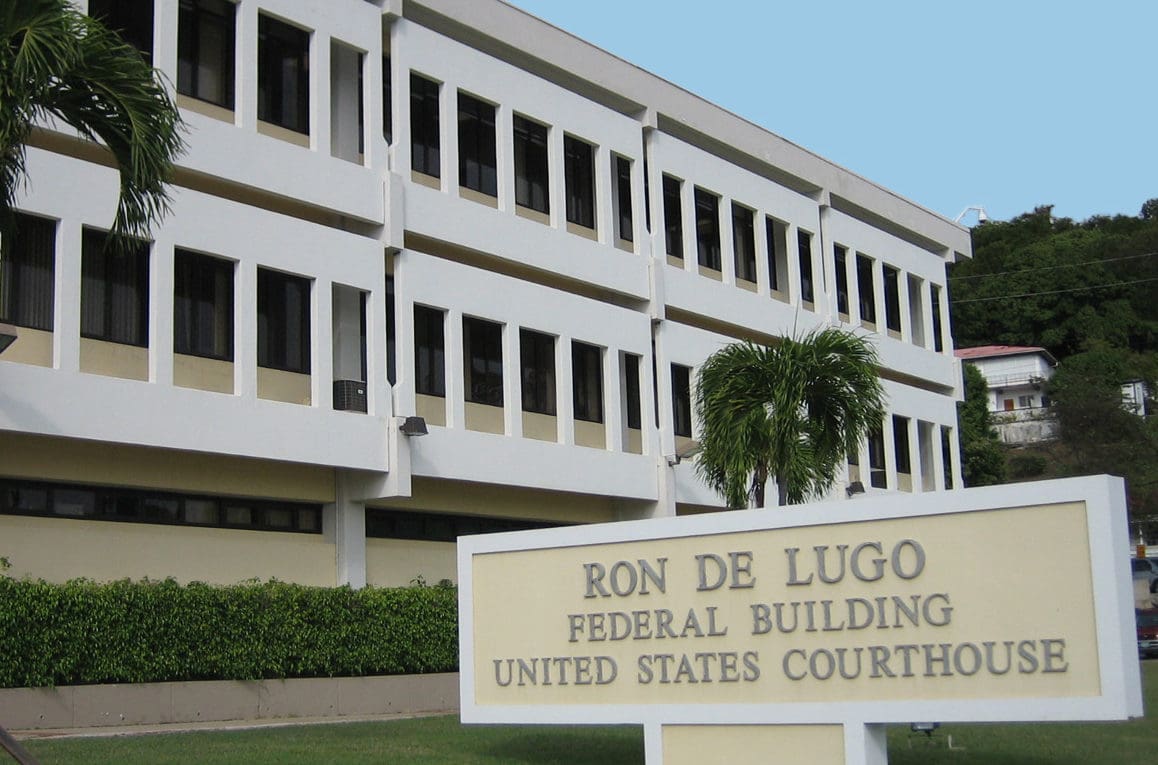
On Thursday, the federal magistrate presiding over a hearing for three people accused of sex trafficking on St. Thomas said the court found probable cause to uphold the charges. That ruling by U.S. Magistrate G. Alan Teague came at the end of two days of testimony and arguments by the legal teams involved.
In doing so, the judge rejected pronouncements made by lawyers representing Hussein Jamil, Magda Castro Santos and Julio Hidalgo de Pena. Defense attorneys said the government lacked sufficient proof that their clients broke the law.
All three are charged with conspiracy to transport women and girls to a business they ran to commit commercial sex acts. They were also charged with conspiracy to harbor aliens for financial gain and conspiracy to violate the Mann Act.
Teague said the ruling was based on an affidavit filed April 17 and testimony given at the hearing by FBI Special Agent Kiernan Whitworthy. “The court finds that there is sufficient evidence that probable cause has been found,” the judge said. He also said the ruling from the bench would be followed by a written order documenting his decision.
The Mann Act — established in 1910 — makes it illegal to transport persons across state or foreign borders for the purpose of committing sex acts. Prosecutors with the U.S. Justice Department say Jamil, Santos and de Pena used Tootsys Gentleman’s Club on St. Thomas as a place to connect exotic dancers they recruited with patrons willing to pay for sex.
Over the course of two days, lawyers for the accused cross-examined Whitworthy, the one witness put on the stand by Assistant U.S. Attorney Natasha Baker.
Attorneys Carlos Sanchez LaCosta, Raul Bandas and Robert Millan claimed details in the affidavit and heard in testimony failed to connect their clients with criminal activity. The judge explained it was a preliminary hearing and there was a low threshold needed to establish probable cause.
The three defendants were returned to detention after the hearing pending further court action.