

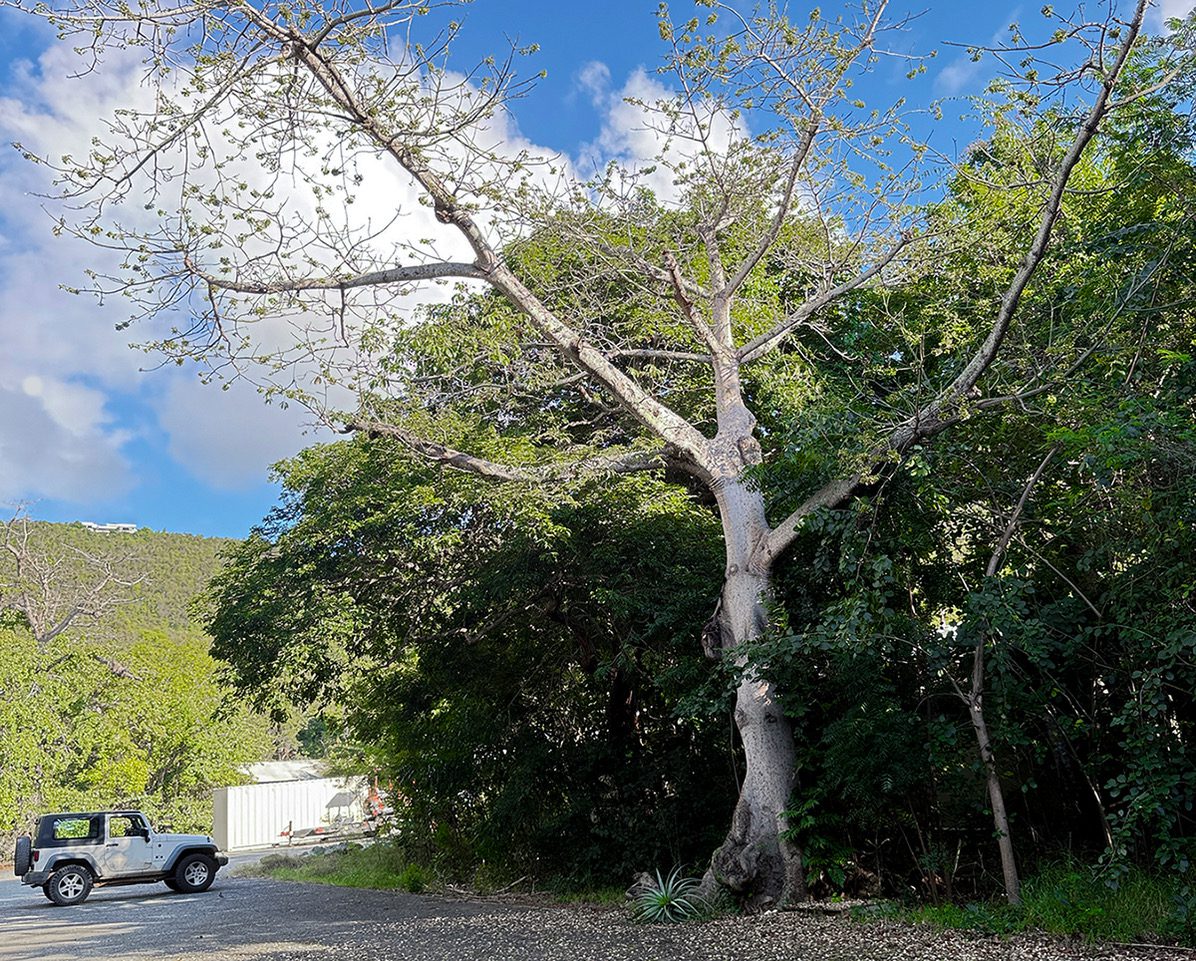
When the hurricane-damaged Caneel Bay property on St. John was opened up for limited public access, I was able to visit with some of my old friends there. I was relieved to find at least eight big kapok trees (Ceiba pentandra) in the area that used to be the employees’ parking lot.
A few of the older kapoks are looking pretty gnarly now, like those ancient sculptures with missing arms. The storm winds definitely came through fiercely and reshaped them, tearing off large branches.
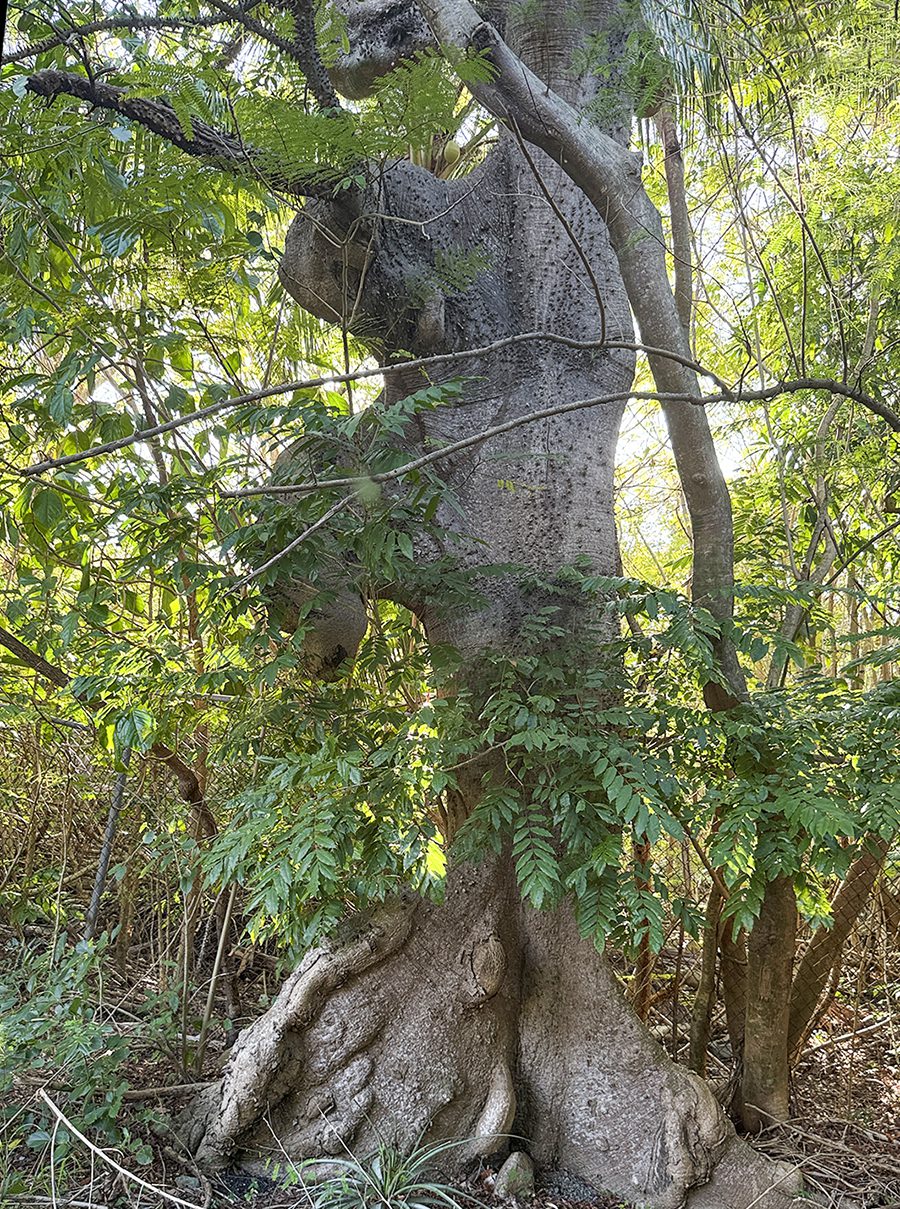
Many of the trees’ wounds have healed over in the isolated years following the storms, often leaving bulging scars where branches were lost.
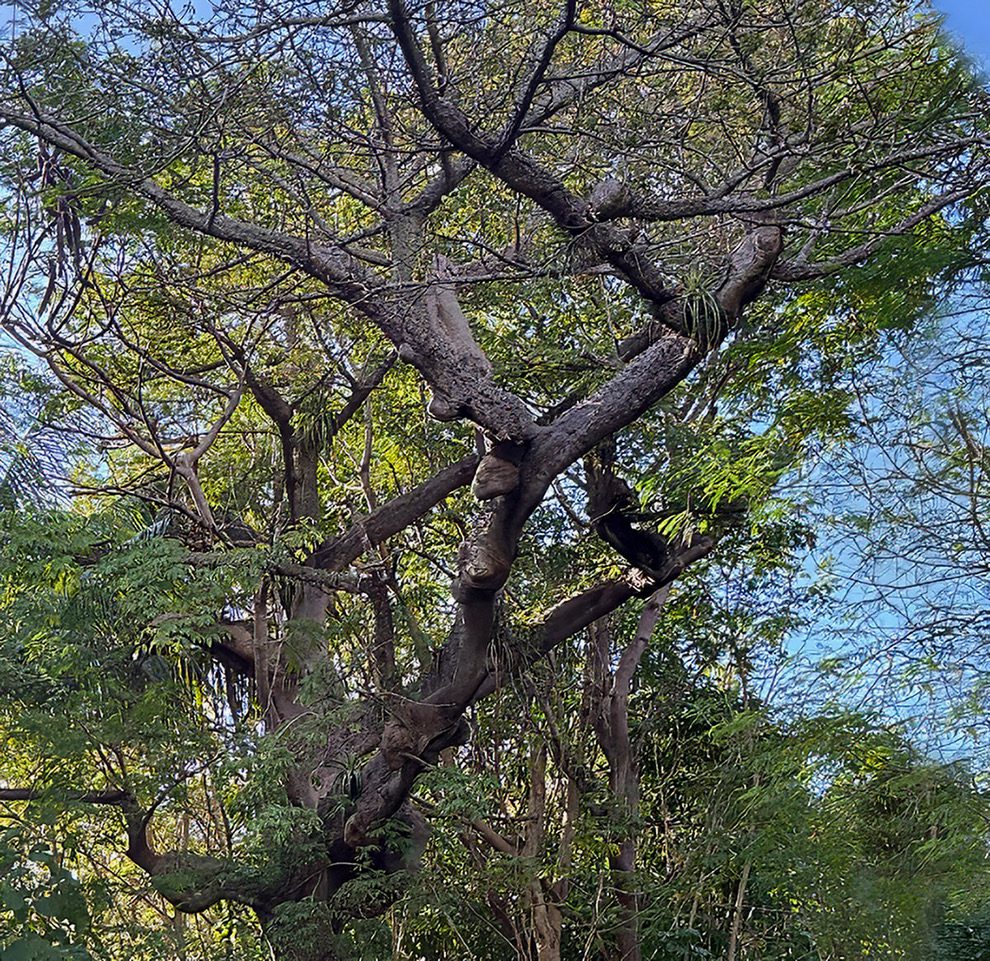
The growths where branches seem to have broken off caught my eye and began to look like fanciful faces.
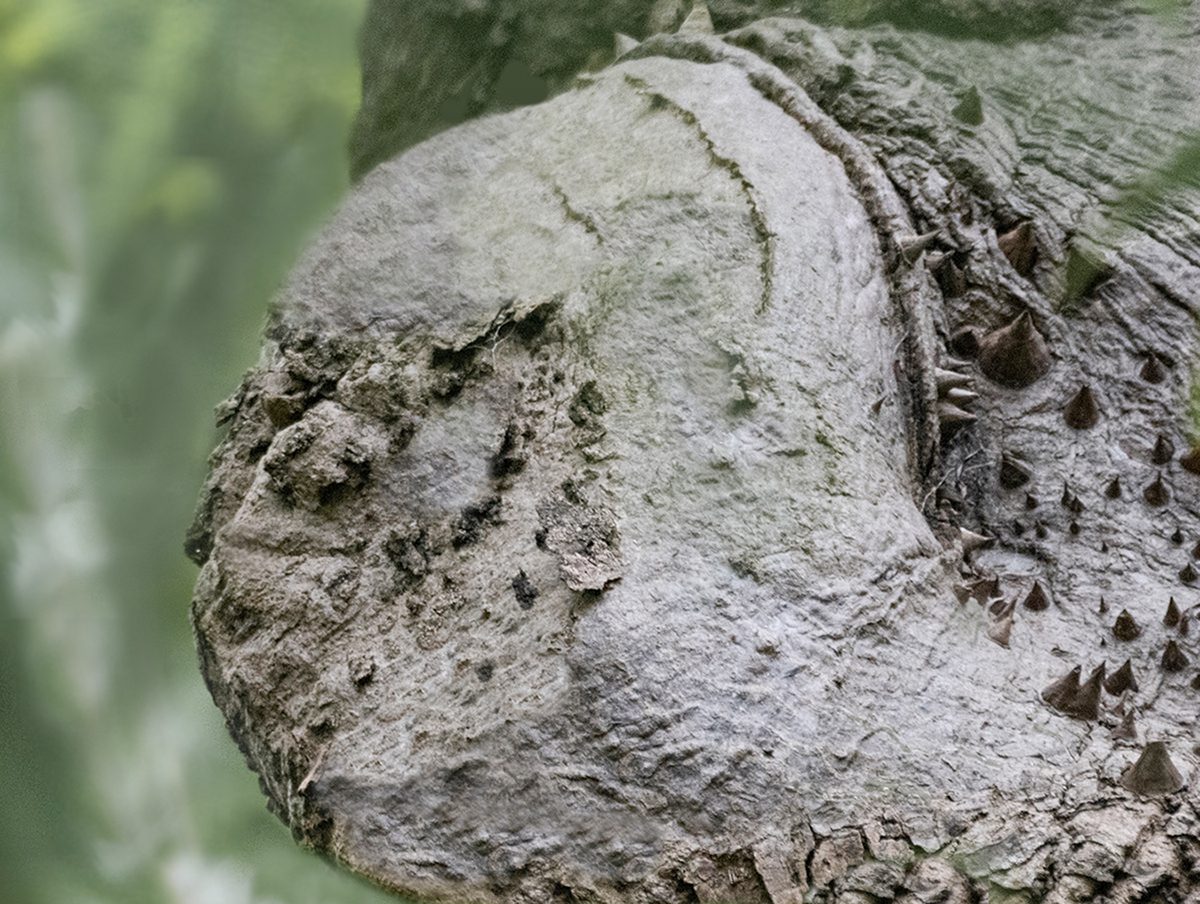
Several stumps have a protruding ghostlike appearance, like weathered gargoyles on the top of a medieval building.
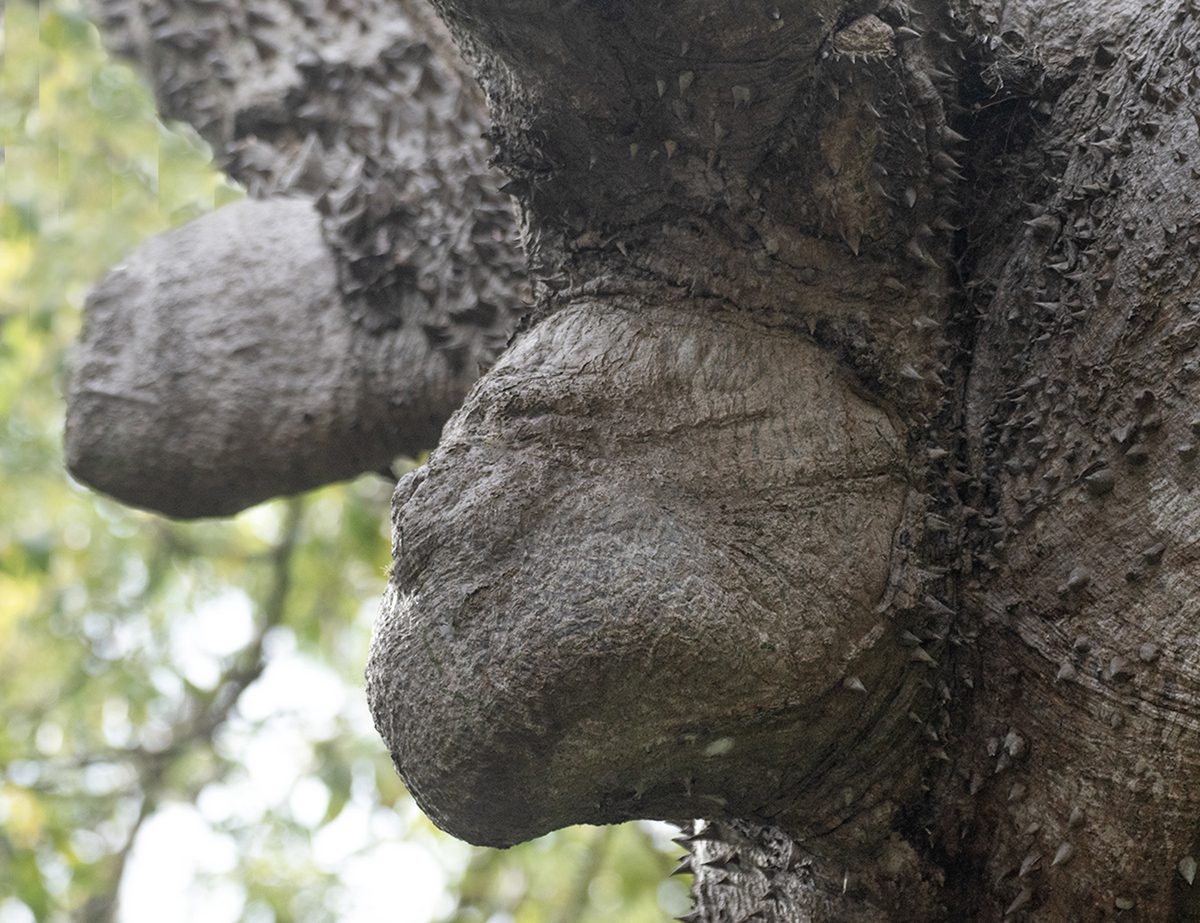
And some look quite dark and menacing, possibly threatening to hurl their seed pods down on intruders standing below in the parking lot.
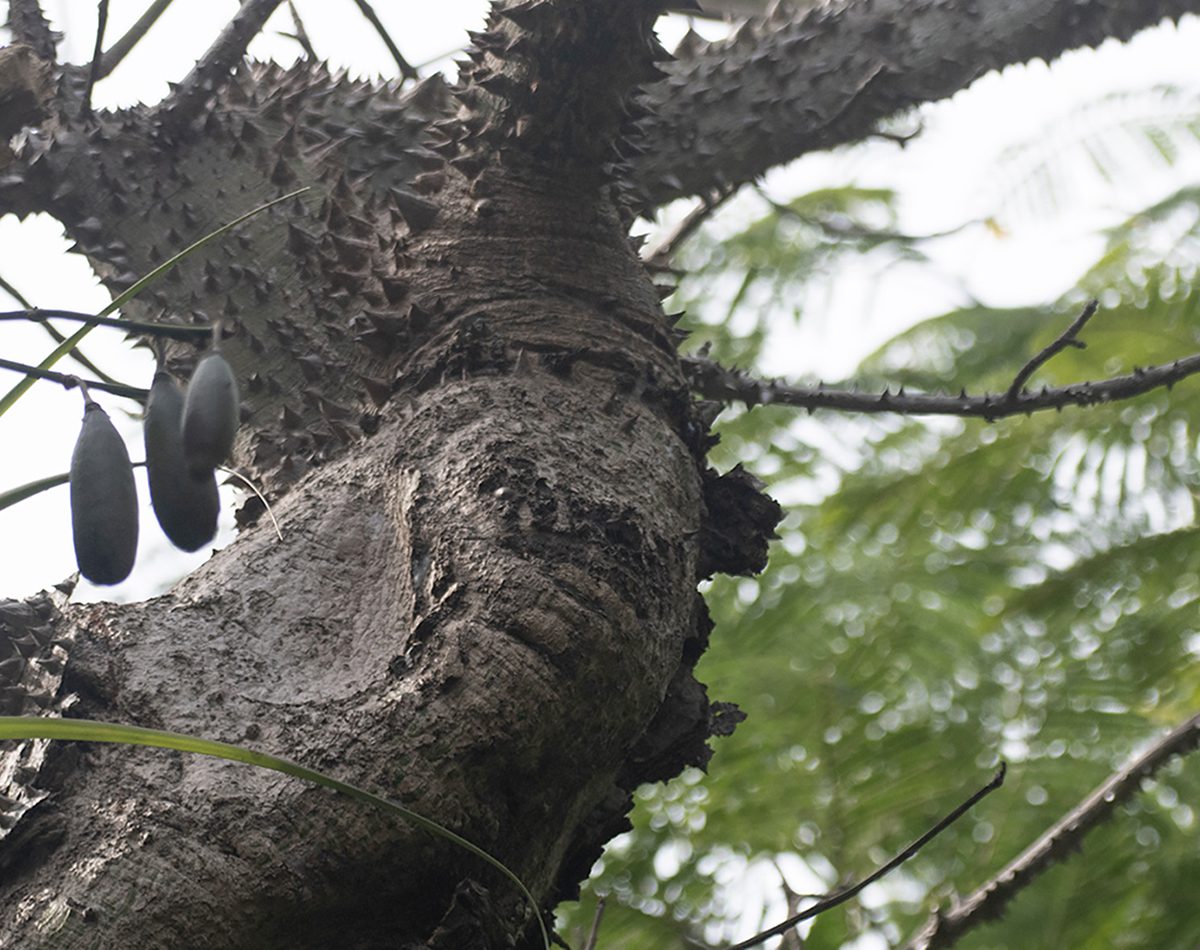
A few of the tree faces are more friendly and whimsical.
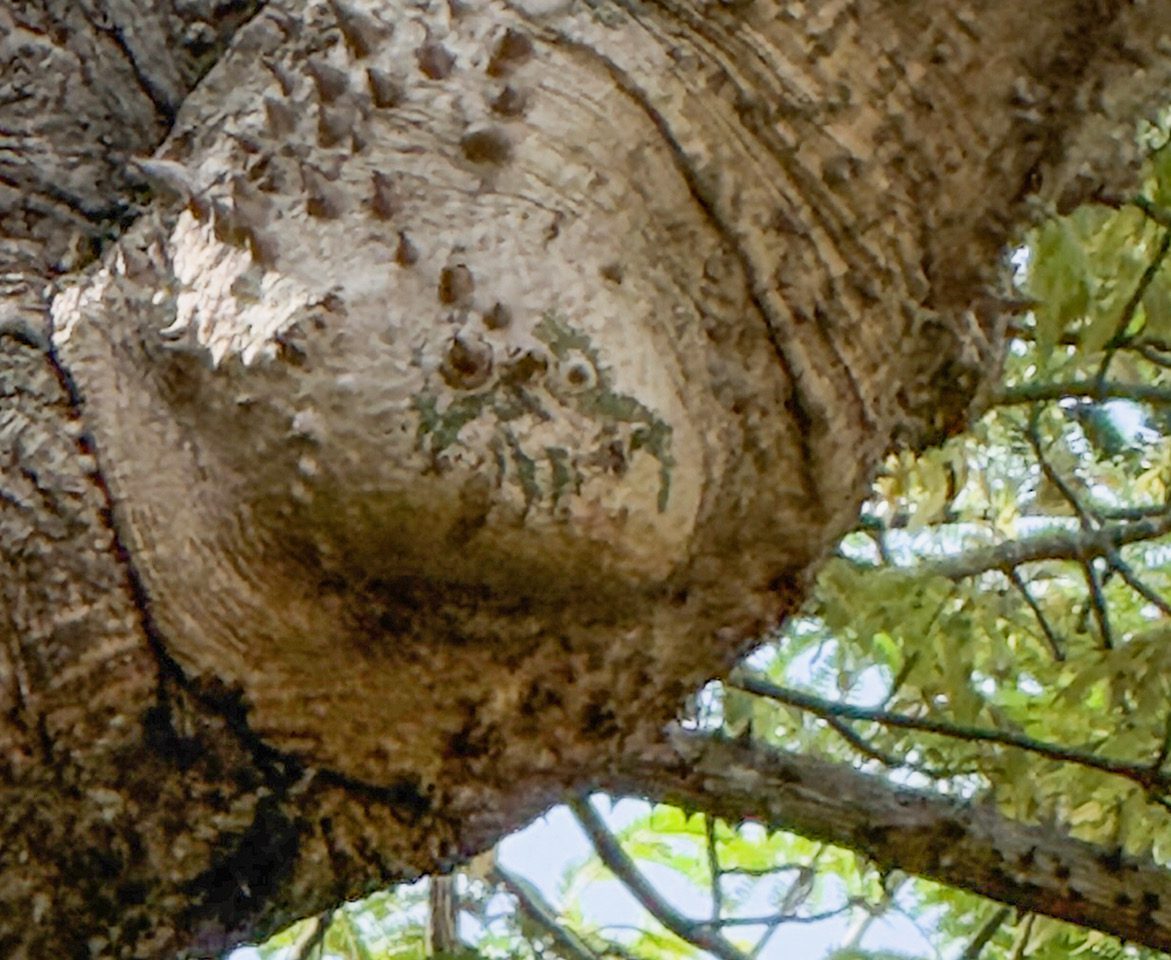
On one tree, the buttress roots at the bottom seemed to have grown out like the head of a tortoise.
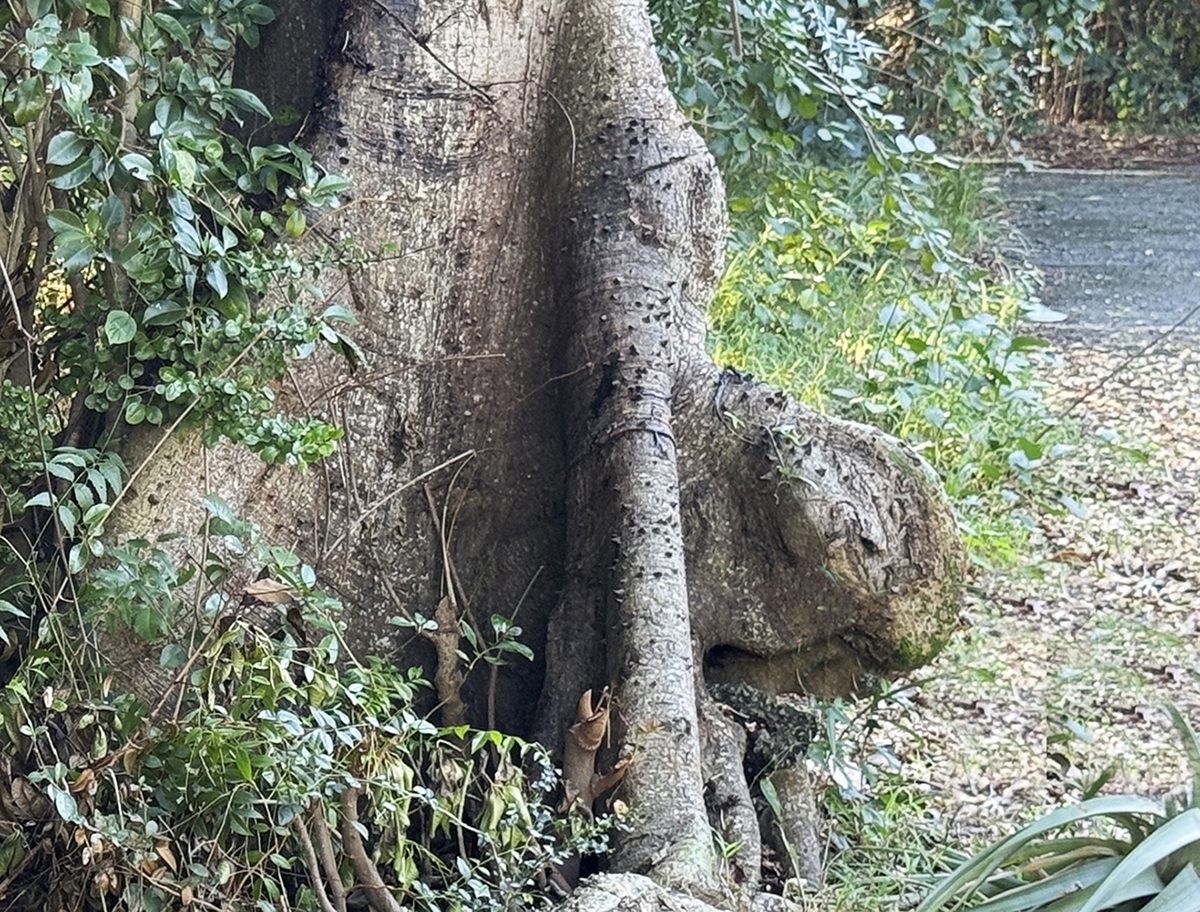
My favorite is one I used to call the elephant tree because of its really wide base, which has expanded into huge gray hump. It is now battered and partially hidden behind bushes, but still thriving, producing flowers and making seed pods.
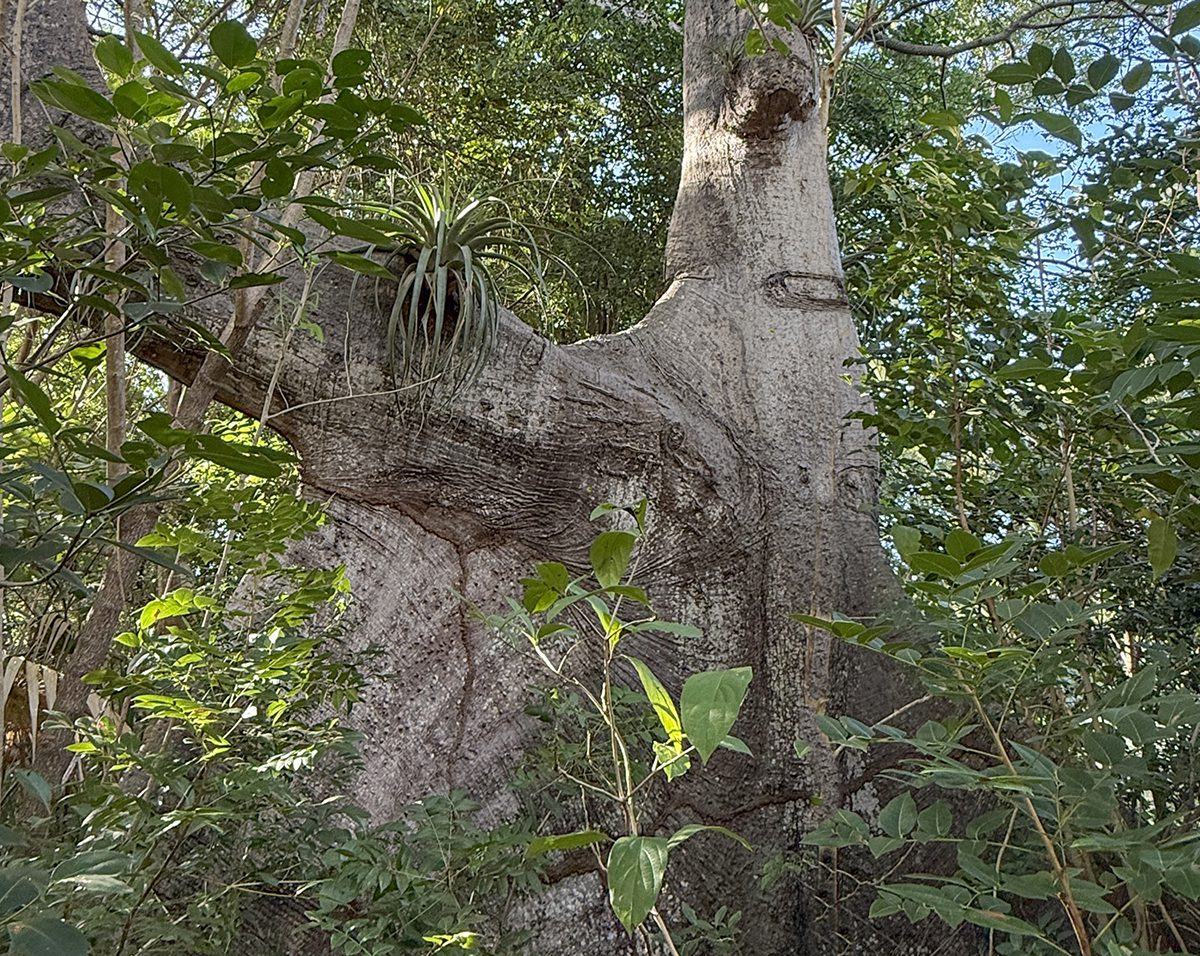
These trees are not statues, though. They are living beings – and they have definitely seen some things. I can feel their dynamic energy surrounding me when I am standing among them.
Since no one was able to visit the Caneel Bay property for many years after the storm, I imagine that the kapoks and other great trees appreciate that I remember them with fondness and have come back to look for them. But probably they were comfortable enough just being left alone, and are fine with the fact that hardly anyone sees them there, even now.
Still, I worry about their future. Who will value these dramatic trees, I wonder, and care enough to protect them. Or will they just be knocked down, because they are old and weird looking and in the way, when the plans for redeveloping Caneel Bay as a new resort are finally implemented.
——————————
Gail Karlsson is the author of a photo book Looking for Birds on St. John, as well as two other books about nature in the Virgin Islands –The Wild Life in an Island House, and Learning About Trees and Plants – A Project of the Unitarian Universalist Fellowship of St. John. Follow her on Instagram @gailkarlsson and gvkarlsson.blogspot.com. More info at gailkarlsson.com