

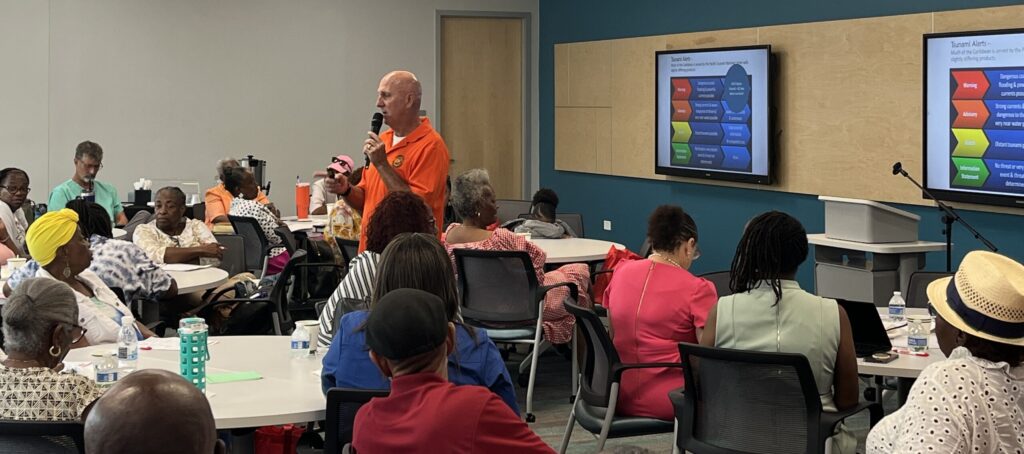
AARP Virgin Islands brought residents and emergency officials together on St. Croix Tuesday for a disaster preparedness summit focused on practical steps families can take before, during, and after an emergency.
The summit, held at the University of the Virgin Islands Medical Simulation Center, focused on helping residents prepare for, respond to, and recover from disasters. A second summit is scheduled for Friday from 9:30 a.m. to 12:30 p.m. at the UVI Innovation Center on St. Thomas.
The St. Croix agenda included scheduled presentations from Daryl Jaschen, director of the Virgin Islands Territorial Emergency Management Agency, Aesha O. Rivers of the V.I. Health Department, and representatives from the V.I. Human Services Department, the Virgin Islands Energy Office, and AARP VI volunteers and community partners.
Among the presentations, notable moments included Jaschen speaking about preparedness for disasters that can affect the territory, including hurricanes, earthquakes, and tsunamis, while emphasizing the importance of residents having plans in place before an emergency happens.
Rivers, director of the Public Health Preparedness Division at the V.I. Health Department, said disasters often bring health concerns along with them.
“With every disaster or emergency, there is a medical or health emergency, and we have to be prepared,” Rivers said.
She also discussed the Health Department’s work before, during, and after emergencies, including preparing, training, and helping the community “get ready together.”
Preparedness as Peace of Mind
In written responses to the Source, Rebecca Hughson, Associate State Director of Communication and Outreach for AARP V.I., said the most important message she hopes residents take away from the summits is that preparedness begins before a storm or emergency is on the doorstep.
“The biggest message is that preparedness equals peace of mind, and it starts now,” Hughson said. “AARP Virgin Islands wants residents to leave the summits feeling empowered, informed, and confident that even small steps today can make a big difference in protecting their families and homes. The goal is to help people understand that preparation is one of the most powerful tools we have to reduce the impact of disasters and recover more quickly,” Hughson continued.
She also emphasized that preparedness should be a year-round effort, not something residents only think about during hurricane season or when severe weather is approaching.
“Preparedness isn’t something that can be done overnight; it’s a process,” Hughson said. “The summits emphasize that taking action early allows residents to build emergency supply kits, create plans, and stay informed without the pressure of an approaching storm. Waiting until a storm is near can limit options and increase stress, while year-round preparedness helps families stay ready in a calm and organized way.”
Small Steps Can Make a Difference
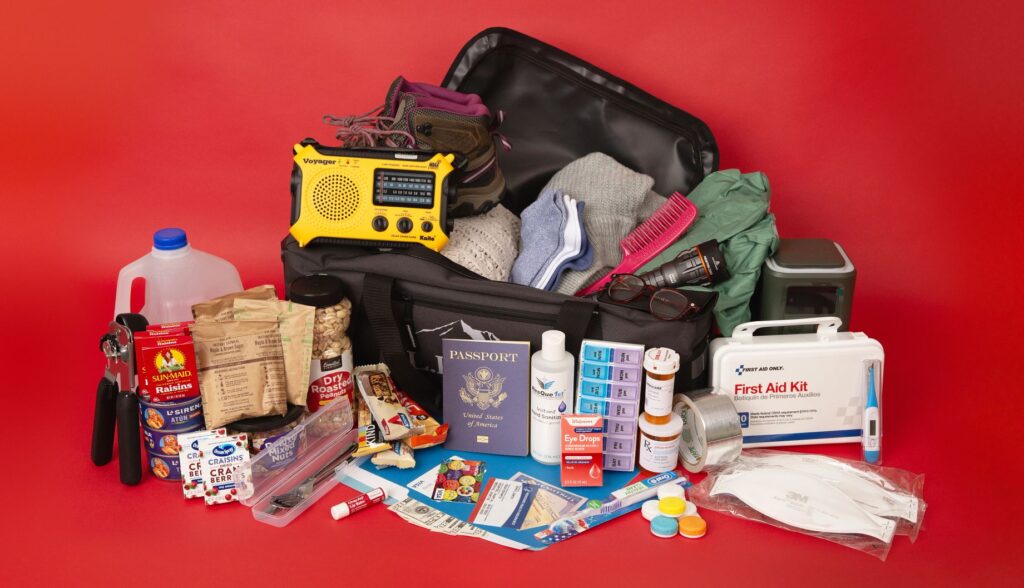
Hughson explained that some of the most important steps residents can take include building or updating a hurricane supply kit, stocking water, nonperishable food and medications, creating a family emergency plan, signing up for trusted alerts such as VITEMA’s Alert VI system, learning evacuation procedures, and preparing for pets.
Hughson added that preparedness includes the time before, during, and after an emergency occurs.
“Disaster resilience doesn’t stop when the storm passes; it’s a full cycle,” she said. “‘Preparing’ helps reduce risk and protect people and property. ‘Responding’ ensures families know what to do in the moment to stay safe. And ‘Recovering’ is critical for rebuilding, restoring services, and returning to normal,” Hughson said.
“The summits are designed to help residents understand that real resilience means being ready before, during, and after a disaster, not just reacting in the moment.”
Hughson also reminded readers that preparedness does not have to feel overwhelming.
“The message we share is simple: you don’t need to do everything at once. It is important just to get started. Preparedness is about building readiness over time, not perfection,” she affirmed.
“Start with small, simple actions, use checklists and trusted guides, break tasks into manageable steps, and focus on what can be done today,” Hughson suggested.
Supporting the Community
As the Source previously reported, information on the AARP website explains that AARP was founded in 1958 as the American Association of Retired Persons. Today, the organization goes by “AARP” to reflect its broader membership and mission. AARP serves people age 50-plus, including those who are working, caregiving, or preparing for the next phase of their lives.
“AARP VI approaches disaster preparedness with the understanding that the 50-plus community includes people in many different stages of life, including those who are working, caregiving, volunteering, and planning for the future,” Hughson said.
“Our approach to disaster preparedness reflects that diversity by providing practical tools for households and families. We offer guidance that supports caregivers and multigenerational households. Our organization addresses the unique needs of older adults, including health, mobility, and safety considerations. We also bring together trusted partners like VITEMA, the Department of Health, and the Human Services Department to ensure comprehensive, community-wide support,” Hughson noted.
“Ultimately, the goal is to make sure that every resident, no matter their stage of life, has the information and resources they need to stay safe and resilient,” she concluded.
Troy De Chabert-Schuster, state director of AARP VI, also highlighted the importance of taking simple steps before disaster strikes.
“Preparedness is one of the most powerful tools we have as a community,” De Chabert-Schuster said. “By taking a few simple steps now, families can reduce the impact of disasters and recover more quickly. These summits are about giving Virgin Islanders the knowledge, resources, and confidence to protect what matters most – before, during, and after a storm.”
For more information about AARP Virgin Islands or the upcoming St. Thomas disaster preparedness summit, visit the AARP Virgin Islands website or call 877-923-8300.