

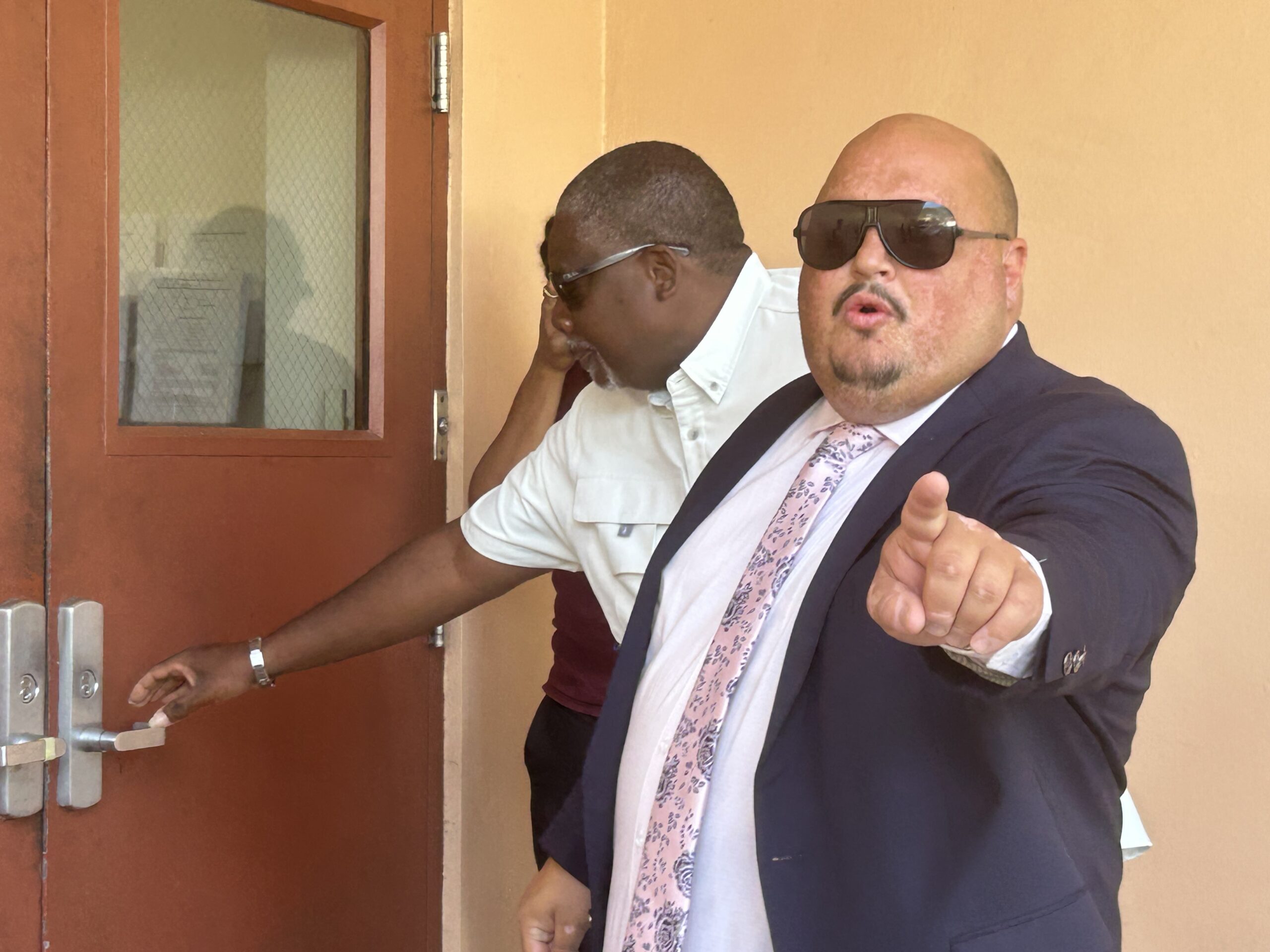
A confirmation hearing is set for Monday in Brett “Mac” McClafferty’s Chapter 13 bankruptcy proceeding in Delaware that the trustee says should be dismissed or converted to Chapter 7 because McClafferty has debts of $3.6 million that “significantly exceed” the statutory thresholds, he has “failed to provide a full and candid disclosure of his financial condition,” and may be shielding his assets and income from the trustees and creditors.
Meanwhile, the trustee in a Chapter 7 bankruptcy petition for McClafferty’s defunct Mac Private Equity company in the same Delaware court filed a status report last month claiming McClafferty “was not able to adequately answer questions of the Trustee, counsel or creditors” at a creditors’ meeting in October or in subsequent meetings. Trustee George L. Miller reported that as far as he can tell, “None of the records obtained to date demonstrate anything other than Mr. McClafferty using corporate funds for personal expenses.”
Additionally, 17 of his alleged victims — investors in Mac Private Equity who say their money vanished, including two who were awarded judgments in Virgin Islands court — have joined the call to have the Chapter 13 case converted to Chapter 7.
Common to all three filings are details of profligate spending they allege belie McClafferty’s claims of bankruptcy.
In a motion for an order to convert the Chapter 13 case to Chapter 7, attorney Michael Sheesley, representing the Mac Private Equity investors, cited as examples bar tabs exceeding $2,000 in Miami, subscriptions to OnlyFans totaling hundreds of dollars, multiple transactions at cigar lounges in Miami and St. Thomas, and Venmo transfers for “vacations” and ATM withdrawals.
“The Debtor’s expenditures, totaling hundreds of thousands of dollars spent in the year pre-petition, occurred while the Debtor testified under oath in related litigation [in the Virgin Islands] that he had ‘no money, no assets, no income,’ and lived modestly (asking if he could ‘buy a cheeseburger’),” the motion states.
In reality, McClafferty was spending on his personal lifestyle, as summarized in Wells Fargo account statements that show he had deposits totaling $414,459.15 from November 2024 through September 2025, and expenditures of $410,822.40, according to the motion.
William F. Jaworski Jr., the Chapter 13 trustee, said in his motion to dismiss or convert the case to Chapter 7 that under the “‘totality of the circumstances’ test, the Debtor’s conduct, characterized by the failure to list all assets, concealment of income, the maintenance of a lavish lifestyle, and the funding of personal political ambitions while in bankruptcy falls far short of the ‘honest debtor’ standard. Such conduct warrants immediate dismissal.”
Sheesley alleges that the timing of McClafferty’s petition — the Chapter 7 petition was filed in March 2025 and the Chapter 13 in November — “shows that he filed this Case merely to avoid further collections processes in the Virgin Islands.”
McClafferty, 38, who is facing criminal bank fraud charges in the Virgin Islands, has a criminal history in Ohio, and recently launched a campaign for Virgin Islands senator, has denied wrongdoing and, as he is wont to do, took to social media Thursday to dispute news reports about his bankruptcy cases.
“We had no obligation to ‘invest’ anything lol. That’s the part you’re missing,” he posted on What’s Going on St. Thomas, referring to the Mac Private Equity case. “Not a single one of our lending agreements obligated us to ‘invest’ anything. MPE was a startup PE [Private Equity] firm operating on a burn rate. It collapsed before it could take off. It’s a shame — but that’s life on the Serengeti; you win some, ya lose some,” he said, concluding the post with a shrug emoji.
In an objection to the investors’ motion to convert the Chapter 13 case that he filed April 10, McClafferty said they “attempt to transform a disputed business relationship with a corporate entity into personal liability of the Debtor and, in doing so, rely on unproven allegations of fraud, selective characterizations of prior litigation, and assumptions regarding intent that are unsupported by a developed evidentiary record.”
While Sheesley refers to those investors as “the McClafferty Victims,” McClafferty prefers the term “Voluntary Lenders,” saying in his motion that he “did not personally guarantee MPE’s obligations, nor did he execute the relevant promissory notes in his individual capacity. No court has entered an order piercing the corporate veil of MPE or otherwise imposing personal liability on the Debtor for MPE’s debts.”
Due to “the combined effects of inflation, a struggling economy, and the costs associated with ongoing litigation, Mac Private Equity never achieved success and instead became insolvent,” according to McClafferty’s filing. In fact, he claims he is owed $460,000 by Mac Private Equity and $70,000 by Social Hospitality Group, the parent company of St. Thomas Social, the restaurant in Yacht Haven Grande he co-owns with business partner Sunil Sharma, according to court filings.
The Mac Private Equity investors, whose civil cases against McClafferty in the Virgin Islands are stayed during the bankruptcy proceedings, disagree with that assessment.
“The Debtor’s debts to his largest block of creditors (the McClafferty Victims) are for monies obtained by fraud or, in one case, intentional torts. The Debtor’s scheme was simple: give me money now, I’ll invest it and give you back more money later. There is no evidence anywhere that the Debtor or MacPE ever made a single investment with the McClafferty Victims funds,” the motion states.
“The Debtor has treated the McClafferty Victims and his other creditors atrociously before and during this Case. He has lied under oath, used the territorial and federal courts of the Virgin Islands — and now the United States Bankruptcy Court for the District of Delaware — to play games, delay and hinder the McClafferty Victims’ recoveries. His outright disregard for his duties as a bankruptcy debtor can only be seen as willful and malicious,” it says.
“There is still much to do in this Case. Conversion to chapter 7 will enable the Debtor’s creditors, including the McClafferty Victims a single forum to achieve a global resolution,” it concludes.