

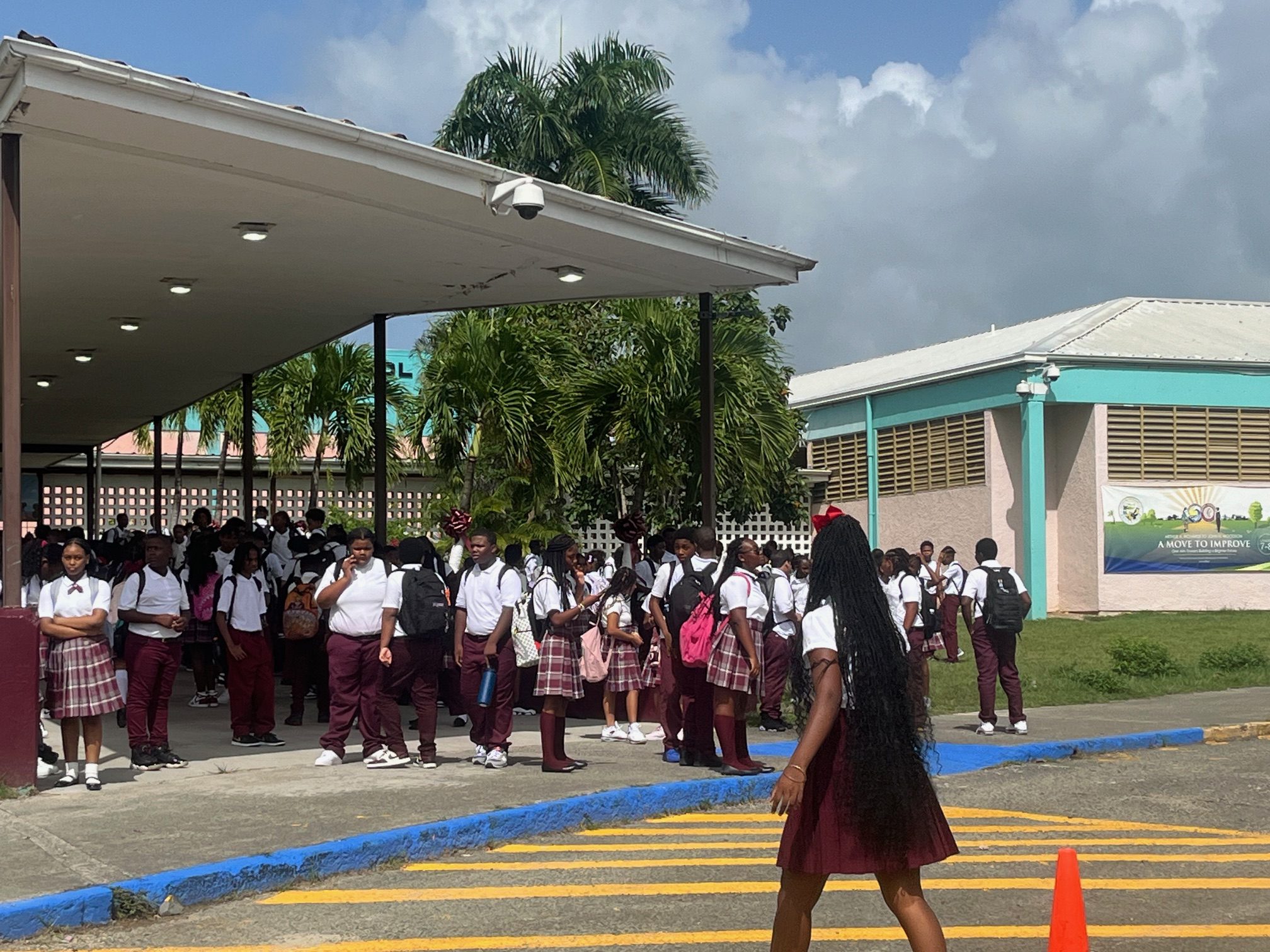
With tensions rising over the future of John H. Woodson Junior High School students, the Virgin Islands Board of Education convened an emergency meeting Thursday evening via Microsoft Teams to confront growing concerns about a proposed campus relocation and broader redistricting plans.
Board members engaged in a detailed and, at times, pointed discussion over the proposed relocation of seventh and eighth-grade students from John H. Woodson Junior High School to the Eulalie Rivera K-8 School. Several members placed their concerns directly on the record, questioning both the decision-making process and the readiness of the receiving campus.
Member Winona Hendricks opened the discussion by referencing what administrators shared during a recent school visit.
“When we visited Woodson, the administration indicated that they did not want to be removed and relocated to an elementary school setting,” she said. “They felt it was inappropriate for a junior high school, especially given their strong involvement with sports and other community activities.”
Chairman Kyza Callwood then questioned whether those concerns had formally reached the Department of Education.
“Do you know if the principal spoke with the superintendent or the commissioner?” Callwood asked.
The response indicated that school leadership had raised their objections at the commissioner level. Callwood emphasized the need for clarity before drawing conclusions.
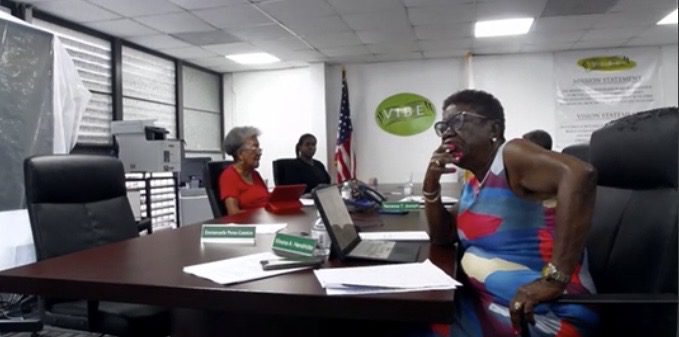
“We need to find out from the commissioner exactly what was discussed,” he said. “Why was that school selected over another school? How was the decision made? Is it already set in stone?”
Vice Chair Emmanuella Perez-Cassius stressed the importance of transparency and inclusion in the decision-making process.
“When I saw the concerns raised in the email, I felt it was important for us to look into this collectively,” she said. “We’re hearing from teachers while we walk through the schools about their challenges, but we don’t have information to share with them. We, as board members, also need to be informed.”
Member Mary Moorhead clarified her reasoning for supporting the special meeting request.
“My intention in signing the request was that this is a time-sensitive decision,” she said. “Parents have to prepare uniforms. They have to understand where their children are going. We should have a position as a body on what is best for the seventh and eighth grade students.”
Moorhead also questioned what she described as a shift in prior expectations.
“It was always my understanding that the Woodson students would be enrolled in the new Arthur Richards school,” she said. “If you have a new school designed to accommodate those students, why move them to a campus that lacks a gymnasium, cafeteria, and auditorium?”
Member Abigail Hendricks Cagan echoed those concerns.
“You’re putting middle schoolers into a school that was designed for elementary students. It just doesn’t fit,” she said. “We’re moving them from one bad situation to what could be worse.”
Callwood noted that he listened to a Feb. 5 Senate hearing where Commissioner Dionne Wells-Hedrington outlined plans to accommodate 441 seventh and eighth-grade students, along with 76 faculty and staff members, one dean of students, and two school administrators. According to Callwood, the commissioner cited environmental concerns at Woodson as the primary reason for relocation and stated that Eulalie Rivera had sufficient capacity to absorb the students.
As debate intensified, Moorhead introduced a motion objecting to the relocation.
“Given the lack of appropriate facilities for seventh and eighth graders at Eulalie Rivera, the board objects to the relocation,” she stated.
The motion faced immediate resistance.
“I think it’s premature because we don’t have all the information,” Callwood said. “We have a meeting coming up with the department. Once the commissioner officially tells us that this is their decision, then this motion would be appropriate.”
Perez-Cassius agreed.
“We did write a letter to the commissioner. We asked her to come before us,” she said. “I think we ought to allow both the commissioner and the Bureau of School Construction to present and then make an informed decision.”
Following a roll call vote, the motion failed.
The conversation then shifted to broader redistricting concerns. Hendricks emphasized the importance of timely communication with families.
“Parents need early notification,” she said. “They need to know where their children will attend so they can get the correct uniforms and prepare for the school year.”
She also linked redistricting decisions to attendance and student support services.
“We’re hearing about students who are chronically absent because of transportation,” Hendricks said. “Redistricting isn’t just about where you live. It has to take into account attendance, services, and student needs.”
Perez-Cassius raised concerns about potential impacts on high school seniors.
“We have seniors who have been in their schools for three years,” she said. “Are we going to separate classes of 2026 or 2027? We need to know if that’s being considered.”
Moorhead added that department employees could also be affected.
“There are department employees who rely on waivers to keep their children near their work locations,” she said. “Eliminating waivers creates serious challenges.”
Throughout the discussion, Callwood underscored the need for verified information before the board adopts a formal position.
“We need to hear from the commissioner,” he said. “We need clear, factual information so the board can make an informed decision.”
The board confirmed that Commissioner Wells-Hedrington will appear before members on March 12 at 2 p.m. to present details on the proposed relocation and redistricting plans. At that time, the board is expected to determine its formal position moving forward.