

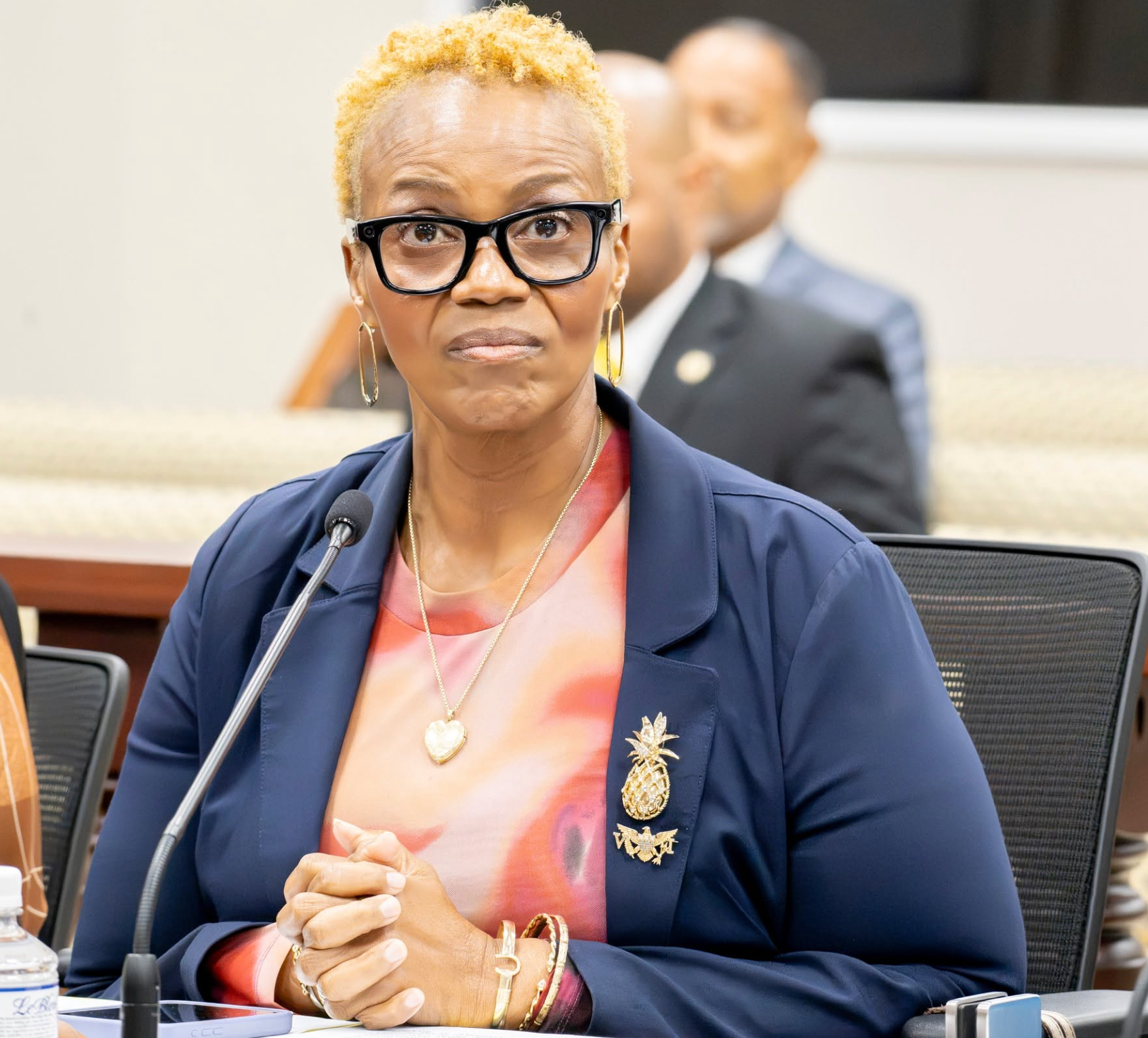
The Virgin Islands Bureau of Corrections has reached 66% compliance under long‑running federal settlement agreements, with St. Croix medical and dental oversight terminated after decades of monitoring, Corrections officials told senators Thursday.
The Senate Homeland Security, Justice and Public Safety Committee reviewed the bureau’s progress under the consent decrees, along with ongoing challenges involving staffing shortages, inmate healthcare, facility conditions, capital projects and the territory’s continued reliance on off-island inmate housing.
Director Wynnie Testamark said the District Court of the Virgin Islands terminated medical and dental oversight requirements at the John A. Bell Adult Correctional Facility on St. Croix in 2025 after more than four decades of federal monitoring.
Quality Assurance Manager Tamara McIntosh-George told lawmakers the Bureau of Corrections is “at 66% overall compliance for the settlement agreement,” with remaining provisions in safety and supervision, mental health and suicide prevention, fire and life safety, environmental health and safety, and training.
She said the bureau is “moving towards the termination, or the conversation of termination for classification, grievance system and training,” but added that “it is a process” that will require monitors and legal counsel to draft supporting documentation.
Despite improved compliance, the territory continues to pay approximately $1.2 million annually for the independent monitoring team. Testamark said the cost has not decreased because it is based on an agreement between the court, monitors and the territory.
Testamark said staffing remains a concern, saying “our numbers are low, and the goal is for us to increase the staffing.” She said the Bureau has 28 sworn correctional officers in St. Thomas and 43 in St. Croix. Kyza A. Callwood, chief strategy officer, said the agency has 69 total vacancies, including 31 correctional officer positions.
Callwood said 28 correctional officers are eligible for retirement, including 19 on St. Croix and nine on St. Thomas. Sen. Franklin D. Johnson noted that those potential retirements could affect nearly half of St. Croix’s correctional officer workforce.
Callwood said the bureau has recruited 25 correctional officers since 2019, including 11 on St. Croix and 14 on St. Thomas, with three of those recruits leaving the agency.
Testamark said the bureau recently completed a staffing analysis required under the consent decree and is awaiting the final report.
The bureau highlighted updates to inmate healthcare, including electronic medical records, telemedicine, telepsychiatry, expanded dental services and increased clinical oversight.
Testamark said the bureau has “significantly modernized correctional healthcare” through those upgrades and expanded services. She said the bureau spends more than $1 million annually on inpatient and outpatient medical care and that about 40% of inmates receive some form of mental health treatment.
The bureau reported 353 inmates in custody, with 184 housed locally and 169 placed in off-island facilities. Testamark said 79 inmates are housed at the Criminal Justice Complex on St. Thomas and 105 at the John A. Bell Adult Correctional Facility on St. Croix.
She said “the territory needs a facility that’s able to take care of the individuals, a different classification of the inmates,” including high, medium and low custody and protective custody, and that “currently the territory does not have facilities to meet those obligations,” contributing to continued reliance on off-island housing.
Senators questioned the long-term use of off-island facilities. Testamark said families can communicate with inmates daily by phone and that relatives “are able to speak with them free,” along with scheduled in-person and virtual visits.
Testamark said the Criminal Justice Complex still needs major repairs from the 2017 hurricanes, including electrical, plumbing, and other infrastructure upgrades. She also updated senators on the Swan Annex replacement, saying FEMA has obligated $25 million for a new 207‑bed facility and that design work is complete under the Office of Disaster Recovery.
Sen. Franklin D. Johnson said he found the Swan Annex site unsecured with medical records accessible inside the building, warning the situation could violate inmate privacy protections and urging the bureau to secure the facility. “These are some serious violations,” Johnson said.
Committee Chair Sen. Clifford A. Joseph Sr. directed Testamark to work with the Office of Disaster Recovery and the Property and Procurement Department to secure the site and records.
Officials confirmed John A. Bell does not currently have a sprinkler‑based fire suppression system and instead relies on smoke detectors, alarm systems and fire extinguishers. Testamark said the bureau also has an agreement with CoreCivic to relocate inmates off island if major storms damage local facilities.
Testamark said the bureau’s three‑year recidivism rate increased from 11% to 18%, adding that some individuals return to custody because they feel “they are better taken care of in the facilities versus on the street.”
Sen. Ray Fonseca said that, combined, criminal justice agencies form “the largest group of spending in the whole Virgin Islands government budget” and called for greater efficiency.
The committee ended the hearing with a mixed view of the bureau’s progress, acknowledging gains in federal compliance and healthcare while underscoring unresolved questions about staffing, aging facilities and the long-term use of off-island prisons.