

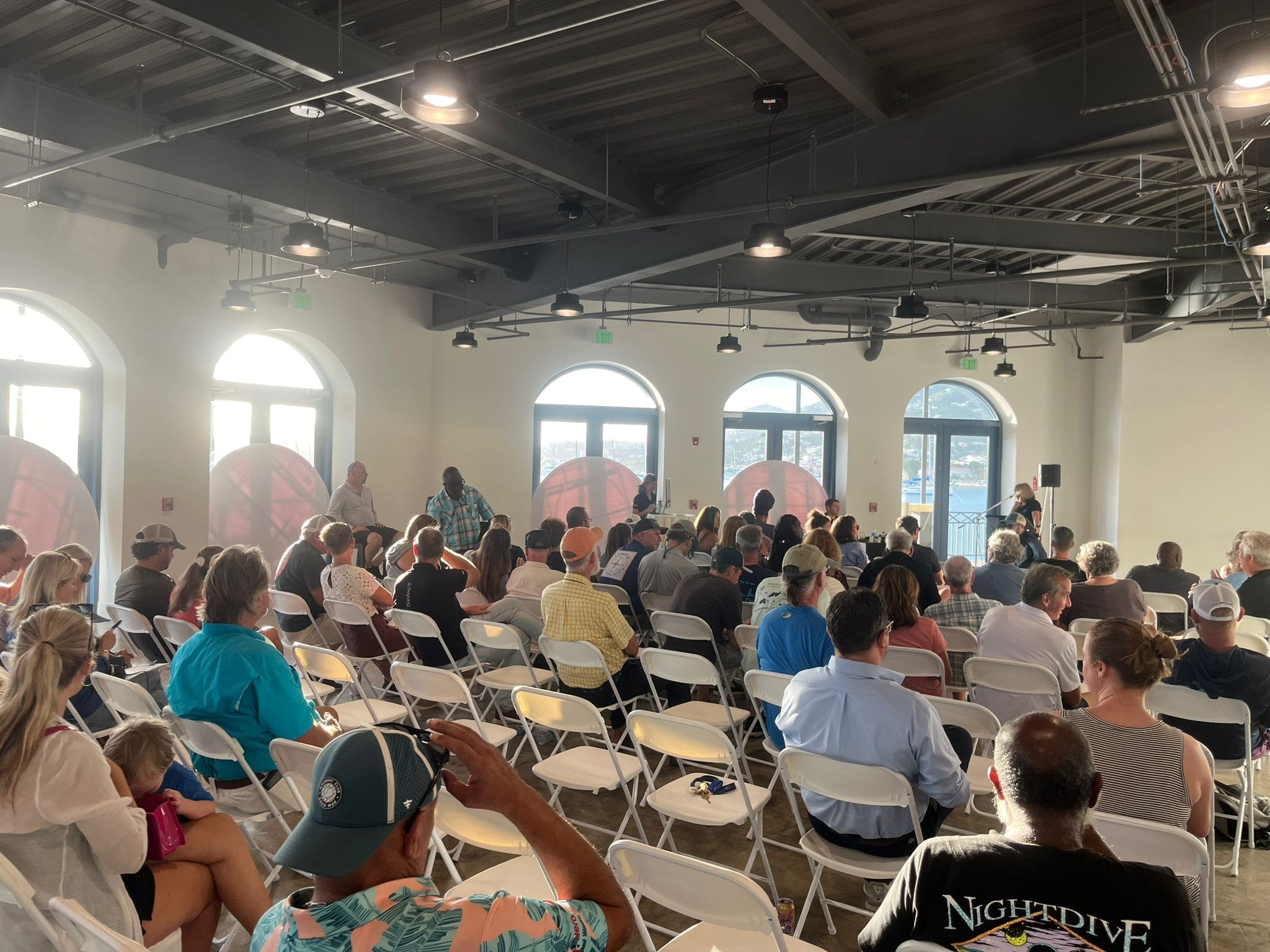
The Virgin Islands Professional Charter Association (VIPCA) held a town hall meeting Tuesday to discuss the high fee increases in the BVI Commercial Recreational Vessels Licensing (Amendment) Bill 2024 and the BVI Cruising And Home Port Permit (Amendment) Bill 2024 for operators of U.S. Virgin Islands charter vessels entering the British Virgin Islands.
The meeting, held at Harbor 360 in Yacht Haven Grande, St. Thomas, hosted over 80 people and more online via Zoom. According to the town hall press release, the proposed increases for operators of USVI-based charter boats may soon have to pay up to $24,000 per boat, which is a 2,900 percent increase for term charters and an increase of 6,150 percent for day charters to enter BVI waters. It was also noted that the charter yacht industry currently contributes over $90 million to the USVI’s marine tourism sector.
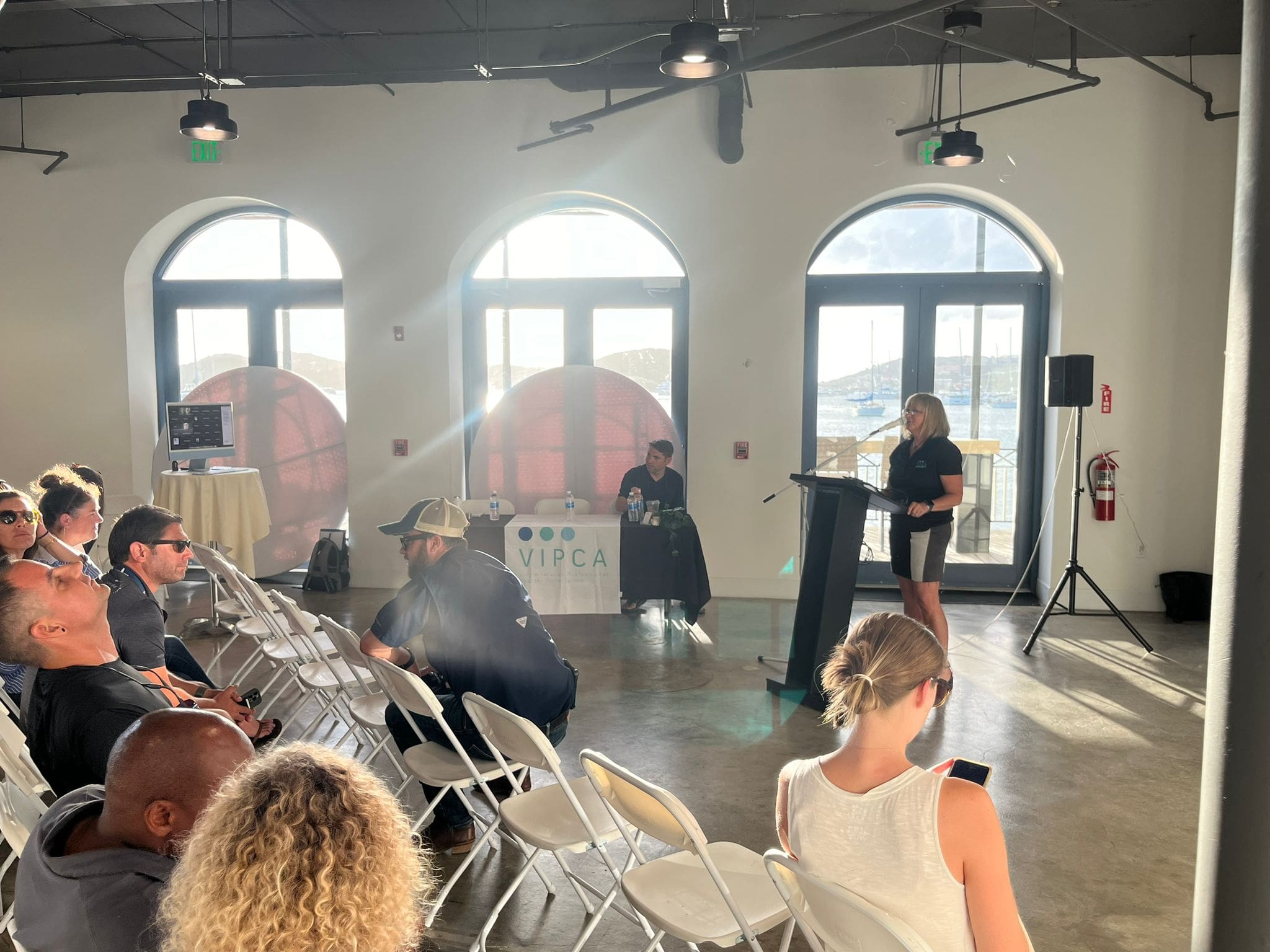
Staci Smith, executive director for the VIPCA, spoke about the fees and said the challenges surrounding them “are not new.” She added that Tuesday’s town hall pushes “for better representation at the government level” and to discuss the impact that the fee increases have on the territory.
Mark Eddy, chair for the VIPCA executive committee, said that the impact is not only on yacht charters but “on the wider economy.”
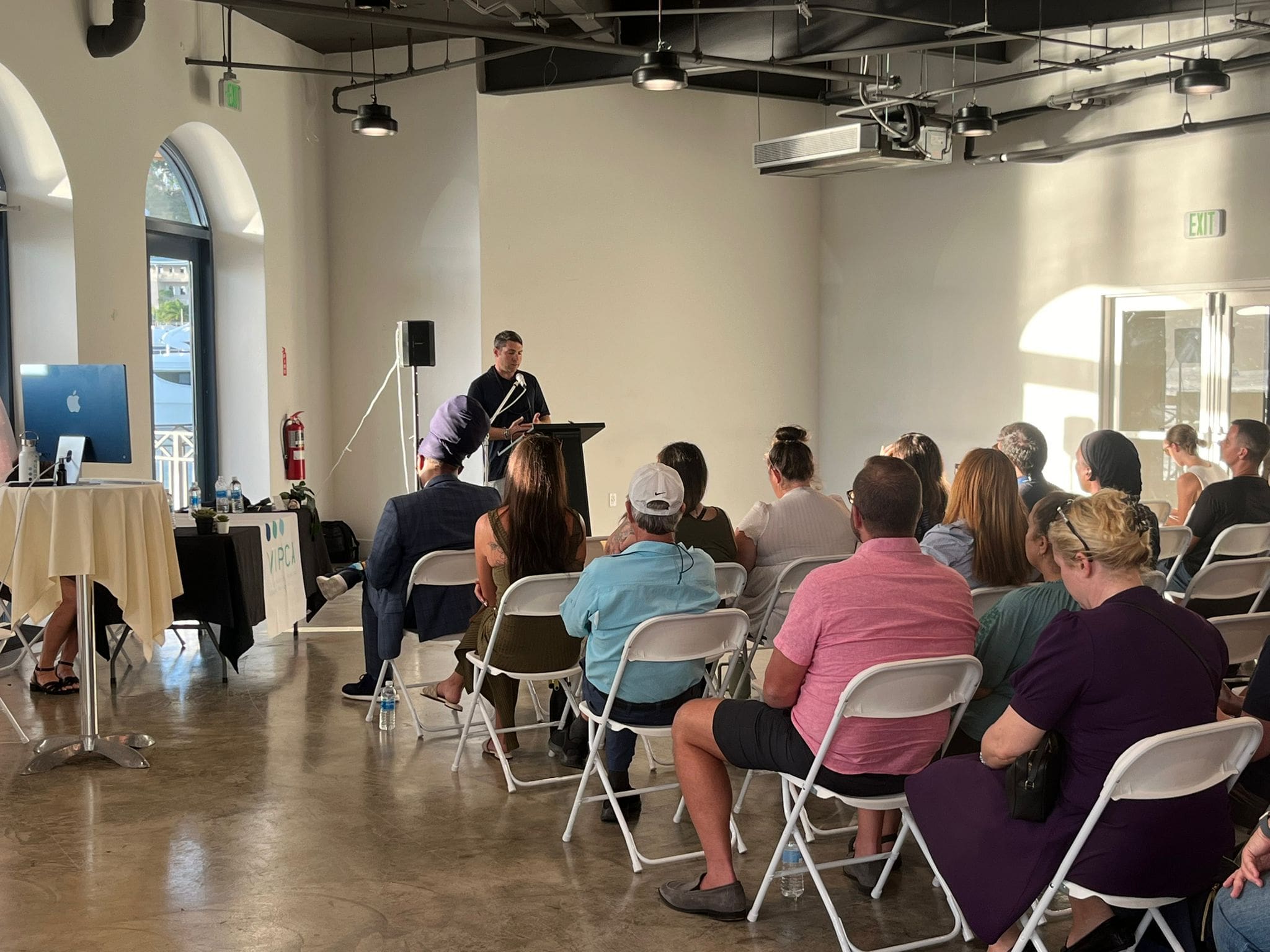
To address the concerns, Eddy said that first, “We need to identify a champion in the USVI that will understand and take feedback from the public to include more rational suggestions when it comes to reform.” He added, “This is not an us versus them conversation.” Eddy concurred in his sentiments with Smith that “the bulk of today’s content is you, the community,” and that it is important to have representation to legislate with the BVI government on the matter.
Andrew Ball, president of the Marine Association of the BVI, whose organization closely mirrors the responsibilities of the VIPCA, also addressed the town hall.
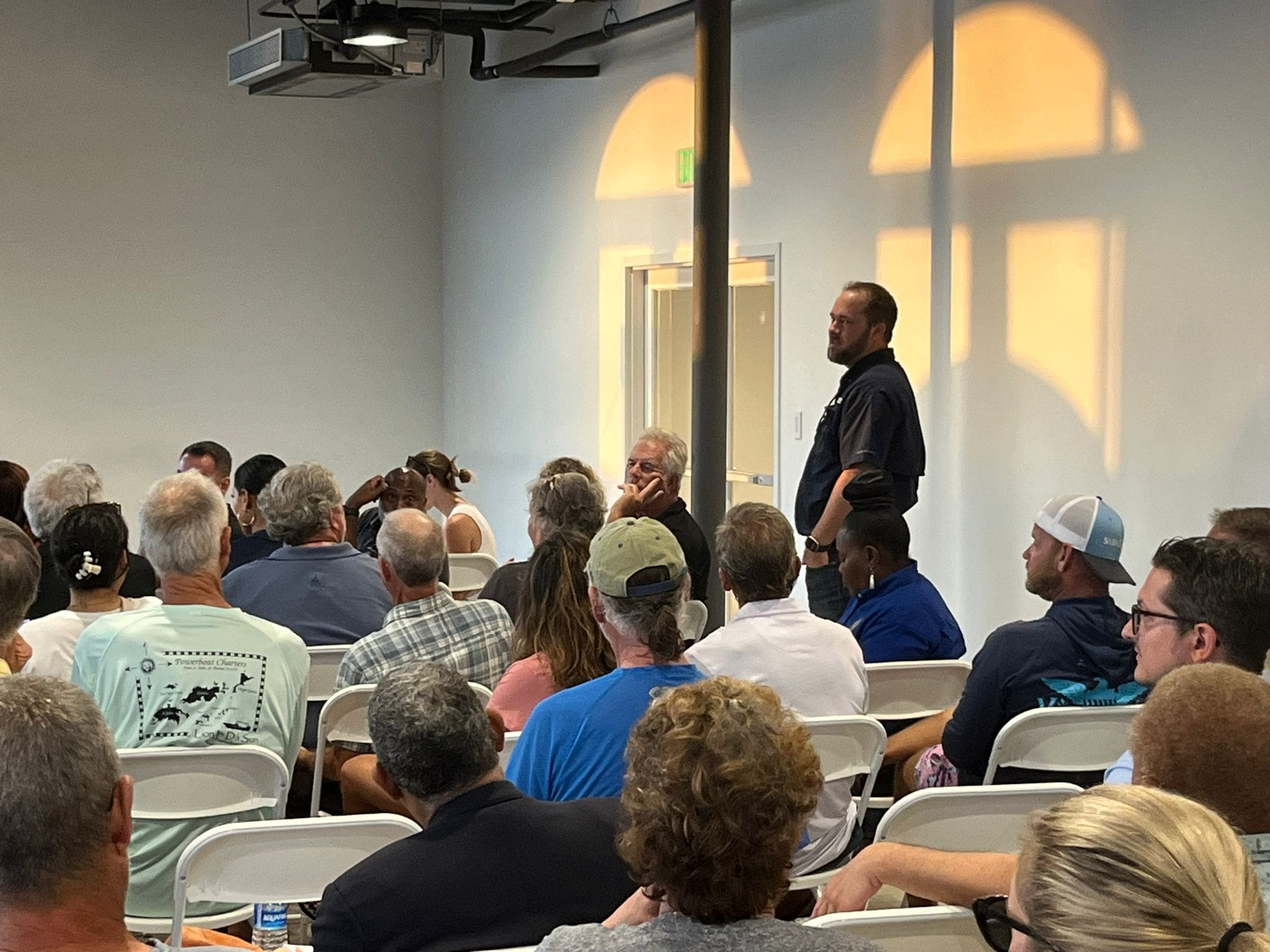
“For a long time this has been a discussion for many years,” said Ball. He said the challenge is “getting many sub-sectors together. [There are] many different needs and wants that don’t always balance,” said Ball. “We’re working together and let’s move forward.”
Jared, an attendee at the town hall, addressed the audience and said, “It’s obvious they’re trying to protect their industry and grow their government,” referencing the BVI.
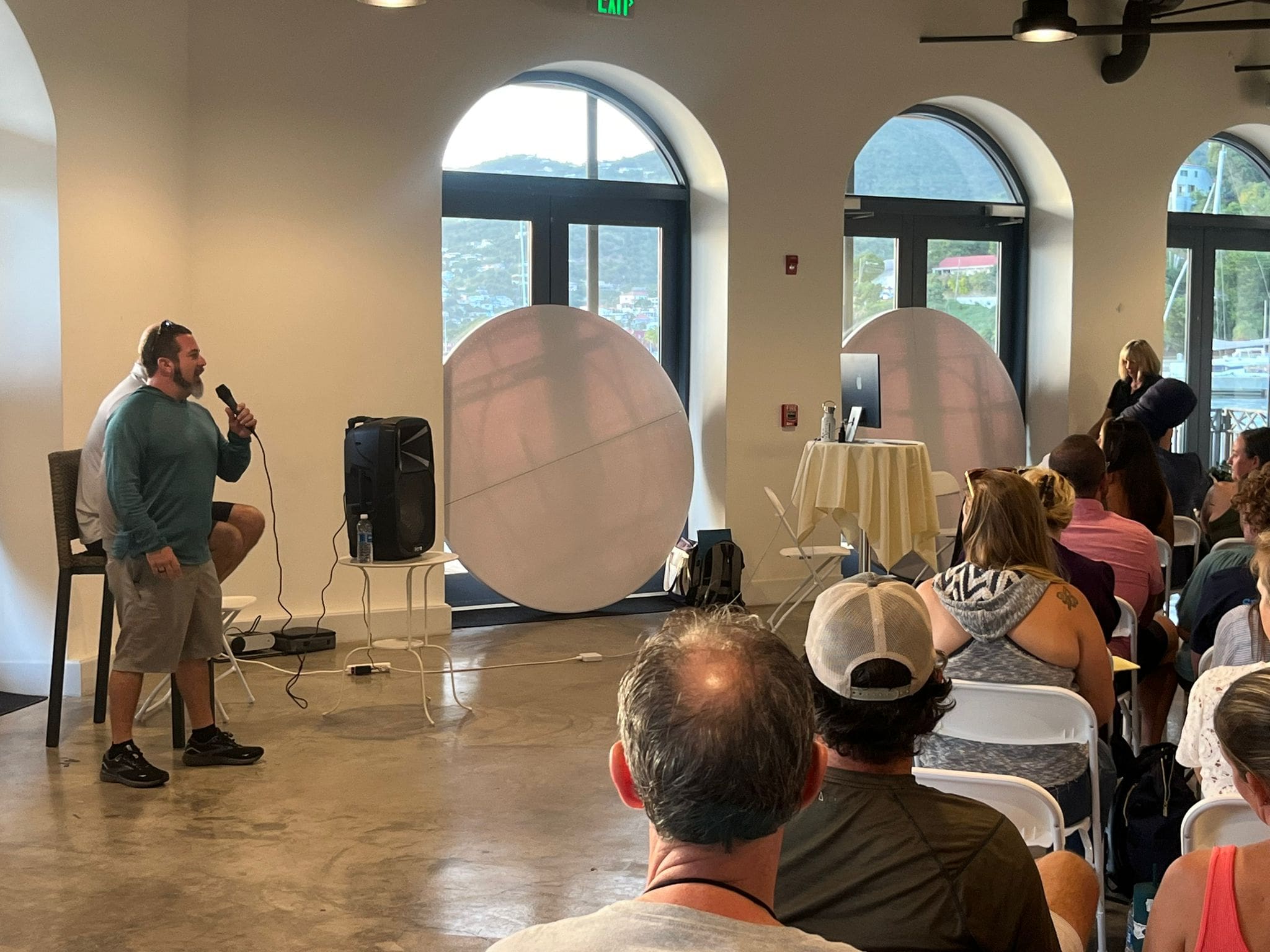
Jared also spoke about the exorbitant fees and said that the USVI government should also implement fee increases in response.
“On the local level we do have Port Authority. Port Authority collects fees when we enter back into the U.S. side. The British Virgin Islands don’t care. They’re not involved in this, they don’t see our industry, they don’t care about our industry,” said Jared. “If we had some sort of retaliatory proposal, that might make the British Virgin Islands think twice.”
Another town hall attendee, who identified himself as Aubrey, said, “We seem to go down the same road every time.”
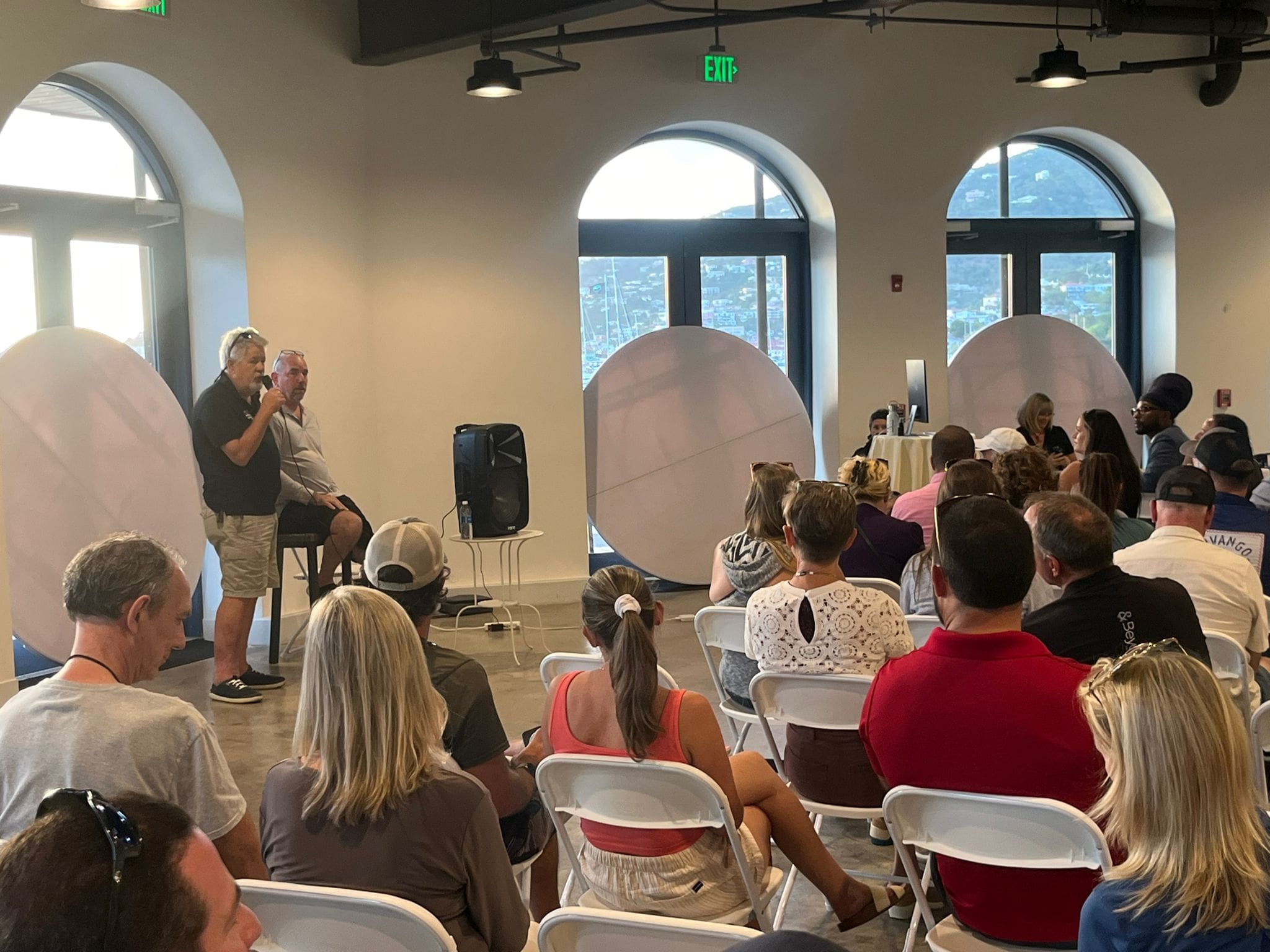
For 38 years, Aubrey said that he has listened and attended meetings, however, no changes in regard to fees have been made to benefit the territory.
“The only government involved is the BVI government,” said Aubrey. He spoke about the demise of the fishing club in the territory and said, “The government never valued the fishing club, and we no longer have it. It’s gone to the BVI.”
Eddy responded that a long-term solution is needed and that they cannot just keep kicking the can down the road.
Andrea King, president of Island Yacht Charter, also spoke during the meeting. She said her organization has been doing business for 47 years and owns the largest charter company in the Virgin Islands.
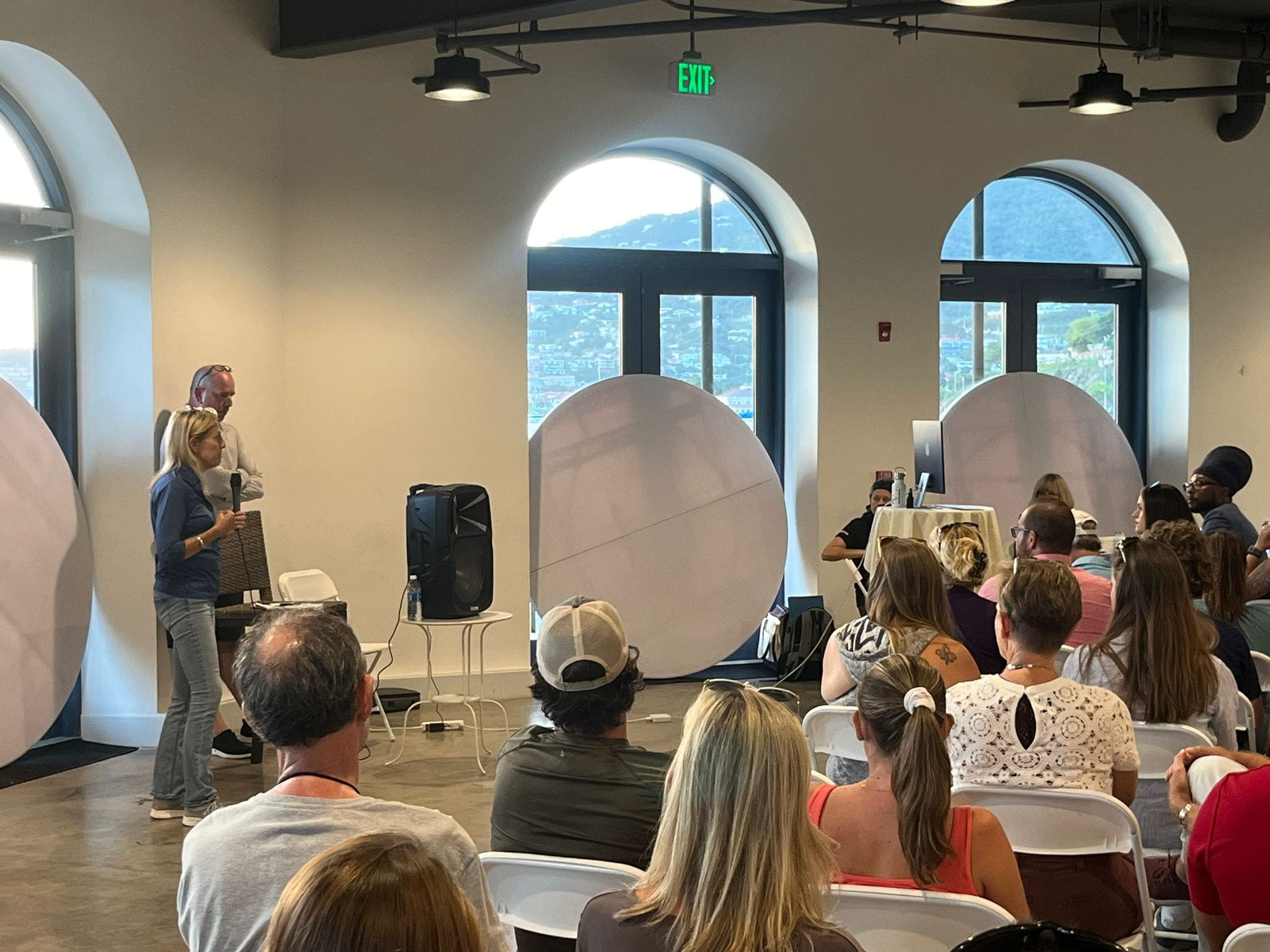
“The effects of what’s been going on since COVID has really hit our industry really hard. My boats haven’t gone to the BVI since COVID,” she said. “I’m probably 70 percent down on charters.” She added that the reciprocal relationship with the BVI was good before COVID.
“We’ve been acquiescent for way too long,” King added. “We’re dying, we’re drowning.”
Kelvin Bailey Jr., president of the VI Game and Fishing Club, told the attendees at the meeting, “We have to be fair. They’re coming after you,” he said regarding the marine industry.
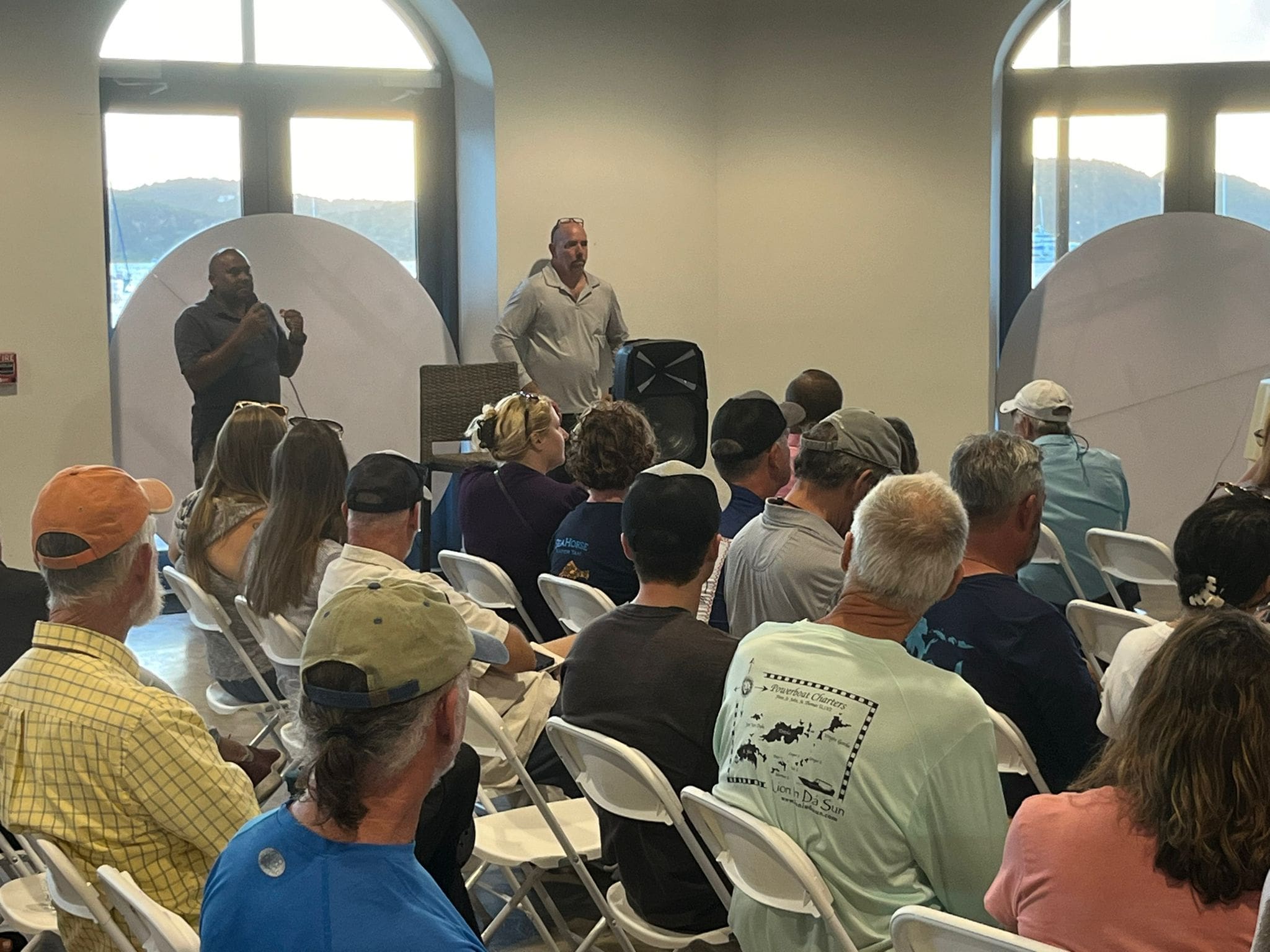
He also addressed the impact the fees and fishing licenses from the BVI have had on the territory, implying it is ridiculous for fishermen to only be able to get 30-day fishing licenses.
“They’re doing it again,” he said. “Fair is fair.”
Eddy reminded attendees that it is important to create a government liaison between the USVI and the BVI to address the concerns. He also discussed looking at examples of case studies in Anguilla and Saint Martin markets to address the problem and told attendees that they ”need more input from the public.”
One attendee asked Ball for some input about the reason behind the BVI’s increase.
“Part of it is our government’s desire for money,” responded Ball, who added that stakeholders and politicians are part of the challenge that leads to the confusion surrounding the issue. He described the process as “a Band-Aid on a stack of Band-Aids.” He mentioned that in the 90s, the fee policy was originally written as a “one-stop shop” with no intention for increases. However, new government entities and regulations have occurred, leading to changes in policies.
“I would advocate that we need to make it more efficient on our side. It is a lot to balance,” said Ball. “The fees haven’t changed since 1992.” He added, however, that because of inflation, fee increases were considered. Additionally, on top of the entrance fees, 12-13 new fees from the BVI government were added as well.
Angel Bolques, senator at large, was in attendance and said, “Fees are now changing the dynamics of what your business can and cannot do.” He added, “I believe in our blue economy and our maritime sector … we’re not really tapped into the blue economy as we should in the U.S. Virgin Islands.”
The general consensus among the members of the town hall were disapproving of the proposal for the fee increases, with some expressing that the territory should increase their fees to challenge the BVI’s fee increases.
“We don’t want to go into a fee war with the BVI government,” said Bolques. “Everybody is sort of scrambling for revenue-generating laws to use those monies for our departments, especially with what’s going on on the national level.” He added, “It’s unfortunate that this is the way it seems to be going down.”
It was also addressed disapprovingly during the meeting that USVI charters can only enter the BVI seven times a year for a maximum of four days.
“I don’t believe in blocking the USVI out or any aspect like that. I believe in fair access,” said Ball.
“This is a simple problem to solve,” said a community member in the audience.
Eddy concluded the meeting after again pointing out to attendees the importance of establishing representation to address concerns with the BVI government.
For more information on VIPCA or the town hall, contact Staci Smith at info@vipca.org or call or text 340-642-0656.