

Representatives of the region’s boat charter industry said Thursday they worried fee hikes on foreign vessels entering the British Virgin Islands and retaliatory tariffs proposed by U.S. Virgin Islands officials could scuttle small, independent pleasure cruising businesses.
BVI lawmakers were nearing ratification of changes to fees charged to commercial charter vessels in the British overseas territory scheduled to take effect June 1. An overnight operator’s annual fee would increase 5,900 percent — from roughly $400 to $24,000 if the Commercial Recreational Vessels Licensing Act of 1992 were amended as proposed. A day sail charter operator’s annual fee would go up 6,150 percent, from $200 to $12,500.
Gov. Albert Bryan Jr. shot back Wednesday, asking the 36th Legislature for an emergency meeting to consider imposing stiff taxes on goods imported from the BVI and a new entry and exit fee for non-Virgin Islanders traveling between the two territories. The tariffs could be over 25 percent, Bryan suggested.
“For too long, we have experienced economic leakage and inconsistencies in our trade relationship with the BVI. It is time we take decisive action to protect our local industries, generate revenue for essential services, and create a more balanced regulatory framework,” the governor said in a written statement.
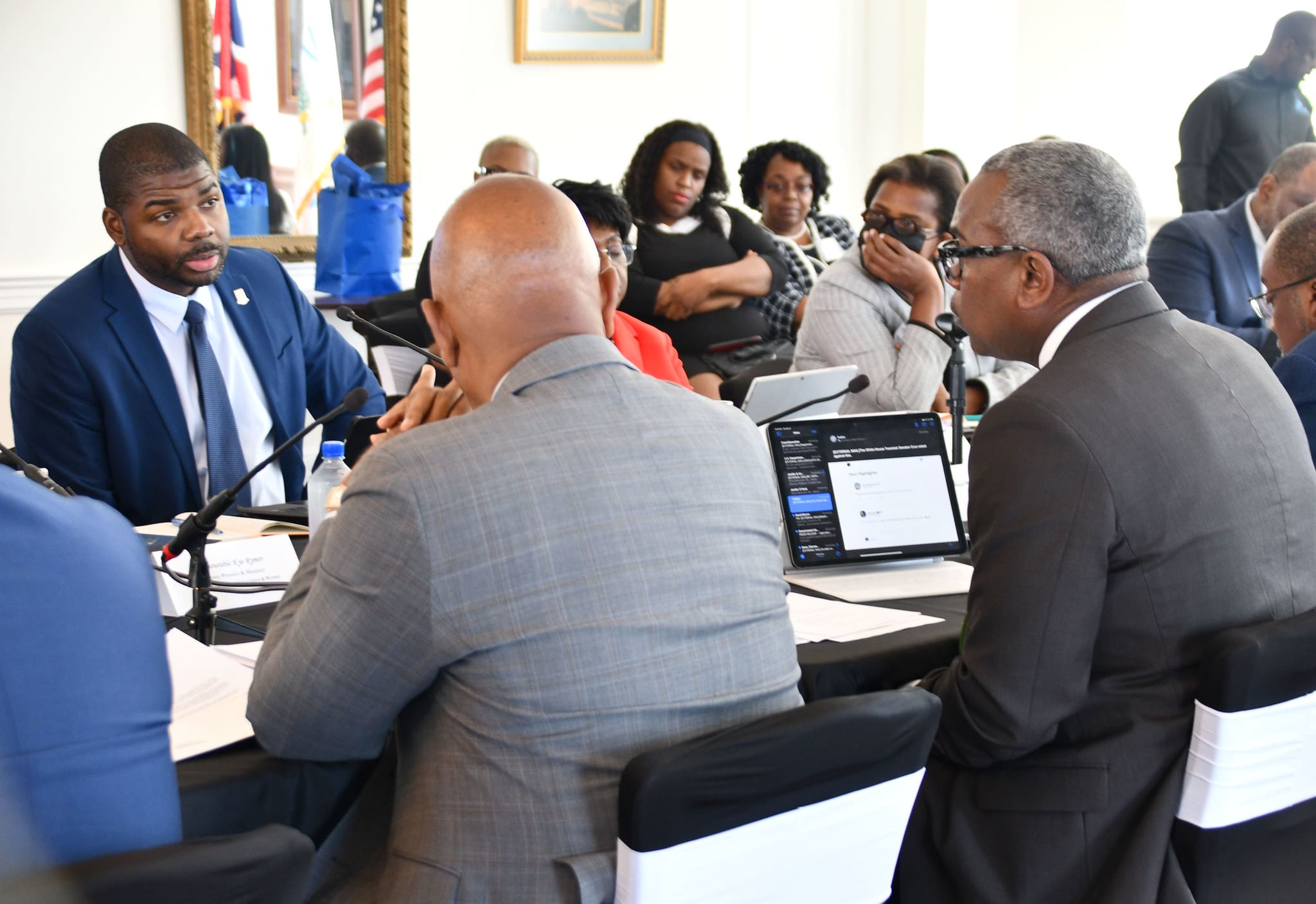
Staci Smith, executive director of the Virgin Islands Professional Charter Association, called together a meeting of 80 or more U.S. Virgin Islands charter boat operators Tuesday. The idea was to collect feedback on what the new BVI entry fees might mean to the industry. It could be devastating, she said, with ancillary industries from hotels to repair yards to housekeeping services and grocery stores feeling the pinch.
Sen. Angel Bolques Jr. was at the meeting, Smith said, and listened carefully to industry insiders’ concerns.
Bolques released a statement Thursday stressing the need for talks between the two territories, hoping for “policies that promote fair and equitable economic opportunities for U.S. Virgin Islanders.”
“It is essential that we address these disparities to ensure that our economy remains competitive, sustainable, and beneficial to the people we serve,” Bolques said in the statement. “We must take a proactive approach in addressing these issues to ensure that Virgin Islands businesses can compete on a level playing field with the British Virgin Islands.”
Even before the meeting, some in the USVI were calling for retaliatory tariffs and entry fees on the BVI. A vocal contingent on social media seemed split between worried vacationers and angered locals.
“We didn’t want it to become a tax war,” she said. “That’s not what the community was looking for.”
Smith was clear Thursday that a trade dispute was not in the industry’s best interest. Large companies might be able to absorb the fee but most small, privately-owned, mom-and-pop operations would be sunk. And passing the cost along to customers would only drive business away.
The Marine Association of the BVI, a Road Town-based nonprofit composed of 50 charter companies and adjacent partners, wrote to BVI Premier Natalio Wheatley and other elected officials saying the 1992 act needed to be modernized but not in the way suggested.
Andrew Ball, the association’s chairperson, expressed dismay that the BVI government had not consulted industry stakeholders before drafting the rule changes.
BVI waters were already overpopulated with charters and environmental degradation could be soon to come, Ball wrote. Encouraging USVI operators to move their businesses to the BVI or moving the bulk of the industry to large-scale operations would not help.
“The current legislative amendments appear to be primarily aimed at regulating USVI vessels out of BVI waters rather than improving the regulatory environment for our own businesses. This approach adds additional weight to an already burdensome and outdated regulatory structure, which is directly contrary to the success of the BVI’s marine industry. It does this while increasing fees exponentially,” wrote Andrew Ball, the association’s chairperson. “Rather than enabling business, these amendments hinder it.”