

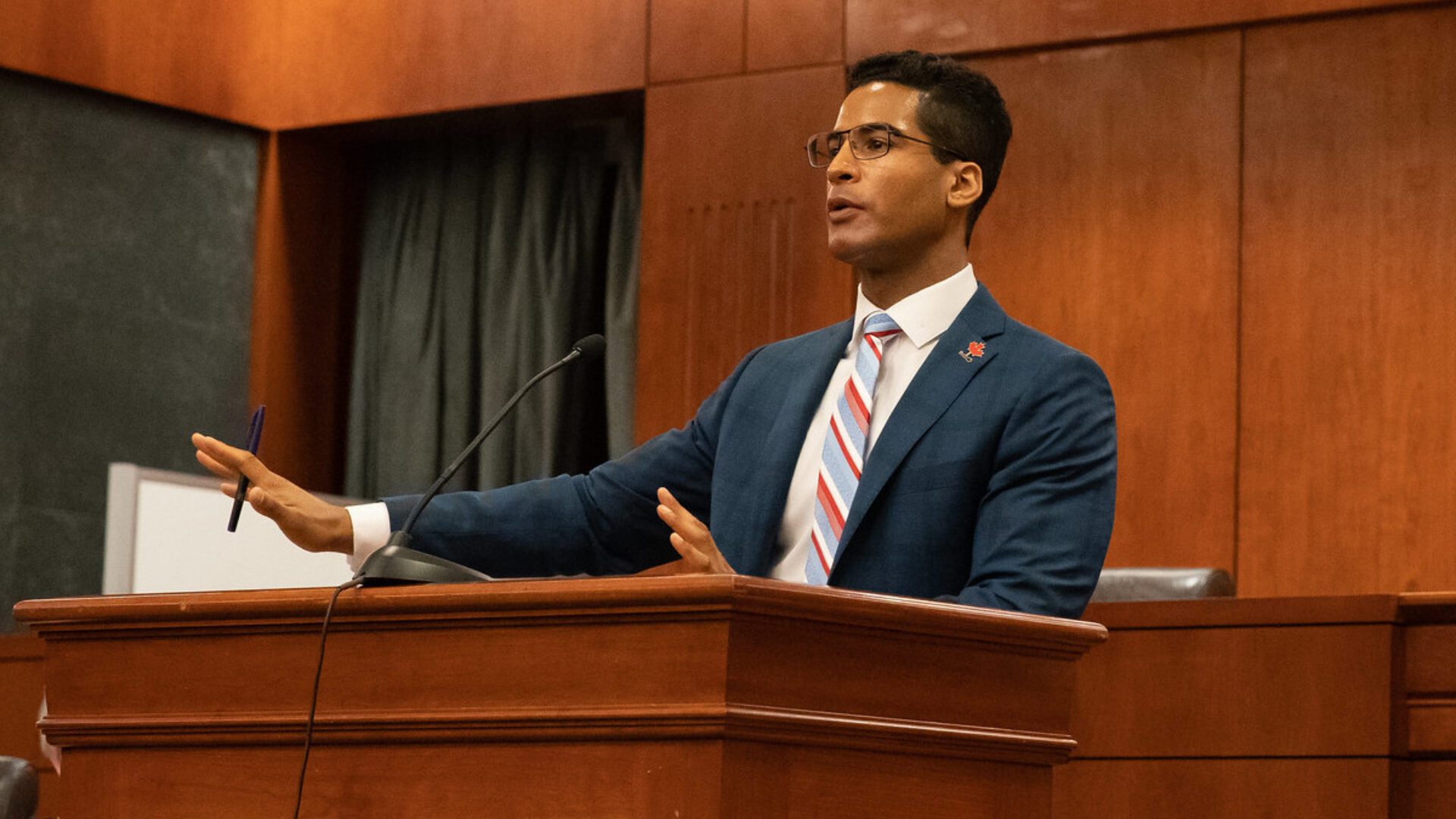
Delegates of the sixth Virgin Islands Constitutional Convention, in a Saturday plenary session, heard a lengthy and detailed review of their work to date. The review was delivered by University of Texas professor Richard Albert, a scholar of constitutions from across the United States and around the world.
More than three months have passed since delegates completed revisions to a previous draft created by the fifth Constitutional Convention in 2009. If the new document meets approval, it could become the U.S. Virgin Islands’ law of the land.
Albert encouraged delegates to simplify the language in the draft and pay close attention to sections flagged for federal-level objections.
“There are some provisions in the draft (sic) you seem to sit at a little uneasily with the requirements of federal supremacy. I’ve identified those provisions in my report,” Albert said, “but I just wanted to flag that issue now, because federal supremacy is not optional, and the language of the Constitution…is required to reflect that rule. It’s not just in a single provision at the end of the Constitution, but in every single section… ”
“The drafts you prepared are more ambitious than any state constitution,” he said. “I’m sympathetic; you need protections, but it’s worth noting that a more detailed document like this one carries a higher litigation risk and a higher financial exposure than the average state constitution.”
Albert added encouraging words for those who spent months debating and revising the previous draft. He encouraged them to express their views on how the final draft should read while allowing others who disagree the same privilege.
“None of these suggestions requires you to change your mind about anything. They simply are intended to invite you to just more directly express what you’ve already decided,” he said, adding that time spent now in revising the draft is time saved later in litigation.
The professor also suggested that once the Virgin Islands’ constitution gains approval, it will send a vital message to the world that people holding different views can work together for a common cause. Among the nations adopting constitutions of late, he said, none promote democratic forms of government.
“Your work is important, not just for these islands, but for the country, the world,” the professor said.
Albert serves as director of Constitutional Studies at the University of Texas at Austin and is a founding director of the International Forum on the Future of Constitutionalism.