

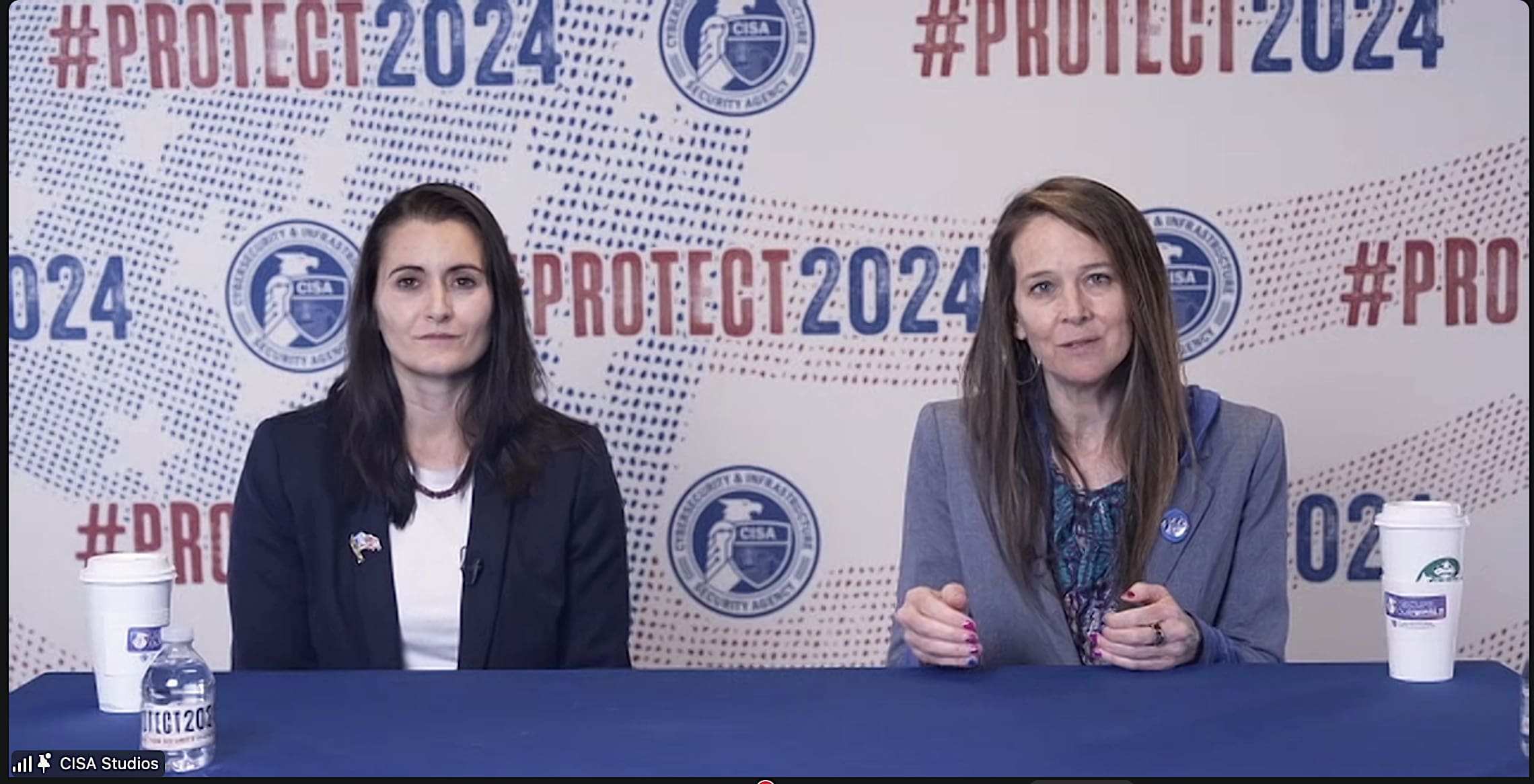
The federal agency tasked with helping elections officials run safe, fair polling places said Friday the Virgin Islands was no different from mainland states.
Jen Easterly, director of the United States Cybersecurity and Infrastructure Security Agency (CISA), told The Source federal elections experts hired over the last year had been in the U.S. territories meeting and training local elections officials.
“100 percent,” Easterly said. “These experts were former elections officials, administrators, technology specialists who have been doing elections for a long time. We hired in Region 2, which includes the territories, New York, New Jersey.”
CISA experts have been in the territories “to ensure they take advantage of all our resources, whether that’s physical security assessments, cybersecurity assessments, and all the training that we provide to ensure elections officials have the support, information, and resources that they need to deliver safe and secure elections,” she said.
Easterly warned of a “literal fire hose” of disinformation regarding the upcoming election, some of which came from hostile foreign nations seeking to disrupt faith in American elections. These bad actors hoped to “stoke partisan discord and pit Americans against each other.”
Elections officials and poll workers aren’t nameless, faceless entities who suddenly appear every other year. They’re your friends and neighbors, she said. The upcoming election would be as safe and fair as possible, and Easterly invited anyone who disbelieved that to come see it in person.
“Sign up to be a poll worker. Be a pole observer. And if you have any questions, talk to your state or local election official. They are the best source for accurate information, and they are the ones who can help you have confidence that your vote is protected and that your vote will be counted as cast,” Easterly said. “Our election infrastructure has never been more secure.”
Virgin Islands Elections Supervisor Caroline Fawkes had also pointed to misinformation or overt disinformation as factors driving suspicion in elections, leading to increased voter apathy and lower turnout.
Kate Conley, CISA’s senior adviser for elections security, said the agency had also worked with elections partners, like law enforcement, to discuss appropriate responses to any disruption in voting.
The Virgin Islands got an early example of this police response on the first day of early voting when a Board of Elections member was said to have created a commotion so severe that it frightened people at a St. Thomas polling place. Eventually, police were called to calm the situation, board members said at an emergency meeting Oct. 15. The board ordered Republican member Harriet Mercer to apologize in writing but did not further describe the allegedly offensive behavior.
The CISA officials warned Friday that, while the elections would be safe and fair, they may be messy. With each state and territory having their own systems of voting, as well as their own unique physical, cyber, and legal challenges, there was sure to be some degree of confusion in each election, they said.
“On election day, things will go wrong. They always do. We’re talking about an event that has hundreds of thousands of election workers, tens of thousands of polling places, and likely some 150 million voters. There will always be hiccups that happen in such a complex process,” Easterly said.
Again, the Virgin Islands is no outlier.
Fawkes filed a lawsuit Oct. 17 in the Superior Court of the Virgin Islands seeking a temporary restraining order and an injunction blocking Congressional Delegate Candidate Ia Smith from appearing on the ballot.
Fawkes alleges Smith was disqualified in June for failing to meet residency requirements, including not submitting a tax return transcript by the June 10 deadline. Fawkes cited 18 V.I.C. §411, which grants the supervisor of Elections sole authority to determine a candidate’s qualifications. She argued that Smith’s failure to provide the necessary documentation was sufficient to remove her from the race.
Despite this, the Board of Elections, led by members Raymond J. Williams and Epiphane Joseph, voted on Sept. 4 to reinstate Smith, reversing Fawkes’ earlier decision to bar Smith. In her lawsuit, Fawkes contends that this move was beyond the board’s legal authority. Determining whether a candidate meets the legal requirements falls solely under the supervisor of Elections’ jurisdiction. Fawkes asked the court to declare the board’s actions illegal and reaffirm the power of her office in deciding candidate eligibility.