

Momentum continues building behind a planned 80-unit housing development overlooking Magens Bay, where developers say months of financing work, federal approvals, environmental reviews, and planning efforts are beginning to give way to the next major push: permits, procurement, and eventually breaking ground.
The Residences at 340 North in Estate St. Joseph and Rosendahl, is aimed at expanding homeownership opportunities on St. Thomas and is now entering a new phase as developers report progress through financing, environmental review, and procurement milestones, according to
When the Source first reported on the project in March 2025, plans called for 64 townhomes and 16 detached single-family homes across approximately 11 acres overlooking Magens Bay. Led by St. Thomas-based A.C. Development, the development team includes St. Thomas native and civil engineer Ajani Corneiro, Director of Communicaions and Brand Strategy Kadeem Huggins, Director of Operations Lindeon Davis, and Jorrell Fredericks, Director of Strategic Initiatives and Brand Management. Designed primarily around middle-income and first-time homebuyers, developers have previously described the effort as a project “by Virgin Islanders, for Virgin Islanders.”
Since then, Corneiro said on a recent call with the Source that the team has spent months navigating financing approvals, federal compliance requirements, environmental studies, and permitting reviews — a process they describe as extensive but necessary to move the project toward construction.
Through work with the Virgin Islands Housing Finance Authority and Community Development Block Grant funding requirements, the development has completed its environmental review period, cleared HUD public comment requirements, and secured approval allowing grant funding to continue advancing through the federal process, though developers said compliance requirements remain before funds are ultimately released. Confirmed is also approximately $7.5 million in grant funding will support the project’s first 22 affordable units. Those units will carry income qualifications and affordability requirements tied to federal housing guidelines, Corneiro said.
The financing and compliance side has also required substantial preparation behind the scenes. Corneiro credited Housing Finance Authority staff with helping guide developers through technical assistance, procurement requirements, compliance reviews, fraud prevention and waste training programs, homeownership program coordination, and federal policy requirements intended to ensure submissions meet standards before advancing further through review. He also said extensive front-end preparation has helped avoid significant revisions or delays during federal processing.
Environmental compliance — often one of the largest hurdles facing major development projects — represented another major milestone. Consultants conducted studies examining air quality, stormwater impacts, streams, construction noise, surrounding environmental conditions, and potential concerns involving native and endangered species. Corneiro and Huggins shared that said additional measures were also incorporated into planning efforts to minimize environmental impacts during construction and long-term neighborhood use. The work builds on commitments Corneiro first outlined publicly last year involving native landscaping components, tree preservation efforts, and strategies intended to address environmental considerations identified during planning.
Several previously announced building features also remain part of the plan, including Insulated Concrete Form construction technology, or ICF — which the development team previously said would make the community the first in the Caribbean to utilize the building approach at this scale. Corneiro has said the system creates stronger, more energy-efficient homes through insulated wall construction designed to improve durability while lowering long-term energy costs. High-efficiency appliances and low-consumption fixtures are also expected to be included throughout the community.
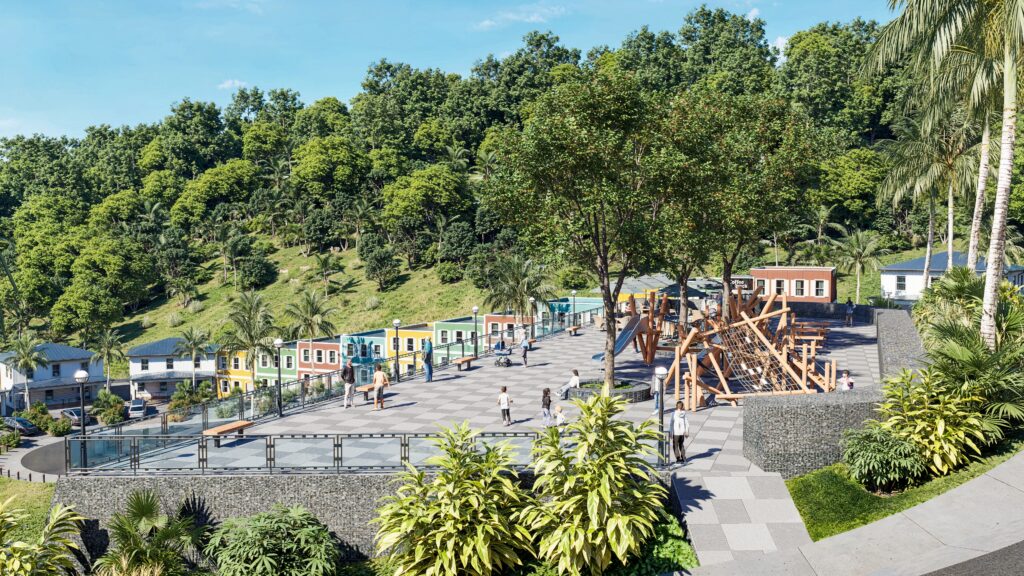
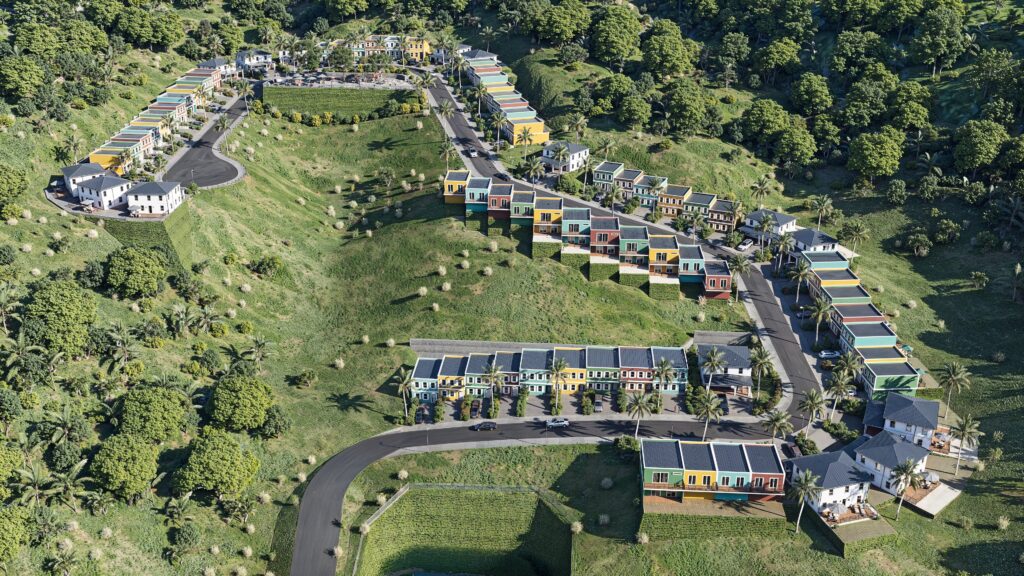
Corneiro also said the design itself has continued evolving around the site’s natural terrain rather than attempting to eliminate it. Located on steeply sloping property overlooking Magens Bay, the neighborhood concept includes building into portions of the hillside to maximize usable space while incorporating gathering areas and community amenities intended to encourage interaction among residents. Potential agricultural components and shared neighborhood spaces are also under discussion as features developers say are intended to support neighborhood activity and shared space.
As construction moves closer, the development team is also encouraging prospective buyers to begin preparing now. Corneiro said future homeowners should focus on filing taxes consistently, organizing employment documentation, understanding debt-to-income ratios, reducing unnecessary debt where possible, and learning what financing programs may help support homeownership. First-time homebuyer education and understanding lending requirements early, developers said, can help residents position themselves more successfully before entering the mortgage approval process.
Beyond housing supply itself, Corneiro estimates the project’s first phase could generate more than $16 million in construction-related economic activity during an estimated 18-to-24-month build period. He and Huggins said they hope local contractors, tradespeople, apprentices, and smaller businesses position themselves now to participate as opportunities expand. The first phase covers only 22 units, with dozens more homes remaining in the pipeline over the years ahead.
Attention now turns toward permitting approvals and procurement timelines. Contractor qualification requests were issued May 15. A mandatory pre-proposal conference is scheduled for Friday at 10 a.m., written questions are due by May 31 at 11:59 p.m., a question-and-answer addendum is expected June 7, and contractor qualifications submissions are due June 14 at 5 p.m. Developers said procurement for the project is being managed through the Virgin Islands Housing Finance Authority’s Ion Wave platform — a system they said is intended to create a more structured and transparent process for firms seeking opportunities tied to the development — as the project continues pushing toward construction.
At the same time, the team says work continues with the Department of Planning and Natural Resources as permitting moves forward. Corneiro said the goal remains breaking ground as soon as possible, with the team particularly mindful of timing as hurricane season approaches. “If we’re moving dirt in the high point of hurricane season … that’s not a good spot we want to be in,” he said, noting they want to stabilize the site early while continuing to move methodically through approvals. For now, Corneiro said the focus remains on lining up contractors, maintaining momentum, and positioning the project to move quickly once permits are secured.