

Weeks of training on how to rush aid to children in an emergency led to the staging of a full-scale disaster drill on Tuesday on St. Thomas. Operation Guardian Angel made its debut at the Lockhart K-8 School in Sugar Estate, according to Emergency Medical Services Director Jacqueline Greenwich-Payne.
Police, Fire, and Emergency Medical Services personnel, and volunteers from St. Thomas Rescue joined Government House, the departments of Education, Human Services, Labor, Justice, and VITEMA, on-site at the exercise venue. The Health Department served as the lead agency and organizer of the pediatric readiness assessment exercise.
Greenwich-Payne described the emergency scenario. Under the terms of grants provided to EMS, she said, local responders must be able to handle any medical emergency affecting children that may arise.
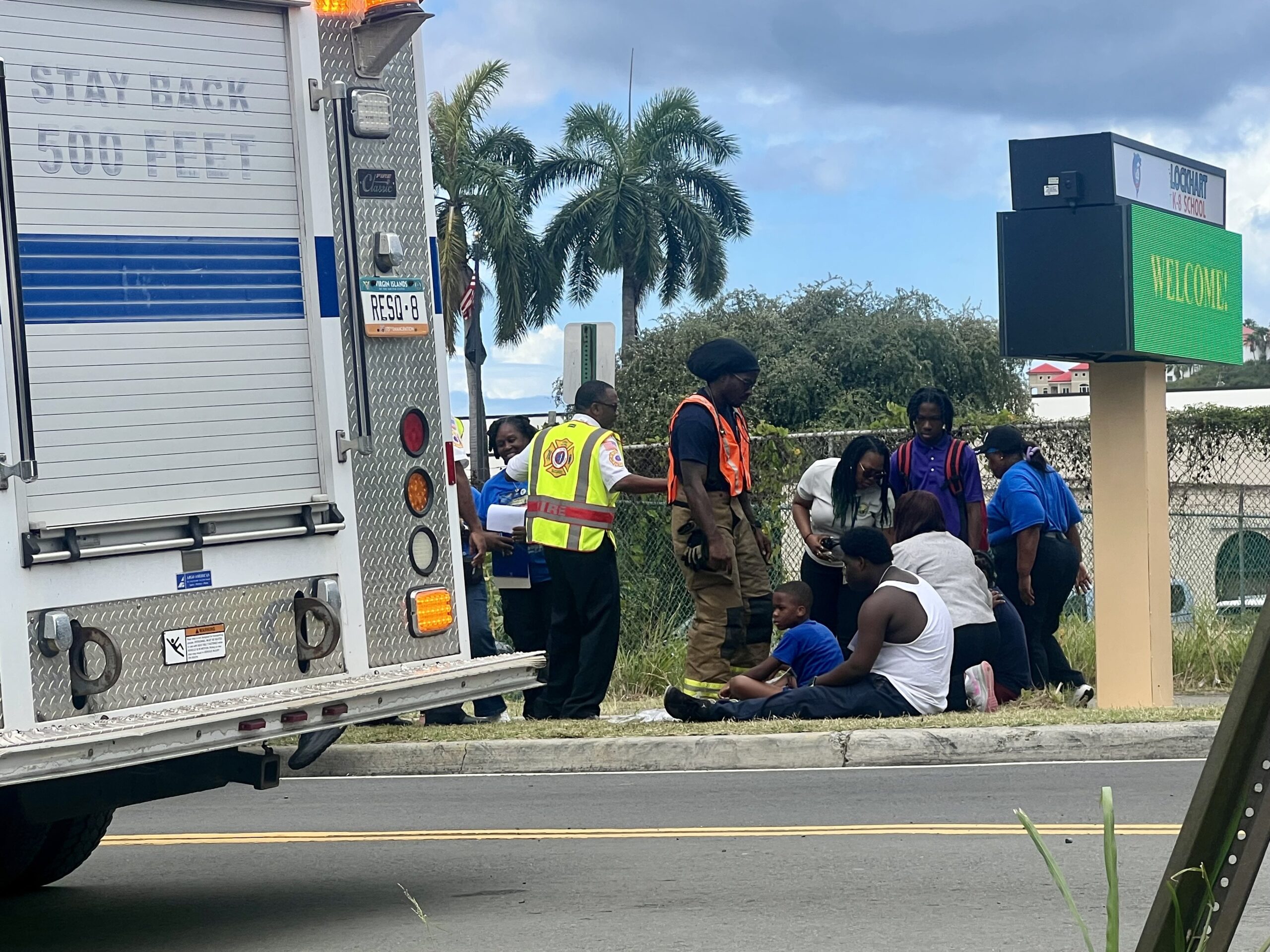
“ … there was an earthquake, some of the buildings crushed and came down,” Greenwich-Payne said. Some debris fell on the school campus, trapping some of the students. The quake’s impact also damaged a school bus, leaving the driver dead.
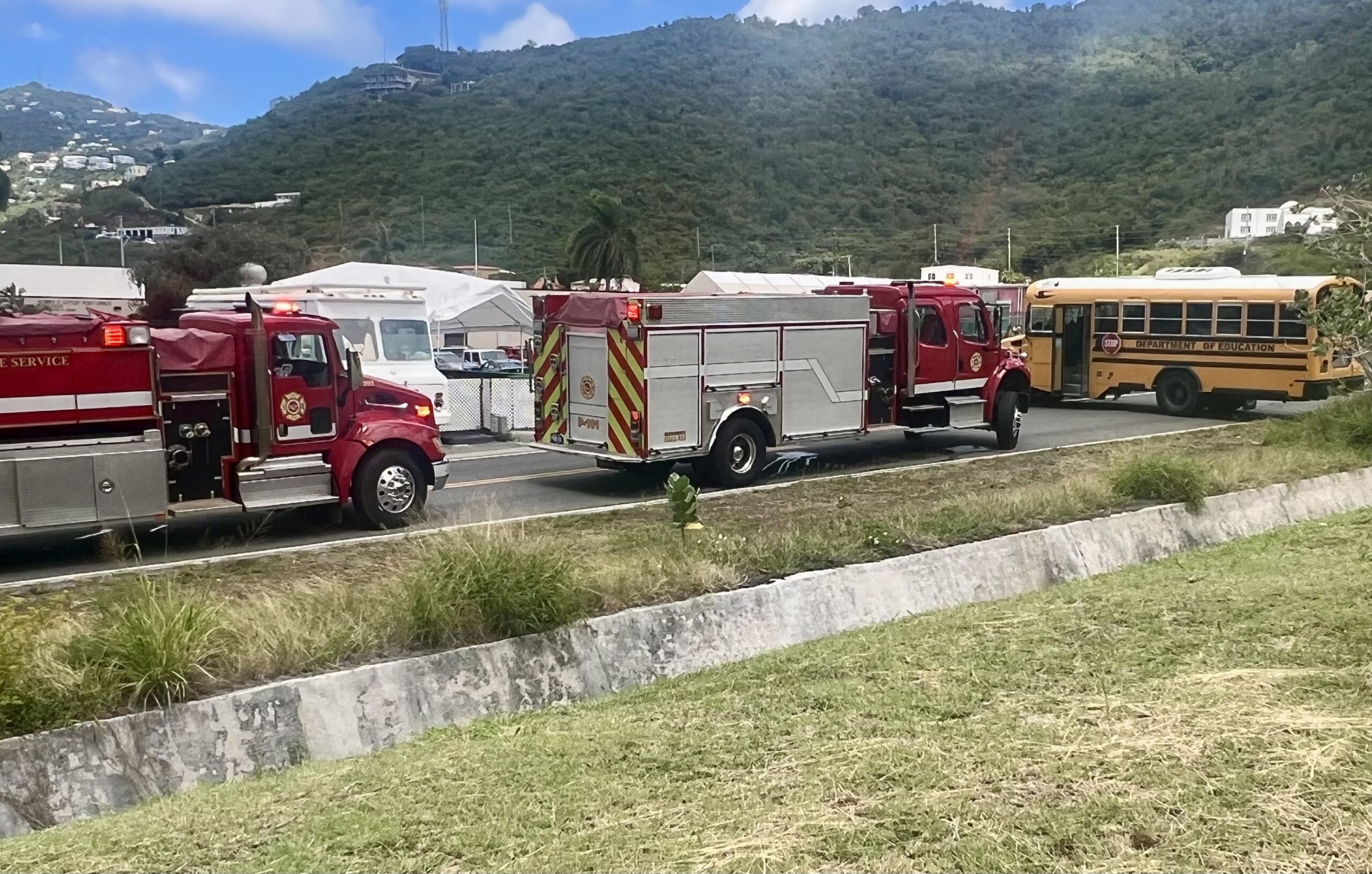
“And so we want to see how they’re going to respond,” she said.
Details of the disaster scene were worked out in advance in tabletop exercises. On Tuesday first responders, observers, and evaluators went through their paces — counting students, tagging those needing medical treatment, transporting others to a spot nearby where they could be reunited with parents and loved ones, searching for those not accounted for.
The signal to start the drill came around 10:30 a.m. from an administrator at a school identified as “Ginger Thomas Elementary School” — a fictional name used because the real school could not be disclosed — simulating a call to 911. All of those steps were transmitted to a unified command hub at nearby Roy Lester Schneider Hospital, Greenwich-Payne said.
“We have evaluators evaluating all of those agencies so that we can identify the shortcomings so that we can work with them in training to be able to increase their knowledge, their readiness, their confidence, because we don’t want to react. We want to respond and to be able to perform,” she said.
Deputy Health Commissioner Hadiyah Charles said the idea of staging a pediatric medical emergency drill came up after schools across the territory became subject to a series of bomb threats in the current school year.
“When children are involved, we have to be really careful, because some children may have some medical issues. So we need to make sure that you have (sic) some sort of identification for them, medication. You know, with us, our disaster comes in the form of a hurricane, and so we have some warning before that,” Charles said, “so what this disaster drill does is it gives parents and guardians all of the information that they would need in order to adequately prepare.”
It also helps local agencies assess their roles before a real emergency triggers a response, Greenwich-Payne said. For those agencies that have not developed emergency plans, training gives them a chance to put one in place.
Dr. Robin Ellett, a local physician, serving as one of the observers, said seeing responders in action would help doctors like her know what to do. “I’m very thankful that they put this together for pediatrics,” she said.
Charles commended Greenwich-Payne for leading the effort and the evaluation afterward.
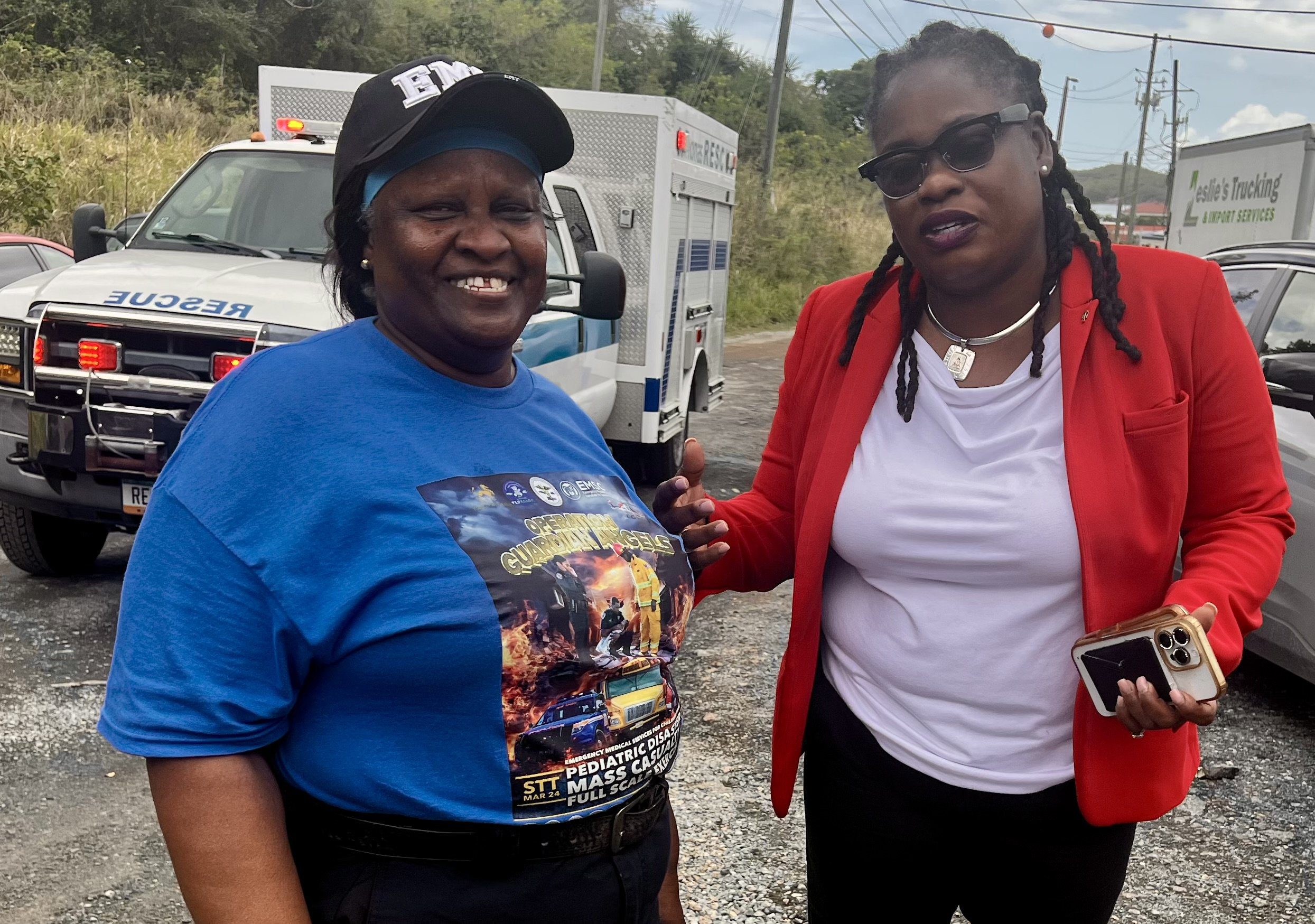
“Miss Greenwich- Greenwich-Payne said that this was to show our shortfalls … but it’s also to give us practice, because who dreams of it? I mean, you can’t even dream of it. And so, seeing the shortfalls is really important. Each department needs to know what we need to do better,” the assistant commissioner said.