

On Thursday, students at Free Will Baptist School on St. Croix stepped out of the classroom and into a living lesson in Virgin Islands history and culture during an expanded cultural showcase that transformed the campus into an interactive learning village.
The event, organized as part of the school’s Virgin Islands history program, brought together educators, artists, farmers, historians, and cultural organizations to give students a hands-on experience with the traditions, stories, and heritage that shape the territory.
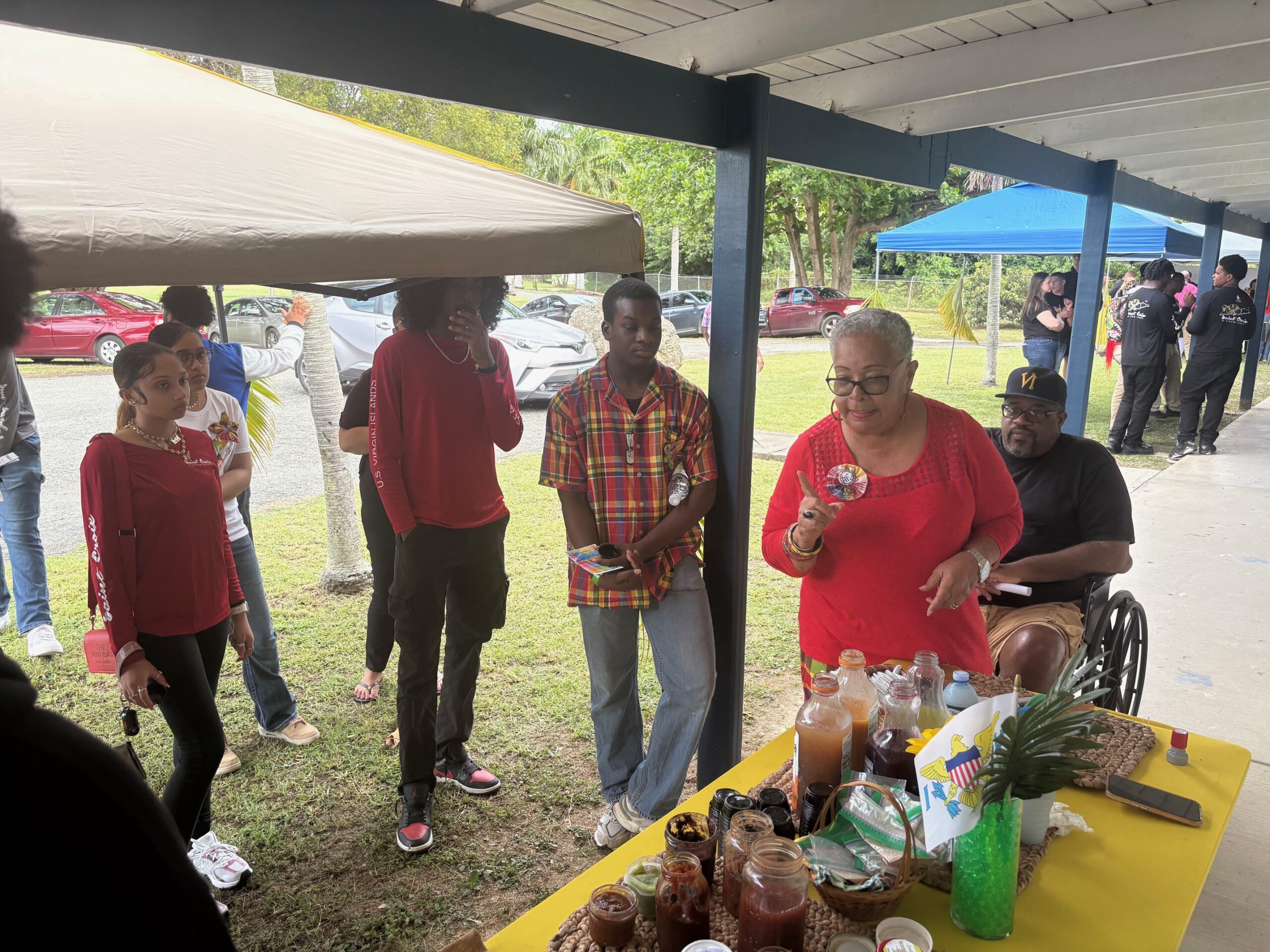
School counselor and Virgin Islands history teacher Kisha Williams said the idea was to move beyond traditional classroom instruction and give students a tangible connection to the history they are learning.
“Children learn differently,” Williams said. “To sit in a classroom and just read from a book or listen to someone talk isn’t always tangible. I wanted them to experience the culture in a way they could see it, touch it, and interact with the people who know it.”
In previous years, the school held a smaller Virgin Islands history showcase during a single class period, where students gathered in the school’s sanctuary to hear presentations or read poems. This year’s event expanded into a full-day cultural experience.
Principal Angela Wooton credited Williams with envisioning the larger event.
“I asked her if she could put something together for the showcase, expecting something like what we had done before,” Wooton said. “A couple days later she came back and said, ‘I don’t know how to do anything small.’ And here we are today.”
Students rotated through a variety of stations set up around campus, each offering a different perspective on Virgin Islands culture and history.
One station introduced students to storytelling traditions through a reading of The Vienna Cake Mystery, a children’s folktale written by retired educator Charlene Abramson Joseph and illustrated by Danica David. Joseph explained the elements of a traditional folktale — including personification, moral lessons, and recurring patterns — while students learned about the beloved Crucian dessert that inspired the story.
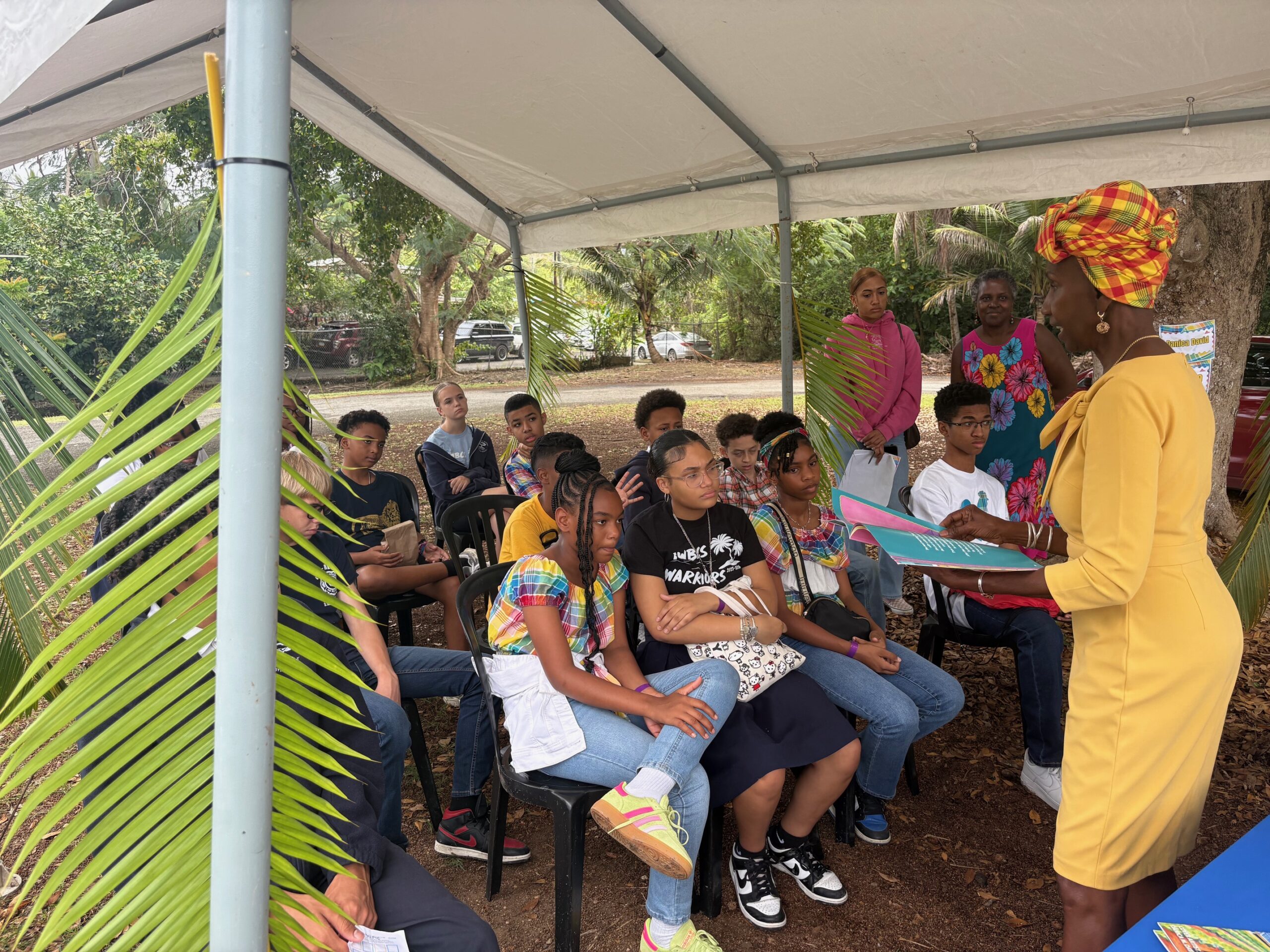
The book centers around the famous Vienna Cake, a layered cake traditionally filled with fruit preserves such as pineapple, guava, guavaberry, and lime. Joseph explained that Crucian-style Vienna cake includes a distinctive lime preserve known locally as green gauge.
Students also learned about the oral storytelling traditions of the Virgin Islands, ending the session with the traditional call-and-response phrase used to close many Caribbean stories.
At another station, from St. Croix Landmark Society, director Sonia Jacobs Dow and Maria Quinones from Estate Whim Museum guided students through a geography challenge using a puzzle map of St. Croix. Working in groups, students identified estates and locations across the island while learning about local place names and geography.
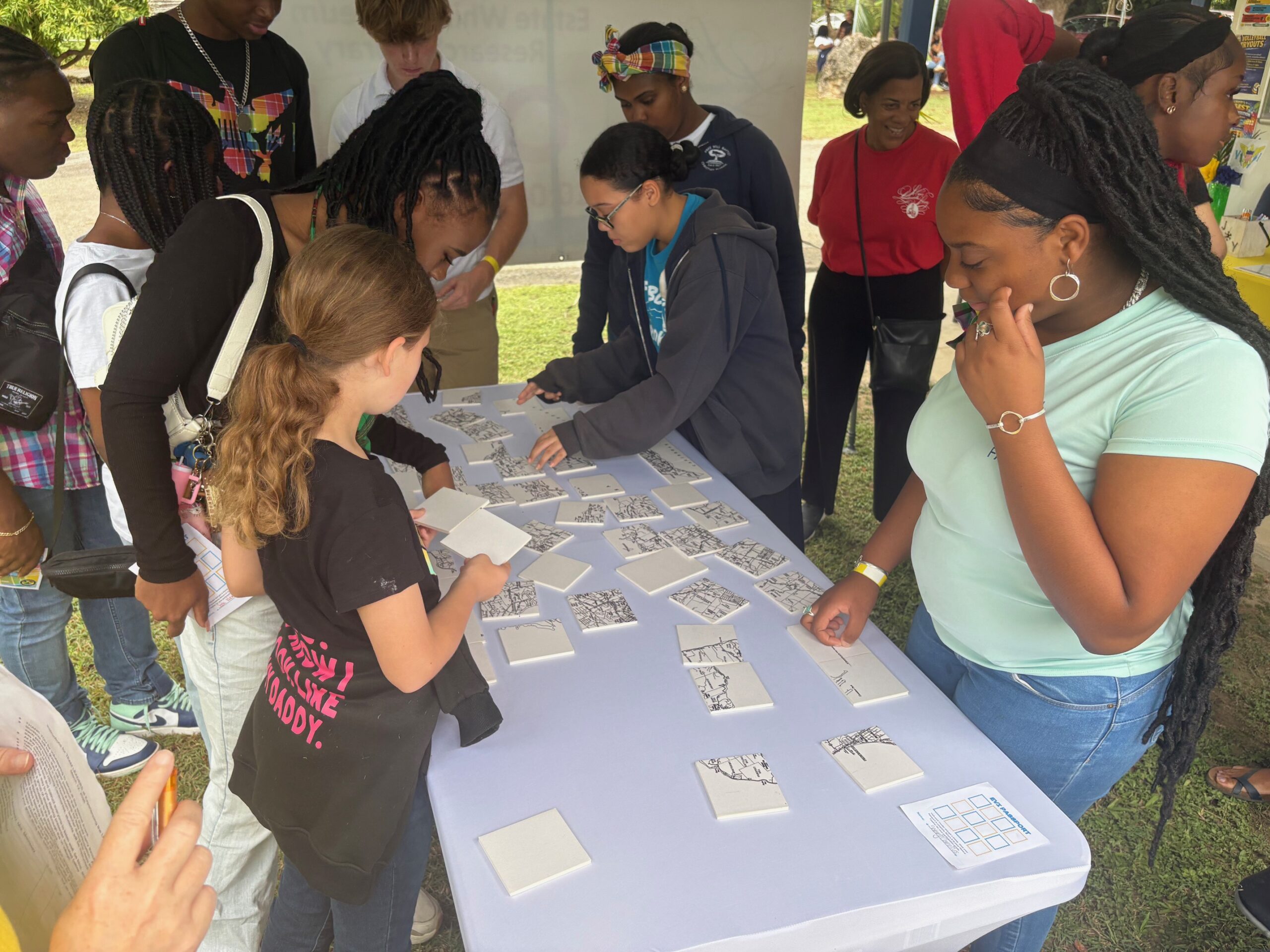
The activity encouraged students to think about where they live in relation to other parts of the island while becoming familiar with historic estate names.
Students also explored the history of religion in the territory during a presentation by local educator and pastor Marthious Clavier. The discussion traced spiritual traditions from the indigenous Taíno, who practiced ancestor-based beliefs, through the Danish colonial era when Lutheranism became dominant.
The religious landscape expanded after the islands were transferred to the United States during Transfer Day (1917), bringing greater religious diversity to the territory. Today, Christianity remains the majority faith in the Virgin Islands, alongside smaller communities practicing traditions such as Rastafari, Judaism, and Islam, said Clavier.
Agriculture was another key focus of the day. Local farmer and staff member at Free Will Baptist Magdalene William, originally from Dominica, shared her personal journey growing up in a farming family and building her own farm in the Virgin Islands.
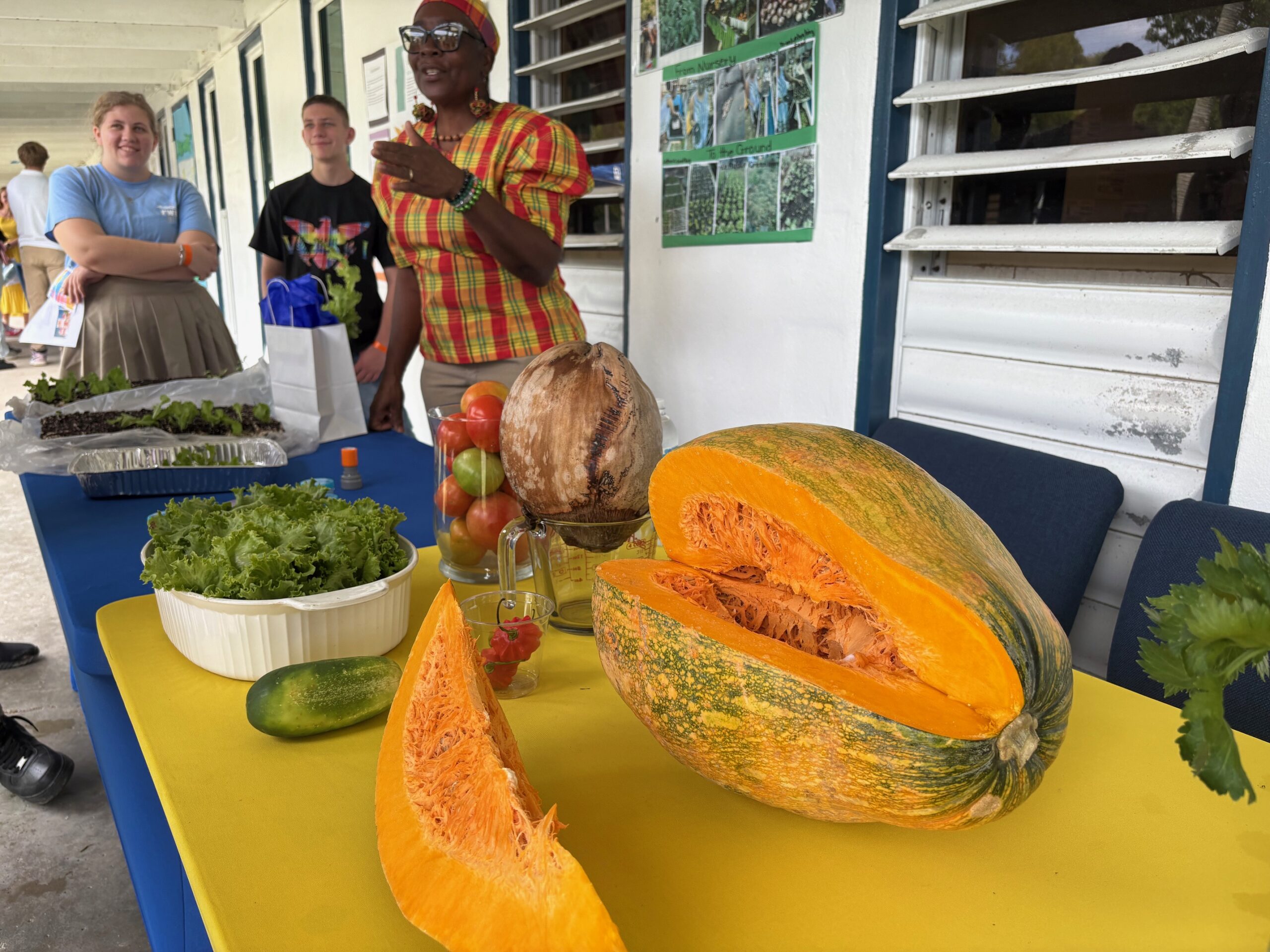
She described the challenges of securing farmland and managing crops in a climate where water access can vary.
“In this world, you have to eat,” she told them. “If you want to be a farmer, you are feeding people.”
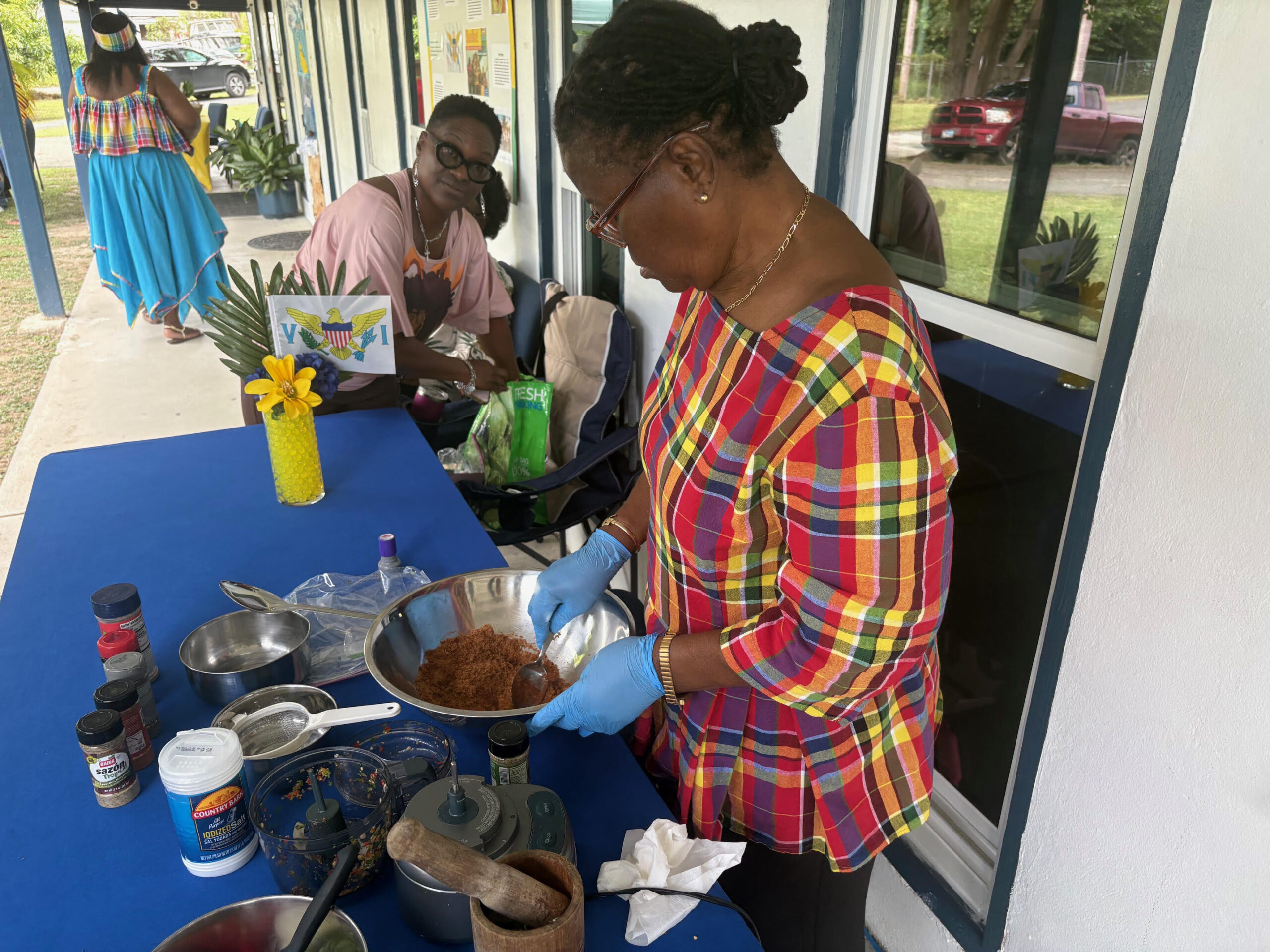
Throughout the day, students also learned about Virgin Islands cuisine, traditional Madras head wraps, music, and history through demonstrations from community members. Steel pan music accompanied a Caribbean-style breakfast and lunch, further immersing students in the territory’s culture. Delicious Virgin Islands treats were also on sale by Glorious Taste of the Islands, serving ice pops, fracos, red grout, stews, sugar cakes, and more.,
Williams said the goal was not just to teach historical facts but to help students build pride in where they live.
“When you don’t know your culture, it doesn’t really mean anything to you,” she said. “But the more you learn, the more you appreciate it.”
Students in the class have also taken part in historical walking tours in Frederiksted and plan to explore Christiansted as well, further connecting classroom lessons with real-world locations.
Wooton said experiences like the cultural showcase help students develop a deeper relationship with the territory.
“We want them to understand where they come from and to be proud to be Virgin Islanders,” she said. “When students appreciate the place they live, they’re more likely to give back to their communities.”
For Williams, seeing students connect with the culture around them has been the most rewarding part of the program.
“The more they know,” she said, “the more they love it.”