

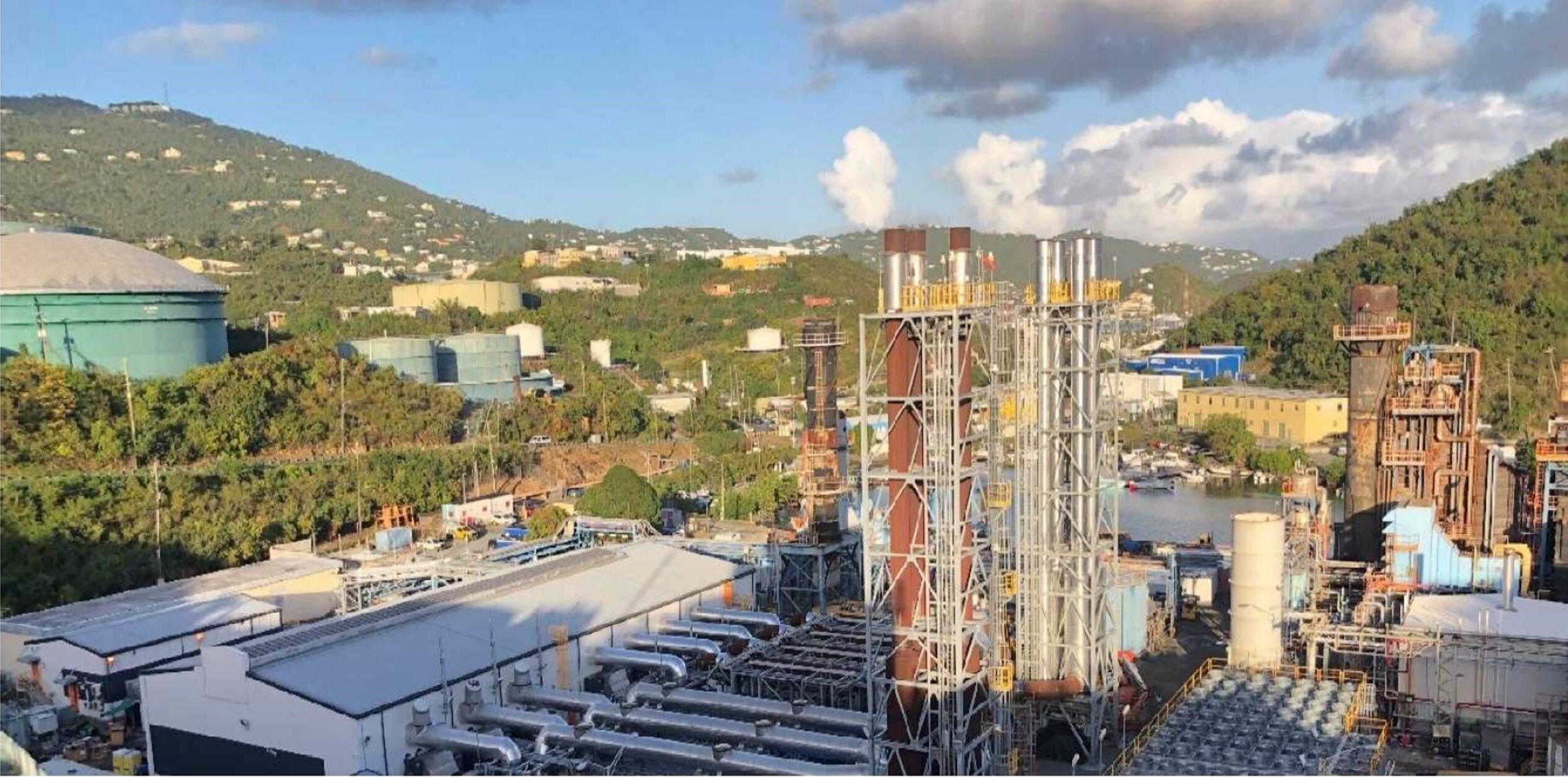
Gov. Albert Bryan Jr. will be moving to extend the energy state of emergency in the Virgin Islands through November 19, marking the fourth such extension since it was first declared in April.
Pending approval from the Legislature, the extension allows the governor to inject much-needed cash into WAPA to help meet its immediate operational needs, particularly when revenue shortfalls prevent the utility from covering essential expenses. “This extension would be helpful,” WAPA Chief Executive Officer Karl Knight said in an interview with the Source on Monday night. “It allows the governor to provide timely and strategic cash infusions to help meet critical obligations when revenue doesn’t allow it – like buying fuel and making payments to vendors.”
WAPA has been struggling with outages across the territory, particularly on St. Thomas, where another series of rotational power outages have plagued residents for the past few days. The outages were triggered by a failure in Unit 15, a key-generating unit that had to be taken offline due to a part failure.
“We did not have a replacement part in inventory,” Knight explained Monday evening. “But we were able to get a replacement part from St. Croix, and that arrived today.”
Knight acknowledged that while WAPA initially believed the issue had been identified on Sunday, it became clear that the problem was more difficult than anticipated. The replacement part is being installed now, with repairs expected to continue into Tuesday, and the unit should be functional by the late afternoon, Knight said.
In the meantime, temporary repairs to Unit 27 have allowed WAPA to resume full power generation, bringing an end to the rotations, he added. Units 27, 23, and the Wartsila generators are currently online and carrying the territory’s electrical load.
WAPA’s second phase of the Wartsila project, which involves commissioning four additional generating units, is still underway. According to Knight, Wartsila has been testing the units, but several issues remain, including fire protection concerns and a punch list of technical challenges that need to be addressed. The contract for the units extends through February, but WAPA has offered Wartsila financial incentives to complete the project earlier.
“We’ve given them some economic incentive to bring the project in early,” Knight said. “If they finish in January, there’s additional compensation. If they deliver in December, there’s another level of compensation.”
This incentive is part of a settlement between WAPA and Wartsila over change orders that were never fully agreed to, allowing some of the disputed amounts to be made available as part of the incentive package, Knight said.
Fuel supply remains another critical issue for WAPA. Knight explained the utility has struggled to maintain its standard two-week fuel reserve and is now operating with a much thinner margin. Despite efforts to pick up the pace on fuel shipments, WAPA has been forced to take steps to conserve fuel, such as improving consumption efficiency and better managing when to refill tanks.
“We’re trying to get to a point where we have at least a comfortable margin of fuel, but we’re not quite there yet,” Knight said.
That’s why WAPA did not ask for a rate increase at last week’s Public Services Commission meeting, he added, explaining that while challenges persist, raising electric Levelized Energy Adjustment Clause (LEAC) would force ratepayers to pay for the utility’s inefficiencies.
“Our rates are already among the highest in the region, and increasing them now would only add more burden on ratepayers who are already struggling with outages and high bills,” Knight said.
Knight emphasized that WAPA is making a conscious decision to avoid passing on the utility’s operational inefficiencies to customers. “We recognize that higher rates, combined with inflation, are detrimental to the community. Increasing rates will only lead to people cutting back on energy use and more disconnections. We are at a tipping point – going higher will have a negative impact on the economy. Instead of raising rates, we’re focusing on reducing operating expenses to address the underlying problems.”