

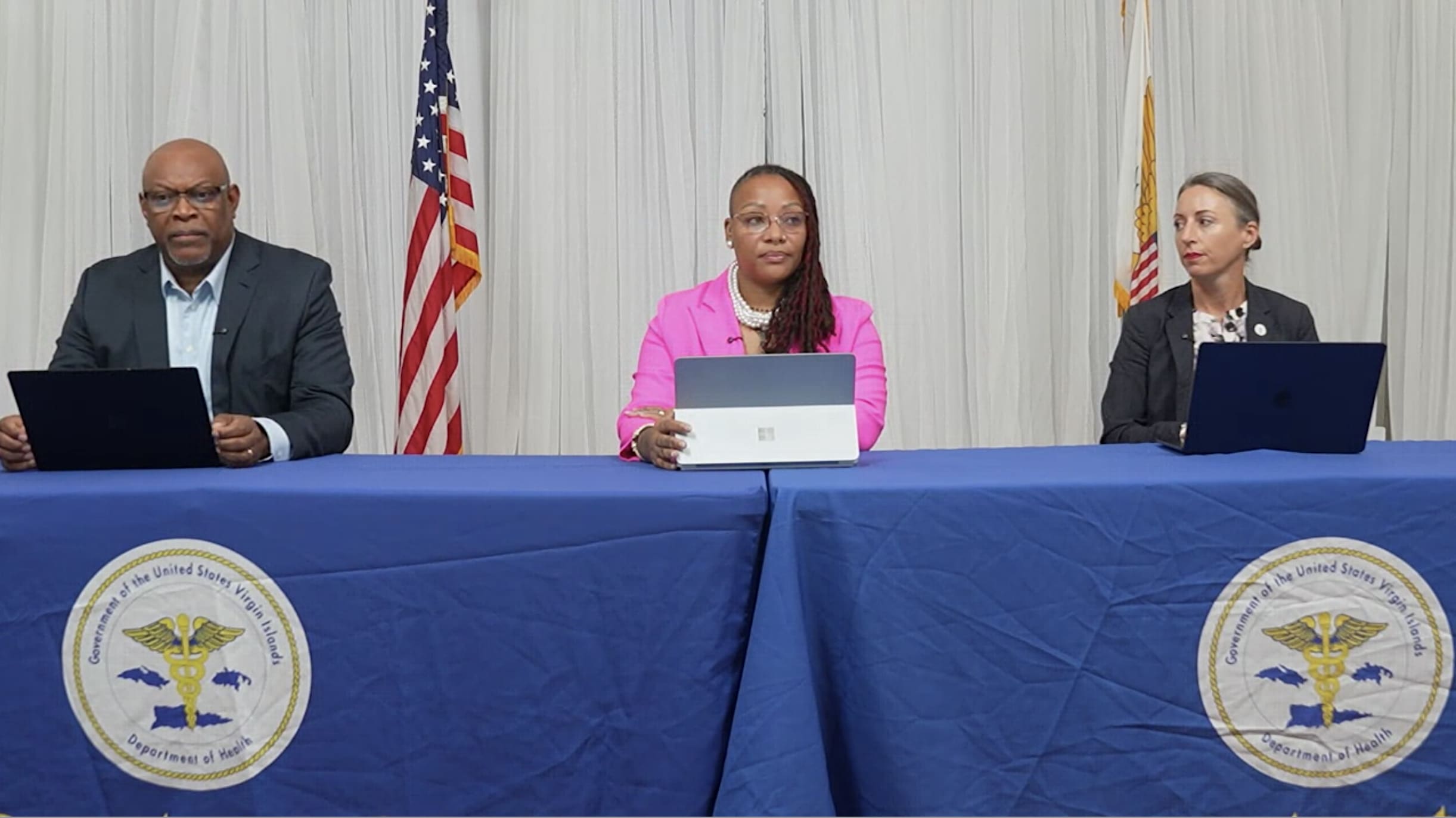
A child under the age of two who died Monday may have been a victim of the hand, foot, and mouth disease outbreak plaguing the territory, health officials said Tuesday.
Doctors were still working to determine the cause of death, but the child had previously been diagnosed with hand, foot, and mouth disease, or HFMD, which can cause painful blisters in the mouth, rash on the hands and feet, fever, sore throat, coughing, headache, fatigue, and loss of appetite.
Although HFMD usually clears up in a few days, in rare cases, it can lead to more serious, even life-threatening conditions like severe dehydration, extremely high fever, and swelling of the brain. It is most common in children but can infect adults as well, V.I. Health Department officials said.
Territorial Epidemiologist Dr. Esther Ellis said her office knows of 188 cases of HFMD on St. Thomas and one on St. Croix. Symptoms can take as many as six days to appear after initial infection, however. Feb. 21, two and half weeks ago, there were just 46 reported cases in the territory.
She asked school and day care officials to email epi@doh.vi.gov to report suspected cases.
Ellis, Acting Health Commissioner Dr. Nicole Syms, and Dr. Anthony Ricketts of the Pediatric Care Center on St. Croix urged parents, educators, and child care providers to be alert for children with rashes or other symptoms as the illness can spread quickly through casual contact and bodily fluids like saliva.
Although there is no HFMD vaccine, infections can be avoided through thorough hand washing, especially after using the bathroom or changing a diaper, and avoiding contact with infected people, they said. Blisters should be kept clean but any oozing fluids should not be touched.
Any suspected HFMD infection should be checked by a doctor. Parents, especially, should err on the side of caution, Ricketts said.
“If you notice a rash or a fever, the child looks sick, you definitely should approach your health care provider, either in the hospital or the clinic,” he said. “It’s always better for you to seek medical care and not need it than guess that the child is OK — especially the very young children under the age of a year or two.”
Emergency care should be sought if the child hasn’t urinated in 12 or more hours, is weak or very lethargic, refuses to eat or drink, perhaps because of severe mouth lesions, has a very high fever, or otherwise appears extremely ill, Ricketts said.
The health officials expressed sadness about the child’s death and said that anyone experiencing prolonged depression or other mental distress should seek professional help.
They also urged Virgin Islanders to get vaccinated against measles, mumps, and rubella. The deadly measles outbreak on the U.S. mainland could infect the territory at any moment given the high visitor rate to the islands.
As of Friday, Texas and New Mexico account for 208 confirmed measles cases. At least two people have died from the preventable viral infection. Other states have not been spared. Alaska, California, Florida, Georgia, Kentucky, New Jersey, New York, Pennsylvania, Rhode Island, and Washington have also reported measles cases.
“More cases are expected as this outbreak continues to expand rapidly,” Ellis said. “The CDC released travel guidance strongly advising individuals and families to get vaccinated before traveling to outbreak areas.”
There has not yet been a measles case identified in the Virgin Islands but Ricketts urged vigilance, “especially when a child comes in with a rash, red eyes, cough, or very high fever. We do know there is a lot of exposure in the territory to people coming from the mainland and people from the territory going to the mainland.”
Measles is highly contagious. The virus can linger in the air for two hours after an infected person leaves, Ellis said. Symptoms can take up to two weeks after infection.
“Serious complications in young children include ear infections, diarrhea, pneumonia, and encephalitis or swelling of the brain,” she said. “Measles, mumps, and rubella — or the MMR — vaccine remains the most effective tool for preventing measles. And I want to encourage parents to get their children vaccinated as soon as possible.”
Syms said the Virgin Islands’ recent MMR vaccination rate was 60 percent — well below Texas’ 82 percent vaccination rate and nowhere near the 95 percent vaccination rate thought to be the threshold for herd immunity, according to the Centers for Disease Control. Herd immunity means enough people have been vaccinated that the likelihood of even unvaccinated people catching the virus is small.
Syms said an increasing number of parents were asking to opt out of the vaccine since misinformation about the COVID-19 vaccine caused widespread vaccine hesitancy.
“I want to encourage parents to get their children vaccinated as soon as possible,” she said. “This low vaccination rate puts our children and our community at greater risk.”
At the beginning of the 2019-2020 school year, 95 percent of mainland kindergartners had received both doses of the MMR vaccine. In 2023-2024, the average U.S. student fully vaccinated dropped to 93 percent, according to the CDC.