

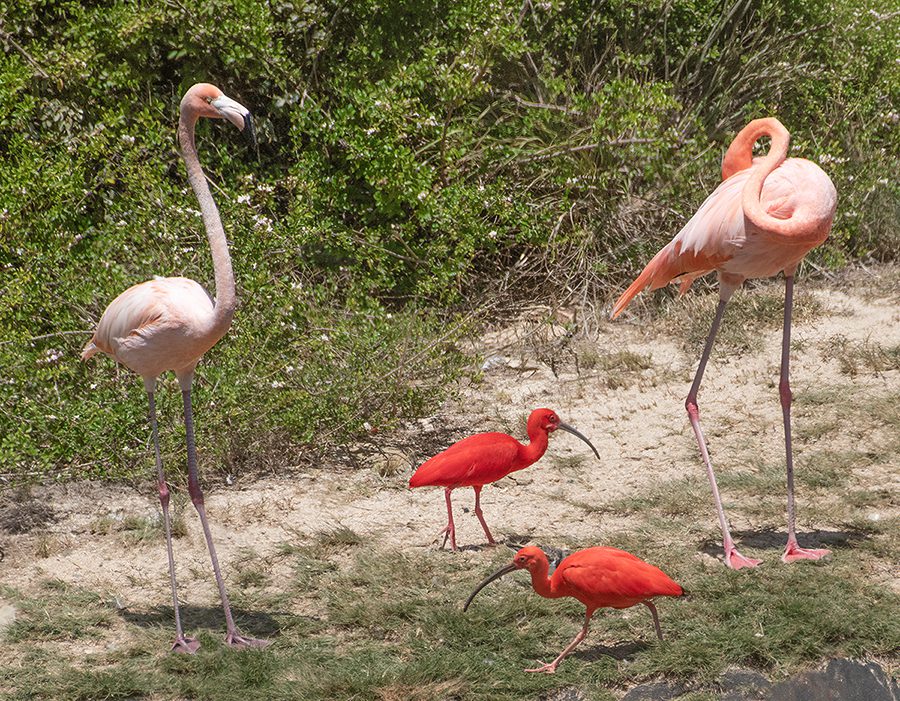
After years of mentioning Necker Island as the source of the celebrated flamingos and scarlet ibises in the Virgin Islands, I finally got to go on a tour there organized by the Virgin Islands Audubon Society group on St. John.
Richard Branson has transformed this small British Virgin Islands site into a conservation center for once-native flamingos, plus ibises and tropical parrots, as well as an exotic mix of Madagascar lemurs, giant tortoises from Seychelles and even baby kangaroos!
As the flamingos on Necker have mated and multiplied in number, some have spread out by flying to other nearby islands, and we are grateful that there are now over 100 flamingos on St. John.
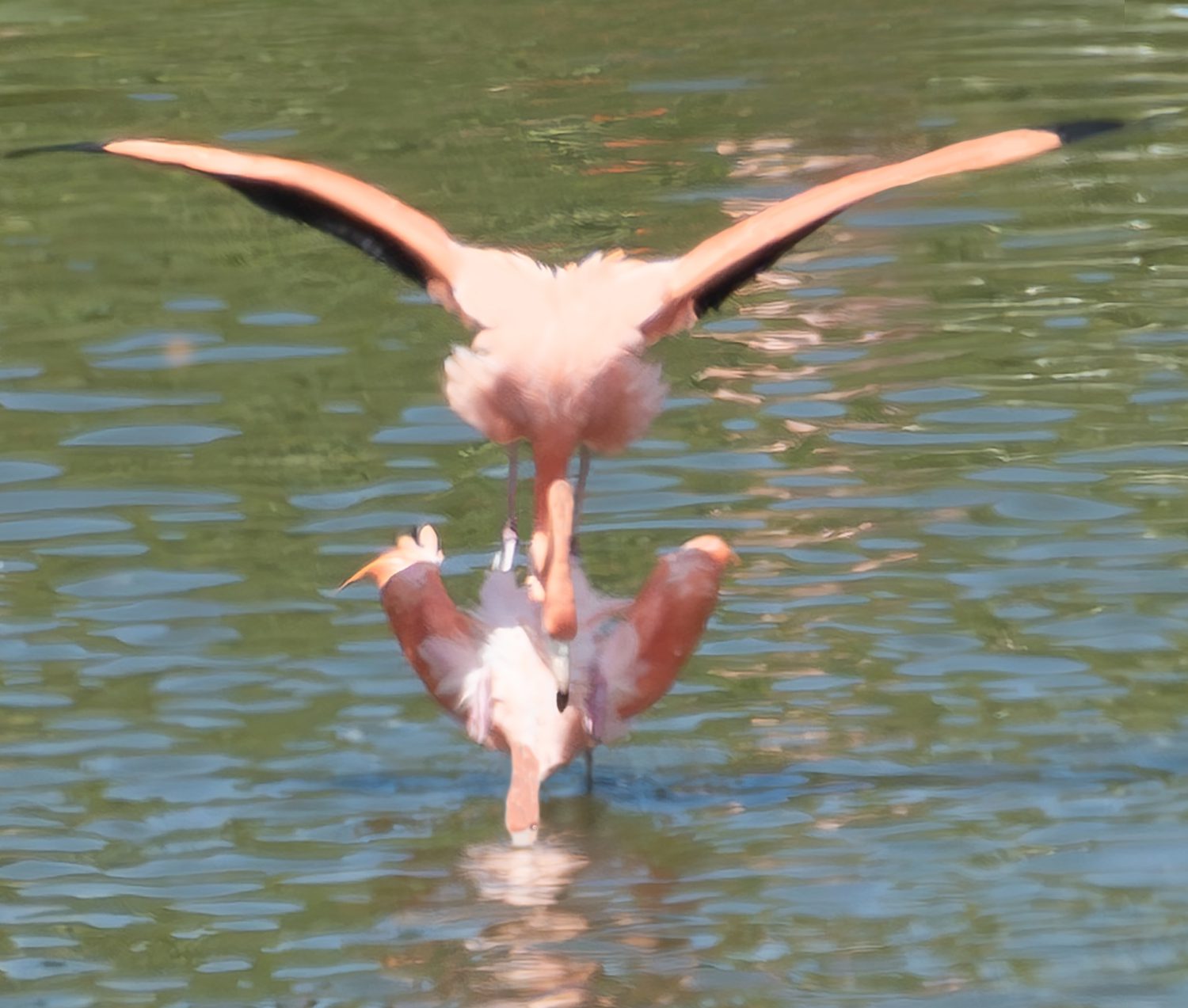
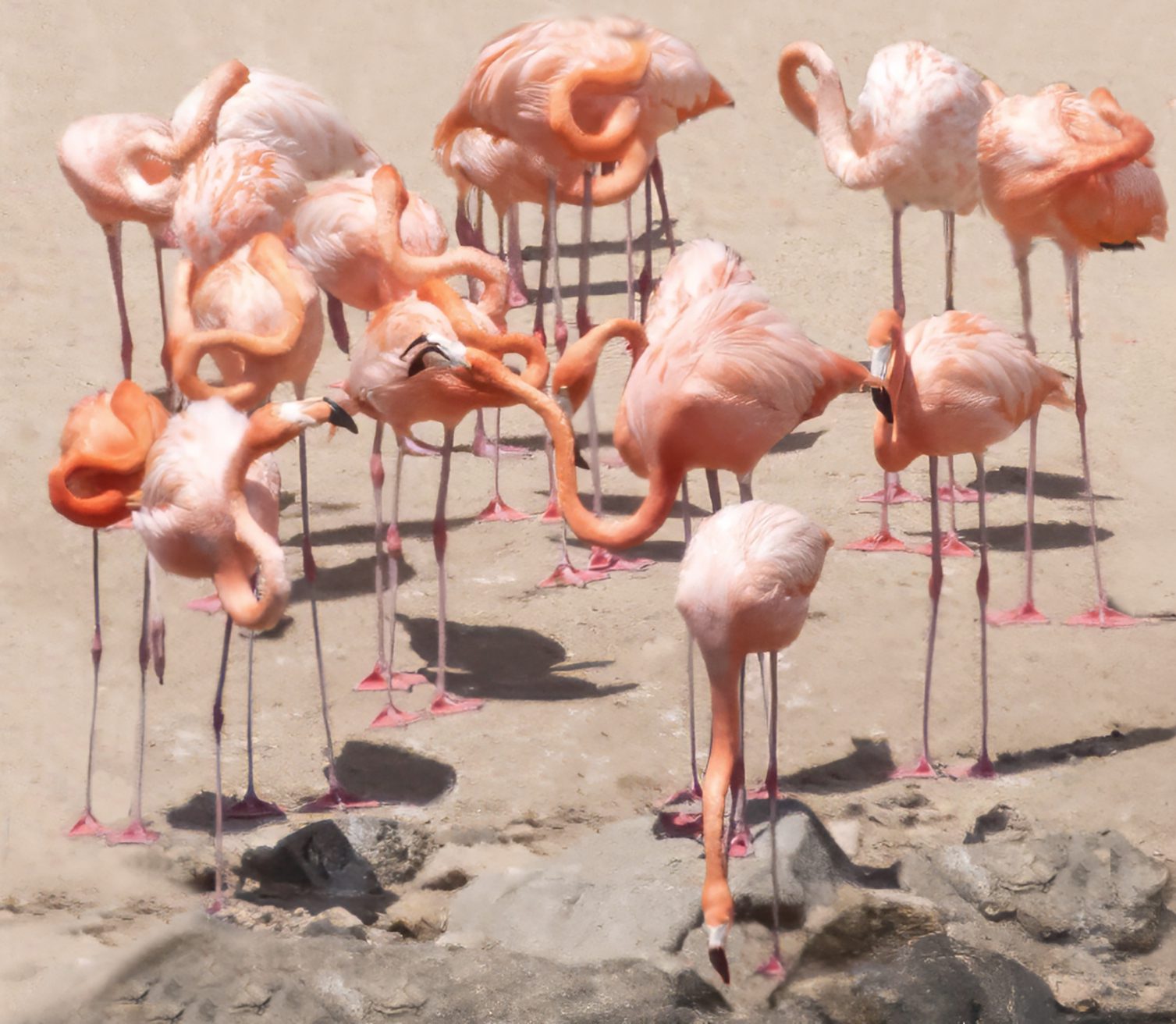
Besides catching some flamingos mating in the pond, I was most interested in a group of flamingos standing around on the sand. I don’t usually see their bright pink feet. In most of my photos they are standing in the water.
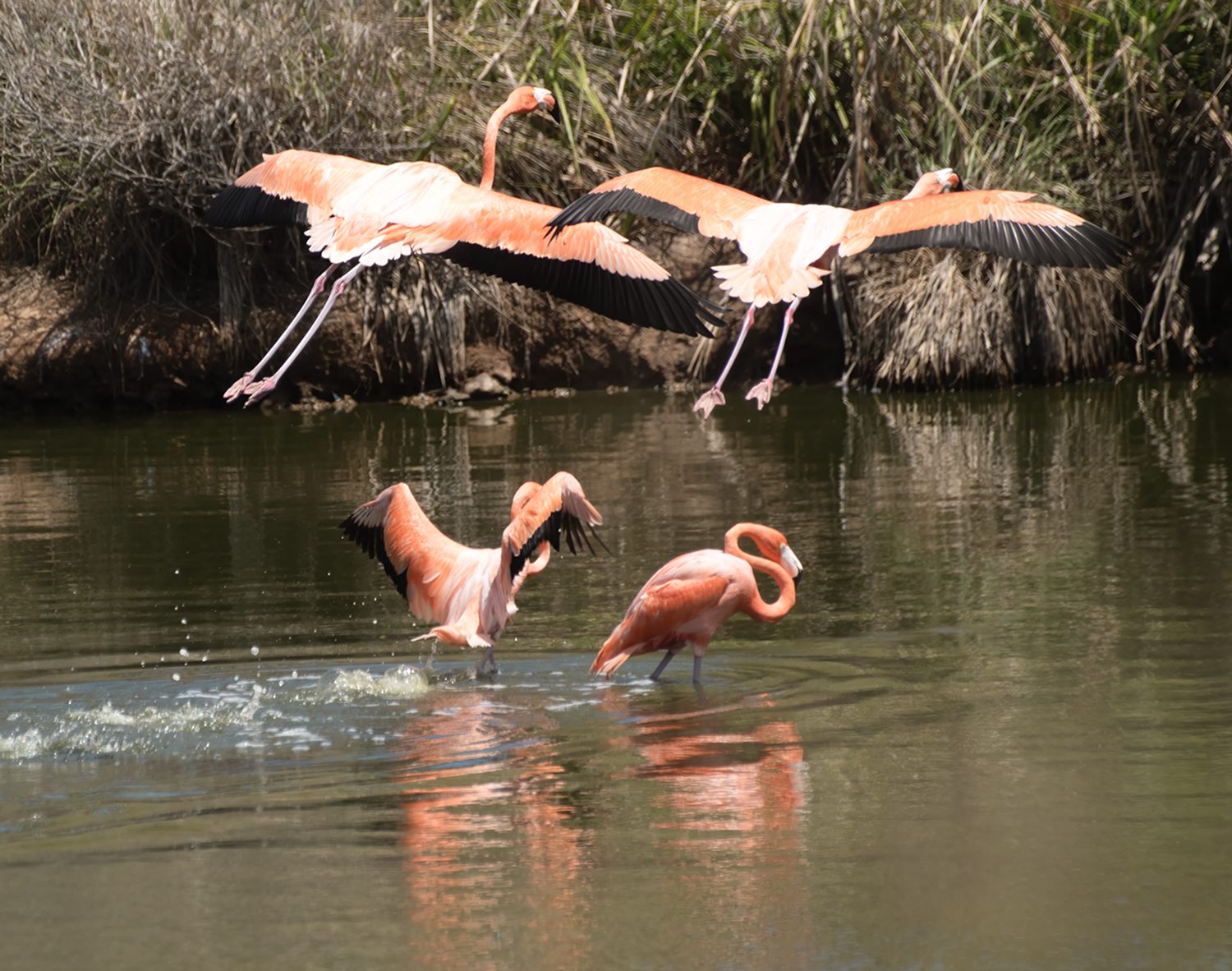
I also got some photos of the flamingos in flight, when their feet are visible, but hanging down loosely.
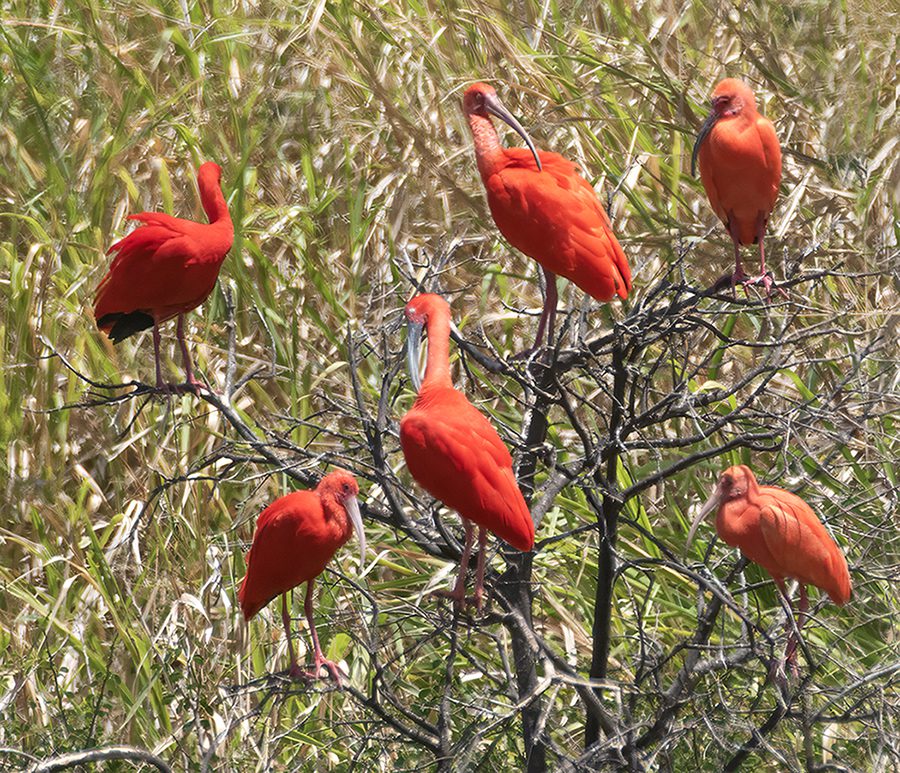
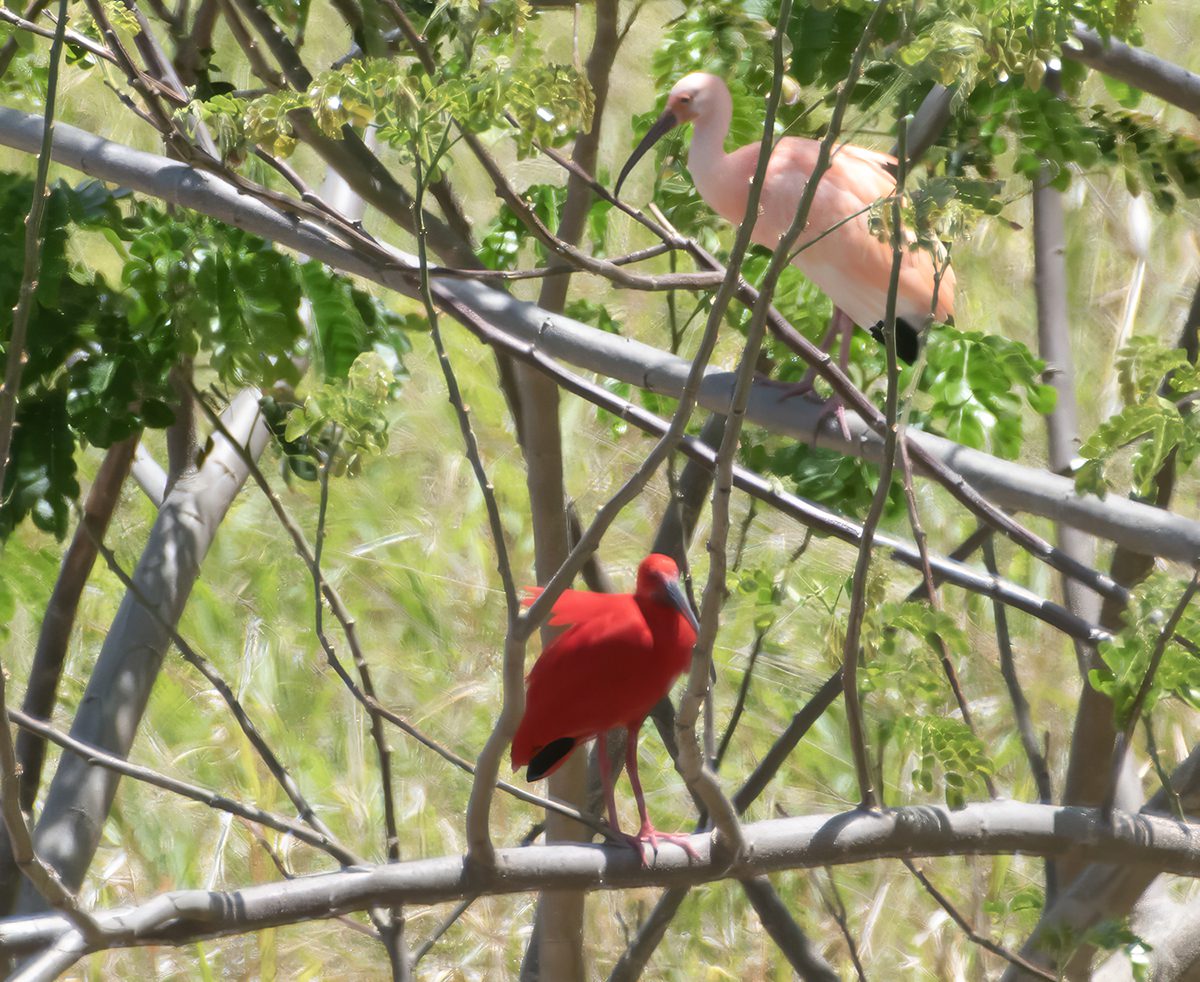
Meanwhile, six scarlet ibises were gathered in a tree near the pond – the most I had seen together.
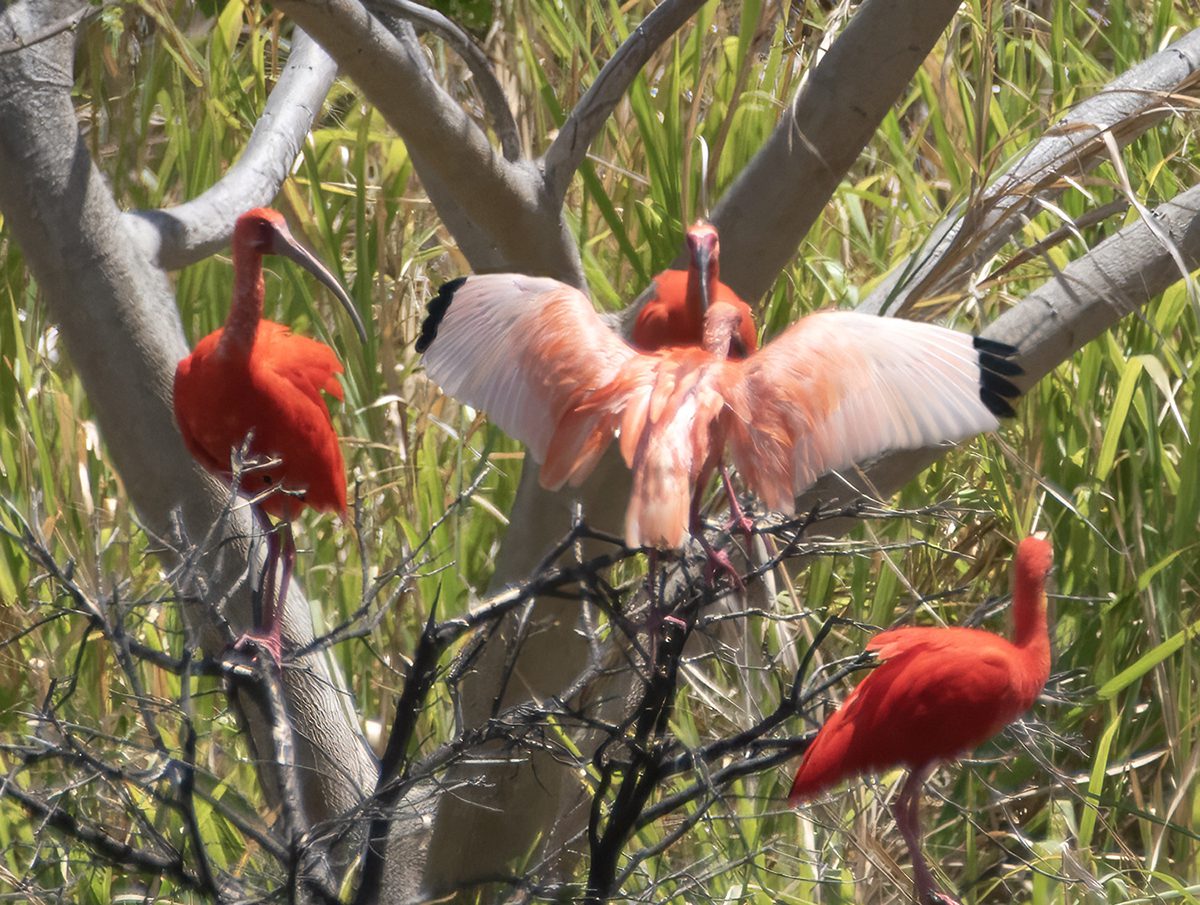
Then a pink one flew in. I assumed it was a baby. We were delighted to have a mating pair on St. John this season and their maturing chick has splotchy pink feathers. The young ones’ feathers get redder as they grow up and consume more food (crustaceans and algae) containing the carotenoids that color their feathers.
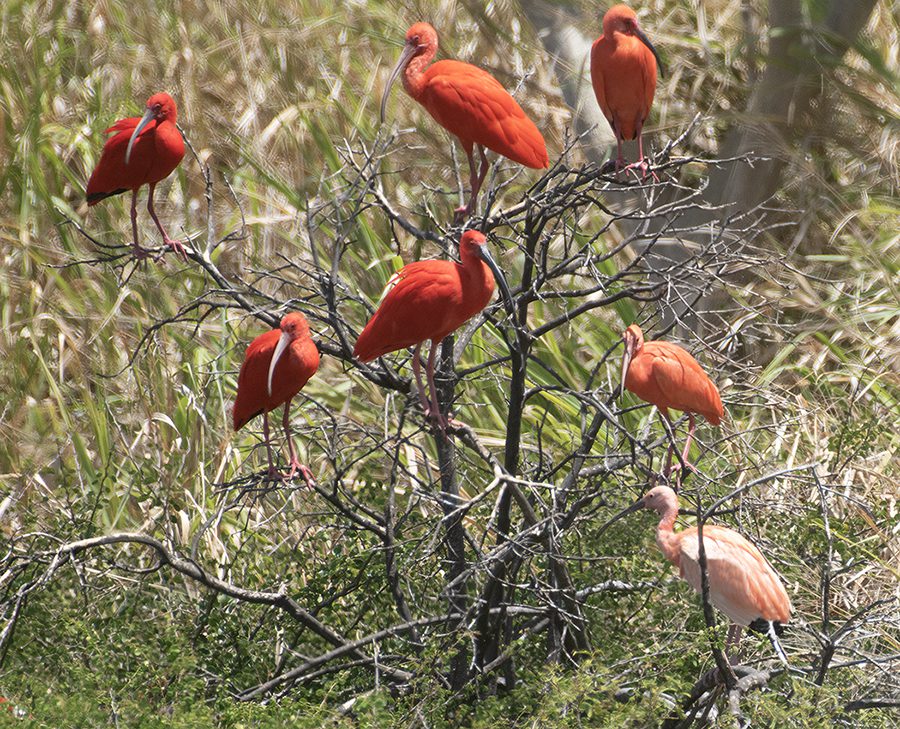
Later I learned that there are also some white ibises on the island. And that they mate with the scarlet ones. And have pink babies that grow up to be pink adults. That was a lot for me to process. I started imagining how the social dynamics of color differences worked out for everyone.
I saw a scarlet ibis sitting with a white one, enjoying the shade under a bush. Both had dark bills so maybe they both were breeding males. Otherwise their bills would be pinkish or tan colored, unless they were just messy from poking around in the mud looking for food along the edge of the pond.
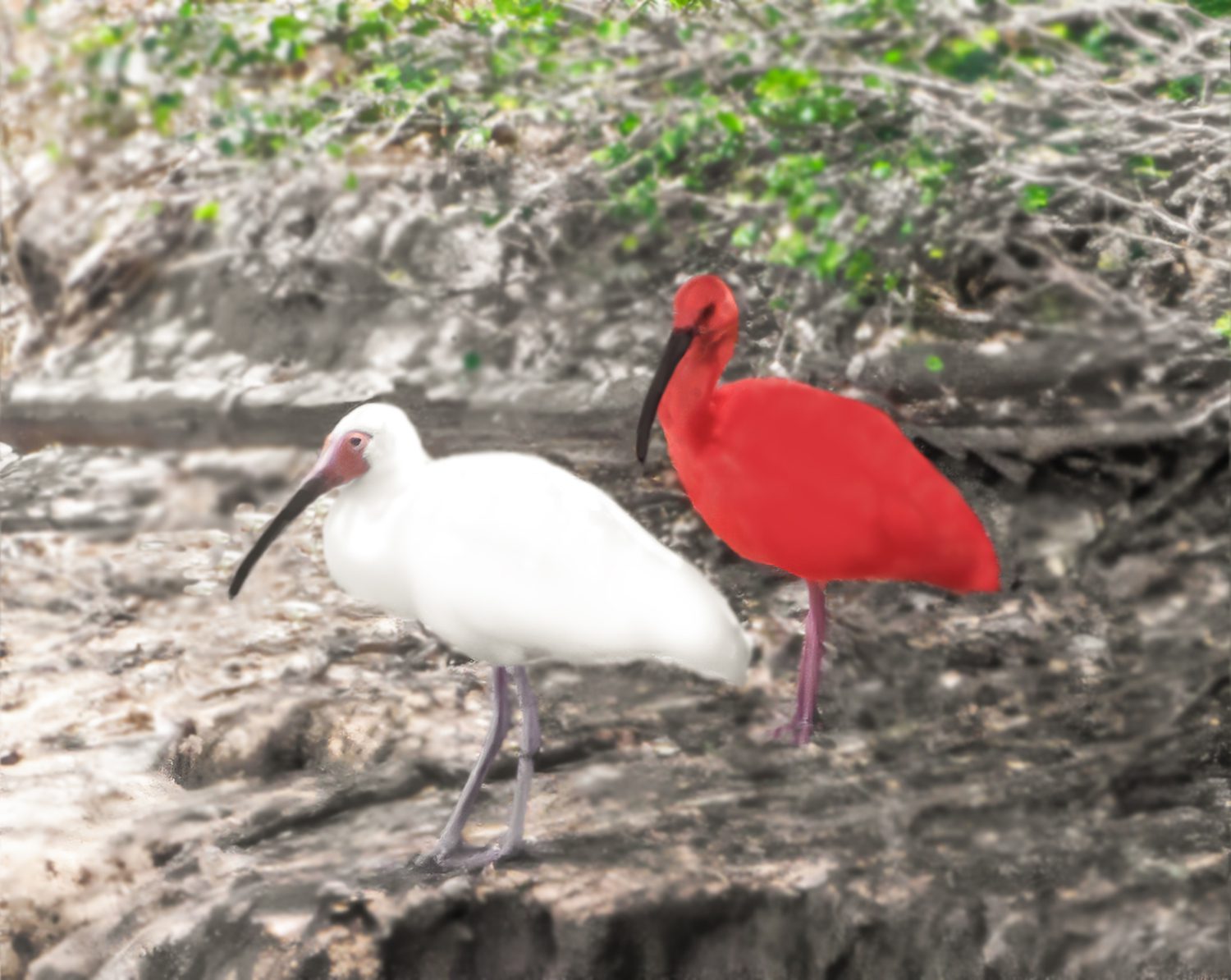
The white and scarlet ibises can mate because they are closely related genetically. Their offspring may not all have exactly the same pinkish coloring though.
Despite my love for flashy birds, I have to admit that the most exciting part of my trip was when I had a personal interaction with a red ruffed lemur. I had been doubtful about the wisdom of bringing lemurs from Madagascar to the Virgin Islands, but I was convinced when I learned they are hunted for meat at home, and in danger of extinction.
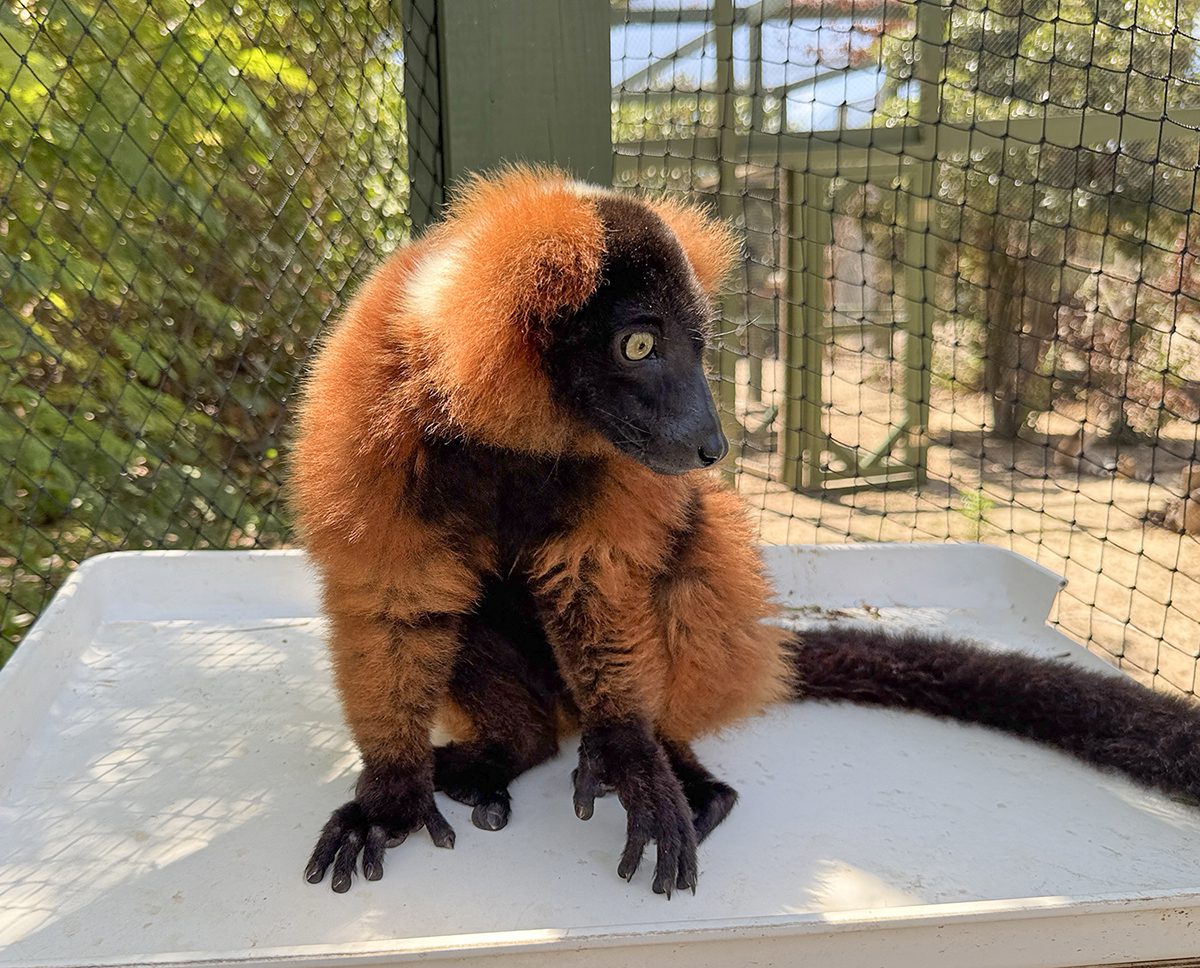
In the wild, red ruffed lemurs mostly eat fruits and are important distributors of seeds. They also like nectar, and frequently carry pollen from one tree to another on their fluffy fur.
When our tour guide offered us small pellets to feed the red ruffed lemurs, I noticed one sitting by itself looking a bit forlorn (or so I thought). I went over and held out my hand flat with the tiny snack on it. I was quite surprised when the lemur reached out with both its little hands and gently pulled me closer.
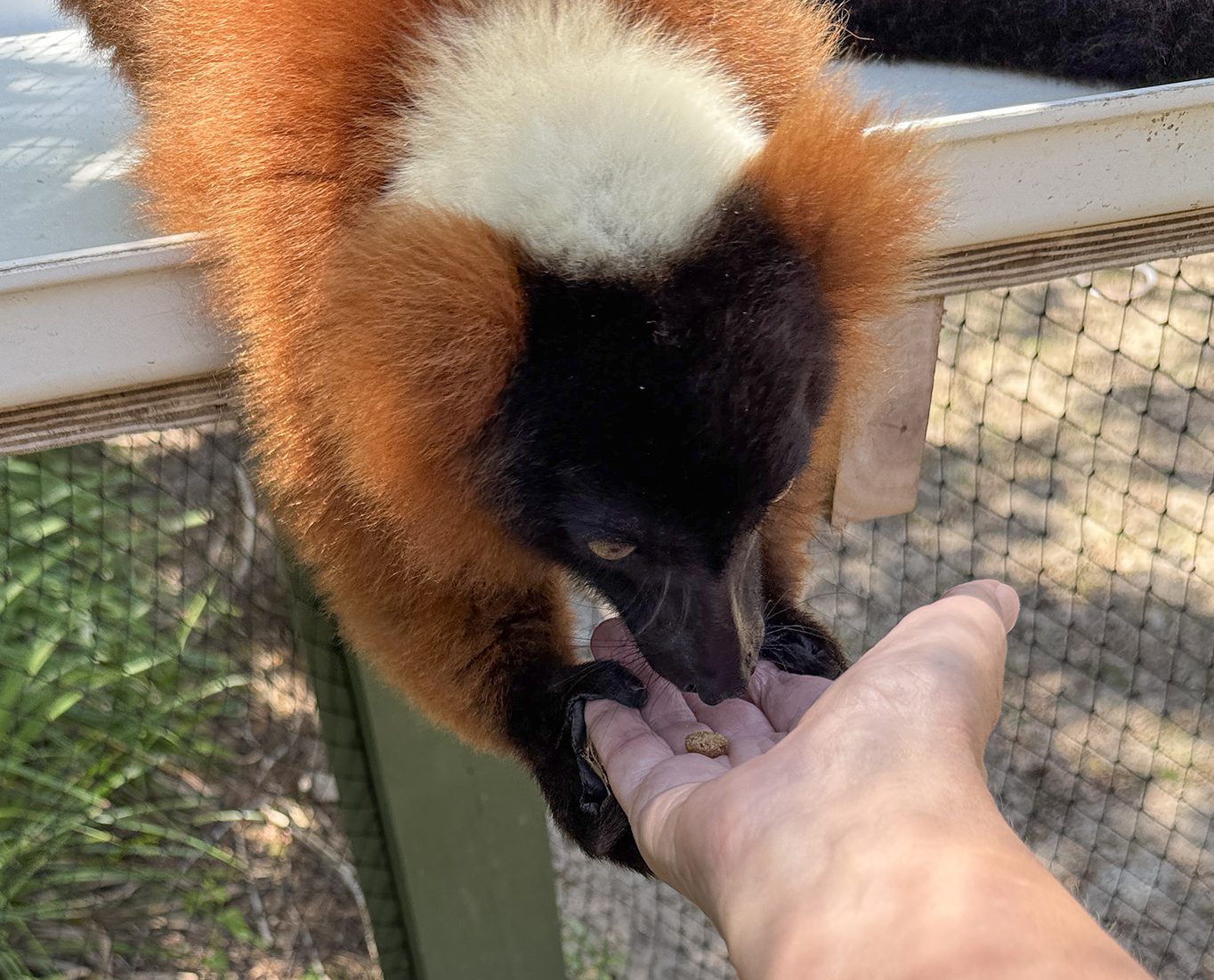
I know it’s a cliché, but I felt like my heart melted. We stayed together that way for a few minutes after the kibble was gone, and then it was time to move on. A truly unexpected moment of grace.
——————————————-
—Gail Karlsson is the author of a photo book Looking for Birds on St. John, as well as two other books about nature in the Virgin Islands –The Wild Life in an Island House, and Learning About Trees and Plants – A Project of the Unitarian Universalist Fellowship of St. John. Follow her on Instagram @gailkarlsson and gvkarlsson.blogspot.com. More info at gailkarlsson.com.