

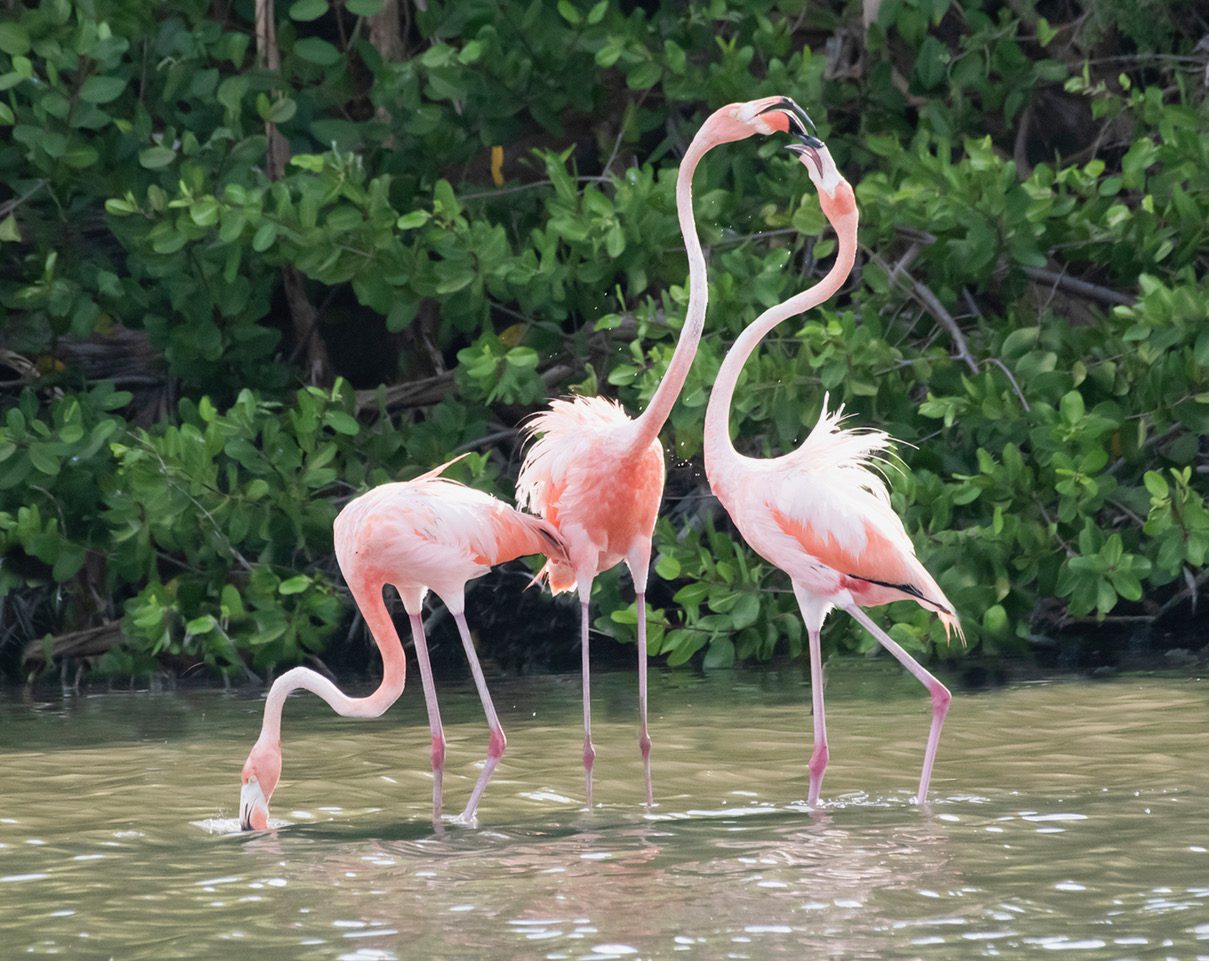
Like people, flamingos enjoy getting together in groups and socializing. And this year we have been blessed with amazing gatherings in some of St. John’s ponds – the annual December bird count included over 100 flamingos. Wow!
A couple of years ago we were delighted to report just one flamingo that showed up on the south shore, so these flashy birds are providing a dramatic new bird watching attraction on St. John.
Historically, flamingos were native residents of the Virgin Islands, but then early European settlers found them to be good eating – ‘tastes like a goose’. Their honking voices do make them sound a lot like geese. But of course they are so much more beautiful. Anyway, between hunting, feather gathering and habitat loss, they were all wiped out by the mid-1900s.
Then in 1992 a conservation group reintroduced a small group of flamingos from Bermuda to the British Virgin Islands. Those birds successfully reproduced, and there are now hundreds of flamingos on Anegada, the farthest north island in the BVIs. Another group was later brought to Necker Island. With growing populations in the BVIs, it seems that some of the flamingos have now decided to spread out and are flying over to check out the living conditions on St. John.
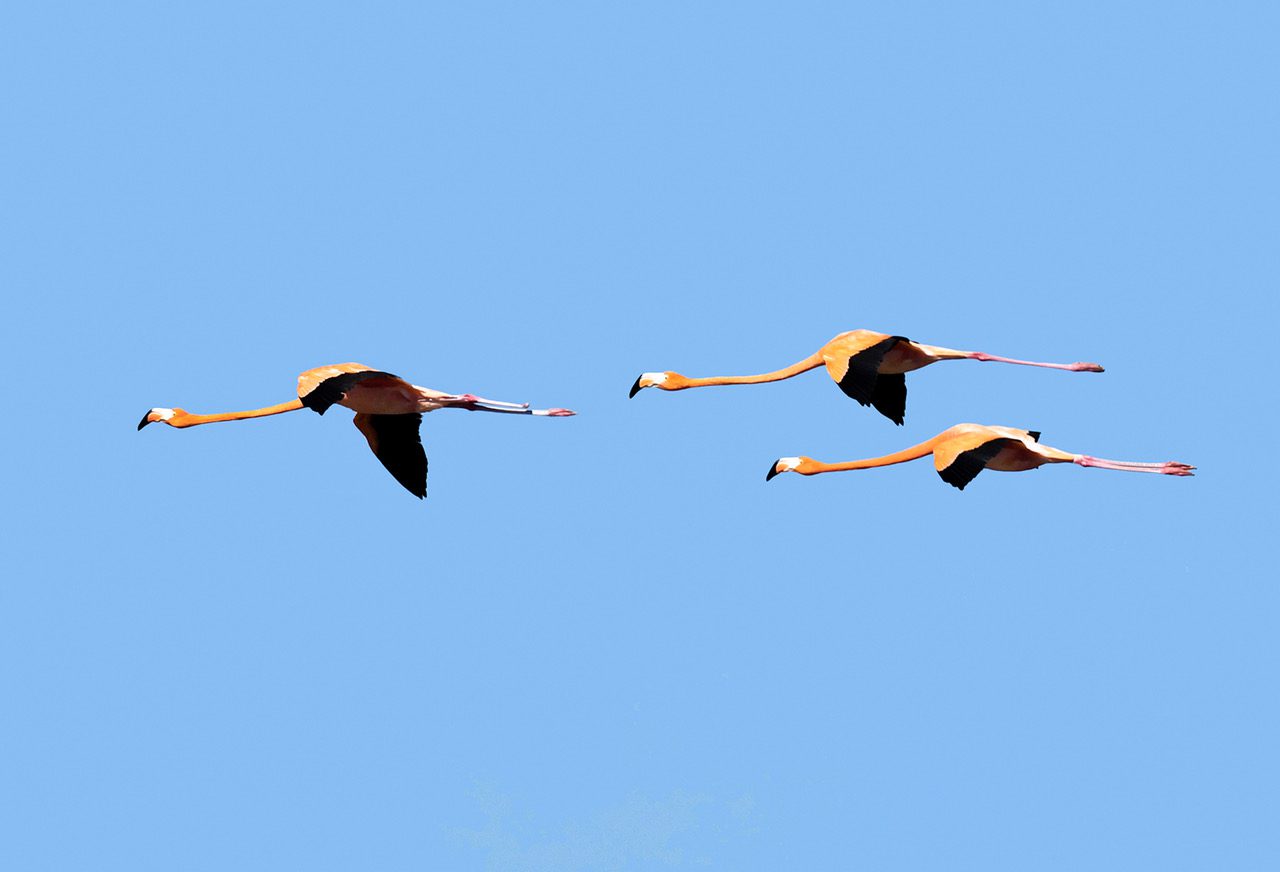
I have been lucky enough to spend time with some flamingos having rather noisy parties. I wasn’t actually invited, but they were gracious enough to allow me to sit quietly on the sidelines with my camera.
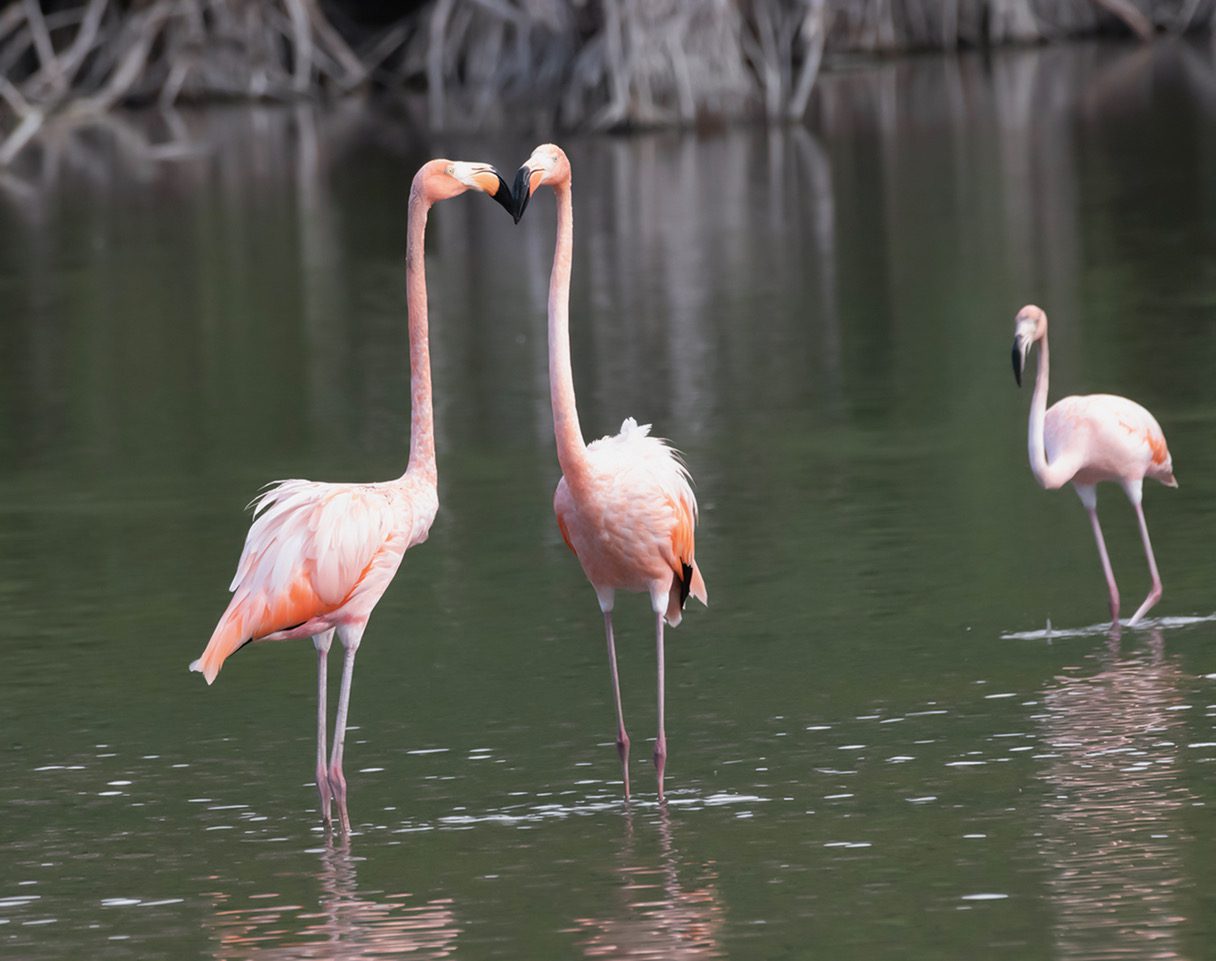
Sometimes the flamingos seem to be enjoying quiet conversations.
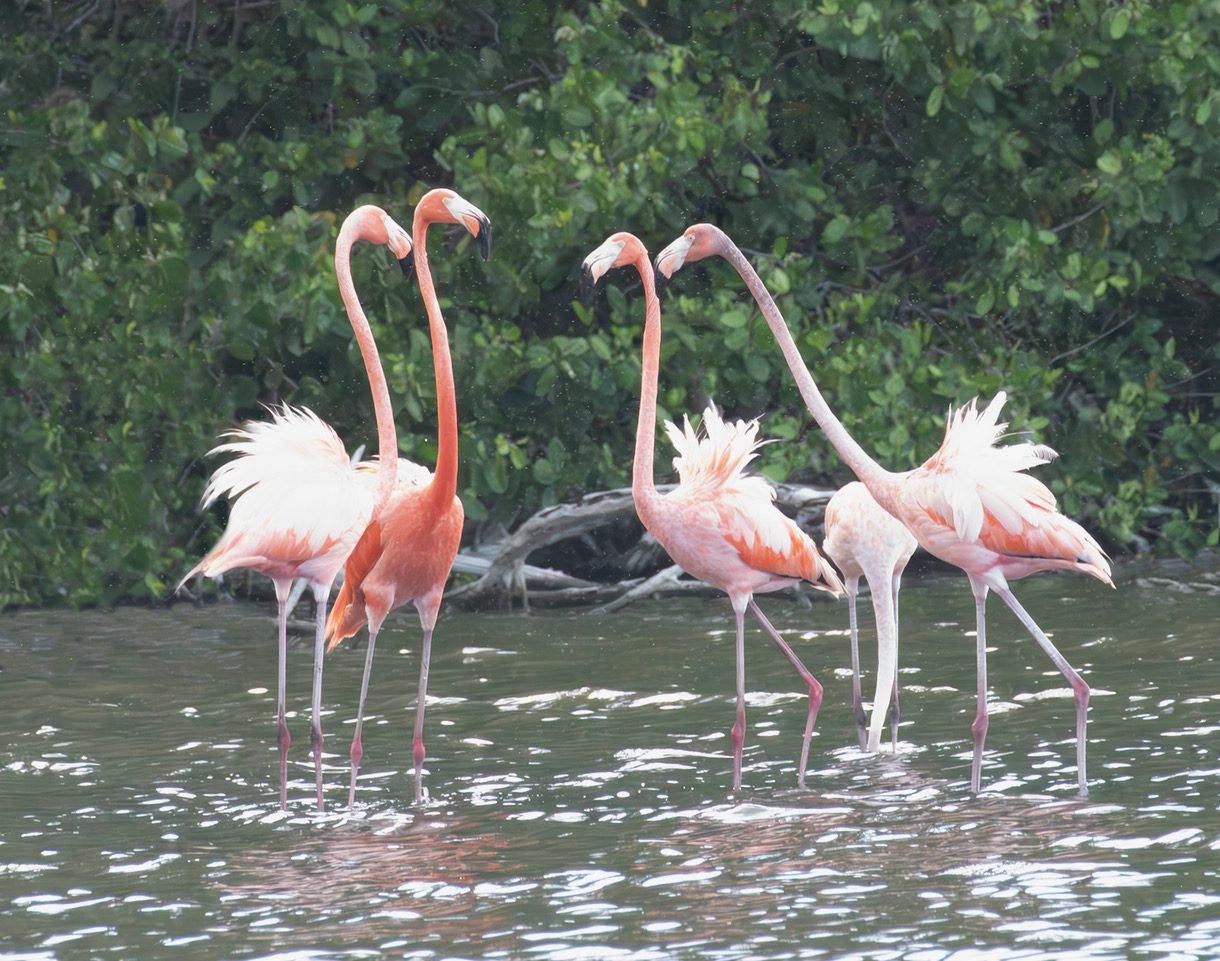
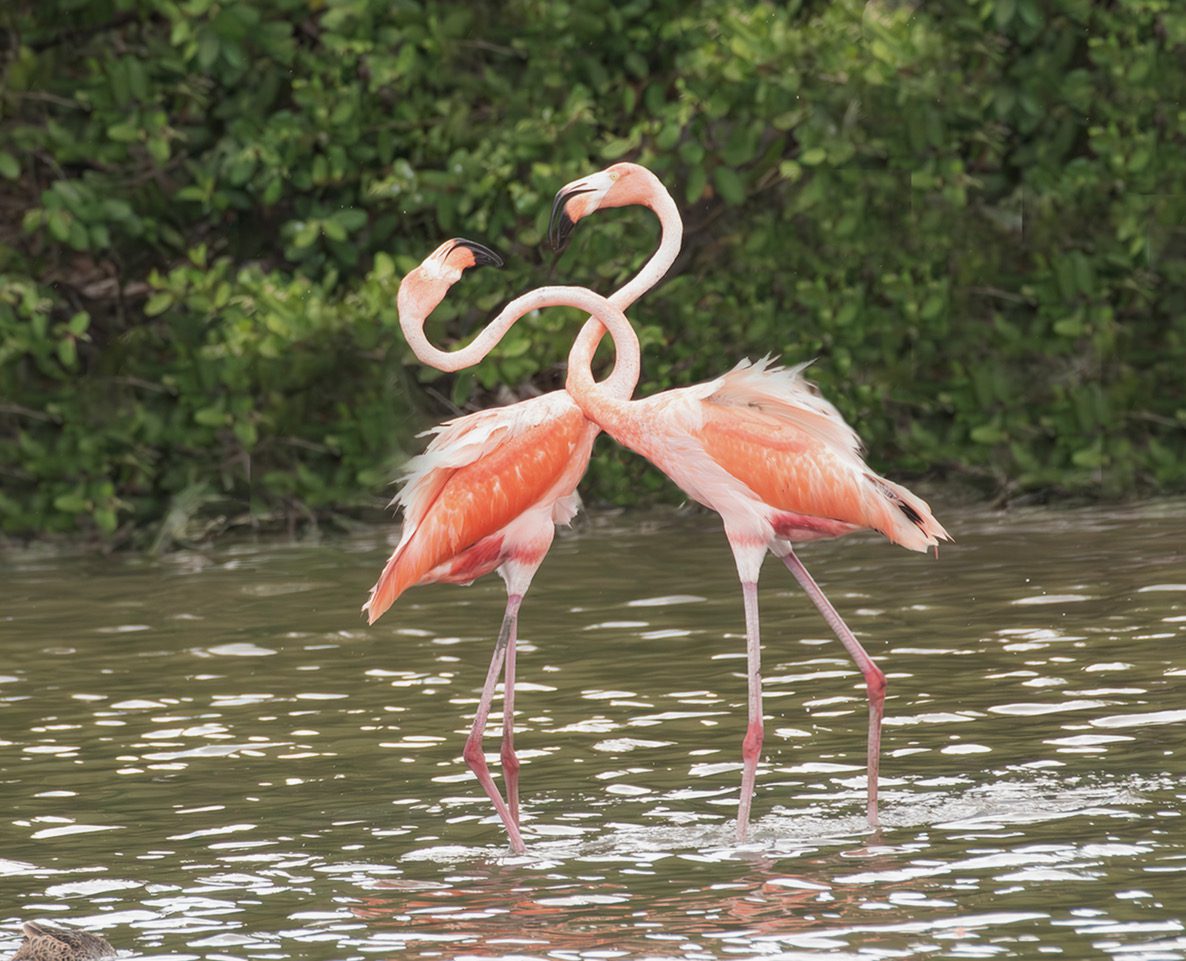
Later there might be dancing.
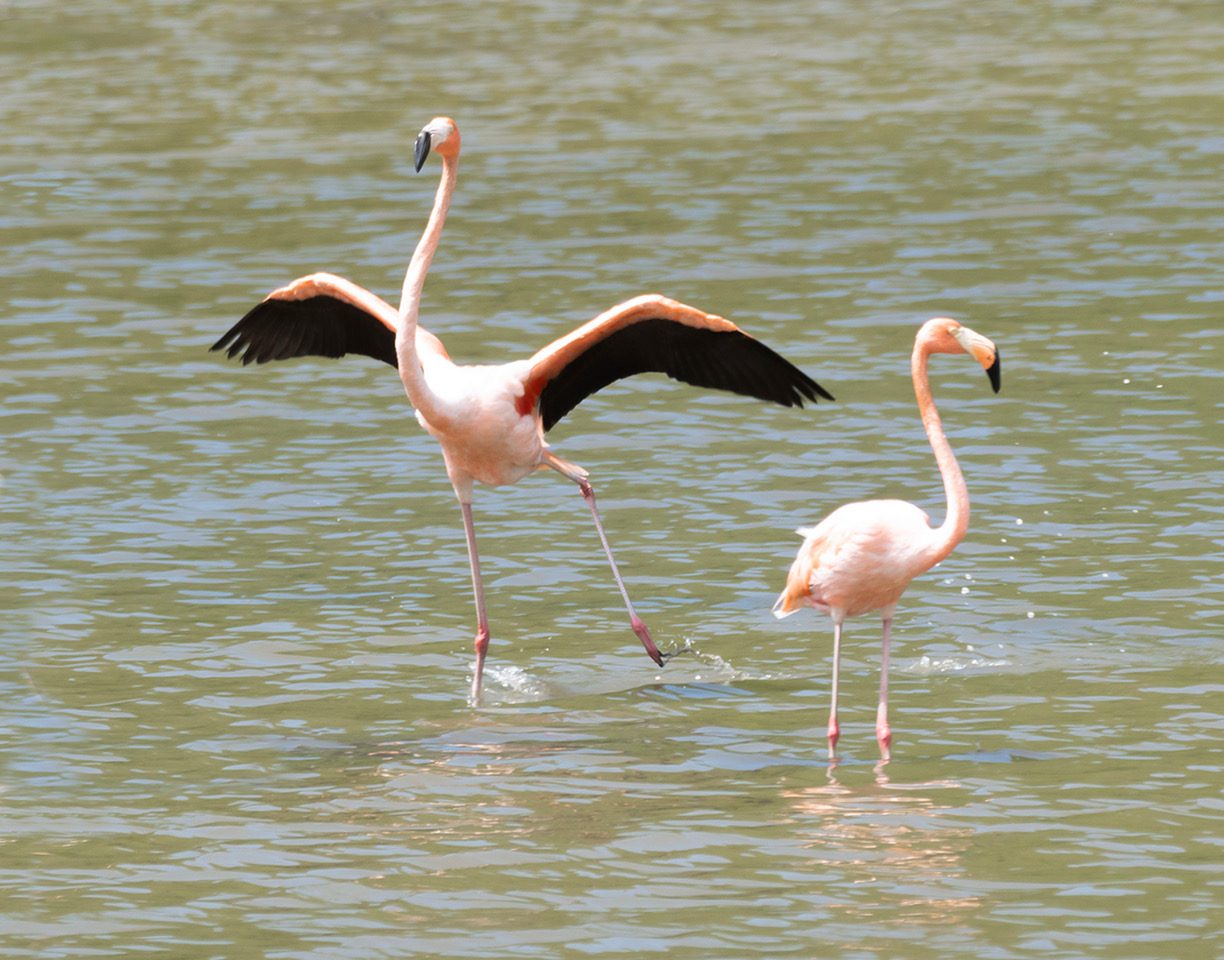
And sometimes it looks like they are kissing.
Perhaps an embrace.
Then, all of a sudden, one of them might take offense and deliver a quick bite.
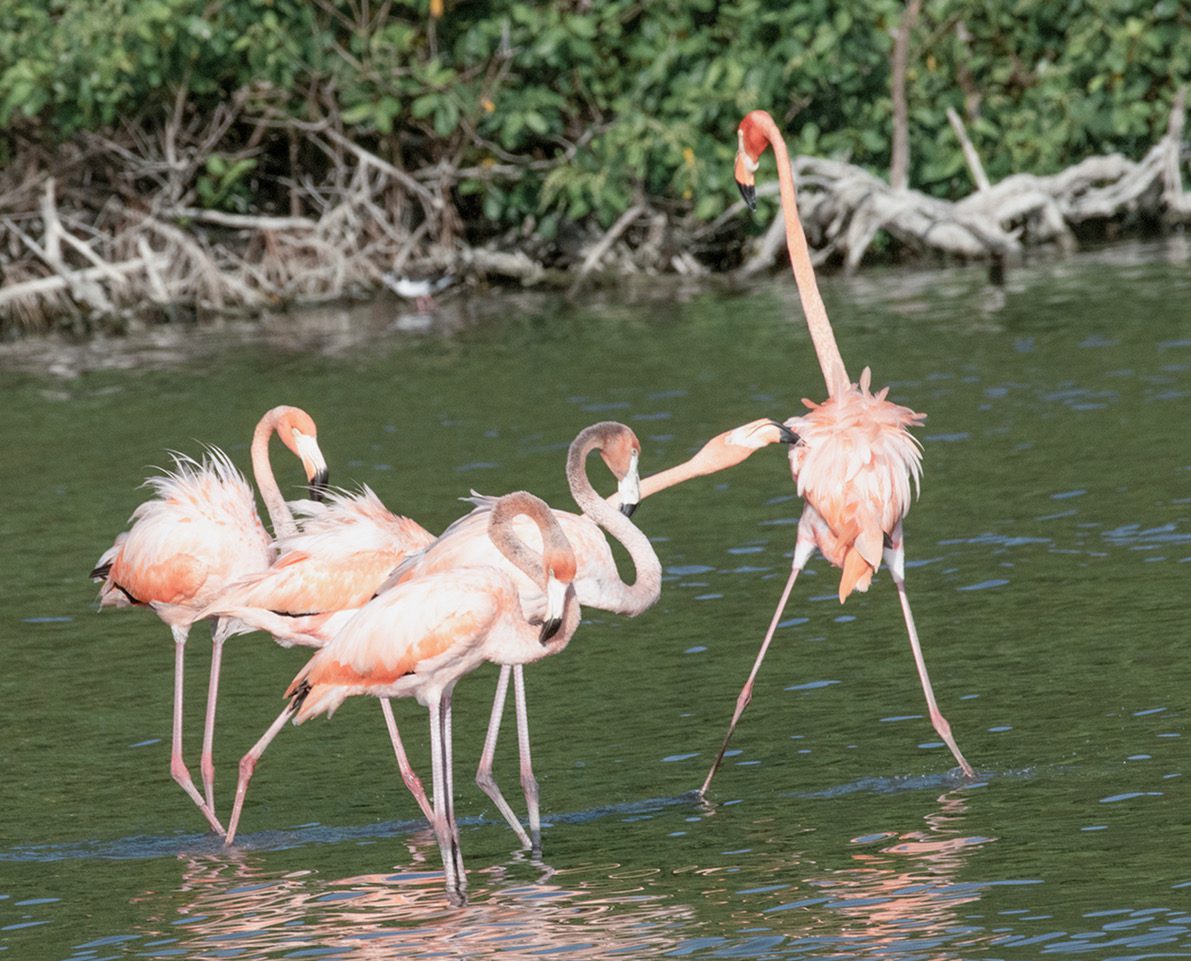
Which might lead to some chasing.
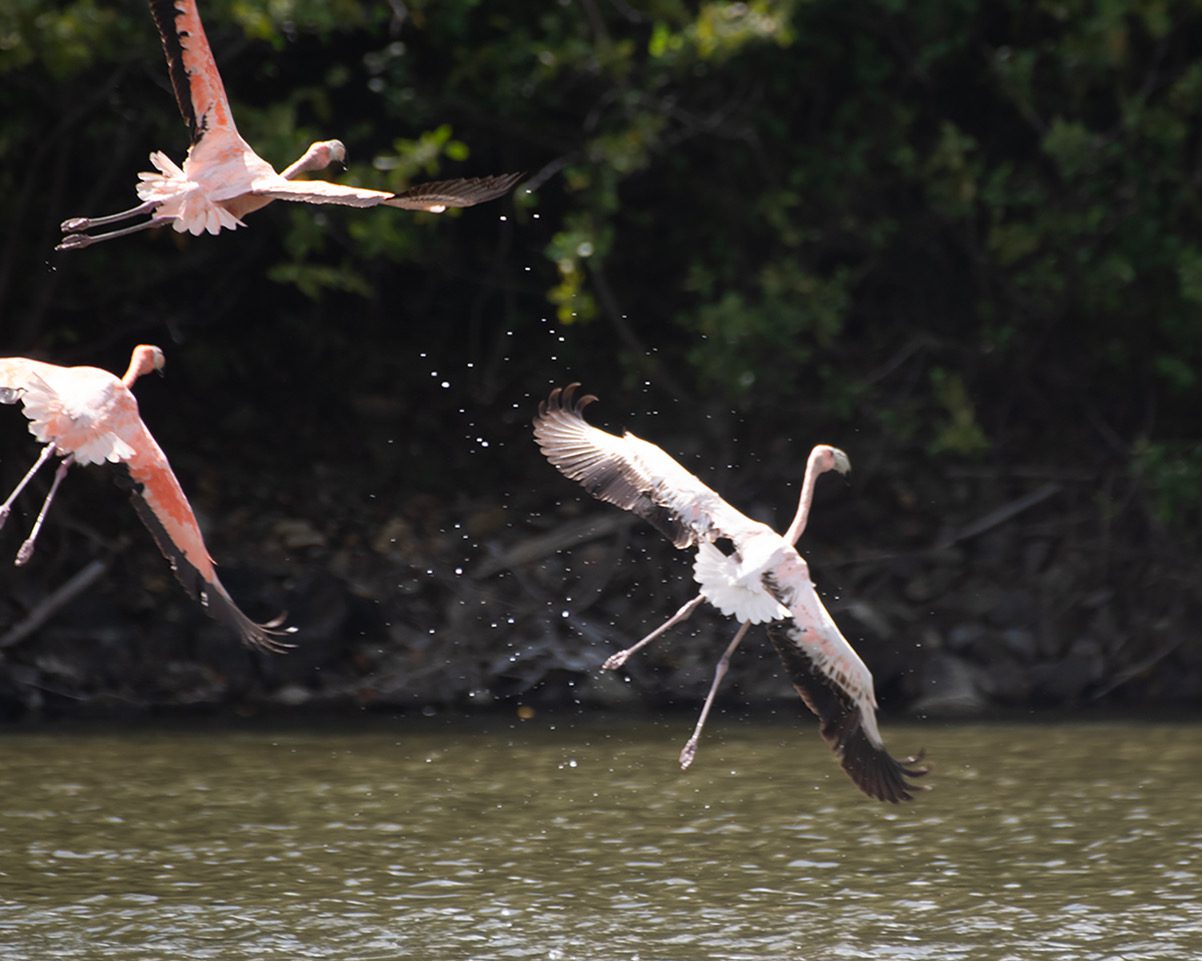
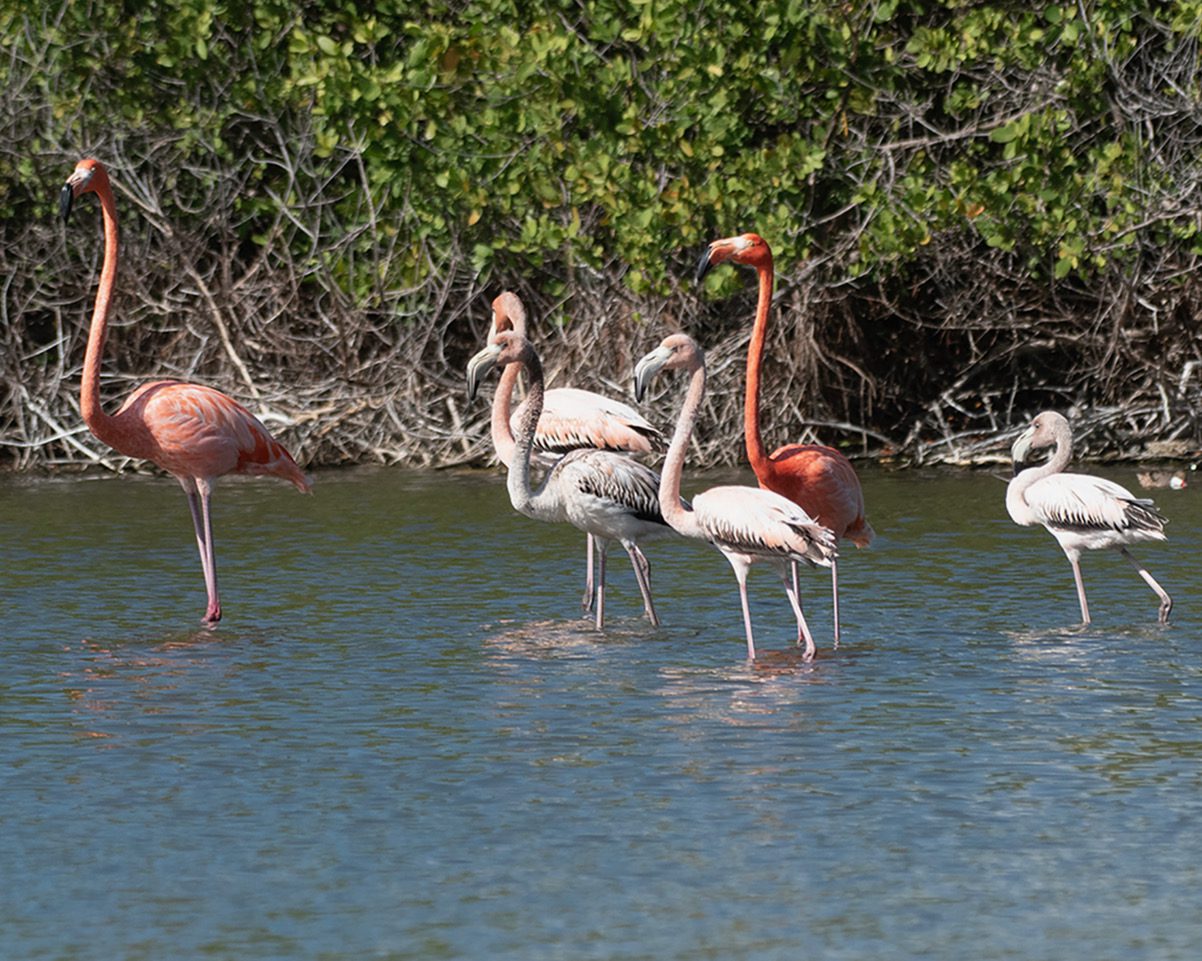
Many of the flamingos in St. John now seem to be adults, judging from their size and coloring. But I noticed a few small, white ones that looked quite young. I am wondering if they might have been born on St. John over the summer, but can’t be sure. A baby flamingo grows almost to full size within a few months, and can fly soon after that, so possibly the young ones flew over to St. John with their parents.
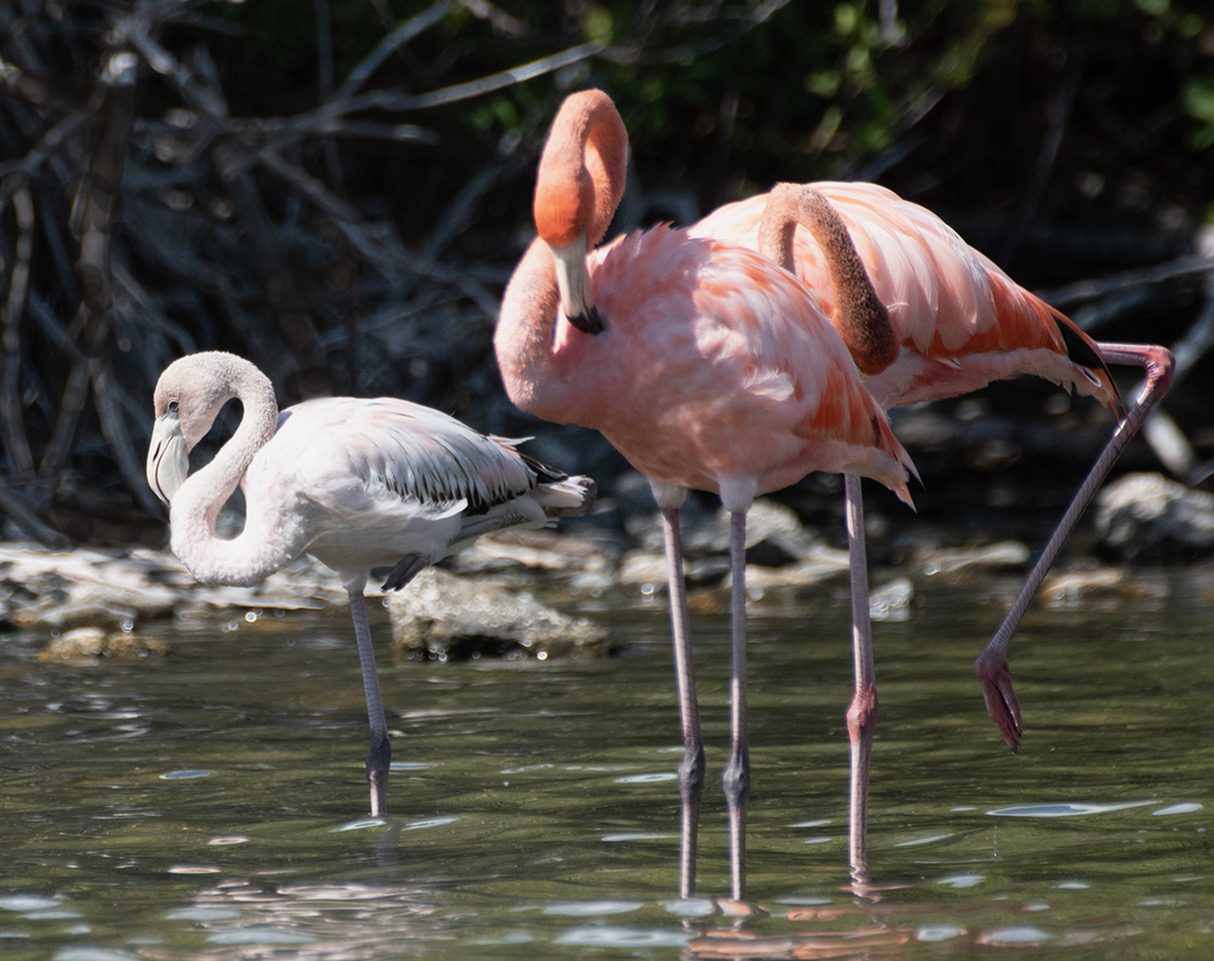
It can take a couple of years for the young flamingos to get their distinctive pink look. As they grow up they have to consume lots of red-orange carotenoid pigments (like the ones that color carrots and tomatoes). The flamingos get those pigments by eating microscopic algae in the water, and crustaceans like brine shrimp that also eat the algae. The pigments are broken down in their digestive systems and then get deposited in their feathers and skin.
Members of a group of flamingos can vary quite a bit in coloring depending on their age and diet. Male flamingos are usually a bit larger and heavier, but not necessarily a darker color than females.
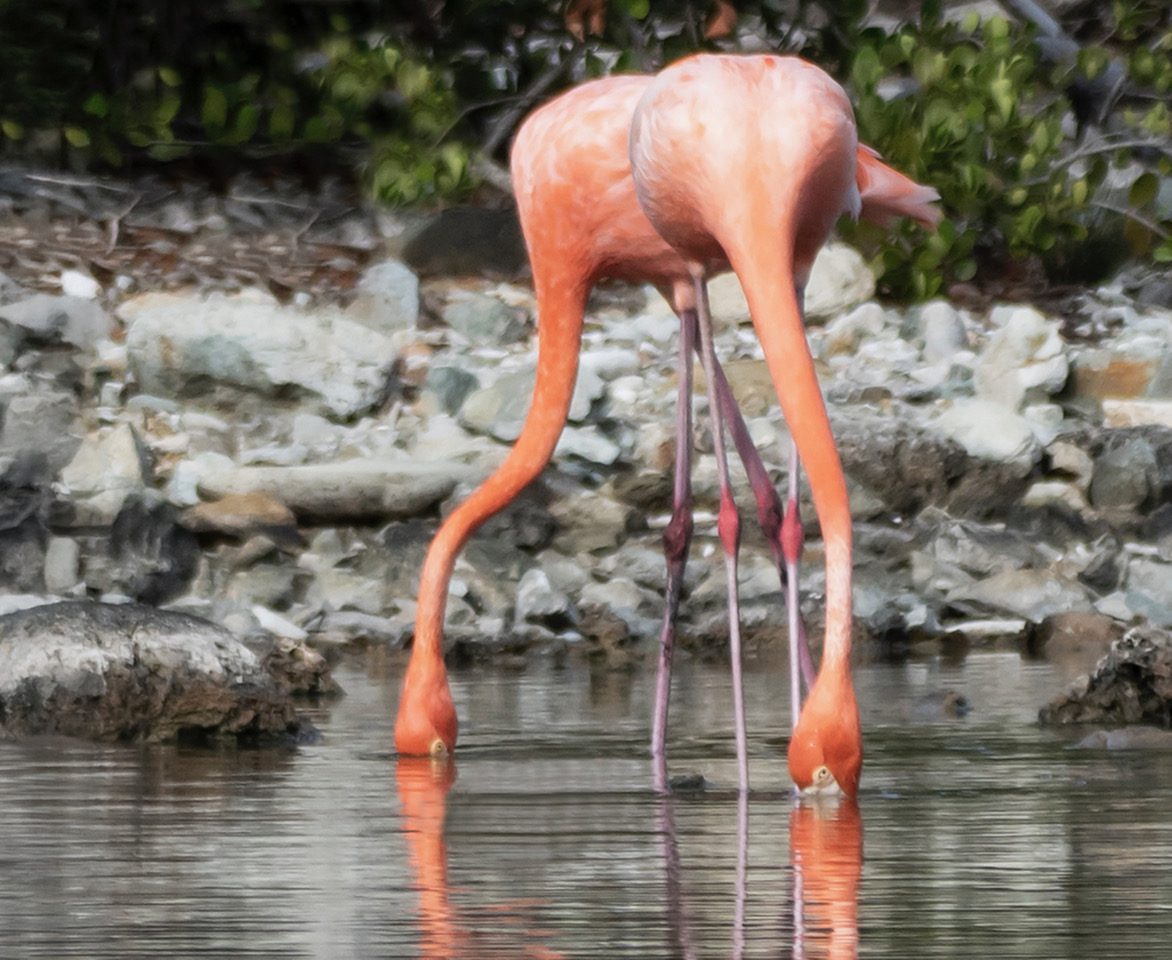
The feeding process involves the flamingos holding their heads underwater, shuffling their feet to stir up the mud on the bottom, sucking in mouthfuls of water, using their tongues to push out the water and strain it through comb-like filtering structures inside their beaks, and then swallowing anything edible.
Besides algae and brine shrimp, they also pick up other small crustaceans and invertebrates, insect larvae, and some seeds and other plant material. They are able to tolerate feeding in very salty ponds where other birds don’t go because they have special glands that they can use to excrete salt through their nostrils.
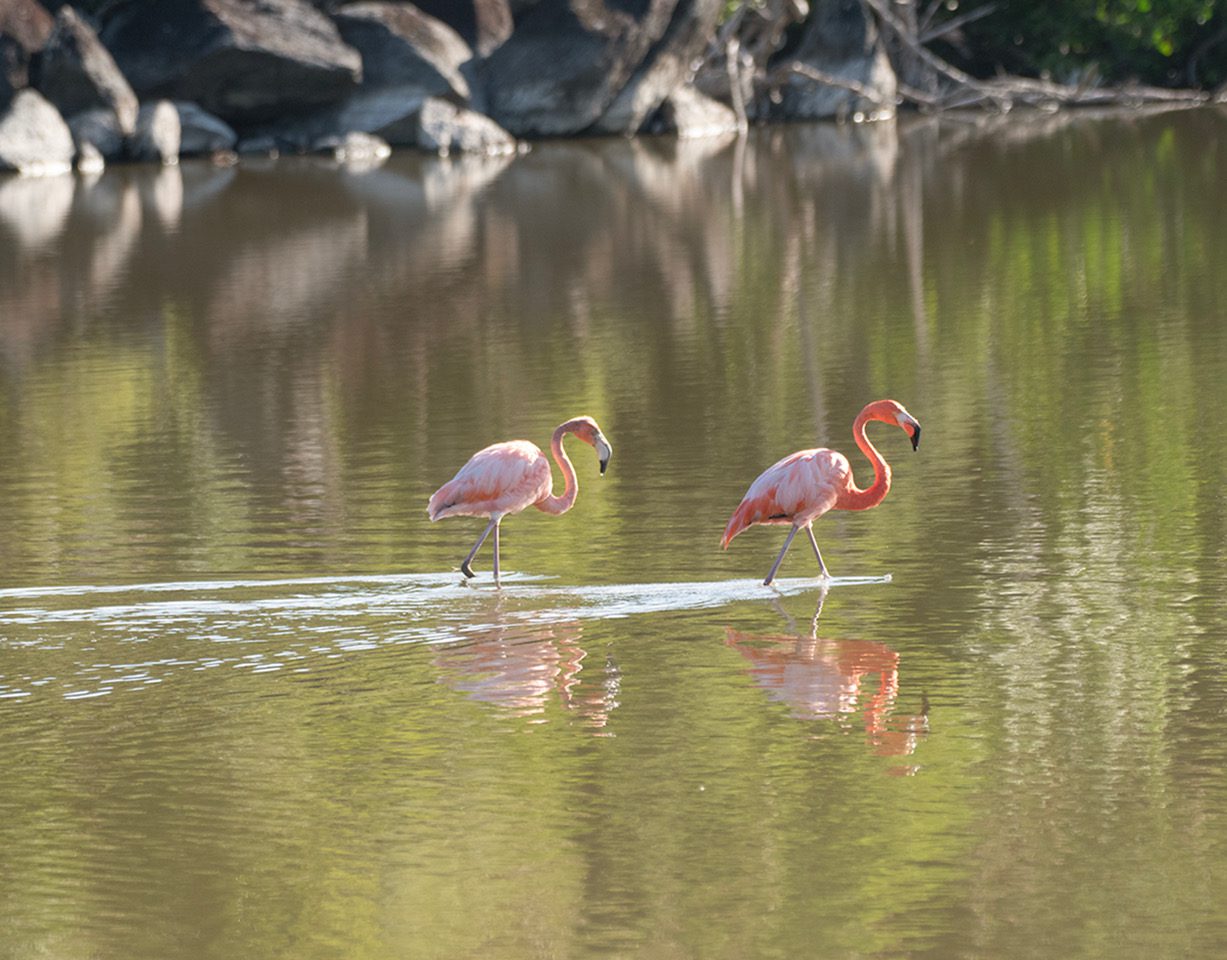
And when the partying is over, it’s time to rest and give thanks for the blessing of a day with flamingos.
________________________________________________________________________
Gail Karlsson is the author of a photo book Looking for Birds on St. John, as well as two other books about nature in the Virgin Islands – The Wild Life in an Island House, and Learning About Trees and Plants – A Project of the Unitarian Universalist Fellowship of St. John. Follow her on Instagram @gailkarlsson and gvkarlsson.blogspot.com. More info at gailkarlsson.com.