

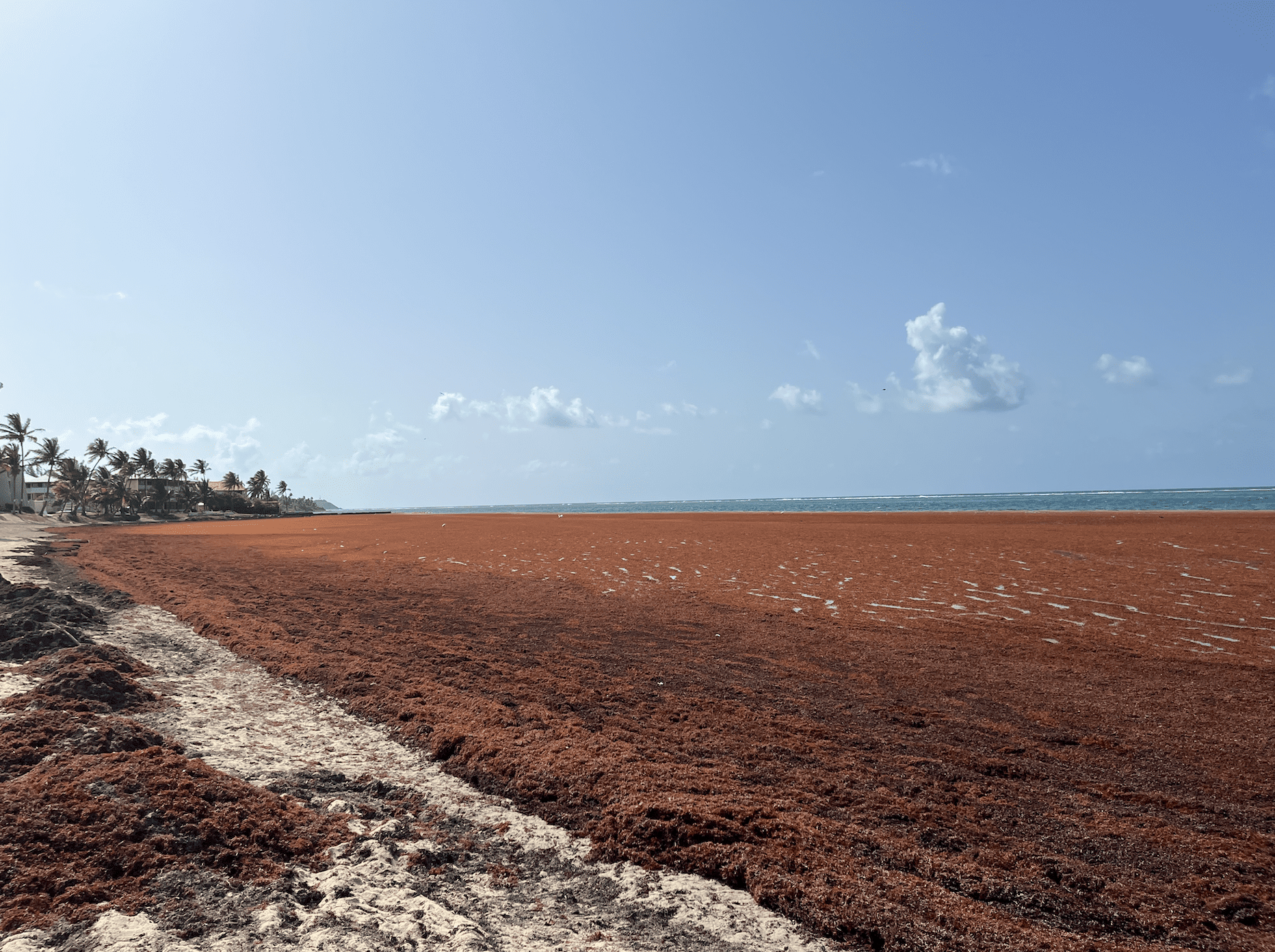
Efforts to manage the ongoing influx of sargassum seaweed across the U.S. Virgin Islands are gaining traction, with new updates shared during a recent webinar hosted by the National Oceanic and Atmospheric Administration and featuring guest speaker Amy Dempsey, a marine biologist and environmental consultant.
The webinar, held on Wednesday, July 30, was one of a five-part series aimed at providing updates on the challenges associated with sargassum.
“NOAA’s Southeast and Caribbean Regional Collaboration Team is launching a five-part webinar series to raise awareness about key issues surrounding sargassum,” according to NOAA. “Each webinar will highlight different aspects of sargassum research, management, and its impacts on coastal communities and ecosystems. The goal of this series is to foster knowledge-sharing and regional collaboration across affected areas as we continue to see impacts from sargassum inundation events.”
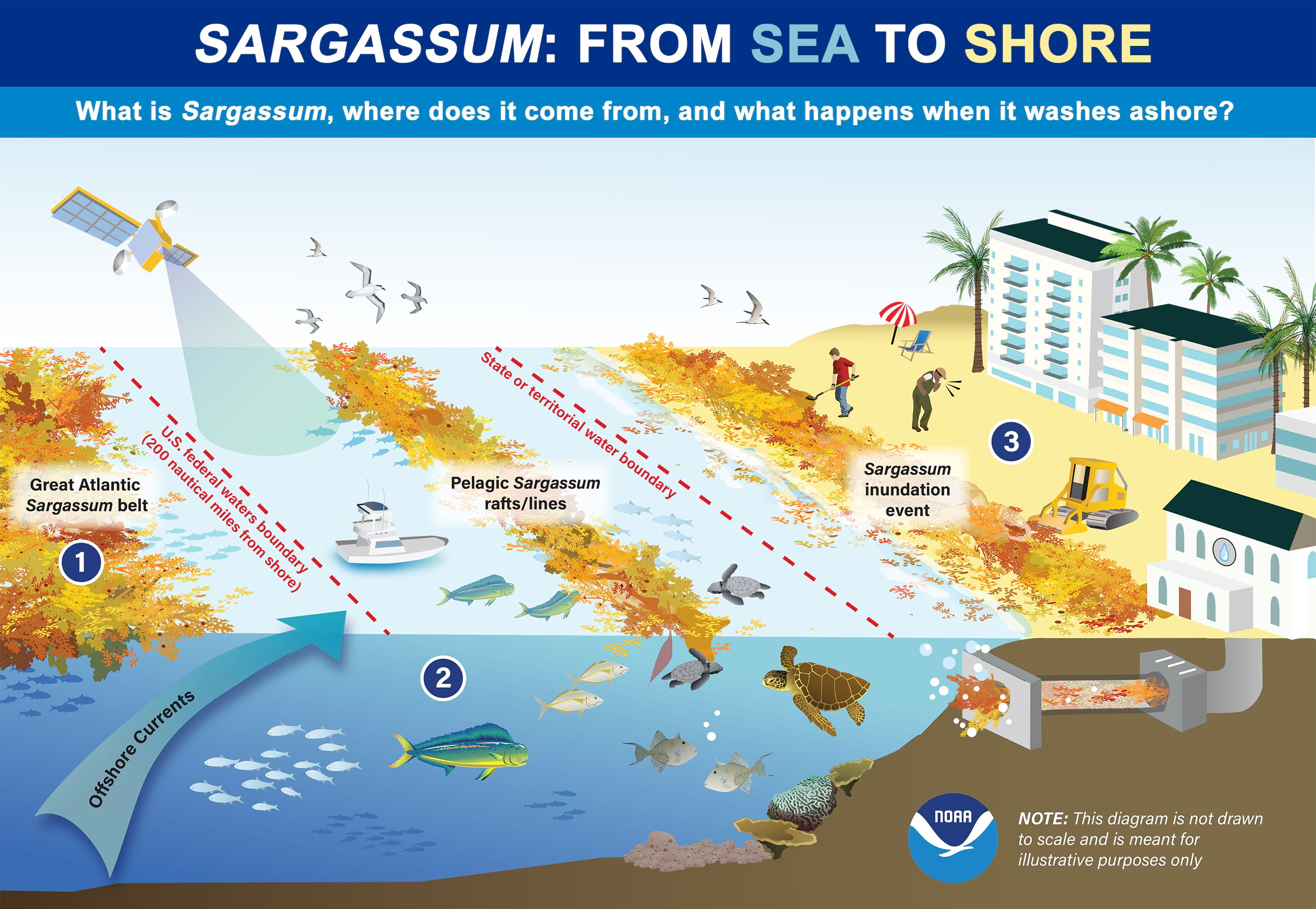
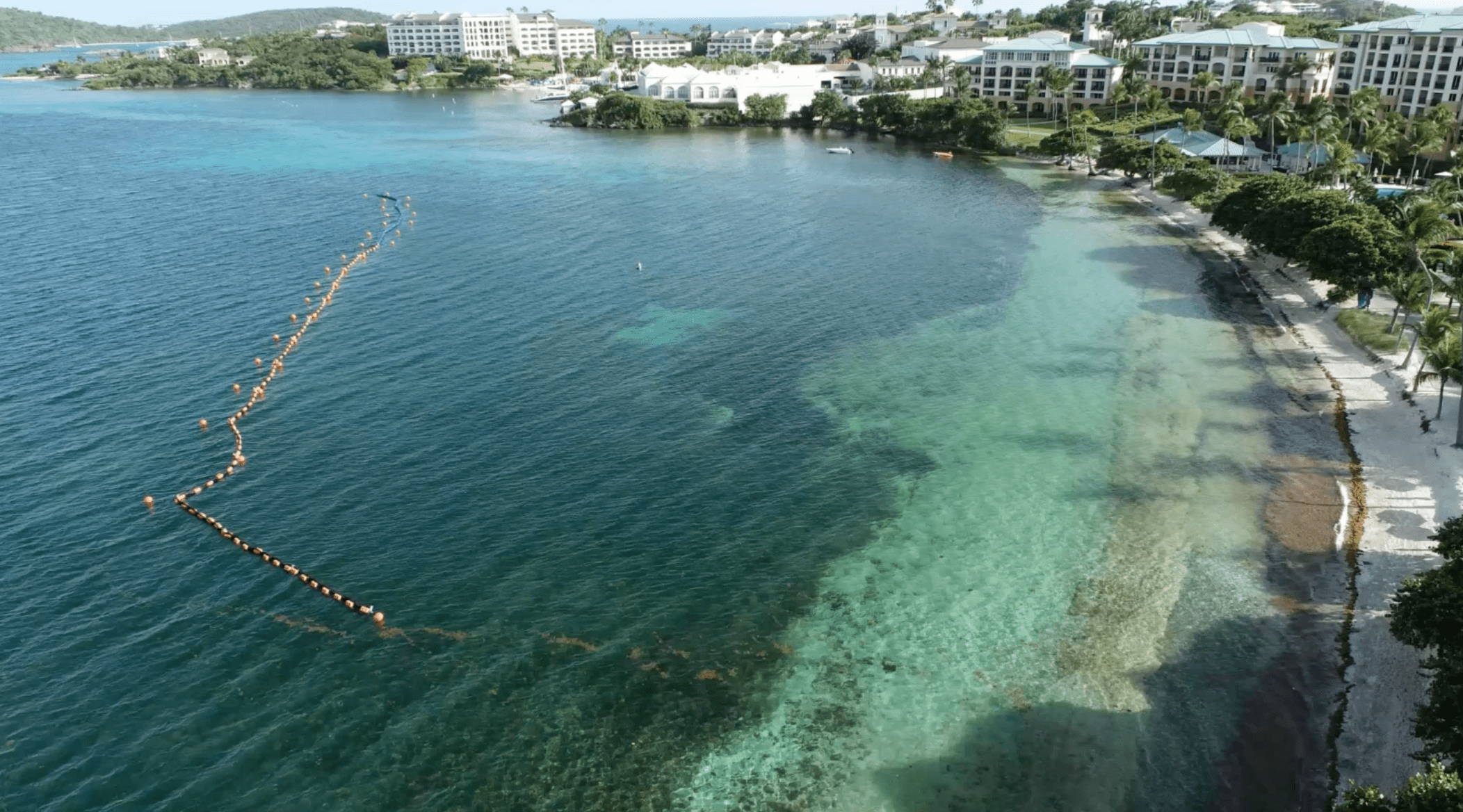
Dempsey, founder of the environmental consulting firm Bioimpact, Inc., detailed how floating offshore barriers are being deployed at select coastal locations on St. Thomas, including near resort areas, to help intercept and redirect sargassum before it reaches shore. These containment systems are designed to protect beaches, reduce erosion, and minimize disruption to marine habitats.
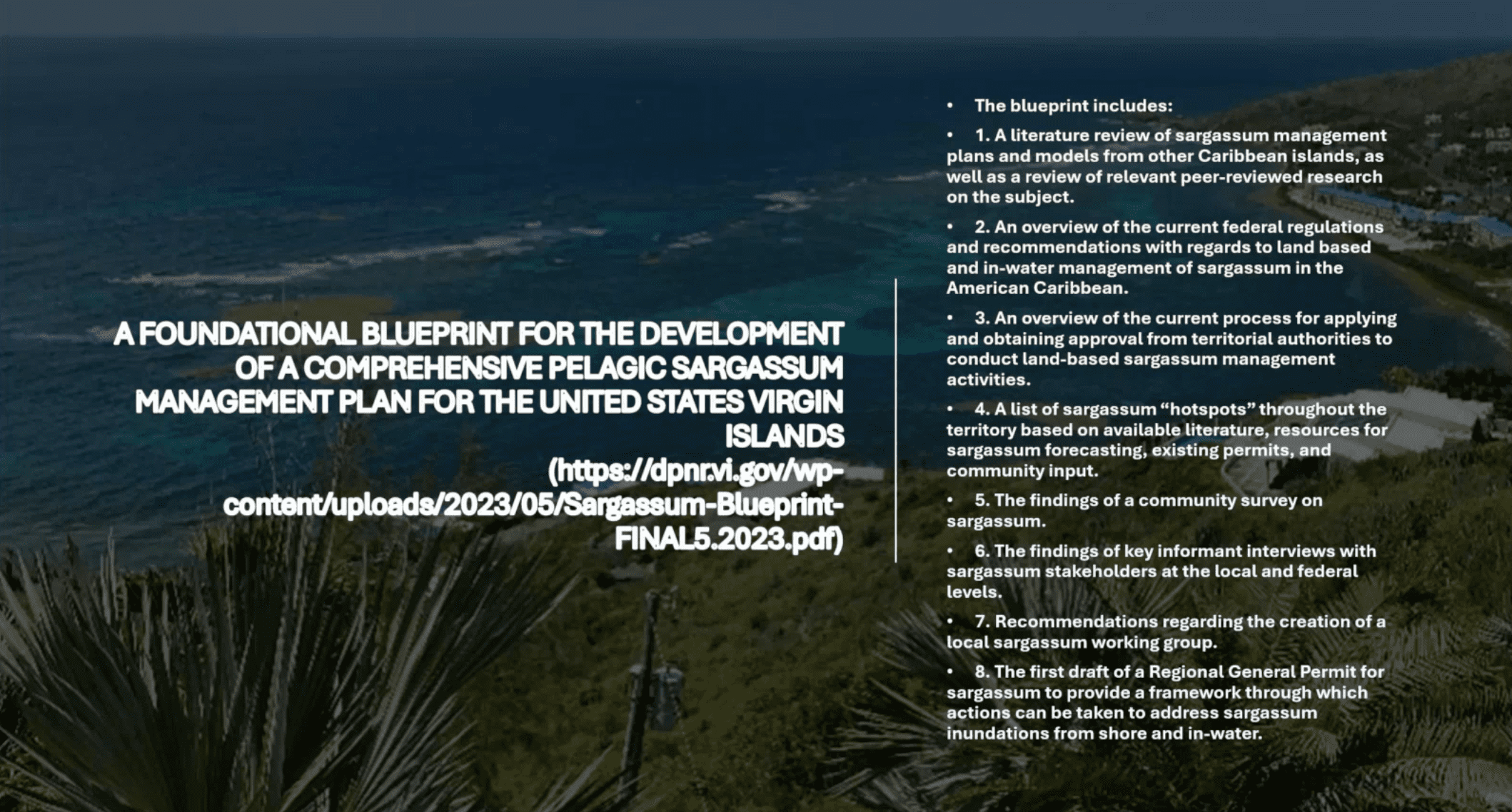
Dempsey also spoke about Bioimpact’s involvement with the creation of the “Sargassum BluePrint,” a 2023 report produced in collaboration with the Department of Planning and Natural Resources. The document outlines coordinated strategies to improve sargassum response, strengthen shoreline resilience, and guide mitigation efforts across the territory.
Design, Materials, and Performance
“Sargassum barriers, or aquatic booms, are floating barriers with a submerged curtain that intercept the movement of floating sargassum in water,” according to information contained in the Sargassum BluePrint report. “Barriers can be used to corral sargassum for in-water collection or to direct the sargassum to one location along the shoreline for collection, referred to as ‘diversion, ’” the report stated.
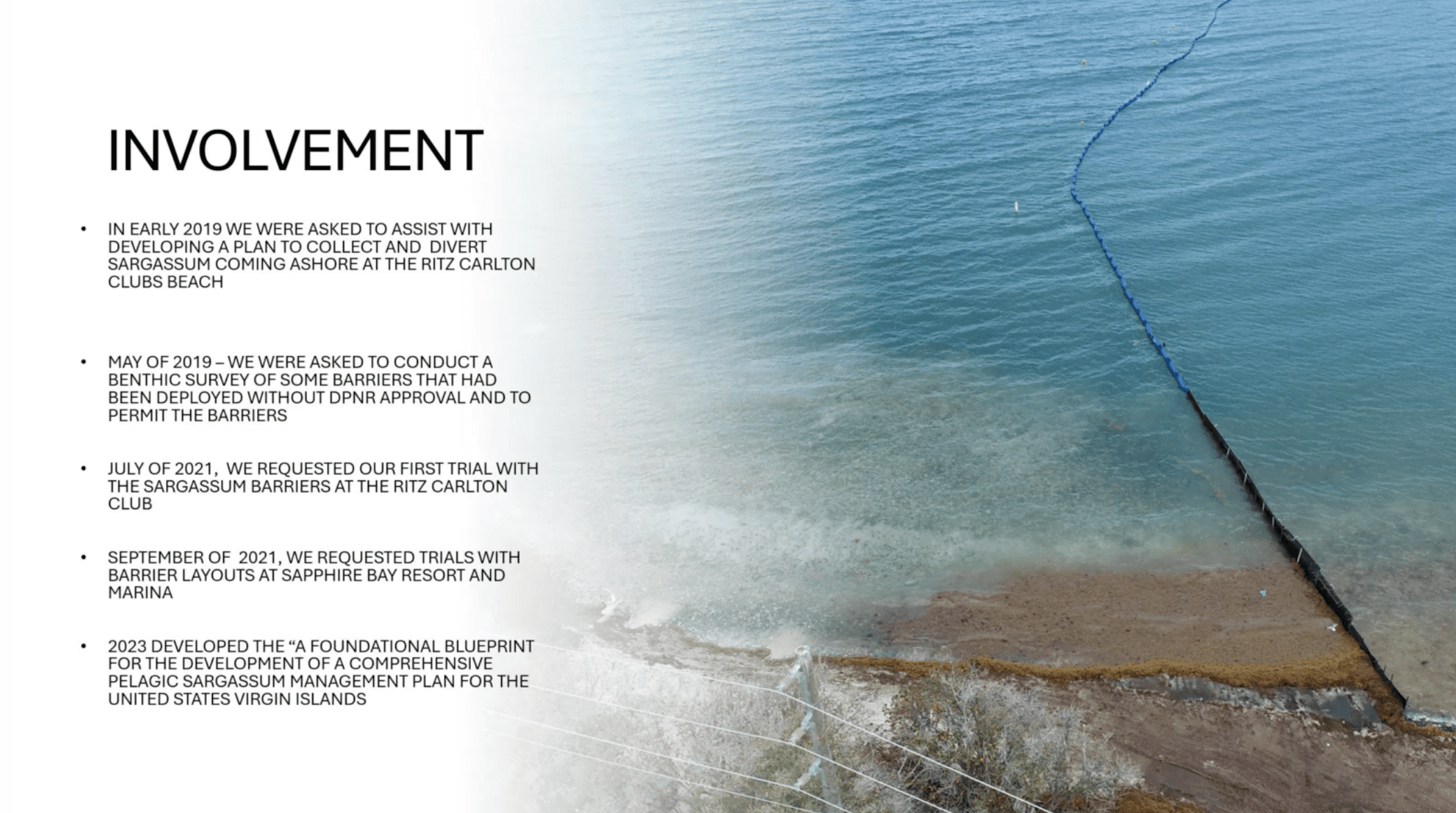
Dempsey said that in 2021, the areas where booms were tested were the resort locations of the Ritz-Carlton Club and Sapphire Bay Resort and Marina on St. Thomas.
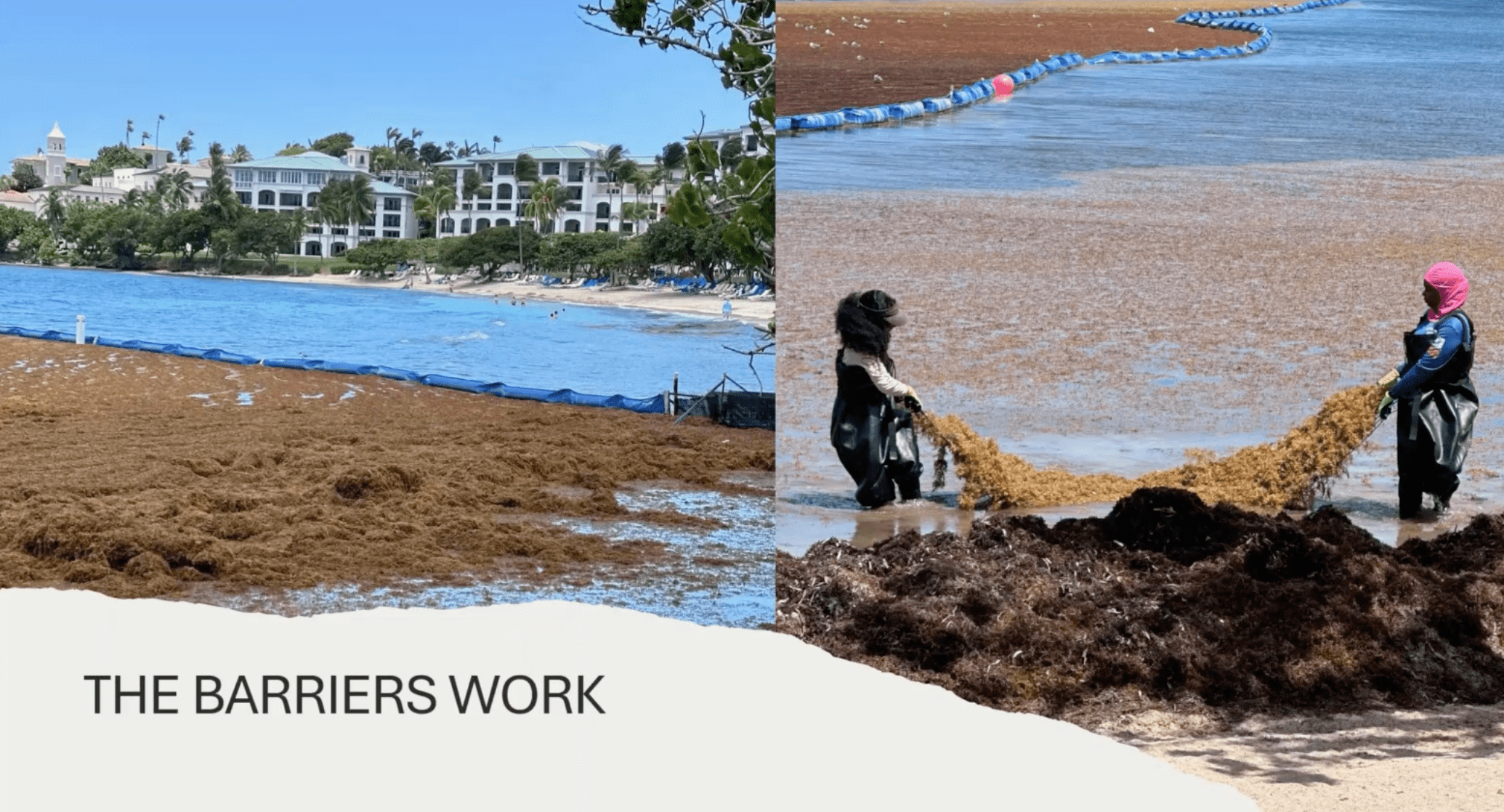
“The purpose of the barriers has been to prevent the sargassum from reaching the beach so that the hotel guests and beachgoers can go in the water and swim and enjoy the beach,” Dempsey told the Source in comments after the webinar. “The intent was to collect the sargassum into a single area to collect without impacting over properties, and we have been able to successfully do that under most conditions,” she said.
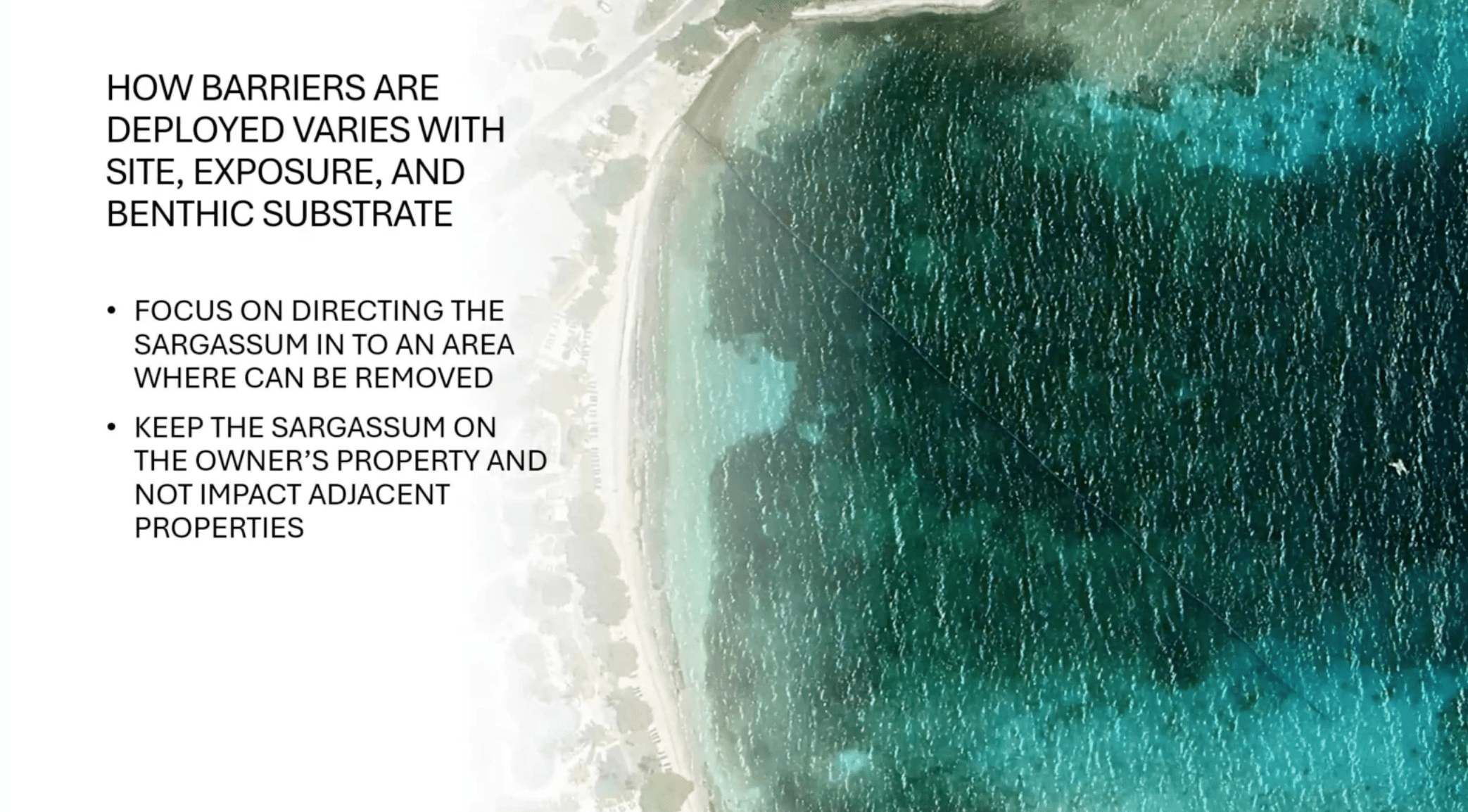
According to Dempsey, the barrier systems use 48-inch helix screw anchors with either 6- or 8-inch plates to minimize damage during installation. These small-diameter screw anchors disturb as little as six to eight inches of the seafloor and are often used in areas with seagrass, limiting the impact to just a few shoots. In hard-bottom areas of the ocean, future systems will rely on rock pins once permitting is approved.
During the virtual presentation, Dempsey also explained how environmental factors such as the nearly constant easterly wind, local marine conditions, and site-specific coastal features influence the design and performance of the barriers. She emphasized the importance of adaptive strategies and careful installation to ensure the systems are both effective and environmentally responsible.
Barriers versus Collection Vessels
Dempsey noted that a key consideration in the placement of the barriers was ensuring they do not divert sargassum onto other nearby beaches. Instead, the goal is to guide the seaweed to designated sections of shoreline where it can be more easily collected and removed.
The webinar explained that collection vessels were tested as a way to round up the seaweed outside of the barriers. However, Dempsey stated that the boats are not a practical long-term solution for sargassum control.
“If we had enough vessels to constantly be collecting sargassum and carry it far out to sea, it could be sustainable,” Dempsey acknowledged. “However, with heavy inundations, it becomes cost-prohibitive due to the number of boats required. As vessels drive through, they break the large mats into multiple pieces, and then you’re left chasing scattered floating bits.”
She added that a more efficient method, such as a scoop vessel with a conveyor and a storage area filled with seawater to hold any marine life, might allow sea creatures within the seaweed mats to survive. However, this approach would still require significant investment and coordination.
Concerns with Sargassum Booms
Overall, Dempsey explained that barriers are highly effective in helping to control sargassum inundations, though damage to the booms can occur and seaweed may occasionally get past them. She emphasized that protecting the installation sites, including the seafloor, is a key priority when designing and deploying the systems. Dempsey also noted that the barriers must be removed from the ocean ahead of major storms to prevent damage to the booms and to avoid creating environmental hazards.
Additionally, Dempsey noted that a growing concern is the ecological impact of collecting large amounts of sargassum, particularly the risk of harming marine species like juvenile fish, crabs, lobsters, and even small sea turtles. While Dempsey has observed birds feeding on sea life in beached sargassum, she emphasized the need for more formal studies.
“We need to do quantitative surveys and see what animals are washing up on shore, and what animals might vacate before it hits the shore, if any,” she said.
Next Deployments and the Path Ahead
Dempsey confirmed that new deployments are being considered, though funding remains a major hurdle. “The barriers are expensive and unfortunately someone has to be willing to put up the cost for the barriers, permitting, installation and monitoring.”
While most barrier deployments have been funded privately, Dempsey stressed the need for public investment and engagement, especially for protecting public beaches and nearshore habitats.
“We need to find funding sources so that public beaches and important resources can be protected,” Dempsey stated. “The public can advocate for financing through private funding to address this issue.”
“It’s important to remember it’s not just an economic impact to resorts; sargassum damages shallow coastal resources,” she added.
More Sargassum Inundations are Expected
Regarding the outlook for sargassum across the area, an update released on July 31 by the University of South Florida’s Optical Oceanography Lab reported that increased sargassum presence can be expected across the Caribbean.
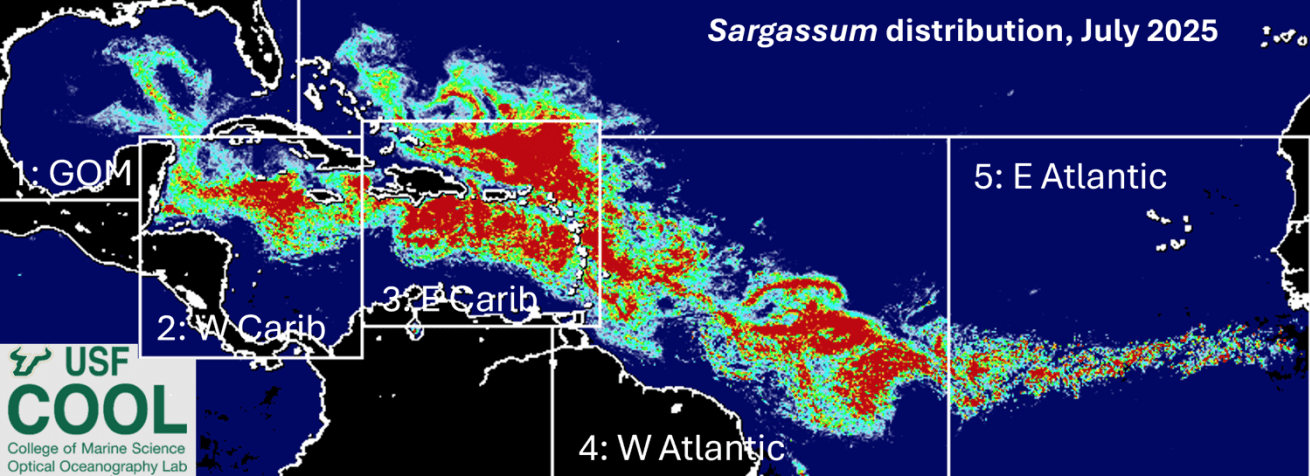
“Historically, sargassum amount mostly decreased from July to August,” the USF report said. “However, with the continuous transport from the tropical Atlantic to the Caribbean Sea and to the Gulf of America, sargassum amount in these two regions may remain stable or decrease only slightly, meaning continuous beaching events around the Caribbean and Florida. However, whether a beach or small region receives large amount of sargassum depends on local factors that are difficult to predict, including winds and ocean currents,” USF explained.
Individuals can follow the progression of the current mat of seaweed and stay up to date each month on where sargassum may be headed.
Lindquist Beach on St. Thomas to Reopen
Finally, though more sargassum can be anticipated across the region in the near future, Lindquist Beach on St. Thomas is planning to reopen to swimmers on Wednesday, Aug. 6. The beach had been closed for swimming since July 30 due to an inundation of seaweed.
“The Magens Bay Authority is pleased to announce that Lindquist Beach will reopen to swimming on Wednesday, Aug. 6, 2025, following a temporary closure due to heavy sargassum accumulation,” according to a press release from the Magens Bay Authority on Tuesday. “Over the past several days, our team has worked diligently to remove large quantities of sargassum from the shoreline and nearshore waters. While we have made significant progress, we will continue to actively monitor beach and water conditions to ensure the ongoing safety and comfort of our guests,” the press release said.