

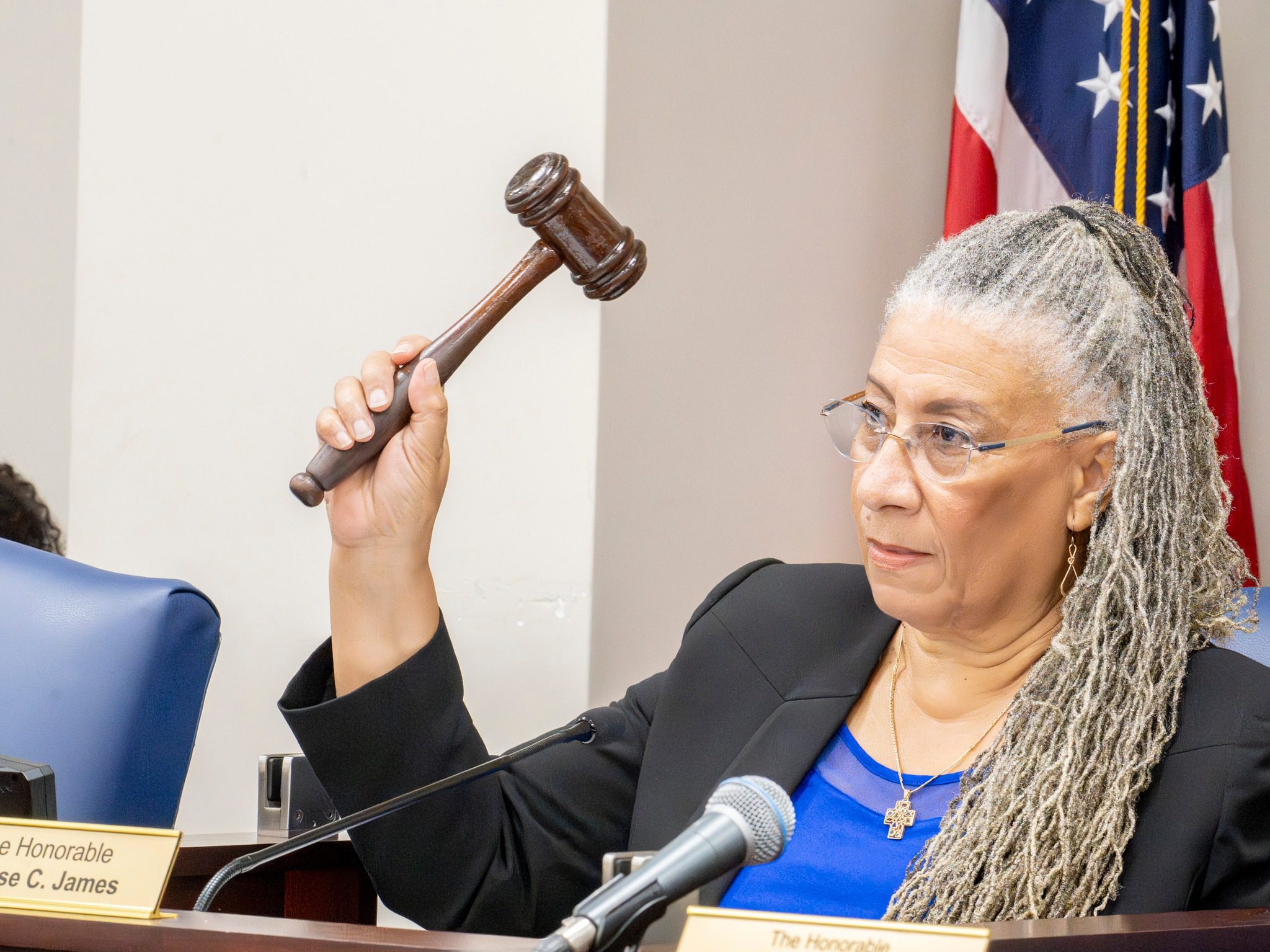
The Senate Disaster Recovery, Infrastructure and Planning Committee on Friday advanced a bill that would allow commercial property owners in the Virgin Islands to pay for energy upgrades and storm protection using private capital rather than taxpayer funds.
The measure, Bill 36‑0248, would establish a Commercial Property Assessed Clean Energy program, or C‑PACE. The program would allow businesses to finance improvements such as solar panels, more efficient air‑conditioning, stronger roofs and water systems, then repay the cost over time through a charge tied to the property. If the building is sold, the remaining payments would transfer to the new owner.
The committee voted 5–2 to approve the bill, sending it to the Rules and Judiciary Committee for further consideration.
Sen. Avery L. Lewis, the bill’s sponsor, said the proposal is meant to give businesses another way to finance building upgrades in a territory facing high energy costs and frequent hurricanes.
The legislation “gives our commercial property owners another tool to invest in their properties, strengthen their buildings and reduce long-term operating costs,” Lewis said.
He emphasized that the program would be voluntary, limited to commercial properties and funded entirely by private lenders.
“The government is not writing a check. We are opening the door,” he said.
Supporters from the business and lending community told senators the program could unlock projects that have stalled because developers cannot meet traditional banks’ upfront equity requirements.
Several testifiers described a common problem: even when projects are planned, permitted and partially financed, high construction costs and strict lending standards leave owners unable to close the final funding gap.
John Hebert, a St. Croix developer working on a planned 120-bed nursing facility, said projects like his often require “a substantial, often prohibitive” level of upfront capital before lenders will commit, leaving many developments unrealized.
Angel Torres Sr., a retired deputy fire chief, described a similar struggle. He said he has spent 15 years trying to build a commercial center at Estate Hartman and owns the land, permits and an approved loan, but rising costs have left him short of the equity needed to move forward.
“No local funding sources have been willing to provide any financial assistance,” Torres said, calling the program “a game changer.”
Lenders said C-PACE could help bridge that gap by allowing certain project costs tied to energy and resilience upgrades to count toward equity. Michael Sammartino of Alba Capital Corporation said a $20 million project that might typically require $4 million in cash could need closer to $2 million with C-PACE.
But key government officials cautioned that the program could create challenges if it is not tailored to local conditions.
Kyle Fleming, director of the Virgin Islands Energy Office, said he supports the goal of lowering energy costs and improving resilience but warned that the bill’s structure, particularly creating a lien ahead of mortgages and tying repayment to the property tax system, could make lenders more cautious in an already limited market.
“In a market like the Virgin Islands where access to capital is already limited and heavily dependent on a small group of regional lenders, introducing a financing instrument that effectively supersedes existing mortgages could further restrict lending activity and place additional pressure on property owners,” Fleming testified.
He also raised concerns about the territory’s once‑a‑year property tax billing, noting that large annual payments could be difficult for borrowers and that “a single missed payment could result in a full year delinquency.”
Officials from the Office of the Lieutenant Governor echoed those concerns. Tax Assessor Ludence Romney said his office is not equipped to administer the program as written and would need costly system upgrades, while Tax Collector Brent Leerdam warned it could blur the division’s role as a neutral administrator.
“We do not help any other borrowing facility … We stay away from that because we have to have fair and equitable treatment to everyone,” Leerdam said.
Some senators pressed similar issues, questioning whether the government should act as a collection agent for private lenders and whether large annual payments could create hardships for businesses.
Supporters responded that the bill allows billing and collection to be handled by private lenders or third-party administrators instead of the tax office, and stressed that existing mortgage lenders would have to consent before a C-PACE assessment is placed ahead of their loans. They also noted that similar programs are already in use across dozens of U.S. states.
The measure now heads to the Rules and Judiciary Committee, where lawmakers are expected to consider amendments as they weigh how to expand financing options for businesses while addressing concerns raised by lenders and government officials.