

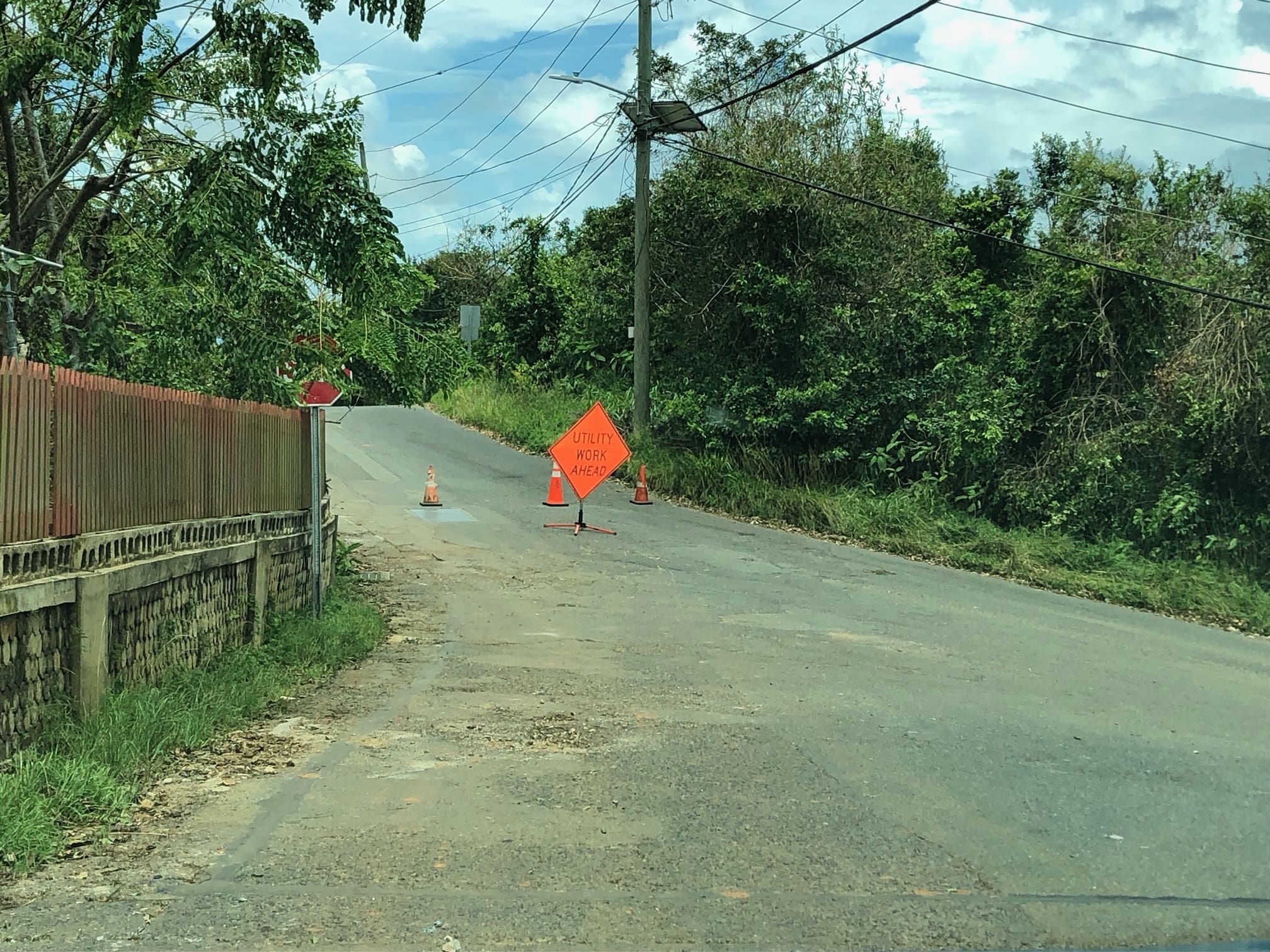
At least 2,000 residents were still without electricity Saturday as power restoration efforts stretched into its fourth day territory-wide and the V.I Water and Power Authority’s linemen completed another 12-hour shift.
In a Saturday morning interview with host Jamila Russell on WSTX radio, WAPA Chief Executive Officer Karl Knight highlighted the significant impact of the storm on WAPA’s infrastructure, particularly the damage caused by downed trees on power lines. “About 70 percent of our feeders went down because of trees on the lines,” Knight said in a follow-up call with the Source.
The absence of a dedicated tree-trimming team, a result of budget constraints, has compounded the difficulties in keeping the power lines clear, he added during the radio show, saying that he hopes to wrap up power restoration by Monday.
Instead, WAPA’s linemen had also taken on the task of vegetation management — a role that requires precision and caution when dealing with live power lines. Despite the additional responsibilities and limited resources, Knight emphasized his team’s determination to overcome the challenges — while he focuses on putting the training and resources in place to make tree-trimming a priority by the next storm season.
“It’s hard to say we could have prepared better when we didn’t know exactly what we were up against,” Knight said when asked whether WAPA was ready going into Ernesto. However, by the second day after the storm, WAPA had deployed supplemental crews to assist in the restoration efforts, helping to speed up the process, he added.
Addressing concerns that the restoration was delayed due to a lack of equipment, Knight was clear. “There is no instance I know of where we were not able to restore electricity because we didn’t have the equipment,” he stated, though he noted that resources like transformers are in short supply. The real issue, he explained, has been the significant number of blown fuses caused by the storm.
When asked by the Source why some neighborhoods still lack composite poles, Knight explained that while thousands have been installed since 2017 as a FEMA-funded effort, priority was given to the most vulnerable areas with the goal of eventually replacing 50 percent of the wooden poles across the territory. However, the supply has since run out, though Knight suggested that with the V.I’s most recent disaster emergency declaration under FEMA’s review, there might be an opportunity to secure more resources and expand the investment in these critical infrastructure upgrades.
Contacted by the Source Friday, Government House Communications Director Richard Motta Jr. said the administration was focused on collecting accurate estimates before filing a declaration. Speaking Saturday, Knight estimated his preliminary damages at about $5 million, a combination of materials and overtime costs.
While WAPA has maintained strong relationships with federal partners, Knight stressed the need for financial support to continue the restoration and modernization efforts.