

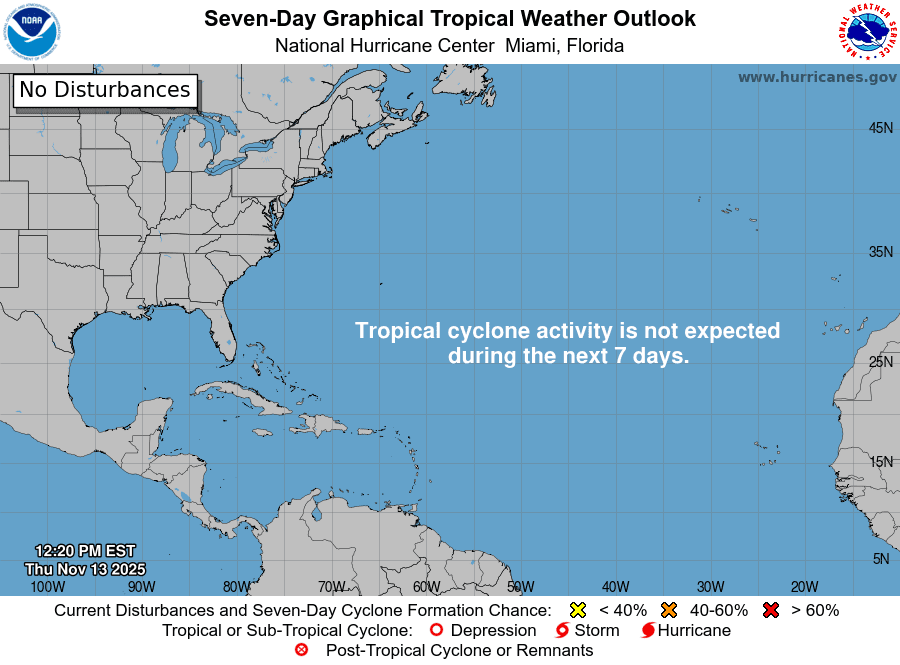
The National Hurricane Center does not expect tropical cyclone development across the Atlantic basin during the next seven days, and long-range forecasts suggest a quiet conclusion to the 2025 Atlantic Hurricane Season, which officially ends on Nov. 30.
Meanwhile, a swell is generating rough and choppy seas across the U.S. Virgin Islands and Puerto Rico through at least Friday. Dangerous rip currents are expected, particularly along northern beaches across portions of Puerto Rico and the U.S. Virgin Islands.
Local Weather Conditions
According to the National Weather Service in San Juan, Puerto Rico, the local weather pattern will remain under the influence of high pressure through Friday, maintaining generally fair weather and warm conditions across the islands. The chance for showers may increase on Saturday and into next week, and while rainfall and thunderstorms may occur at times, the NWS does not expect significant precipitation.
“For the Virgin Islands, seasonably warm temperatures and passing showers are expected. No significant threats are expected over land areas,” the NWS said on Thursday morning.
Marine and Coastal Hazards
While the NWS does not anticipate severe weather in the immediate future, marine conditions will remain hazardous due to a north-northwesterly swell affecting local waters. Small Craft Advisories are in effect for portions of the Atlantic waters and Caribbean passages surrounding Puerto Rico and the U.S. Virgin Islands through early Friday morning.
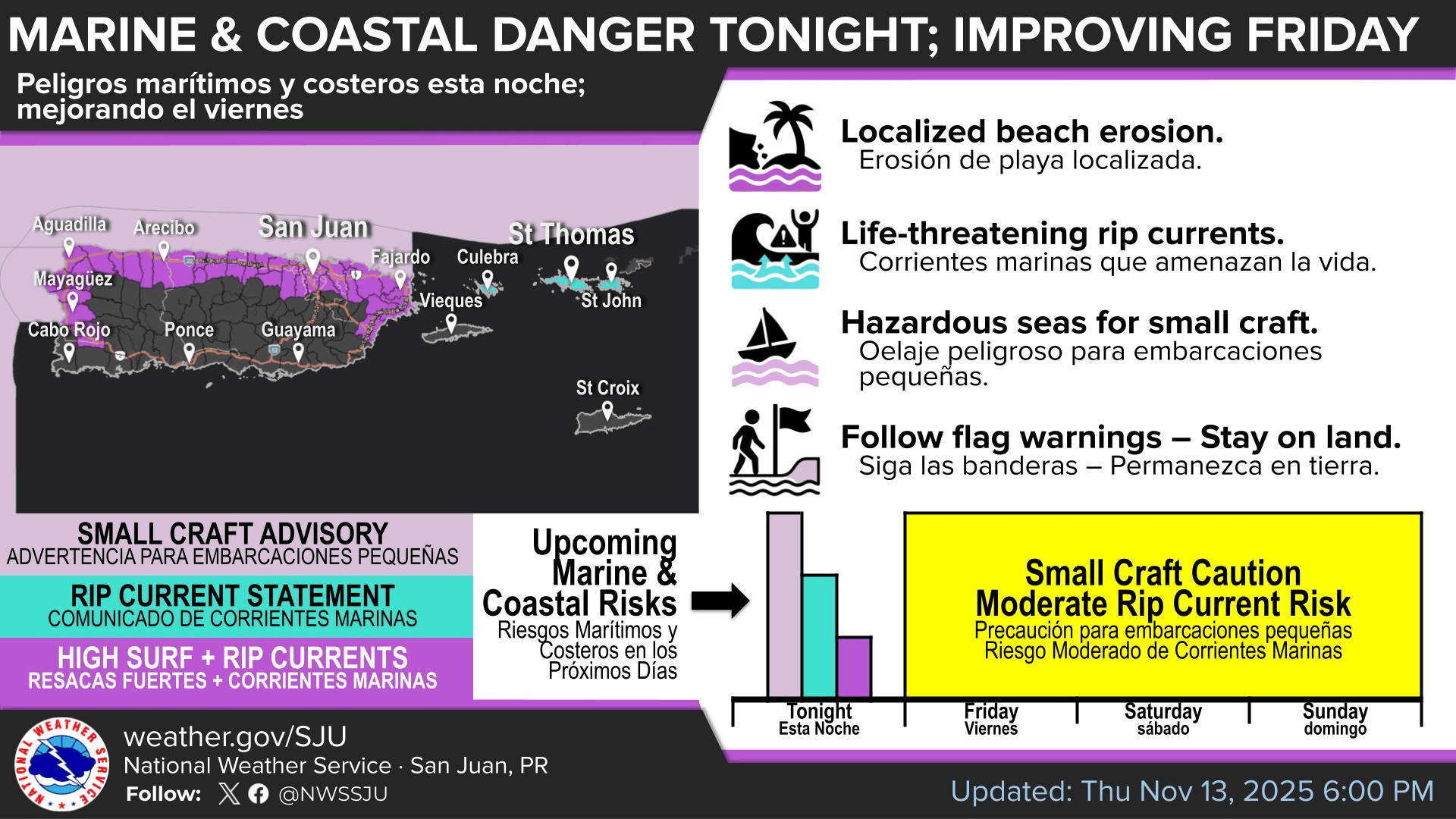
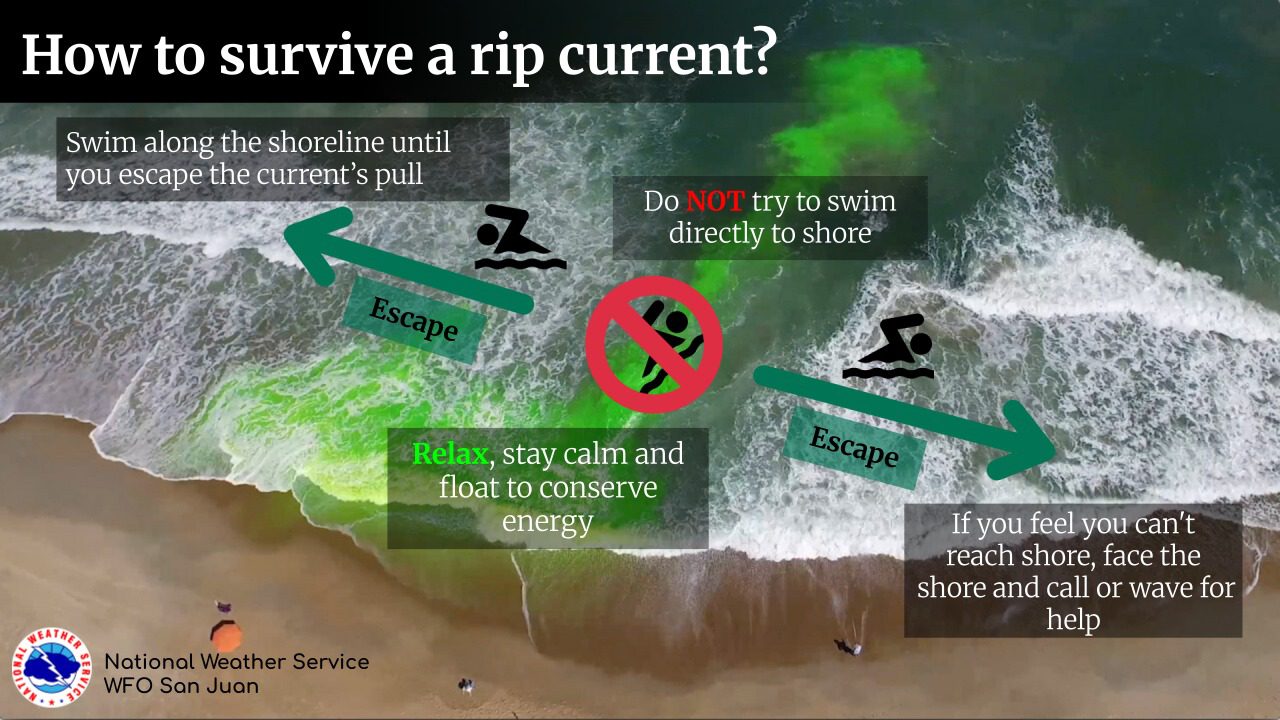
A High Rip Current Risk is also in effect for Atlantic-exposed beaches of the northern U.S. Virgin Islands and parts of Puerto Rico, where life-threatening surf and rip currents are expected. In addition, a High Surf Advisory remains in place for portions of Puerto Rico’s north-facing coastline.
“A north-northwesterly swell will continue to arrive Thursday, deteriorating marine conditions,” the NWS warned. “Conditions are expected to gradually improve on Friday. However, a broad surface high pressure over the north-central Atlantic will continue to promote moderate to locally fresh easterly winds across the regional waters during the next few days, keeping choppy to occasionally rough seas,” the NWS explained.
Cyclonic Development Not Expected in Coming Weeks
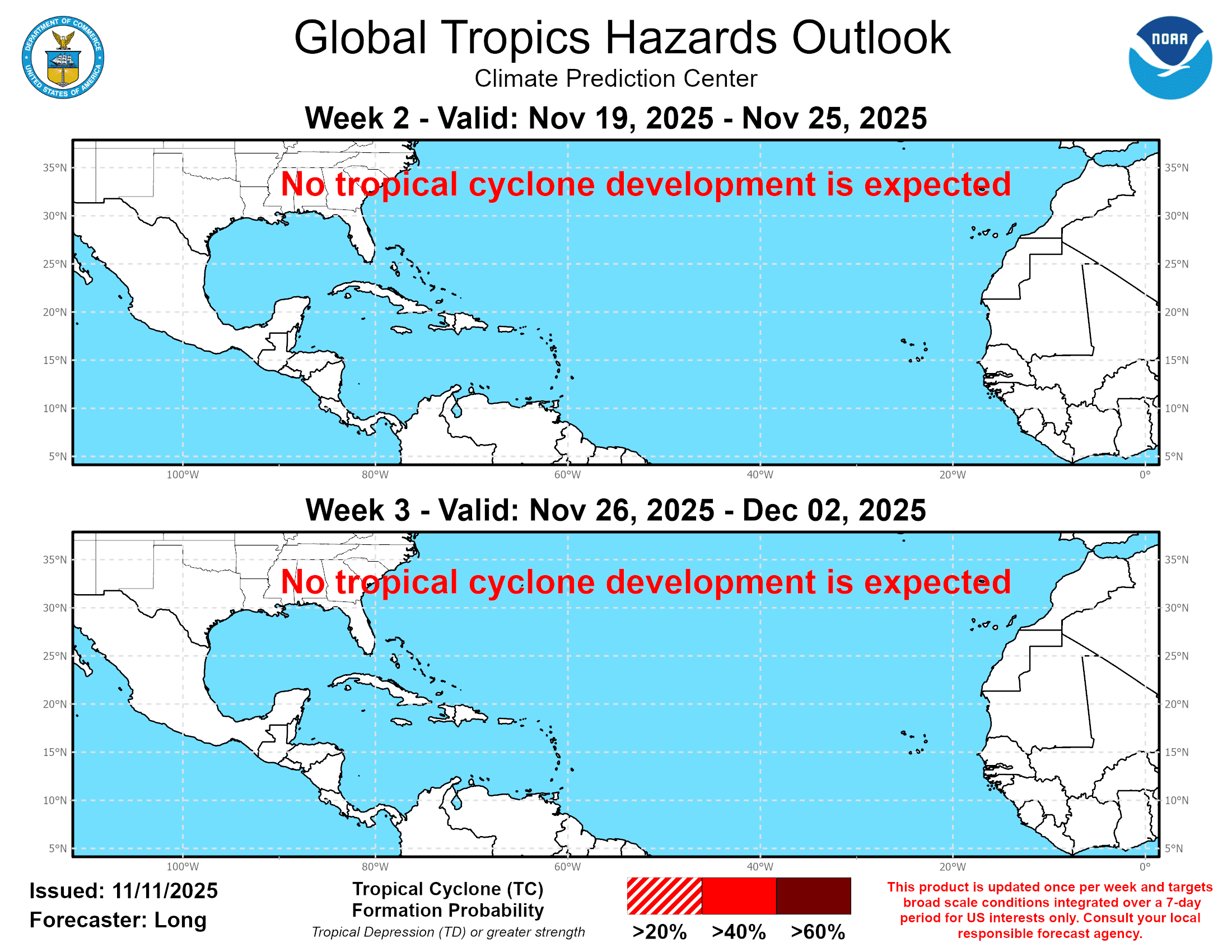
The 2025 Atlantic hurricane season will officially come to an end Sunday, Nov. 30. According to the NHC on Thursday, no cyclonic development is forecast to develop within the next seven days. Additionally, a Global Tropics Hazards Outlook released Tuesday by NOAA’s Climate Prediction Center also explained that tropical activity is not expected through the end of the season across the Atlantic basin.
In a recent exclusive video interview with the VI Source, Alex DaSilva, lead hurricane expert at AccuWeather, indicated that, based on climatology, the eastern Caribbean typically does not see hurricanes after November. Still, he urged individuals across the islands to remain prepared.
“Climatologically, the eastern Caribbean is usually in the clear after November starts, but we can never let our guard down,” DaSilva said. “The warm sea surface temperatures and La Nina conditions could still spark one or two storms before the end of the month. Even a single storm can have major impacts, as history has shown,” he continued.
Historic Hurricane Season So Far
During the interview with the Source, DaSilva also noted that the 2025 Atlantic hurricane season has already proven to be historic.
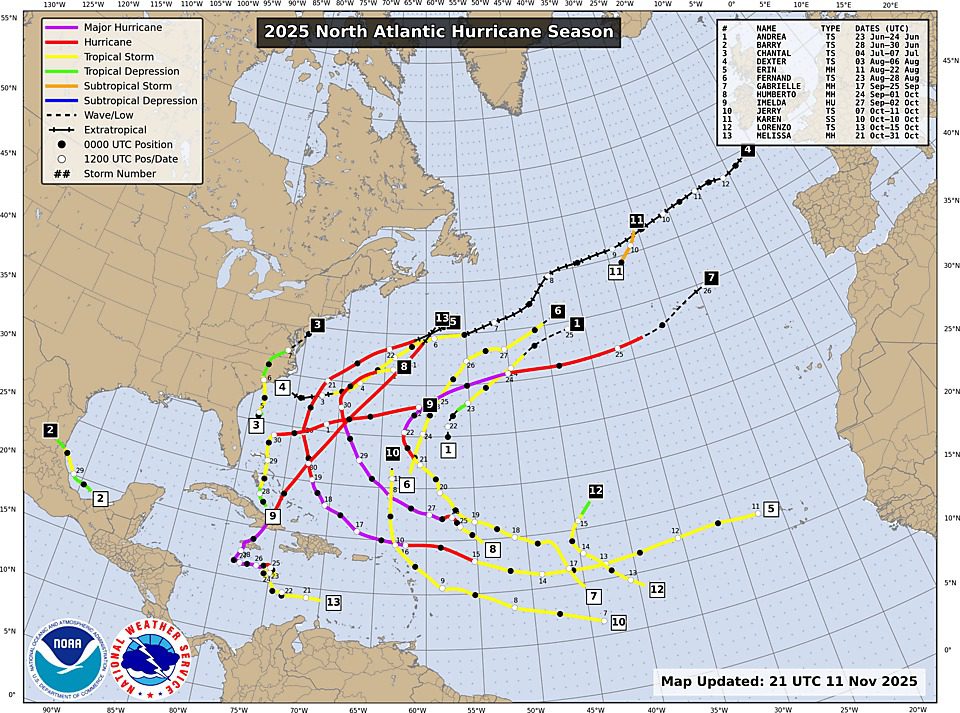
“We’ve seen three Category 5 hurricanes this year, which is only the second time in history that’s ever happened. The cyclones that formed essentially went to the moon in terms of intensity. That’s being driven by incredibly warm sea surface temperatures, especially in the Caribbean, where the heat extends hundreds of feet down. That deep energy is what allows storms like Melissa to explode,” DaSilva explained.
Information contained in a media advisory released by AccuWeather on Wednesday shared details regarding notable events that have occurred so far throughout the season, including Hurricane Melissa, which became one of the most powerful cyclones ever recorded in the Atlantic basin.
While one cyclone — Tropical Storm Chantal — made landfall on the U.S. mainland earlier this year, both the mainland and the nation’s Caribbean territories, including the U.S. Virgin Islands, have so far avoided a direct strike from a hurricane of Category 1 strength or higher, thanks to several favorable atmospheric factors.
“Fueled by near-record ocean heat, the 2025 Atlantic hurricane season has produced a range of extreme, unusual and historic events — including the rare Fujiwhara Effect, repeated close calls for the U.S. coastline, significant coastal erosion, and three storms that underwent extreme rapid intensification before reaching Category 5 intensity,” the AccuWeather article said.
“The U.S. benefited from a combination of unique atmospheric conditions, the timing of cold fronts pushing across the East Coast, and a lot of luck to make it through the peak of the season without a single hurricane landfall. This reprieve is welcome after recent catastrophic hurricane strikes like Hurricanes Helene and Milton in 2024,” AccuWeather Chief Meteorologist Jonathan Porter said. “The U.S. has endured 17 hurricane landfalls in the past five years. Many families and businesses are still struggling to recover,” AccuWeather explained.
Still, while the U.S. mainland and the U.S. Virgin Islands have not experienced a direct hit from a hurricane in 2025, several areas elsewhere in the Atlantic basin have been significantly impacted by powerful storms such as Hurricane Melissa, which caused widespread damage in Jamaica and parts of the Caribbean.
“Despite the lack of U.S. landfalls, this was an incredibly powerful and unique hurricane season, which featured several rapidly intensifying storms. Water temperatures hundreds of feet below the ocean surface surged to near-record territory again this year,” Porter said. “Tragically, 2025 will be remembered for the last storm of the year so far. It only takes one landfall to create a devastating season, and Melissa was the deadliest and most destructive,” AccuWeather reported.
Stay Informed
While no tropical development is expected near the Virgin Islands through the end of this year’s hurricane season, it’s important to remember that forecasts can change. Residents and visitors are encouraged to stay vigilant and remain prepared. For the latest updates, visit the official websites of NOAA, the NWS, and the NHC.
The local weather forecast for the U.S. Virgin Islands is also regularly updated on the Source Weather Page and VI Source YouTube Channel. Additionally, residents and visitors can find weather alerts and preparedness information from the Virgin Islands Territorial Emergency Management Agency.