

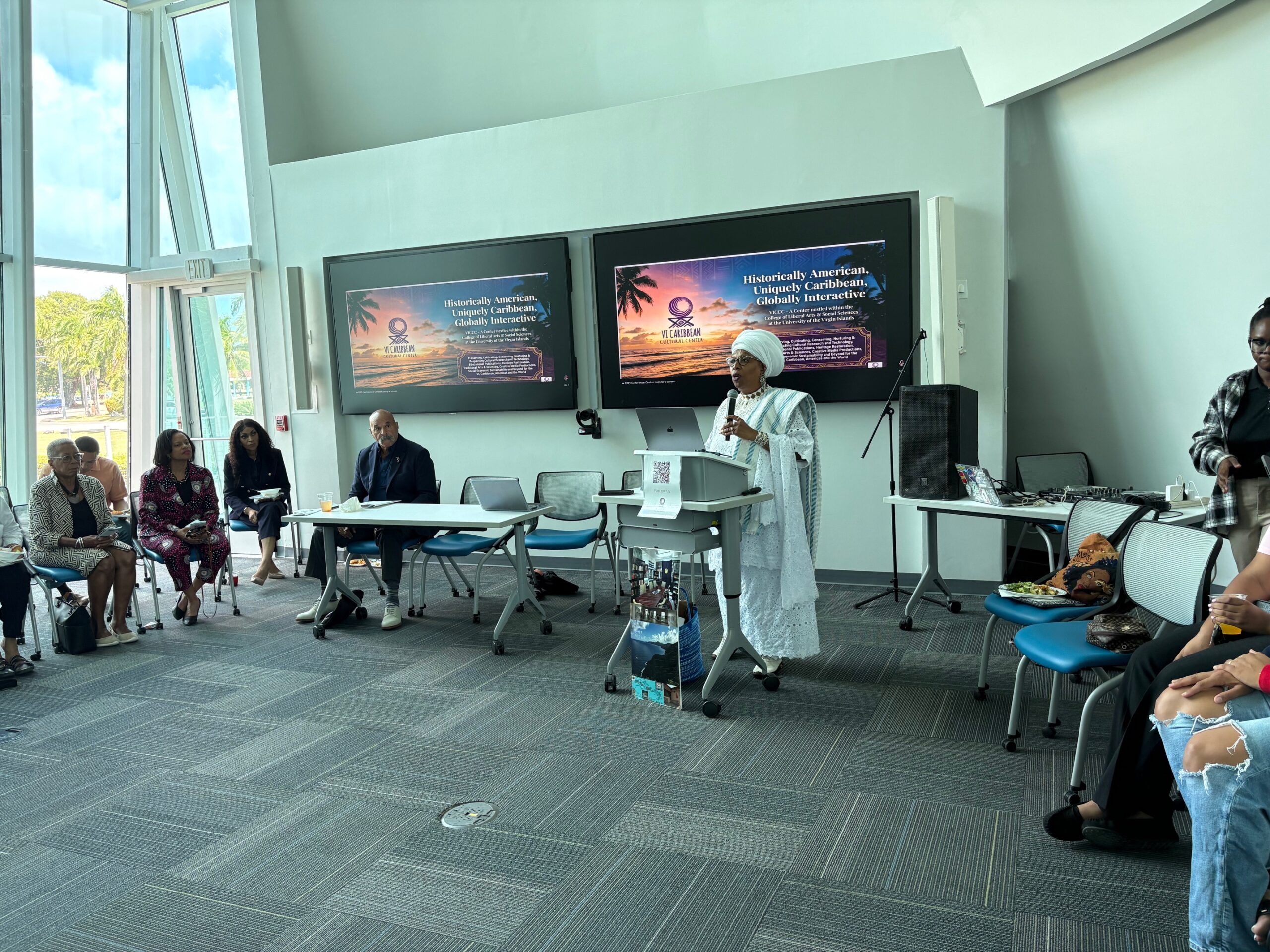
The University of the Virgin Islands relaunched the Virgin Islands Caribbean Cultural Center on Friday with a renewed focus on preserving heritage, advancing scholarship, and strengthening ethical leadership within the territory.
The relaunch was held at the UVI Research and Technology Park at the Albert A. Sheen Campus on St. Croix.
The center, housed within the College of Liberal Arts and Social Sciences at the University of the Virgin Islands, builds upon decades of Caribbean studies at the institution, including its long-standing Caribbean Studies minor and the ongoing development of expanded academic programming. The director of the Caribbean Cultural Center, Chenzira Davis Kahina, noted that the center is not a stand-alone entity, but one embedded within the university’s public liberal arts framework, reinforcing both scholarship and cultural stewardship.
The relaunch traces part of its modern foundation to Nov. 9, 2012, during the Eastern Caribbean Islands Cultural Conference, an international partnership originally formed among the University of Puerto Rico Río Piedras, the University of the West Indies Cave Hill Campus in Barbados, and UVI. That conference brought together more than 250 scholars specializing in Caribbean literature, linguistics, economics, social sciences, biological sciences, medical research, and the creative arts. It was during that gathering that the leadership of the Virgin Islands Caribbean Cultural Center transitioned, marking a pivotal moment in its evolution.
UVI President Safiya George praised the effort and emphasized the center’s long-term significance for the territory.
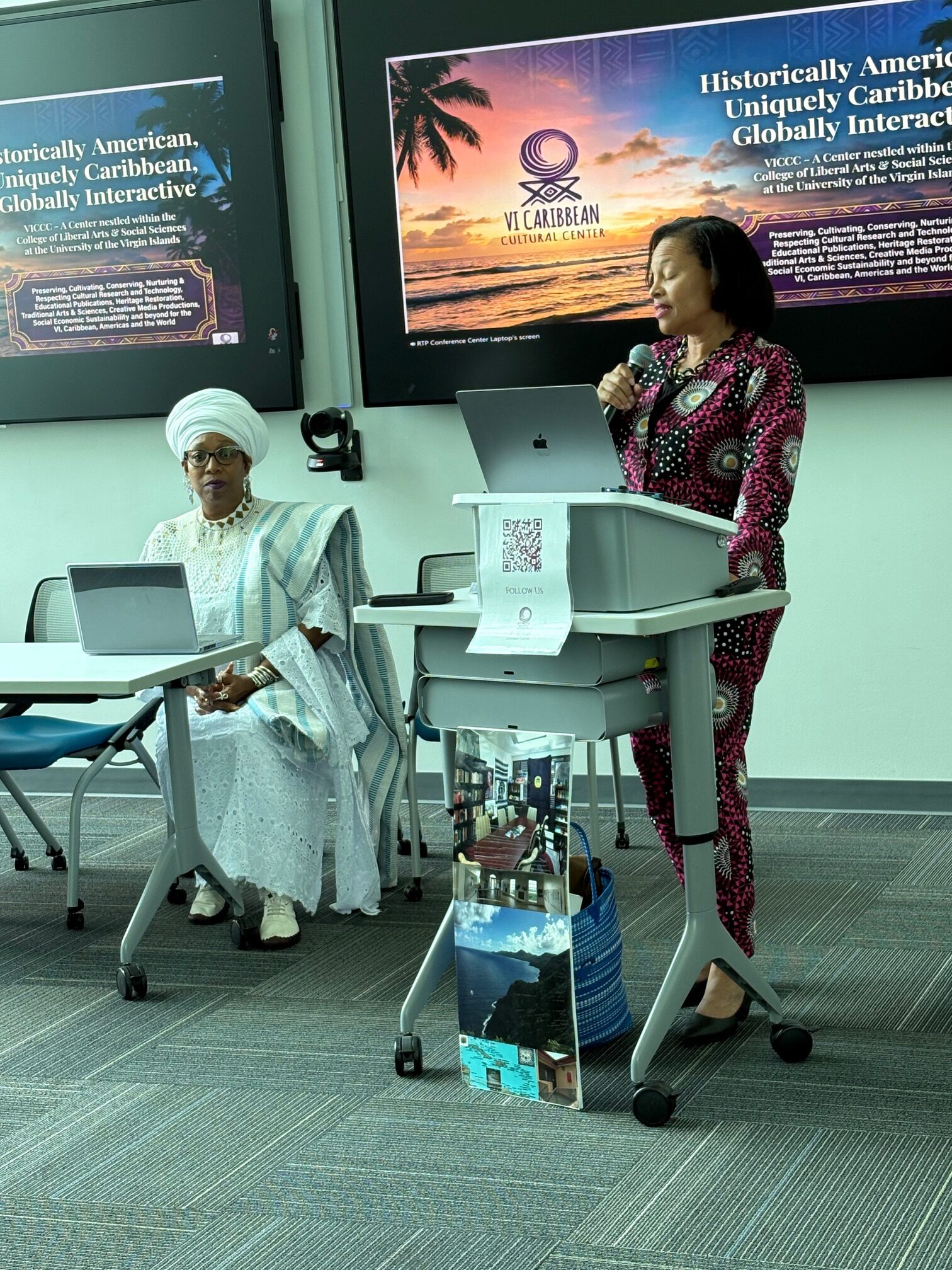
“One of the things we love about UVI is how we embrace culture,” George said. “But what the VI Caribbean Cultural Center does is take that embrace to another level. It ensures that cultural traditions are preserved, researched, archived, and advanced so they are not lost, but transferred to the next generation.”
She also highlighted the importance of partnerships, noting collaboration across institutions and within the territory, including ties to the Research and Technology Park Corporation. George acknowledged the many leaders who have shaped the university over the years and underscored the responsibility to carry that legacy forward.
Guest speaker Johann Clendenin, founder and CEO of Inner Circle Logistics and a sixth-generation Crucian with 38 years of service in the United States Marine Corps, invited attendees to reflect more deeply on the meaning of culture, ethics, and citizenship.
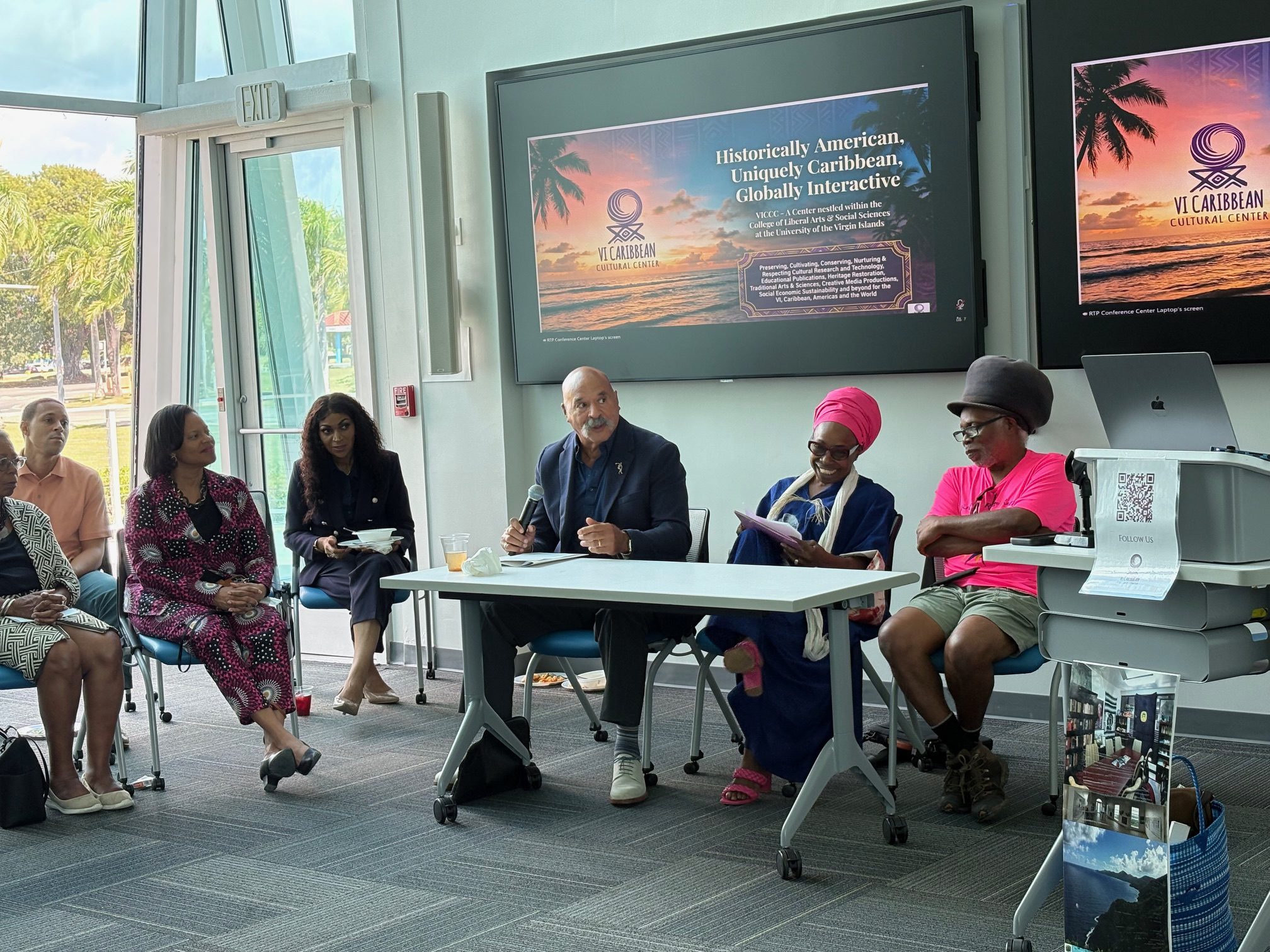
“I tend to think of culture not as something we perform, but something we live inside of,” Clendenin said. “It’s an ecosystem made up of shared stories, habits, values, assumptions, and expectations.”
He explained that in small island communities, where relationships overlap and histories linger, ethical leadership becomes even more critical.
“Societies don’t erode because corruption exists,” he said. “They erode when corruption becomes tolerated, normalized, or quietly justified.”
Clendenin stressed that citizenship extends beyond voting and legal status into daily responsibility.
“Citizenship isn’t just a legal status or a vote,” he said. “It’s a lived practice. It’s asking not just what am I entitled to, but what am I responsible for.”
Kahina also highlighted the hands-on role students played in curating the exhibition space inside the center. Students participated in archival research, artifact selection, and exhibition design, gaining practical experience in preservation and curation. Faculty members emphasized that when families entrust the university with letters, photographs, and cultural materials, those items must be treated not only as historical artifacts but as treasured belongings that carry generational meaning.
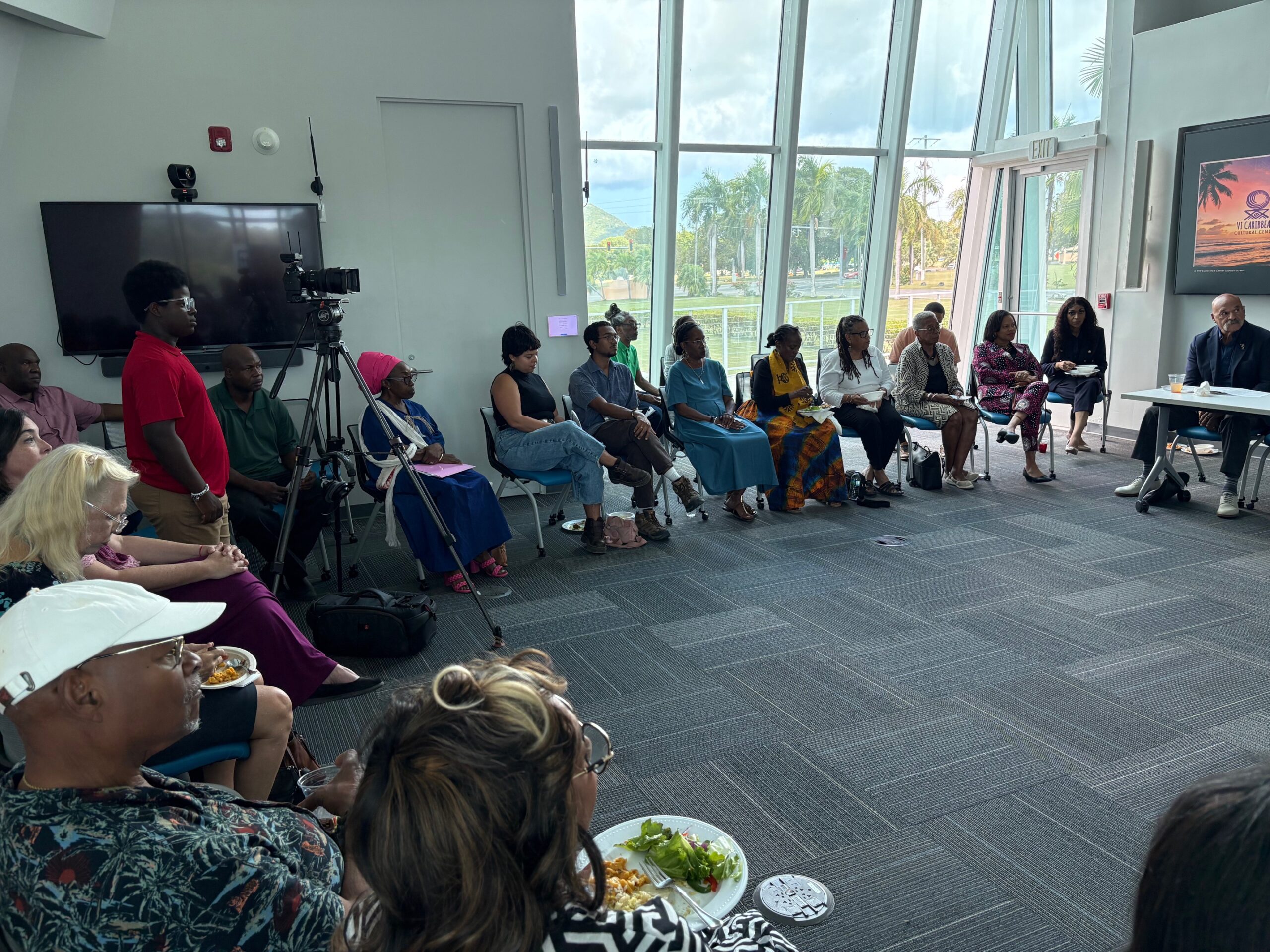
The relaunch continued with an open dialogue that included guest speakers, as attendees were encouraged to reflect on a guiding question raised throughout the event.