

Rising ocean temperatures leading to coral bleaching. Stony Coral Tissue Loss Disease spreading throughout the Caribbean. Contaminants on land washing into the sea when it rains. These are some of the well-known threats to our coral reefs.
But what actually causes corals to sicken and die when they encounter one of these threats? What exactly are the pathogens that weaken corals? What genetic traits help protect corals? What does the chemistry of water tell us about the health of our coral reefs?
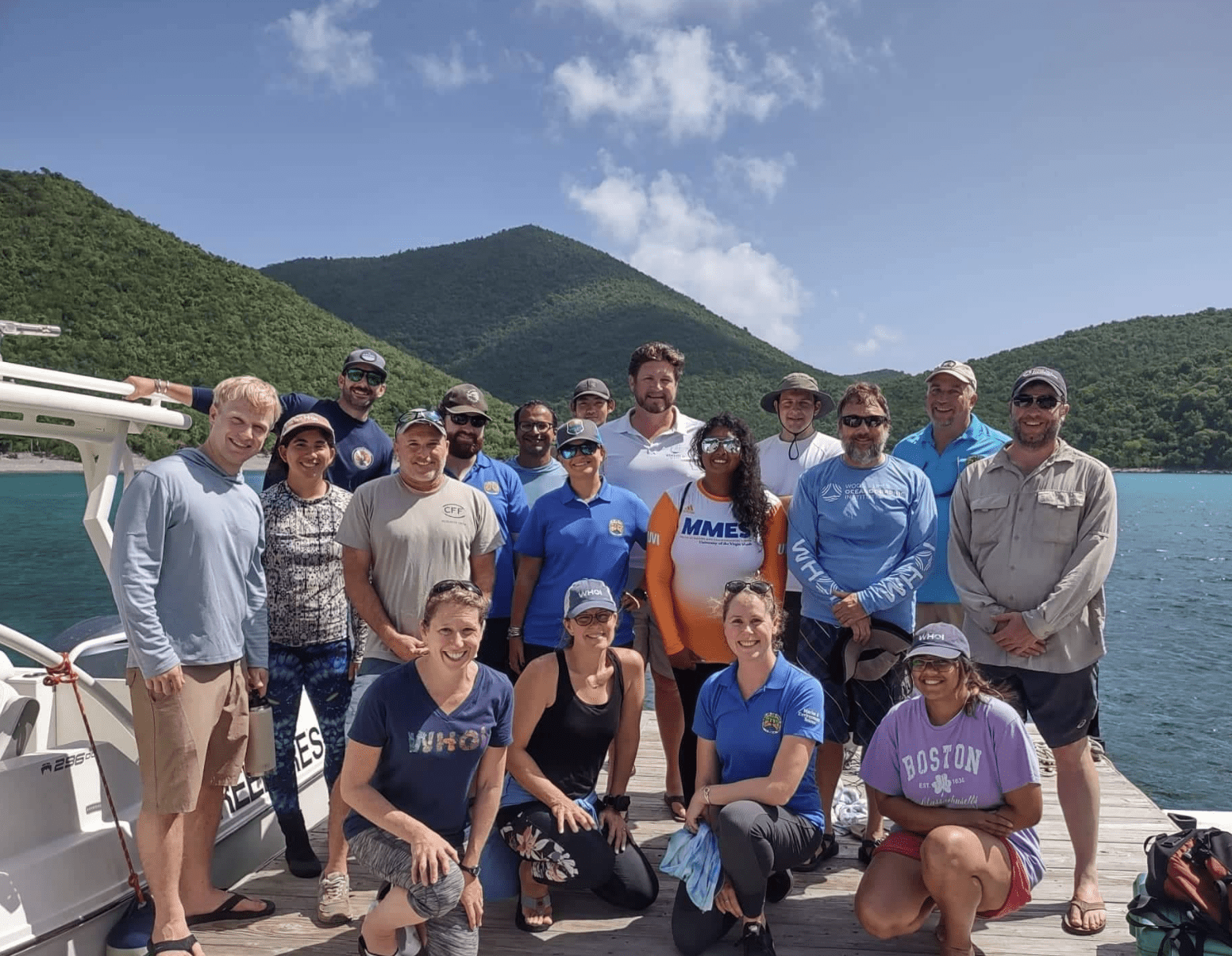
These are some of the questions that scientists at the University of the Virgin Islands and the Woods Hole Oceanographic Institution in Massachusetts are teaming up to solve.
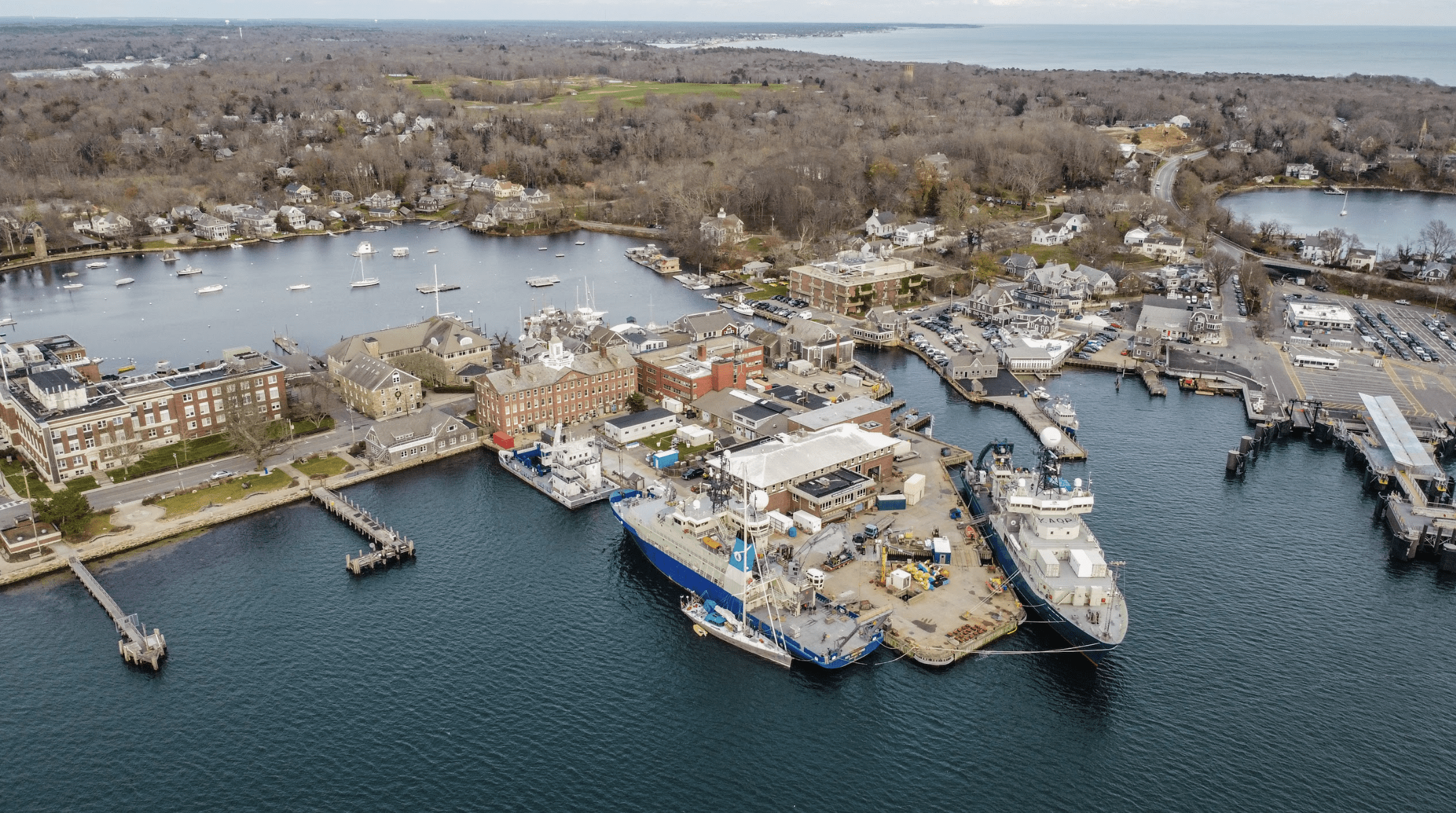
In June, UVI and WHOI signed a new memorandum of understanding, renewing an ongoing partnership that has brought opportunities for local students and cutting-edge research to the Virgin Islands.
Most recently, it has led to the award of a $2.5 million grant from the National Ocean and Atmospheric Administration for transformational habitat restoration.
“The grant was very competitive,” said Marilyn Brandt, Ph.D., a marine biologist at UVI. “There were 227 proposals, and ours was one of the 30 selected.”
Brandt said Amy Apprill and Aran Mooney, two WHOI scientists who have been working in the Virgin Islands for more than a decade, have stellar reputations in the scientific community. “We (at UVI) have day-to-day interaction with the environment, and we appreciate that they trust us to lead the fieldwork,” said Brandt.
The multi-institutional grant is designed to apply the best science to coral restoration, Brandt said. Investigators will be focusing on two sites: Flat Cay, where Brandt first sounded the alarm to the presence of Stony Coral Tissue Loss Disease in 2019, and Lameshur Bay on St. John within the Virgin Islands National Park.
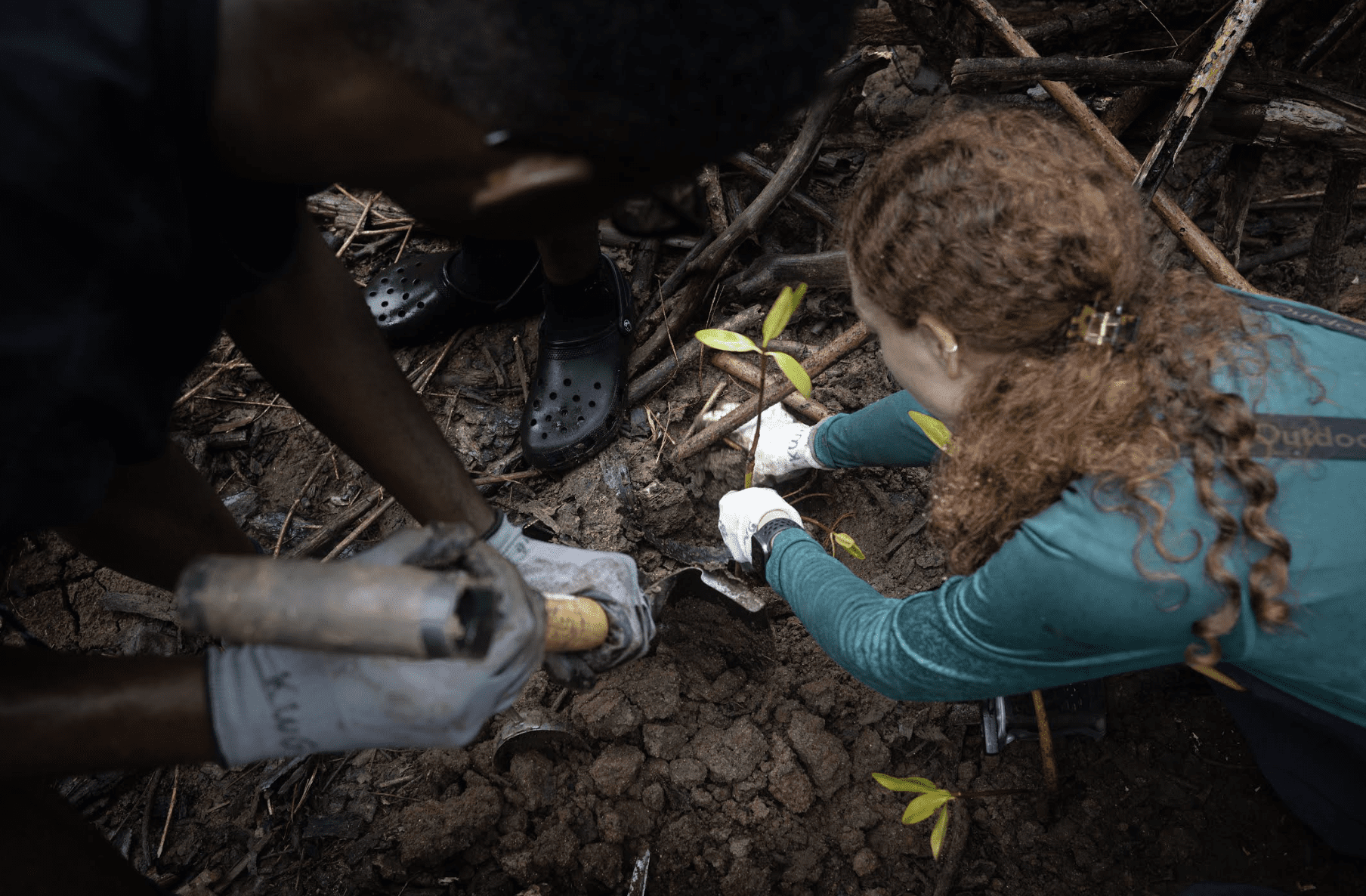
The grant, which is part of NOAA’s Coastal Resilience Program, looks at other features of the habitat, including mangroves at the East End Reserve near Mangrove Lagoon on St. Thomas. This part of the project involves the expertise of UVI professor Kristin Grimes, Ph.D., who specializes in watershed ecology.
The grant has a workforce development component, according to Brandt, bringing UVI students into public high school and junior high school classrooms to engage students in practical applied scientific research.
With the new funding, UVI will expand the program “Mangroves in the Classroom” led by Grimes and, in January, launch “Corals in the Classroom.” Howard Forbes Jr., Virgin Islands Marine Advisory Service director, is partnering to provide support and visual aids.
This is only one of a half-dozen projects involving the collaboration between scientists at UVI and WHOI. For the last three years, they’ve been investigating coral diseases from multiple angles and, with a multi-institutional team, are “moving towards publication” about their latest findings, according to Brandt.
The project involves the study of coral histology and connectivity by Dan Holstein of Louisiana State University (who did graduate and complete post-doctoral work in the Virgin Islands); Laura Mydlarz of the University of Texas at Arlington, who looks at corals’ immunity to disease; Adrienne Correa of the University of California at Berkeley, who along with Apprill specializes in micro-organisms including viruses and microalgae in coral tissue; and Brandt who specializes in the ecology of disease.
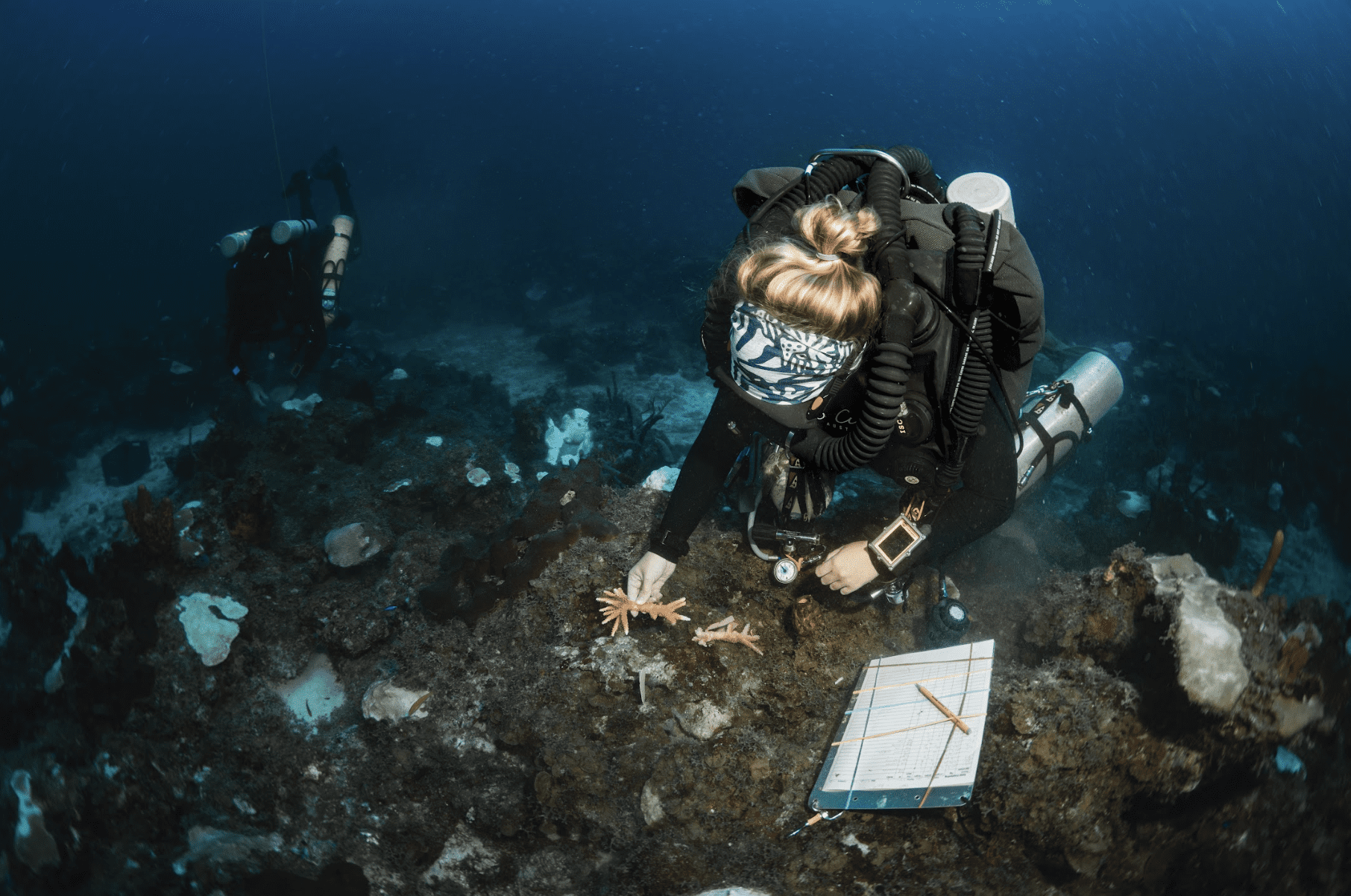
Recently, they have expanded their research to include corals in mesophotic reefs – at depths of between 80 to 220 feet – where corals receive less light. Brandt and her colleagues have been diving on deeper reefs in the Virgin Islands and in Flower Garden Banks National Marine Sanctuary in the Gulf of Mexico to investigate a troubling recent outbreak of coral disease there.
Research at these depths requires technical diving training and the use of rebreathers (rather than traditional scuba tanks). Fortunately for marine biology students in the Virgin Islands, “UVI is one of the few scientific organizations to train students in deeper diving,” said Brandt.
In addition to researching the causes of coral diseases, a team of scientists has also been looking at ways to encourage the growth of corals. Apprill and Colleen Hansel of WHOI have been working with UVI to pilot a project in artificial reefs through a disaster relief grant funded by NOAA through the V.I. Department of Planning and Natural Resources.
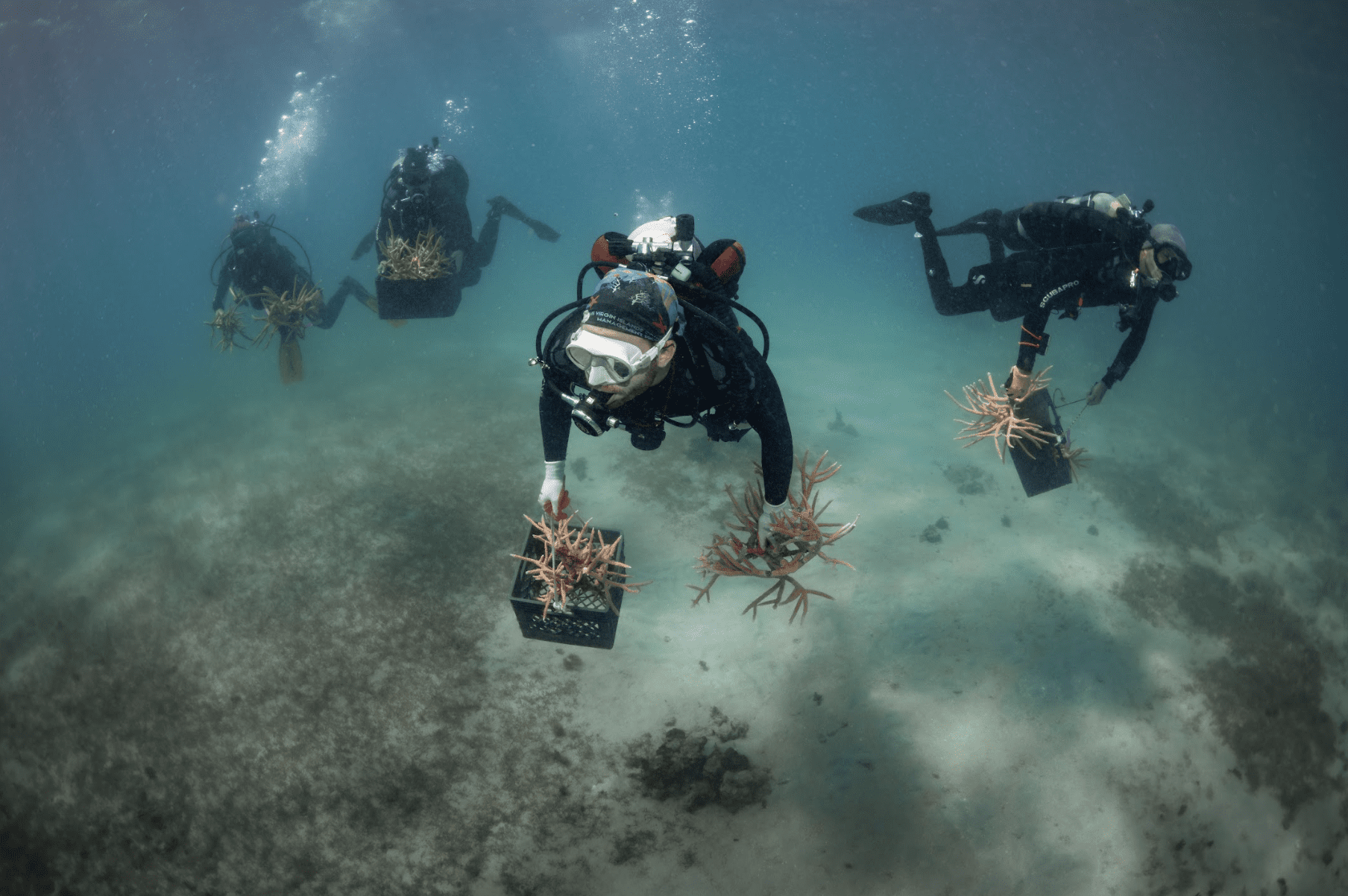
Brandt and her students are also assisting WHOI’s Aran Mooney with his research recording sounds underwater. Since 2012, Mooney has been planting acoustic devices and recording the sounds made by creatures inhabiting coral reefs. They hope to find out if replaying recordings of healthy reefs helps recruit coral larvae to reefs that may have been damaged by storms or disease.
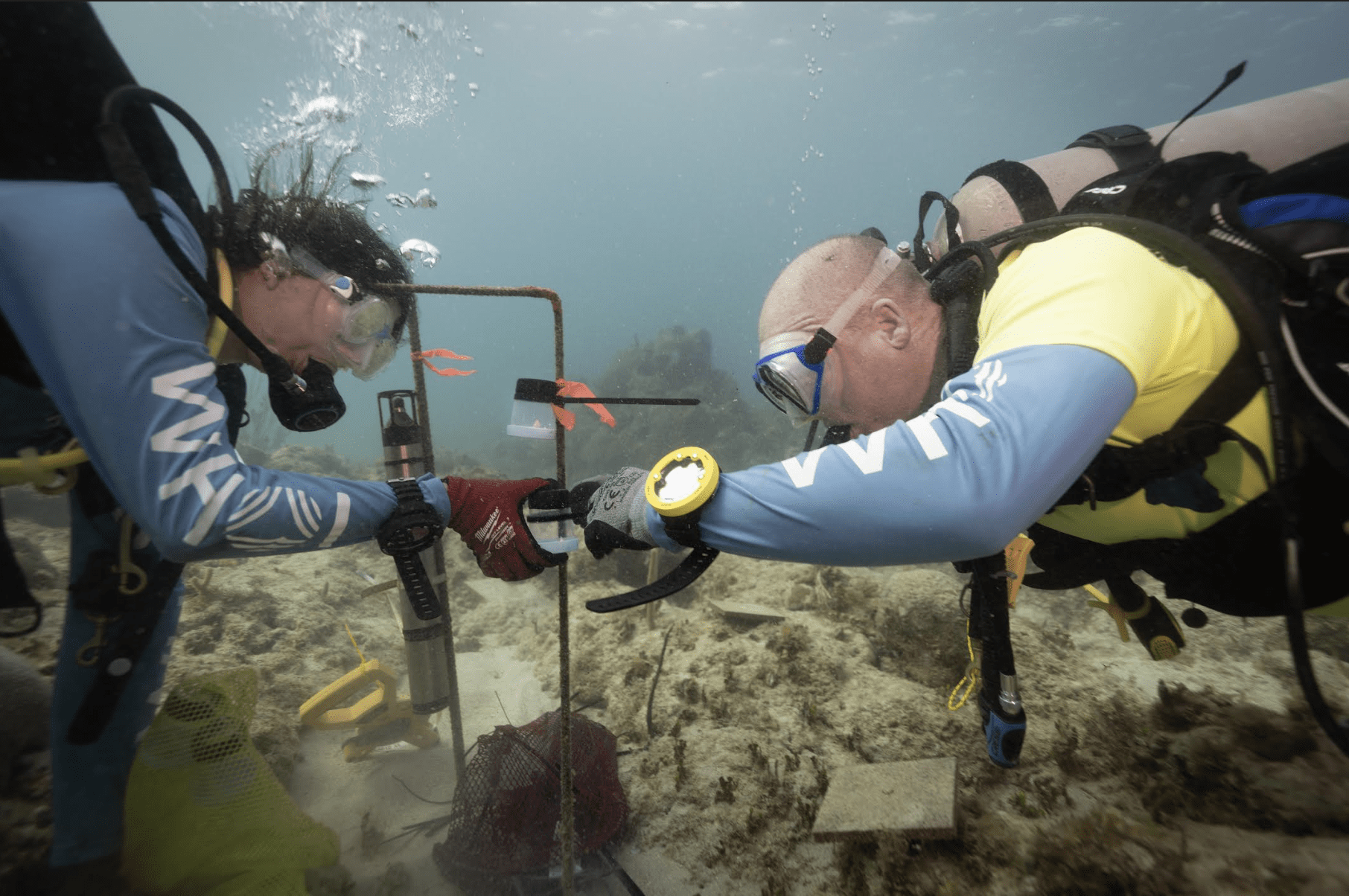
Mooney is also working with UVI’s Richard Nemeth, Ph.D., a marine biology professor who specializes in fisheries, to record fish sounds and build a machine-learning tool to identify which species of fish are making which sounds. “Acoustic data is easy to collect, but it’s hard to analyze,” said Mooney. “We don’t know who is making what sound. Rick and his team are trying to figure that out.”
The partnership between UVI and WHOI creates unique opportunities for UVI students. During the summer, WHOI has hosted students from UVI’s Emerging Caribbean Scientists program; some UVI students move on to internships with WHOI scientists, like Apprill, in their labs.
WHOI scientists typically return to the Virgin Islands to conduct research twice a year. (To learn more about one of their interdisciplinary trips in 2022, click here.
Because they’re not on island all the time, they particularly appreciate having UVI researchers serve as their “eyes on the reef,” according to Apprill.
“We’ve seen some major changes – decline– which is really troubling,” said Apprill. “It’s helpful to have UVI alert us to changes so that we can plan before we get there. We greatly value our collaboration with UVI. Together, we are a more powerful force in our efforts to reverse the decline of coral reefs.”