

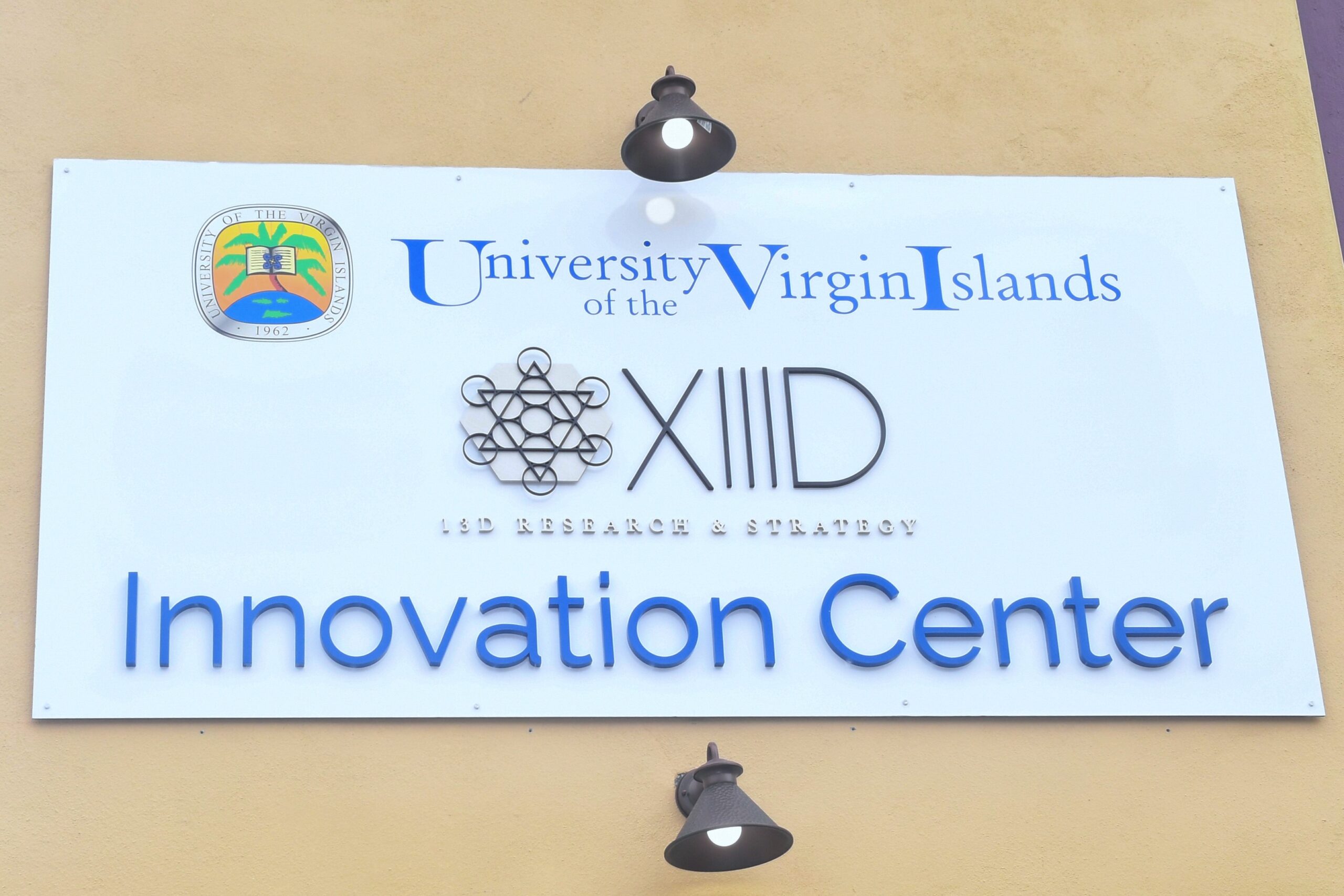
On Thursday, May 28, Virgin Islands Good Food will host an interest meeting at the University of the Virgin Islands 13D Innovation Center Main Room from 5 to 7:30 p.m. The gathering is designed to bring local farmers, buyers, and support organizations together for a direct conversation about market access opportunities for V.I. farmers.
Attendees will learn about VIGF’s “Scaling Good” project and participate in a discussion exploring fruit market access and opportunities in St. Thomas. Refreshments will be served, and an RSVP is appreciated.
According to Jamal Pennick, the VIGF Chief Operations Officer and Program Lead, there is no single barrier preventing local VI farmers from getting their produce into schools, restaurants, and grocery stores. Instead, a layered set of compounding challenges exists. He explains that the most stubborn structural issue is price disparity. “Locally grown fruits and vegetables, often raised using more natural and organic methods, cannot compete with imported prices sourced from regions where labor costs are significantly lower. When shoppers see imported tomatoes at a fraction of the price of locally grown options, the economics become difficult for local farmers,” Pennick said.
“And the real irony is that the consumer is often trading quality and traceability for that lower price; they have no way of knowing that pesticides were used on those imported products, or how they were processed to maximize size and yield,” Pennick said.
Another key issue is that the consumer has come to expect produce that is impeccable, when locally grown, organic produce often has blemishes and small imperfections. “There’s often a real disconnect between what a buyer considers acceptable product and what a farmer considers a fair delivery. Without common grading standards and training, those conversations can turn into lost contracts,” Pennick said.
Cash flow presents a third obstacle, particularly in farm-to-school programs. “Payment may flow from the federal government to the VI government before reaching the farmer, creating a pipeline that can take longer than many small farmers can financially sustain, particularly if they don’t have other revenue streams carrying them in the meantime,” says Pennick.
VIGF is working on two parallel avenues through its “Scaling Good” project, both aimed at giving local farmers sustainable, real-world markets.
The first avenue is institutional procurement. The organization is providing technical assistance, guidance, and coordination resources to help small farmers and cooperatives to develop a strategy to supply the VI government, specifically for Farm to School breakfast and lunch programs. “We’re providing technical assistance, guidance, and coordination resources to help small farmers and cooperatives develop a strategy to supply the VI government. The goal is a Fall 2026 demonstration with the VI Department of Education that proves the model works,” Pennick said.
The second avenue is a direct-to-consumer access system where customers can browse available products from local farmers, purchase electronically via card or digital payment apps, and either pick up directly from the farm or have items delivered. “Think of it as a DoorDash for local produce: a small delivery fee, a driver who picks up from the farmer, and fresh VI-grown food at your door,” Pennick said. He acknowledges that this vision is ambitious, with real technological, logistical, and operational challenges, but it represents the ideal goal for reducing friction between local farmers and everyday customers.
“The path forward for VI farmers isn’t about any one grower becoming a large-scale operation overnight. It’s about building an ecosystem where farmers, producers, buyers, and support organizations work together, where the system is designed to absorb the natural variations of small-scale agriculture and turn it into consistent, marketable output. That’s the model we are building toward,” Pennick said.
To RSVP for this upcoming information session, visit https://bit.ly/GoodFood2026STT, or call 340-643-2298 or 860-922-2194.