

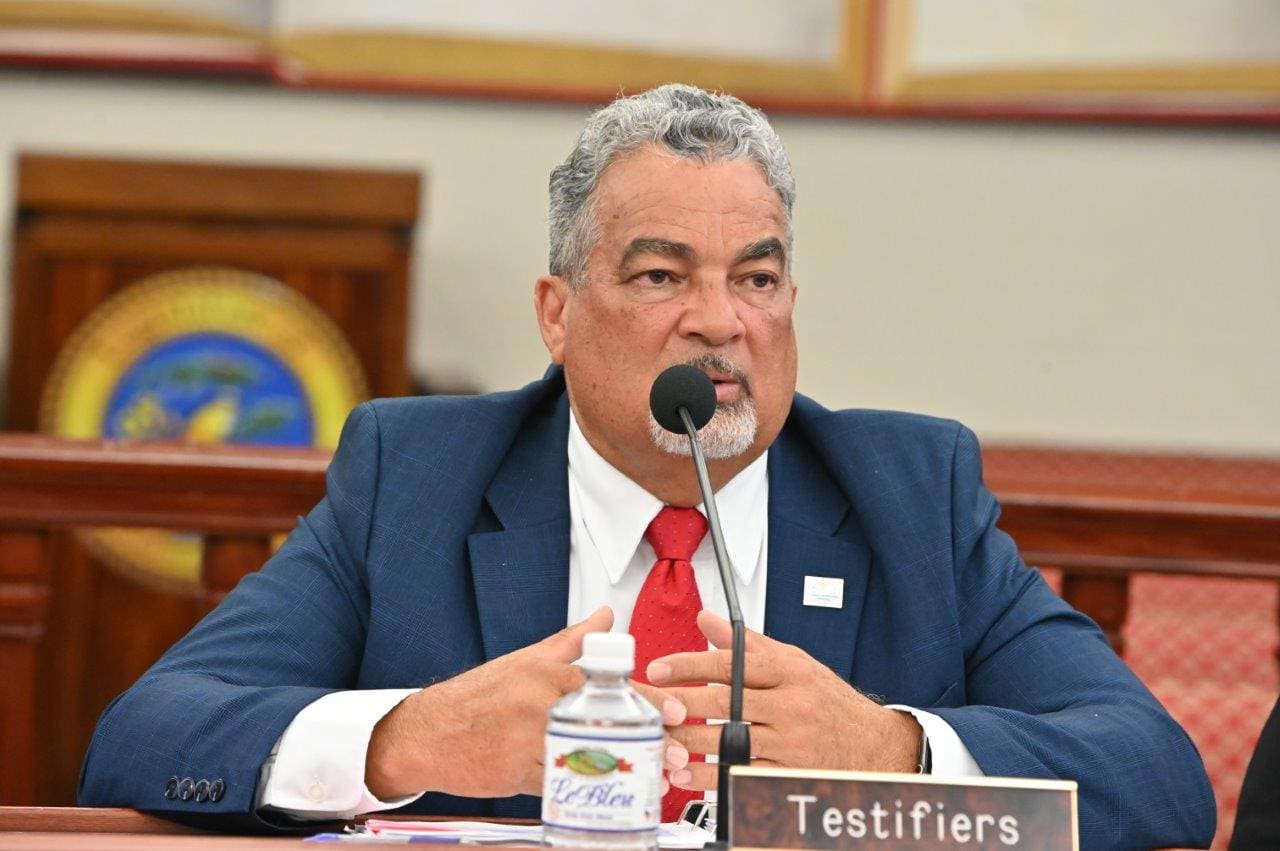
The Virgin Islands Economic Development Authority (VIEDA) found itself under both scrutiny and commendation from the Senate as lawmakers examined the authority’s performance, budget, and strategic direction during Thursday’s Committee on Budget, Appropriations, and Finance hearing, chaired by Sen. Donna A. Frett-Gregory.
The hearing began on a positive note, with several senators acknowledging the vital contributions VIEDA has made to the economic stability and growth of the Virgin Islands. CEO Wayne Biggs was praised for his leadership, particularly in navigating the authority through challenging economic conditions, including the post-pandemic recovery phase. Senators recognized VIEDA’s efforts in attracting substantial investments and generating tax revenues, which have been crucial in sustaining the local economy. Sen. Novelle Francis remarked, “VIEDA has been a cornerstone of our economic resilience, especially during times when other revenue streams were unstable.”
VIEDA’s impact was underscored by the $350 million in estimated annual contributions to the local tax base, a figure that reflects the authority’s effectiveness in fostering economic activity. Although this figure is subject to verification through an upcoming impact analysis, senators expressed their appreciation for the authority’s work, with Sen. Kenneth L. Gittens noting, “The tax benefits and economic contributions brought in by VIEDA cannot be understated. You’ve managed to turn limited resources into significant returns for the Virgin Islands.”
Despite the initial praise, senators expressed serious concerns about the transparency and availability of data regarding VIEDA’s operations. Sen. Javan James, for example, highlighted the lack of detailed financial reporting, particularly in relation to the funds generated by VIEDA’s programs. The senator pointed out that while VIEDA’s contributions to the tax base are substantial, the authority was unable to provide precise figures during the hearing, leading to calls for more robust data collection and reporting.
“We need to understand not just the overall numbers but the specific contributions each program is making,” the senator urged, emphasizing the need for VIEDA to compile and share more granular financial data.
In response, Biggs acknowledged the gap in data availability and assured the Senate that a comprehensive impact analysis was in the works, with results expected by mid-2025. This analysis, he explained, would provide a clearer picture of VIEDA’s economic impact, including the wages paid, taxes collected, and other financial contributions made by businesses under VIEDA’s umbrella.
One of the most significant discussions centered around VIEDA’s funding structure and its reliance on legislative appropriations. The authority had requested a budget of $13,226,000 for the upcoming fiscal year, a figure that represents 73 percent of its operational costs, including the salaries of 48 full-time employees and five critical vacancies. Senators questioned whether this reliance on appropriations was sustainable in the long term, particularly given VIEDA’s crucial role in driving the territory’s economic development.
Biggs described the $6 million currently allocated to VIEDA as “a drop in the bucket” compared to the economic benefits the authority generates. He proposed that VIEDA should retain a percentage of the taxes it helps generate, which would allow the authority to operate more independently and reduce its dependence on legislative funding.
“If we had a funding source that provided some of the taxes that came in from our beneficiaries back to us, then I think we could operate independently and be self-sufficient,” Biggs argued, a suggestion that received cautious support from some senators.
However, concerns were also raised about VIEDA’s ability to effectively manage its budget, particularly in light of fluctuations in certain expenditure categories. For instance, the budget for professional services, specifically lead generation, saw a marked increase in fiscal year 2024 before being adjusted downwards for fiscal year 2025. Biggs explained that the spike was due to a major rebranding initiative and the development of a new marketing strategy, which had now been completed, hence the reduced budget for the following year. Senators urged VIEDA to maintain transparency in its budgeting process and to ensure that funds are allocated efficiently to maximize economic impact.
The hearing also shed light on strategic planning and staffing issues within VIEDA. Biggs acknowledged that the authority was operating under strain, with five critical positions remaining unfilled. He noted that these vacancies were not merely administrative but essential roles that, if filled, would alleviate the burden on current staff and enhance VIEDA’s capacity to manage its growing portfolio.
“These vacancies are not just numbers on a budget sheet—they represent essential roles that, when filled, will significantly enhance our capacity to attract and retain businesses,” Biggs explained.
Senators expressed concern over VIEDA’s ability to execute its strategic initiatives effectively, particularly in the areas of marketing and lead generation. While the authority had attended nine trade shows during the fiscal year, which generated significant interest from potential investors, lawmakers questioned whether VIEDA’s current marketing strategies were sufficient to achieve the desired level of economic growth. “We need to ensure that VIEDA has the resources and the strategy in place to continue attracting high-quality investments to the territory,” Frett-Gregory emphasized, calling for a more robust and forward-looking approach to economic development.
Despite these concerns, the senators were unanimous in their praise for VIEDA’s accomplishments, particularly in areas such as workforce development and the administration of programs like the Economic Development Bank (EDB). The EDB was highlighted as a key success, with its efforts in providing loans to small businesses and managing initiatives like the VI Slice program receiving particular commendation.
“The Economic Development Bank under VIEDA has been a lifeline for many small businesses in our community. Your work in this area has made a real difference,” Francis remarked, reflecting the broad support for VIEDA’s efforts to boost local entrepreneurship.
Additionally, VIEDA’s involvement in the Vision 2040 plan—a long-term strategy for the territory’s economic development—was another aspect that garnered praise. Senators recognized the authority’s commitment to this initiative and its role in ensuring that the goals of Vision 2040 are met.
“VIEDA is playing a critical role in shaping the future of our territory through Vision 2040. Your dedication to this long-term plan is commendable,” Sen. Samuel Carrion noted, expressing confidence in VIEDA’s ability to deliver on the ambitious goals.