

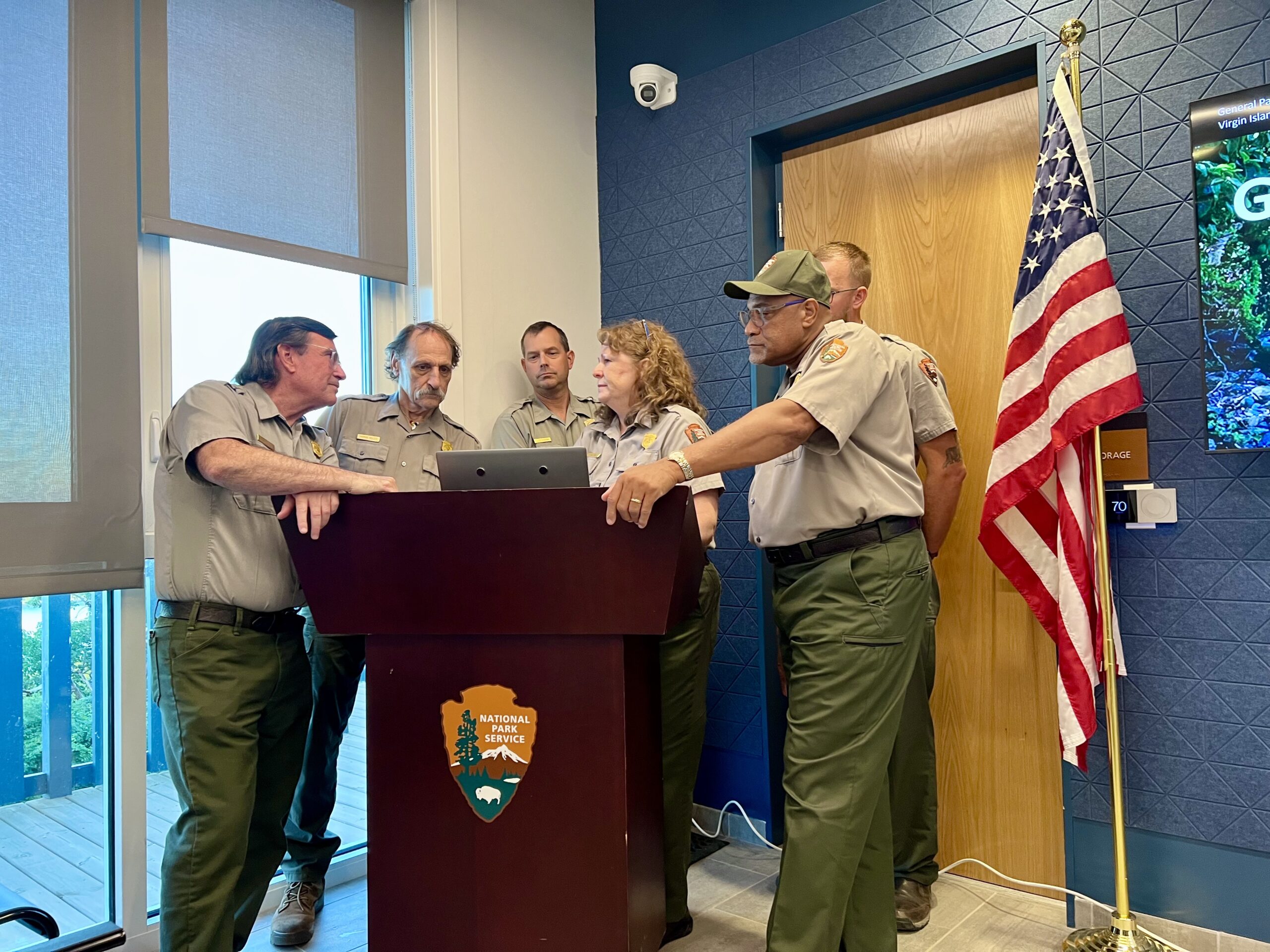
Virgin Islands National Park officials presented an overview of the park’s infrastructure projects during the year’s first community engagement meeting held Wednesday night on St. John. The meeting covered the removal of toxic materials, an inventory of archaeological features, restoration of ruins, and other topics.
VINP Superintendent Penny Del Bene announced that the regularly scheduled monthly meetings at the Resource Management and Science Building will be held every two months in 2025.
The meeting began with an update on the status of the cleanup of toxic materials found at Caneel Bay.
The first phase of the removal of toxic materials was completed in May 2024. Contractors removed nearly 58 tons of asbestos-containing materials from the lodging area and shipped them to a containment site in Florida.
During the second phase, which begins in April, contractors will remove an estimated 425 bulk cubic yards of soil from the area near the former maintenance facility containing barium, pesticides, and chemicals found in fuel sources.
Planning is still underway for the third phase at a former dump site located about 100 feet inland from the beach at Honeymoon Bay. The site includes an estimated 12,500 bulk cubic yards of organic matter, debris made up of concrete, plastic, and metal, and toxic materials including pesticides and PCBs.
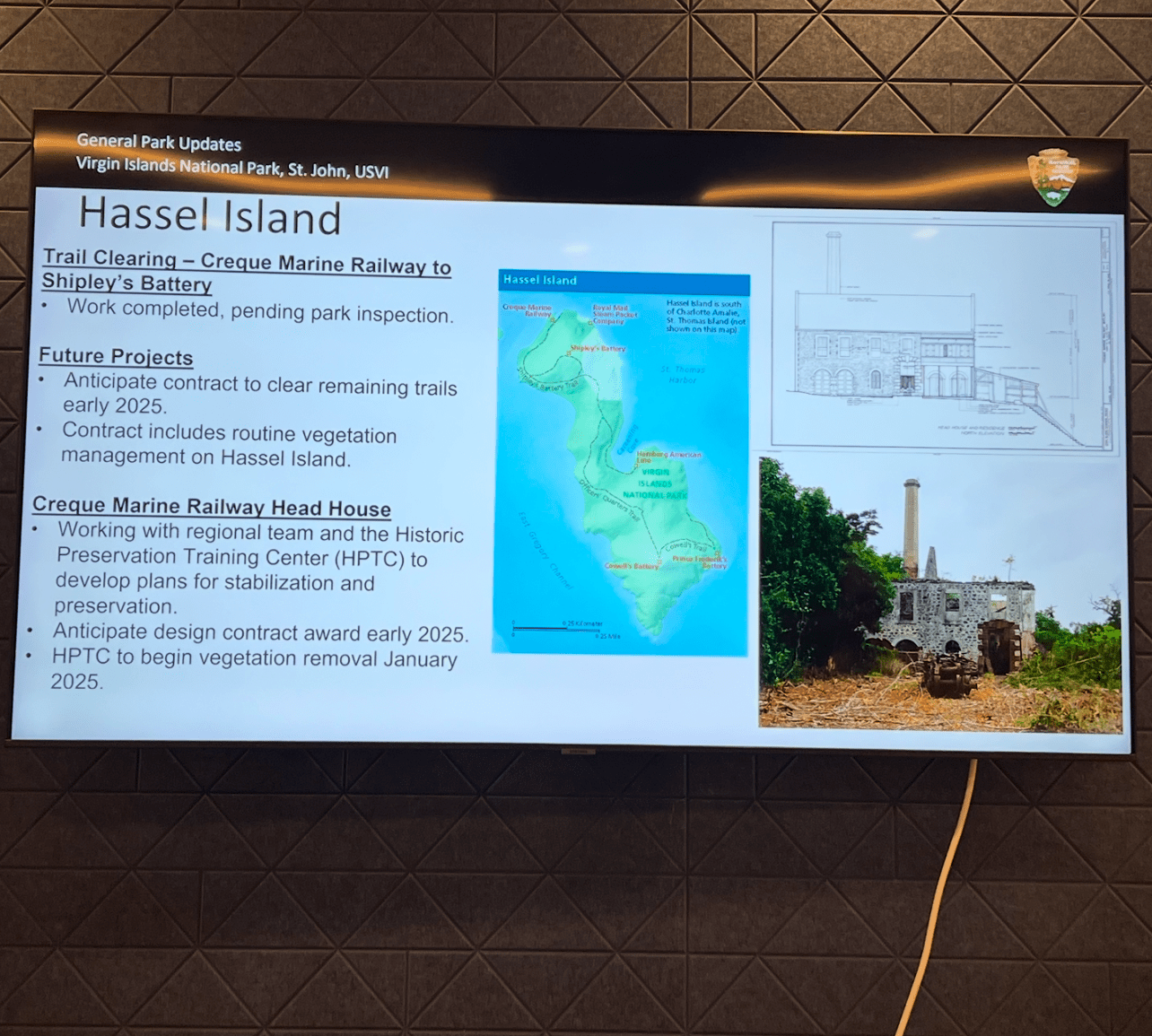
On Hassel Island near St. Thomas, a regional team continues to clear trails from the Creque Marine Railway to Shipley’s Battery. Plans are underway with the NPS’s Historic Preservation Training Center for the removal of vegetation and the long-term stabilization of ruins.
Back on St. John, the water and wastewater plants at Cinnamon Bay and Trunk Bay are all in need of replacement. Pending permits, test borings will be drilled in February at Cinnamon to collect “geotechnical data necessary to inform project needs, capacity and design,” according to Facilities Manager Nick Crowley.
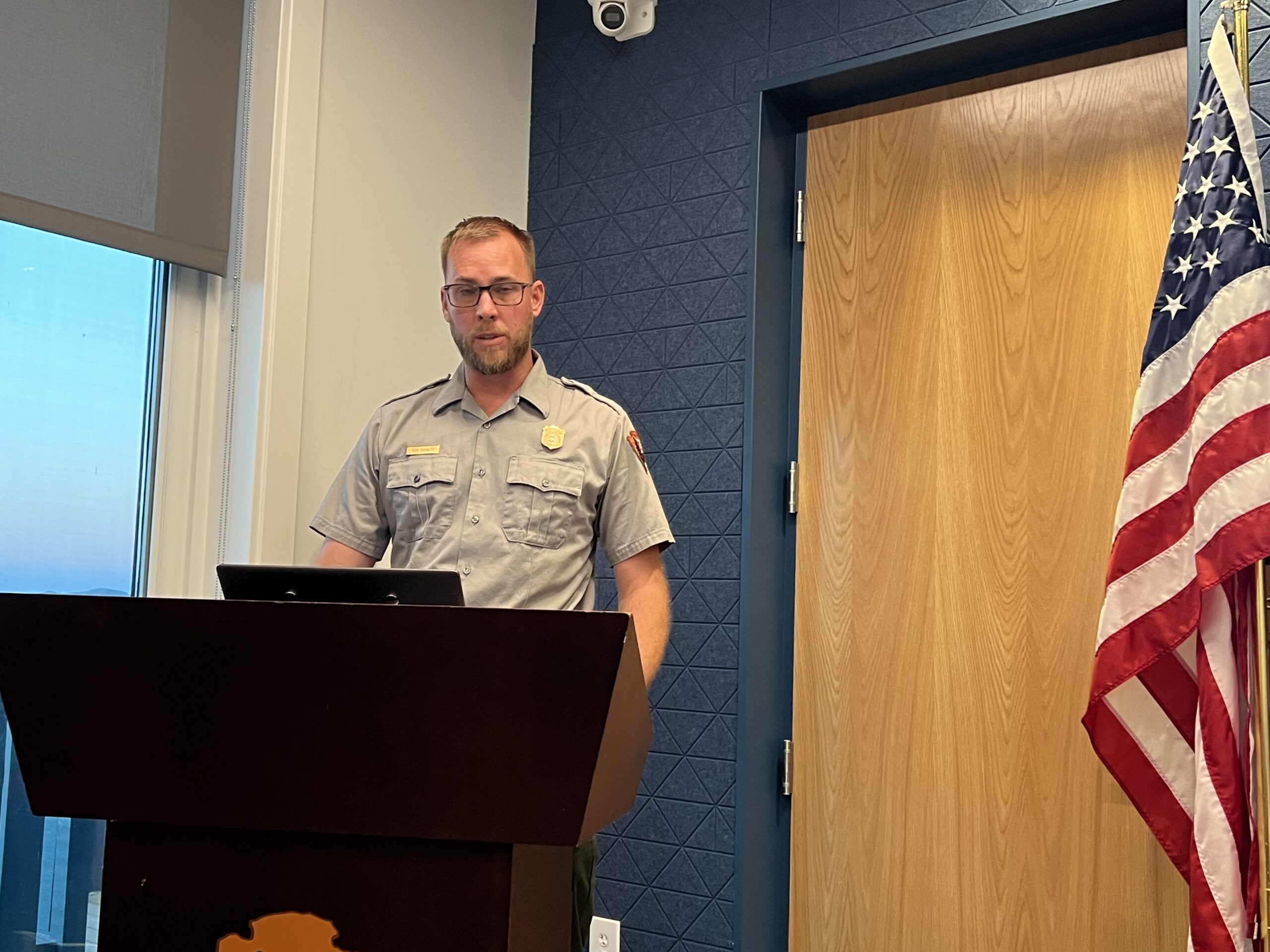
A new water plant for Trunk Bay has been designed and may be constructed starting this fall. Funding for these projects comes from the Great American Outdoors Act.
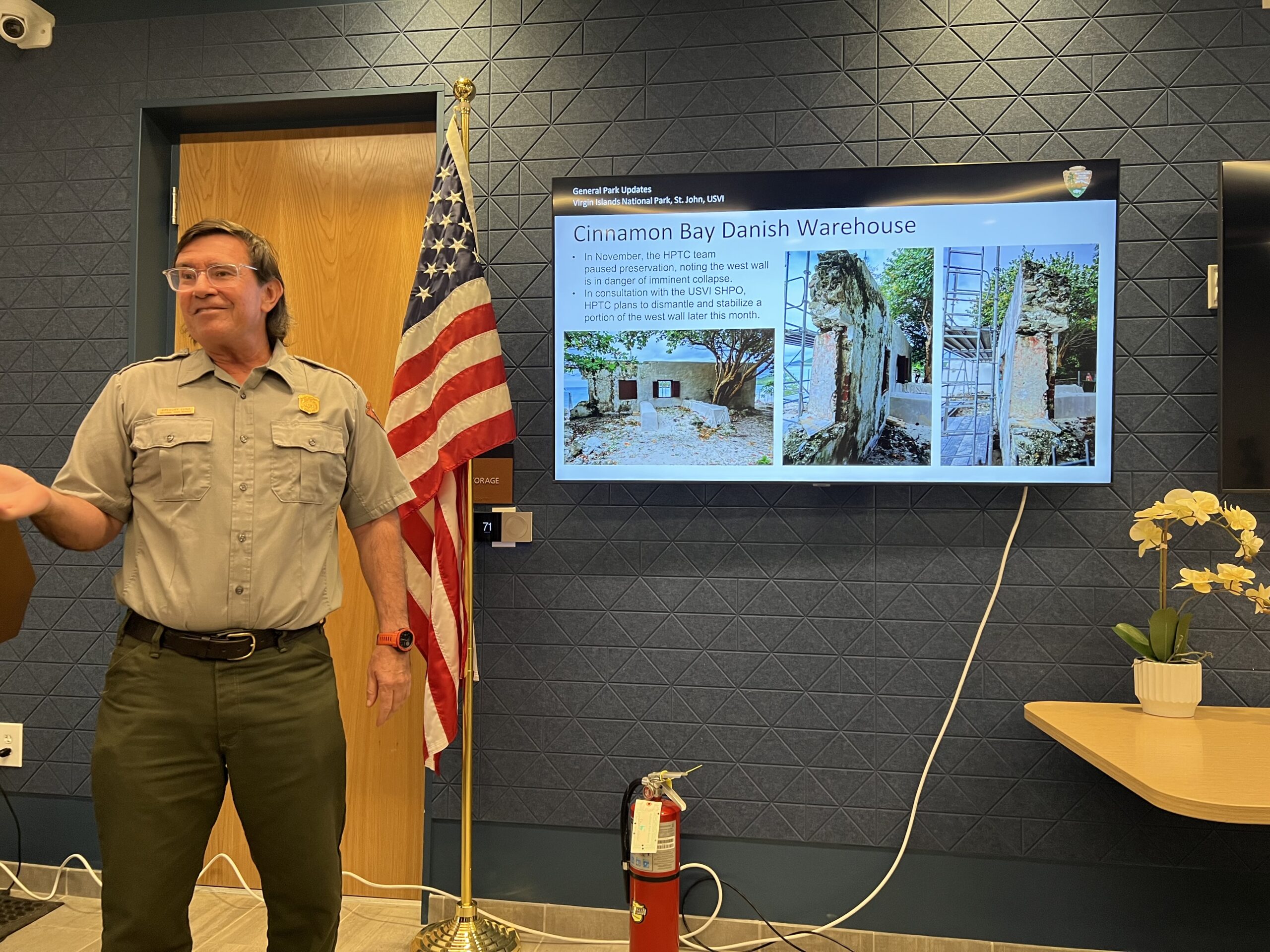
The Great American Outdoors Act is also funding the stabilization of the ruins of the old Danish Warehouse at Cinnamon Bay. The warehouse, one of the oldest structures on St. John, was largely destroyed by swells during Hurricane Irma in 2017.
“There is no intent to reconstruct the historic building, or to relocate it,” according to park officials. Thomas Kelley, natural resource manager for the park, said the shoreline has changed dramatically over the decades and rising sea levels continue to pose a threat to the existing ruins. Old records show that the Northshore Rd. used to run between the warehouse and the waters of Cinnamon Bay, he said.
Stabilization of the warehouse using historic materials was paused in November when the western wall began to lean precariously. Officials have decided to take down a portion of it permanently and partially rebuild another part.
Meanwhile, back at Caneel Bay, a team of archaeologists has begun to document and map the historical structures, leading to a two-phase planning process. The data will be used to determine the structural integrity and historical value of the ruins, some of which may qualify for the National Register of Historic Sites.
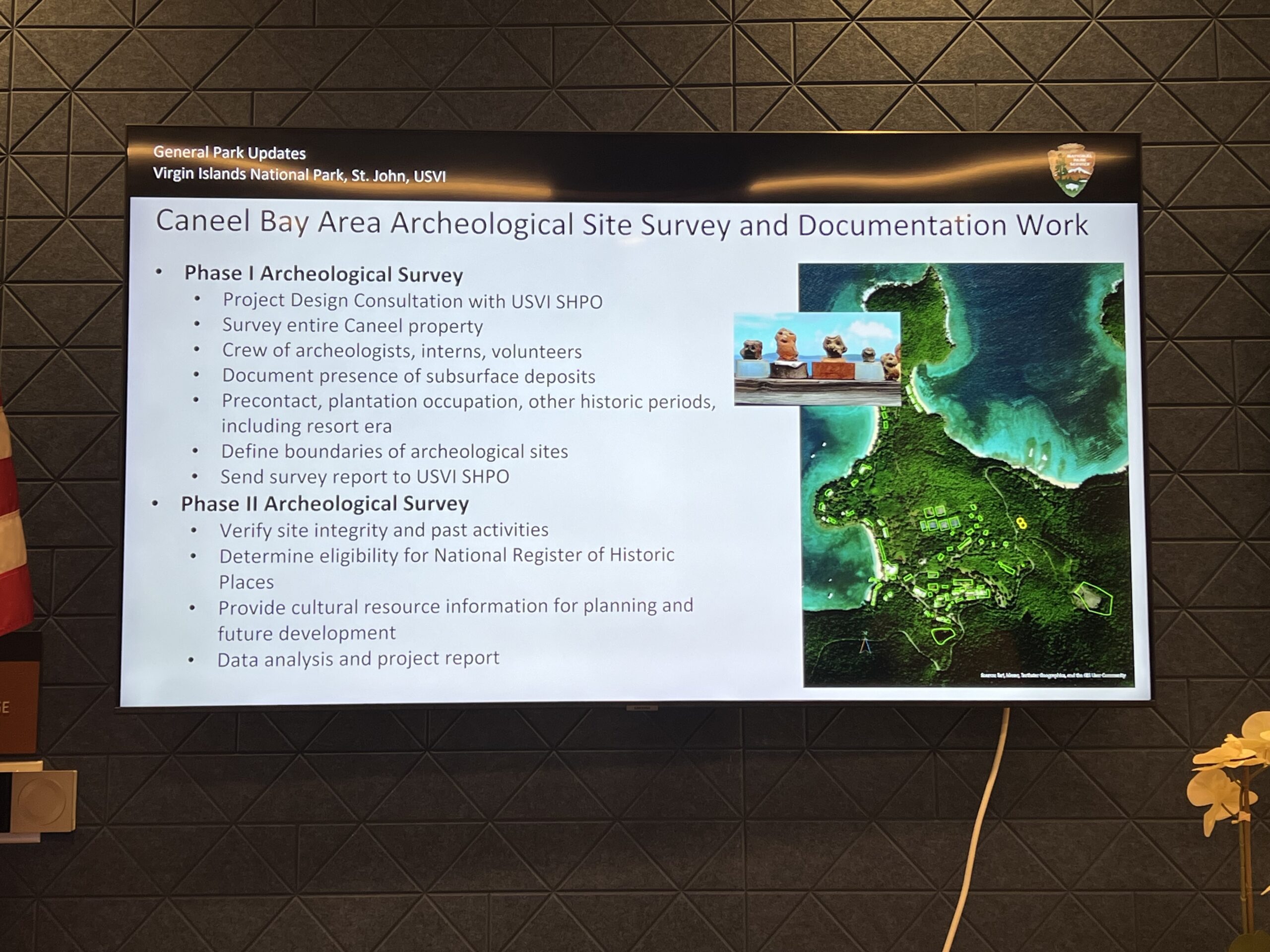
The plan will be used to guide applicants who will be submitting proposals to construct a new resort on the property. The first phase of the selection process for development ends in late February when applicants respond to a Request for Qualifications.
Park Archaeologist Gregory Luna said ceramics dating back to 1100 to 1200 A.D. have been recovered from Caneel, but regulations prevent him from revealing details about where the artifacts were found in order to protect the sites’ integrity.
Del Bene said the Park Service is committed to keeping all artifacts found on St. John on the island rather than shipping them elsewhere for safekeeping, a practice that was done in the past. The park now has the facilities to process artifacts and plans to create a position for a museum curator and support staff.
In response to a question from the audience, Crowley said the VINP is putting out to bid a contract to cut the vegetation along the Northshore Road and at the East End near Haulover. Motorists have been complaining about the narrowing of the road from the growth of brush following the unprecedented increase of rainfall in 2024. Kelley said the island usually gets slightly over 40 inches of rain annually. In 2024, the amount of rainfall totaled nearly 70 inches.