

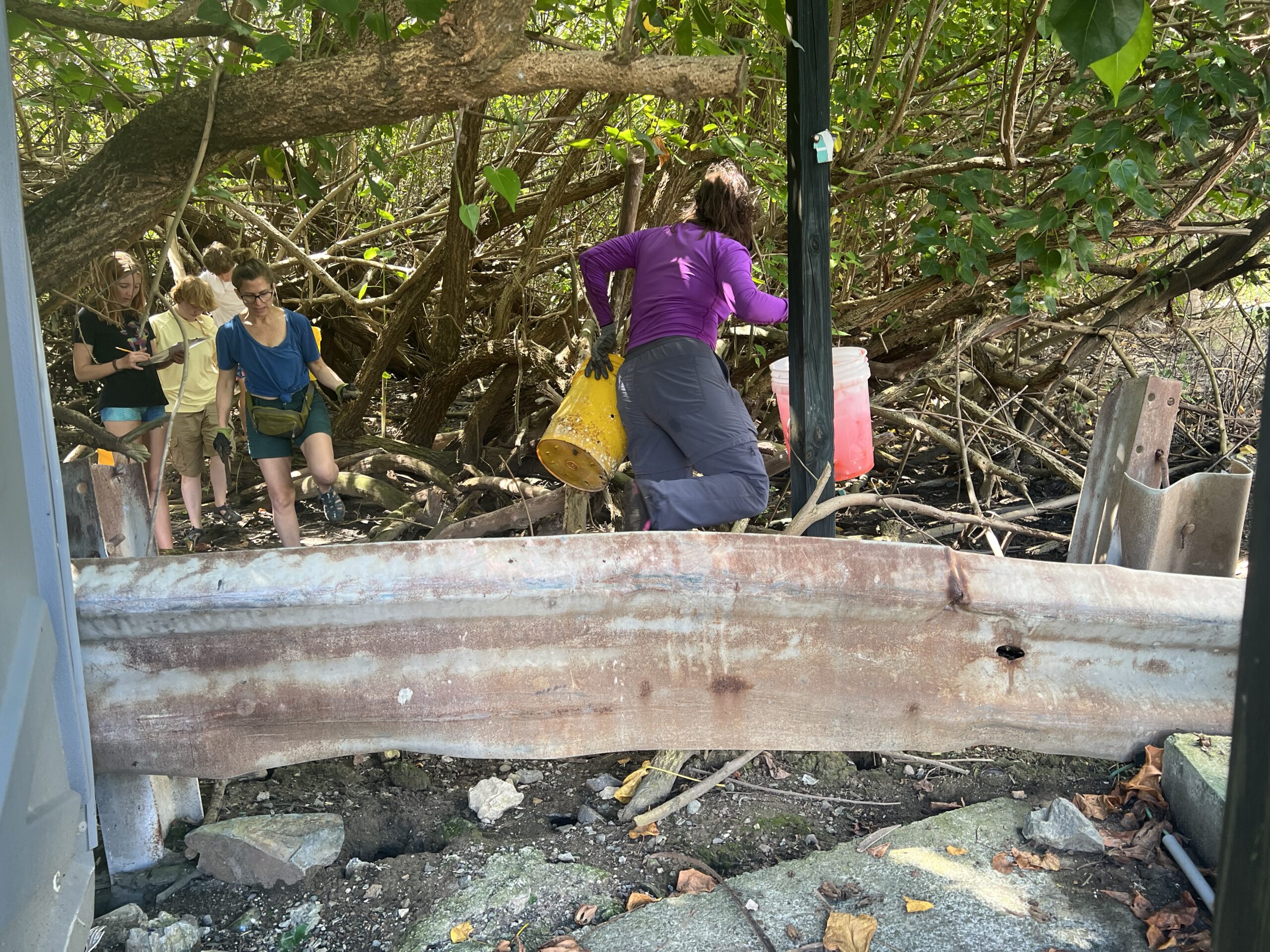
On a Saturday morning with spring a few days away, a group of volunteers pulled up in a van along St. John’s Route 107 in Coral Bay. They came to clean up a portion of the mangrove shoreline adjacent to Kendall George Drive.
It was the latest effort in the Great Mangrove Cleanup, an initiative led by the University of the Virgin Islands since 2018. The researcher leading the program says since the work began, volunteers have removed an estimated 52,000 pounds of debris from vital mangrove shorelines on St. Thomas, St. Croix, and St. John.
The Coral Bay cleanup on Saturday was quick and efficient, starting around 10:30 a.m. and wrapping up by noon. An extra trash bin was stationed at the Waste Management convenience station near the intersection with King’s Hill Road. A pile of old tires and twisted metal lay on the ground nearby.
Within minutes of arrival, teams of volunteers spanned out among the trees, passing debris hand-to-hand over the guardrails. Emma Winkle recovered a plastic container lid. She said she didn’t know much about the project but came to volunteer.
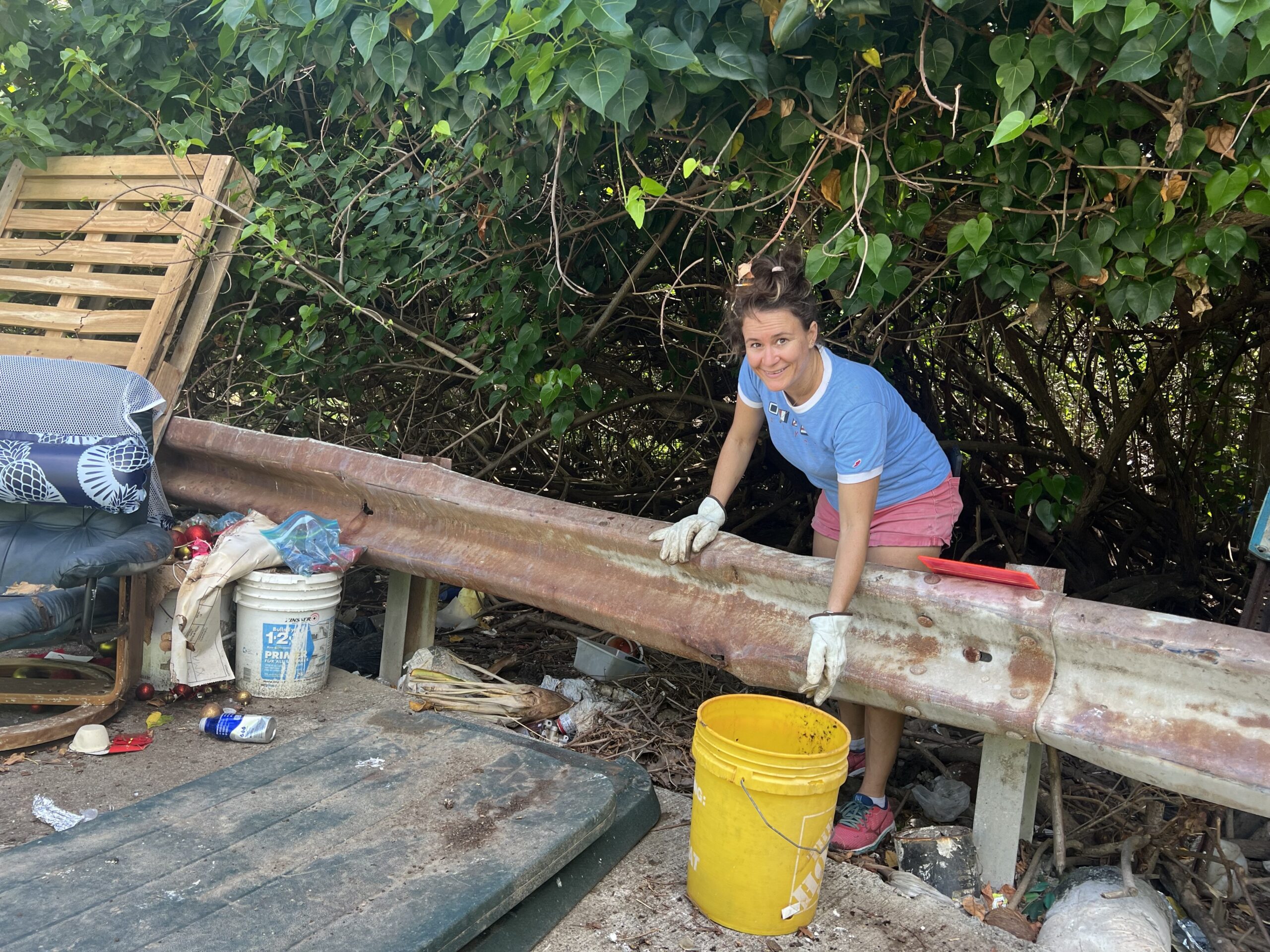
Ali Durdal, project manager for GRROE USVI Mangroves, shared some of the details. GRROE stands for growing research, restoration, outreach, and education for U.S. Virgin Islands mangroves.
“ … the cool thing about these cleanups is that they are data-driven. So all the volunteers who come out help us, they get a data sheet, and every piece of debris that they pull out of the mangroves, they’re helping us to record the type of debris that it is,” Durdal said.
Throughout the day, participants were seen holding clipboards with itemized charts. Pencil marks tallied the types of trash collected that morning.
“And at the end of the day, they’re also collecting weights about the total amount of trash removed. So that allows us to, when we look back at the data, to see the cumulative impact of all of the people who participated in the event. The leading item recovered that day were single use beverage bottles,” Durdal said.
Lead research associate Kristin Wilson Grimes said most of the recovered items came from land-based sources. Grimes credited the UVI students, university staffers, and their families for putting the work in to get the junk out.
As the cleanup wound down, a smiling group of boys who worked as volunteers sped by. While working the mangrove, Grimes said she heard one of them say, “This is a lot of fun.”
Where else could a child spend the day getting wet and dirty with parental approval? The team leader laughed. Grimes said she also had to change into a clean shirt herself after spending the morning at work.
When asked how the collection of bottles, buckets, container tops, car fenders, and deflated dinghies would be disposed of, Grimes said most would be handled by Waste Management. Other items, like dinghies, would be recovered because they attract a lot of interest.
Through its marine debris program, the National Oceanographic and Atmospheric Administration funds programs like the Great Mangrove Cleanup in the Virgin Islands, Puerto Rico, and Florida. Local agencies like Waste Management, Planning and Natural Resources Division of Coastal Zone Management, VI-EPSCOR, The Center for Marine and Environmental Studies, and the V.I. Marine Advisory Service have also supported mangrove cleanup efforts over the years.
The first NOAA-funded cleanup this year took place Feb. 21 in Altona Lagoon on St. Croix; the next is scheduled for Vessup Bay, St. Thomas, on April 18. Those who would like to volunteer can find contact information on the Island Green Living social media page.