

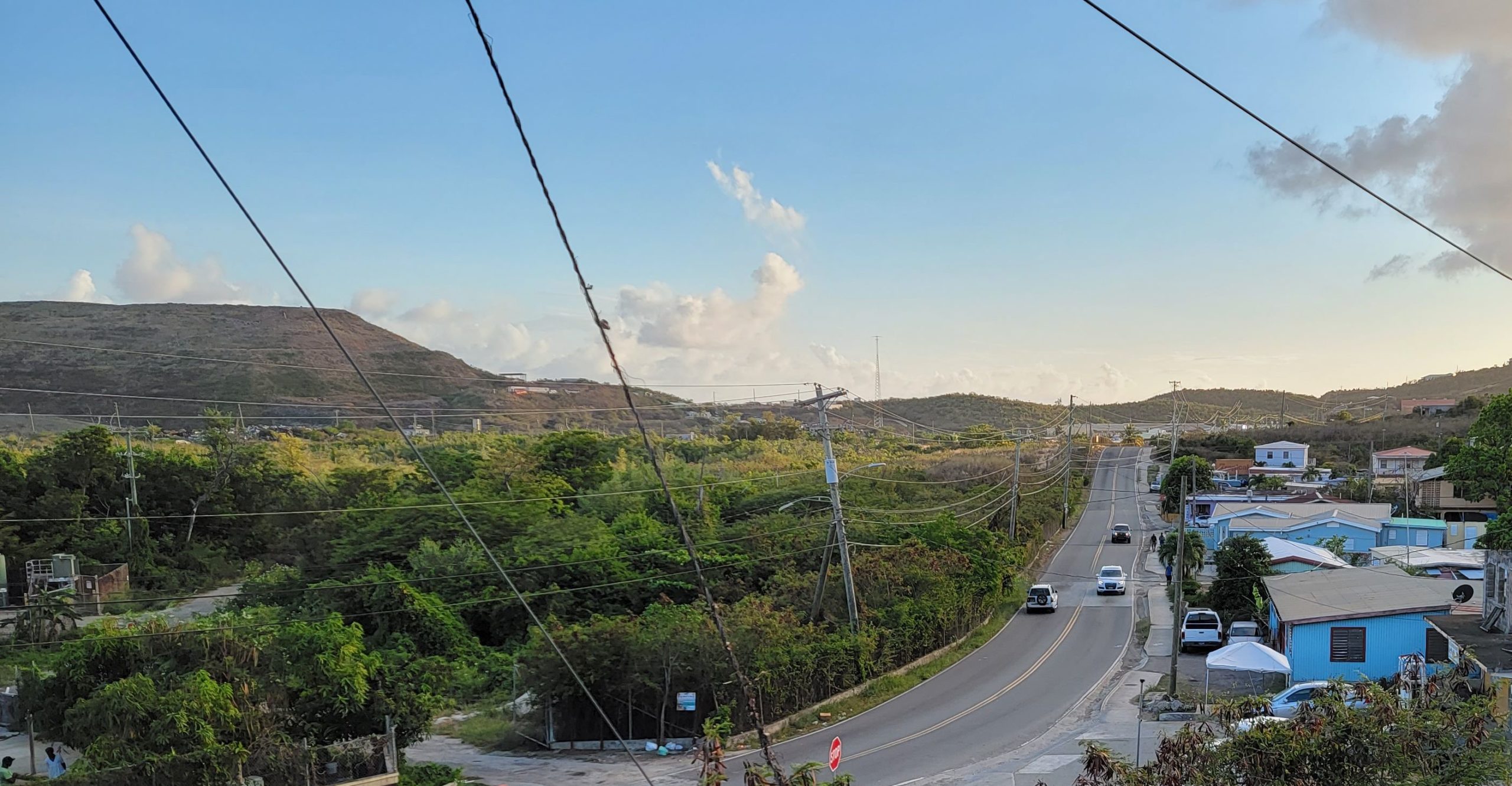
The V.I. Waste Management Authority and Caribbean Green Technology Center outlined the territory’s ambitions toward reducing and reusing waste during a public hearing Thursday evening held concurrently on St. Thomas and St. Croix.
Setting the stage Thursday evening, WMA Executive Director Hannibal “Mike” Ware said the U.S. Virgin Islands has to handle a “modern waste challenge with an outdated system.”
“Our rules were written before this authority existed,” he said. “Our infrastructure is aging and aged. Our financing model is woefully and structurally insufficient — I’m working on that. And yet, we’re managing close to half a million tons of waste each year. We’re under federal consent decrees with limited land, limited resources and increasing demands. The strain on our system is undeniable.”
Citing chronic underfunding, towering vendor debt and imperfect municipal frameworks, Ware said Waste Management has been stuck in a vicious cycle of crisis management, “responding to issues as they arise, managing limited space, walking through a series of emergencies every half a day.” Ware said that a comprehensive waste management plan has to address all of those issues while prioritizing waste reduction, diversion and recovery.
Greg Guannel, director of the Caribbean Green Technology Center, elaborated and stressed that the territory is attempting to implement an “integrated sustainable material management plan.”
“It is not a ‘solid waste’ or ‘garbage’ plan,” he said. “The reason why we call it ‘sustainable material management’ is because of the idea that waste is not just garbage. There is value — we can develop, we can reuse, we can do a lot of things before disposing it and making it bigger and bigger and bigger at the landfill.”
Guannel also pointed to the need to capitalize on opportunities to recover energy from processing waste.
“There is a lot of opportunity with waste — Sargassum, waste water — in terms of creating biogas … that can be used as revenue generation,” he said.
Community members who tuned in to Thursday night’s meeting had multiple questions about the authority’s fee structure, composting efforts and a recent, controversial bill that would reverse the territory’s “Ban the Burn” law and allow air curtain incineration for burning vegetative debris.
“We have, I think, 1.5 million cubic yards of green waste in our landfills,” Ware said. “We get in about … 70 tons of green waste into the landfills on a daily basis. While I am fully behind composting … we have a crisis with our green waste in the territory currently. Air curtain incineration can reduce the issue that we have by 90% almost overnight, whereas composting is more of a long range solution that I am fully behind — which is why you will see it all over the sustainable materials management plan.”