

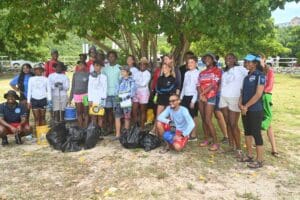
The Youth Oceans Explorers Summer Program, a four-week immersive experience that offers students a unique opportunity to actively engage in coastal and environmental conservation while also learning to identify various plants and fish species, wrapped up in the first week of August.
The program, led by Howard Forbes Jr. from the Virgin Islands Marine Advisory Service (VIMAS), has been engaging in various activities aimed at fostering a love for the ocean and its surrounding ecosystems for almost a decade.
The program’s activities culminated in a beach cleanup at Brewer’s Bay. These cleanups help collect crucial data that can influence local legislation to better protect the Virgin Islands’ natural resources.
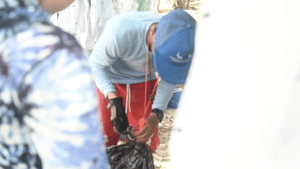
On the day of the cleanup, the participants made their way to Brewers Bay around 10 a.m., armed with gloves, bags, and a competitive spirit. As they combed the beach for debris, the excitement was palpable. The goal was not only to collect as much trash as possible but also to log the types of debris found, providing valuable data for future conservation efforts. This hands-on experience taught the campers the importance of protecting their environment and how their efforts contribute to a larger cause.
As the cleanup progressed, the campers’ bags filled with a variety of trash, from plastic bottles to discarded fishing gear. The most memorable moment came during the weigh-in, a highly anticipated event where Forbes brought out his scale. The campers gathered around, eager to see who had collected the most trash. One particular bag stood out – it contained a cinder block. When asked about it, the camper simply replied, “Building materials count as trash, so I put it in there.” The bag, weighing an impressive 30 pounds, became the talk of the cleanup.
After the weigh-in, the group headed back to the UVI Marine Center for lunch. The camaraderie and sense of accomplishment were evident as the campers shared stories of their finds and discussed the impact of their work. Post-lunch, the campers participated in an educational activity that allowed their creativity to shine. Using pieces of coral, rocks, and toy animals, they created artificial reefs. These miniature ecosystems, complete with turtles and crabs, were a fun and informative way to learn about the importance of reefs in marine environments.
For those interested in supporting ongoing conservation efforts, there are numerous ways to get involved. Volunteering at cleanups, donating financial support, providing personnel, or even offering refreshments for volunteers are all invaluable contributions. Interested organizations and stakeholders can reach out to Forbes at howard.forbes@uvi.edu and follow the UVI Center for Marine and Environmental Studies (CMES) Facebook page for updates. Additionally, more information can be found at www.viepscor.org and www.uvi.edu/vimas.