

Editor’s Note: This is the second article of a three-part series. A Spanish version follows below.
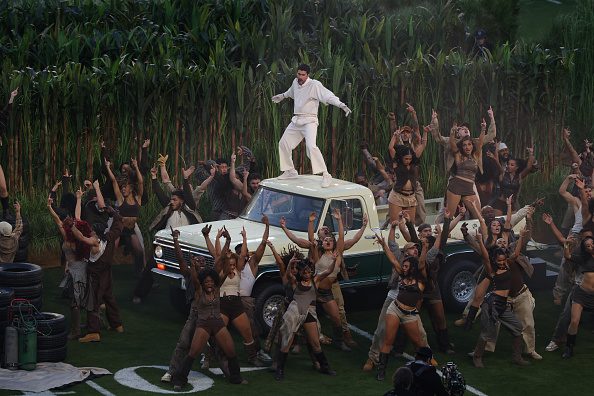
The Benito Bowl, also known as Super Bowl LX, began with a young man in a sugarcane field, with a big smile on his face, saying, “Qué rico es ser Latino.” How good or nice, or delicious, or precious it is to be Latino (the word “rico” is fluid in this sense and very much depends on context).
Latino, in this case, as in most cases, is used to include all people born in the Americas or of American ancestry who speak Spanish, but also those who don’t speak the language but feel they are Latinos culturally, or genetically. Like the word “rico,” “Latino” has a fluid definition.
The term is particularly useful for business, demographics, statistics, marketing, and is good for politicians and other public figures, whether used to unite or divide.
In the case of the show’s opening statement, “Latino” was obviously used to unite.
But the halftime show, more than representing the Latino world, was staged to represent Bad Bunny’s homeland, Puerto Rico, and by extension the Greater Caribbean Region, because the two are inseparable (even so, Benito was able to honor and recognize every Latino, and every non-Spanish speaking American during his brilliant grand finale).
The show opens with what seems like an endless sugarcane field (cañaveral) where workers, cutlass in hand, are taking care of business. More than the rest of the American continent, it is the Caribbean that, since the XV century, has had the strongest and most painful relationship with the plant.
Just like canoes linked our islands during the previous 4,000 years, once sugarcane arrived, it became the reason many islanders travelled from island to island.
The sugar trade was the epicenter of the forced migration of citizens from Africa to our islands, the crop that maintained armies and empires, the monoculture that, up to the XX century, destroyed the agricultural self-reliance many of our islands had, and turned them into nations that despite fertile soil and year-round growing season, are incapable of feeding its people without importing food.
Sugarcane workers mixed our blood, our music, our language, our food, our games. It transformed us into human mosaics, composed of multi-continent, trans-insular DNA which we distilled and aged into our own unique blends: Caribbean people, Caribbean culture.
That is why you can travel from one end of this stunningly beautiful part of the world to the other, and regardless of the language differences we all feel very much at home.
Those cane fields, for better or for worse, are part of us. They are the sugar in our morning coffee or tea, in our desserts and candies, and they are also the rum we drink, an integral part of Caribbean economy and a welcomed guest to many celebrations.
The sugarcane and cane cutters were only one segment of Bad Bunny’s (Caribbean) multi-stage extravaganza.
The scene changes to a closer shot of some of the cane cutters and we finally see the artist, Benito Antonio Martinez Ocasio, who proceeds to sing as he walks past people busy doing their thing.
A young man is selling coconut water, next we see men playing dominoes. Pay attention to the faces, the clothing, the bottle on the table. Bad Bunny playfully shows a players which piece to play next.
This is followed in order of appearance by a nail salon, construction workers using cinder blocks to probably build a house, a “piragüero,” the snow cone cart so ubiquitous in our islands and called “granizado” in Cuba, “frio-fio” in the Dominican Republic, “fraco” in the US Virgin Islands, etc. Bad Bunny then passes a street food vendor and walks under two sparring boxers.
In a mere 1 minute 47 seconds, the artist had established the geographical/cultural environment where the show is taking place. Not the Puerto Rico or the Caribbean that visitors may see, but the one we locals know and recognize.
Bad Bunny was doing what many other artists have done before, creating a narrative arc to take the performance from A to B to C smoothly. This narrative structure often contains a story. But most times the stories are allegorical, filled with symbolic gestures and props, and so loosely tied together that many times we don’t see them.
In the case of the Benito Bowl, never has a halftime show been so explicitly told as a story, with a specific geographical region as the setting, or one that has exposed more of the star’s personal life, while at the same time intentionally not being so much about him.
History, family, love, injustice and uncertainty, were all part of the performance. It spoke about the past, the present, and a call for a better tomorrow.
The story was told in ways that never took away the joy and the fun of watching the show.
Those for whom it was intended got it, while the rest danced to the irresistible beat of reggaeton, Latin trap, bachata, salsa, dem bow, and other Caribbean rhythms.
Every part of the show can be explained as a segment of this multi-act play containing layers upon layers of meaning. It was intentional, it was well done.
There was messaging in everything, whether when the artist falls through the roof of the concrete house representative of so many houses in Puerto Rico and the Caribbean (Poorly built? Effect of hurricanes?), or having dancers perform in simple, comfortable, mostly brown, beige and white costumes that enhanced and complimented skin tones and bodies instead of dazzling, or impressing, those color schemes spelled tropical heat which does not require the bright colors associated with beaches and tourists. The earthy tones reminded us more of mountains, earth, rocks and rivers than cities, sands or sea. During another dance scene, we see all combinations of couples; everything is allowed here, something he later stresses when he says, “dance without fear, love without fear.” The message is tied to the main theme of the show, as we learn at the end. That scene takes place deep in the pastizal, in the bushes, is private, perhaps clandestine, and most definitely far from hotels and resorts.
In his songs “El Apagón” (The Blackout) and “Lo que le pasó a Hawaii” (What Happened to Hawaii), this second song performed by Ricky Martin, Benito protests injustice and socio-political crises. Even though Puerto Rican specific, the arguments and the roots of the problems can be easily extrapolated to many Caribbean nations and territories.
Was it political? Yes, but not in the way many expected. Benito is a Caribbean man after all, and so he used one of the many ways in which we can criticize and not offend. What we witnessed is an adaptation for the Super Bowl halftime show of our very own carnival narrative style.
During carnival, costumes and lyrics can be plain fun, but in the hands of a clever creator, they can also sting those who deserve it, and make the rest of the audience laugh in complicity, and also think. Artists and revelers can speak about or enact ills and wrongdoings in the community or country while singing or parading down a street.
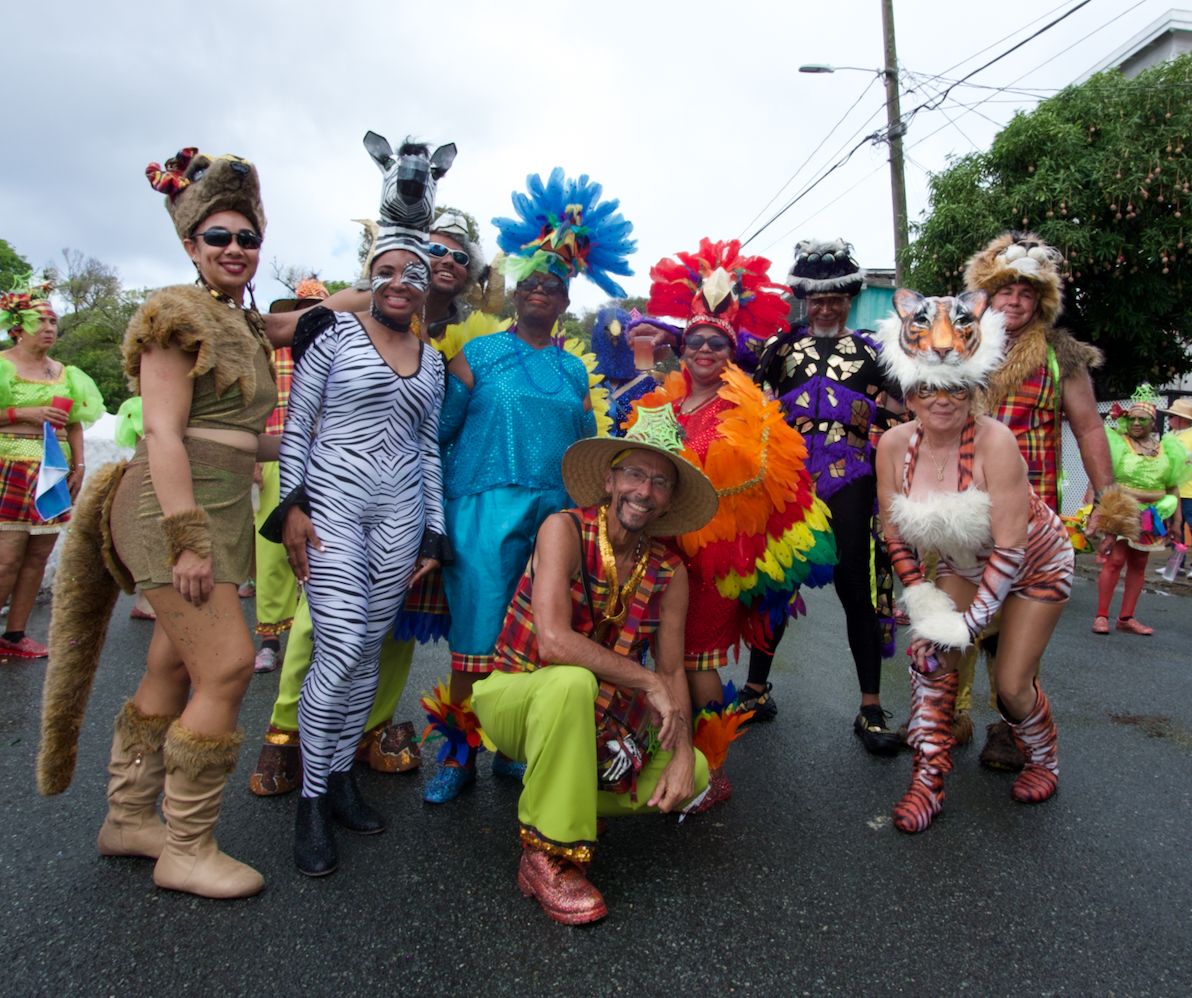
Many artists before Benito have been much more explicitly political during the Super Bowl halftime shows. Watch Eminem (2022), Beyoncé (“Formation” 2016), and, in particular, Kendrick Lamar (2025) for three recent examples, but none of them did it as Bad Bunny. He brought his personal and public worlds to the stage, including special people in his life so that they could share the moment, be at the party and tell the story with him. He brought the islands to the Super Bowl and he left the stage parade style: colors flying, people running and jumping. Pure Caribbean fete.
Carnival and storytelling are good words to speak about the roots and the structure of the show, but there are two other words that keep coming to my mind after seeing that halftime performance many times. They might sound contradictory to some readers, considering all the whining, twerking, perreo, and grinding. Those words are classy and respectful. Respect is a word that I used in the previous article as well because it is one aspect of the production that should be emphasized and praised.
There was a level of tension and negative expectations before the show that the actual performance completely deflated.
It was manufactured by people who profit from clicks and from performing for the cameras. People in the business of scaring, insulting and dividing. Experts in the use of what is called “rage bait.”
Benito gave us, and them, a halftime show that reflected the absolute opposite. It was a unifying embrace: “We are all Americans,” “as long as we are alive we should love as much as we can,” “God Bless America,” and “the only thing stronger that hate is love”.
He did the show his followers expected, and convinced doubters and naysayers of what his millions of fans already knew: Bad Bunny is a top-notch entertainer.
Benito did not fall for the bait, either. He did not use sarcasms or cynicism, or explicitly, in language or image, create anything that could be considered controversial or divisive. As host of this gigantic celebration, Benito Antonio also had the good taste and courtesy to dress to the T in his Sunday best, white suit, tie, and all.
The artist broke barriers and told the world the story he wanted to tell about everything that he loves, especially his matria, his motherland, Borikén, Puerto Rico.
He did it with class, he did it with joy and he did it with tremendous respect for every viewer of Super Bowl LX.
¡Te la comiste Benito!
— Mario Picayo is a Caribbean cultural activist, writer and publisher. He is chief editor of the publishing houses Little Bell Caribbean and Guaní Press. Born in Cuba, he lived many of his formative years in Puerto Rico, and later in the U.S. Virgin Islands. For close to four decades he has resided between the U.S. Virgin Islands and New York. Previously, and also parallel, to his publishing career he has worked as photographer specialized in documenting cultural celebrations, like carnival, and similar joyful, musical, community-unifying events from Trinidad to the Bahamas.
Editor’s Note: Opinion articles do not represent the views of the Virgin Islands Source newsroom and are the sole expressed opinion of the writer. Submissions can be made to visource@gmail.com.
Related Link:
Op-Ed: Bad Bunny’s Super Bowl Halftime Show, Part One: Singing in Puerto Rican, Speaking Caribbean
****
El Benito Bowl, también conocido como Super Bowl LX, comenzó con un joven en un cañaveral, con una gran sonrisa en el rostro diciendo “Qué rico es ser latino”.
Latino, en este caso, como en la mayoría de los casos, se usa para incluir a todas las personas nacidas en América o de ascendencia americana que hablan español, pero también a quienes no hablan el idioma pero se sienten latinos culturalmente o genéticamente.
El término es particularmente útil para los negocios, la demografía, las estadísticas, el marketing y es bueno para los políticos y otras figuras públicas, ya sea para unir o dividir.
En el caso de la declaración inicial del programa, “latino” obviamente se usó para unir.
Pero el espectáculo de medio tiempo, más que representar al mundo latino, representa a la patria de Bad Bunny, Puerto Rico, y por extensión a la Región del Gran Caribe, porque ambos son inseparables (aun así, Benito logró honrar y reconocer a cada latino y a cada americano no hispanohablante durante su brillante Gran Final).
El espectáculo comienza con lo que parece un interminable cañaveral donde los trabajadores, machete en mano, trabajan. Más que el resto del continente americano, es el Caribe el que, desde el siglo XV, ha tenido la relación más fuerte y dolorosa con esta planta.
Si las canoas unieron a nuestras islas durante 4000 años, con la llegada de la caña de azúcar, esta se convirtió en la razón por la que muchos isleños viajaban de isla en isla.
El comercio del azúcar fue el epicentro de la migración forzada de ciudadanos de África a nuestras islas, el cultivo que sustentaba ejércitos e imperios, el monocultivo que hasta el siglo XX destruyó la autosuficiencia agrícola de muchas de nuestras islas, convirtiéndolas en naciones con suelo fértil y una temporada de cultivo durante todo el año, pero incapaces de alimentar a su gente sin tener que importar alimentos.
Los trabajadores de la caña de azúcar mezclaron nuestra sangre, nuestra música, nuestros idiomas, nuestra gastronomía, nuestros juegos. Nos transformaron en mosaicos humanos, compuestos de ADN multicontinental y transinsular, que destilamos y añejamos creando mezclas únicas: gente caribeña, cultura caribeña.
Por eso se puede viajar de un extremo a otro de esta hermosa región del mundo, y más allá de las diferencias lingüísticas, todos nos sentimos como en casa.
Esos cañaverales, para bien o para mal, son parte de nosotros. Son el azúcar de nuestro café o té mañanero, de nuestros postres y dulces, y también el ron que bebemos, parte integral de la economía caribeña y un invitado bienvenido en muchas celebraciones.
Pero el cañaveral fue solo una parte del espectáculo caribeño multiescénico de Bad Bunny.
De ahí, la escena cambia a una toma más cercana de algunos de los cortadores de caña y finalmente vemos al artista, Benito Antonio Martínez Ocasio, quien procede a cantar mientras camina pasando junto a gente ocupada en diferentes labores.
Un joven vende agua de coco; hombres juegan dominó. Préstenle atención a las caras, la ropa, la botella sobre la mesa. Bad Bunny, juguetonamente, le muestra a un jugador qué ficha jugar.
A esto le siguen, en orden de aparición, un salón de manicura, “trabajadoras de la construcción” usando bloques de cemento para probablemente construir una casa, un piragüero, el carrito de raspados tan común en nuestras islas y llamado granizado en Cuba, frío-frio en la República Dominicana, Freico en las Islas Vírgenes de los EEUU., etc. Bad Bunny luego pasa junto a un vendedor ambulante de comida y pasa por debajo de dos boxeadores.
En tan solo 1 minuto y 47 segundos, el artista ha establecido el entorno geográfico y cultural donde se desarrollará el espectáculo. No el Puerto Rico o el Caribe que los turistas visitan, sino el que los del patio conocemos y reconocemos.
Bad Bunny hizo lo que muchos otros artistas han hecho antes: crear un arco narrativo para llevar su show de A a B y de B a C con fluidez. Esta estructura narrativa, necesaria en muchos espectáculos complejos, a menudo contiene una historia. Pero la mayoría de las veces las historias son alegóricas tenuemente entrelazadas y de tramas difíciles de seguir.
En el caso del Benito Bowl, nunca antes se había narrado un espectáculo de medio tiempo de forma tan explícita, con una región geográfica específica como escenario, ni uno que expusiera más detalles de la vida personal de la estrella del show, pero que, al mismo tiempo, no se centrara en ella o él.
La historia y el presente de Puerto Rico, la familia, el amor, la injusticia y la incertidumbre formaron parte de la actuación. Habló del pasado, el presente e hizo un llamado a un futuro mejor.
Parte de los que vieron el espectáculo lo entendieron en todas sus dimensiones, y el resto lo gozó bailando al ritmo irresistible del reggaetón, el trap latino, la bachata, la salsa, el Dem Bow y otros ritmos caribeños.
Y es que cada parte del espectáculo fue un segmento de esta obra en varios actos, con múltiples capas de significado. Fue intencional; estuvo bien hecho.
Había un mensaje en todo, como cuando el artista cae por el techo de la casa de concreto, representativa de tantas casas en Puerto Rico y el Caribe (¿mal construida? ¿efecto de huracanes?), o en la decisión de que los los bailarines usaran vestuarios sencillos y cómodos, mayormente marrones, beige y blancos, que realzan y que complementan sus cuerpos y sus tonos de piel en lugar de deslumbrar o impresionar.
Esas paletas de colores evocaban un calor tropical que no requiere los colores brillantes asociados con las playas y los turistas. Los tonos terrosos nos recordaban más a las montañas, la tierra, las rocas y los ríos que a las ciudades, la arena o el mar.
Este no es el Puerto Rico costeño, siempre a la venta y siempre necesitado de protección.
Durante otra escena de baile, vemos todas las combinaciones de parejas posibles; aquí todo está permitido, algo que luego enfatiza el artista cuando dice «Baila sin miedo, ama sin miedo»; el mensaje está ligado al tema principal del espectáculo, como descubrimos al final. Esa escena transcurre en lo más remoto del pastizal o matorral, entre los arbustos, en un ambiente privado, quizás clandestino, y definitivamente lejos de hoteles y resorts.
En sus canciones «El Apagón» y «Lo que le pasó a Hawái», esta última interpretada por Ricky Martin, Benito protesta contra la injusticia y la crisis sociopolítica. Aunque son específicos de Puerto Rico, los argumentos y las raíces de los problemas se pueden extrapolar fácilmente a muchas naciones y territorios del Caribe.
¿Fue político el espectáculo? Sí, pero no de la forma que muchos esperaban. Benito es caribeño, después de todo, y por eso usó una de las muchas maneras en que podemos criticar sin ofender. Lo que presenciamos es una adaptación para el Espectáculo de Medio Tiempo del Super Bowl de nuestro estilo narrativo carnavalesco.
Durante el carnaval, los disfraces y las letras de las canciones pueden ser simplemente divertidos, pero en manos de un creador ingenioso también pueden herir a quienes se lo merecen y a la vez hacer reír al resto del público, cómplice de lo que está sucediendo. Artistas y creadores de comparsas y disfraces pueden hablar o representar males y quejas de sus comunidades o países mientras cantan o desfilan por la calle.
Muchos artistas antes de Benito se han mostrado mucho más abiertamente políticos durante los espectáculos de medio tiempo del Super Bowl. Vean a Eminem (2022), Beyoncé (“Formation”, 2016) y, en particular, Kendrick Lamar (2025) como tres ejemplos recientes, pero ninguno de ellos lo hizo como Bad Bunny. Él trajo su mundo personal y público al escenario, incluyendo a personas especiales de su vida para que pudieran compartir el momento, estar en la fiesta y narrar la historia con él.
Trajo las islas al Super Bowl y salió del escenario, como en desfile, con banderas de colores ondeando y con los participantes en el show corriendo, saltando y cantando. Pura fiesta caribeña.
Carnaval y cuentista son buenas palabras para describir las raíces y la estructura del espectáculo, pero hay otras dos palabras que me siguen viniendo a la mente después de ver esa actuación de medio tiempo muchas veces. Podrían sonar contradictorias para algunos lectores, considerando el perreo y demás bailes urbanos, ofensivos para algunos, que vimos. Pero las palabras que me vienen a la mente son clase y respeto.
Respeto es una palabra que también usé en el artículo anterior porque es un aspecto de la producción que debe destacarse y elogiarse.
Había un nivel de tensión y expectativas negativas antes del espectáculo, que la actuación en sí desinfló por completo.
Esa atmósfera nociva fue creada por gente que lucra a través de las redes sociales y actuando para las cámaras. Gente que se dedica a asustar, insultar y dividir. Expertos en el uso de lo que se llama “carnada de ira”.
Bad Bunny nos ofreció, y a ellos también, un espectáculo de medio tiempo que reflejó todo lo contrario. Fue un abrazo unificador: Todos somos americanos, mientras uno esté vivo, uno debe amar lo más que pueda, Dios bendiga a América y, lo único mas poderoso que el odio es el amor.
Ofreció el espectáculo que sus seguidores esperaban y convenció a escépticos y detractores de lo que sus millones de fans ya sabían: Bad Bunny es un artista de primera.
Benito tampoco mordió el anzuelo ni la carnada. En ningún momento durante el show utilizó sarcasmos ni cinismo ni creó explícitamente, en lenguaje o imagen, nada que pudiera considerarse controversial o divisivo.
Como anfitrión de esta gigantesca celebración, Benito Antonio también tuvo el buen gusto y la cortesía de vestirse impecablemente con su mejor traje de domingo, blanco, con corbata y todo.
El artista rompió barreras y le contó al mundo la historia que quería contar, acerca de lo que ama, especialmente su patria, Borikén, Puerto Rico. Lo hizo con clase, con alegría y sobre todo con respeto hacia cada espectador del Super Bowl LX
¡Te la comiste, Benito!
— Mario Picayo. Activista cultural caribeño, escritor y editor. Es director de las editoriales Little Bell Caribbean y Guaní Press. Nacido en Cuba, vivió gran parte de sus años formativos en Puerto Rico y en las Islas Vírgenes de los EEUU. Durante casi cuatro décadas ha residido entre las Islas Vírgenes y Nueva York. Anteriormente, y en paralelo a su carrera editorial, ha trabajado como fotógrafo especializado en documentar fiestas tradicionales de un lado al otro del Caribe insular. Estas incluyen carnavales, fiestas patronales y otras celebraciones comunitarias honrando la musica, las artes y las tradiciones de sus pueblos.