

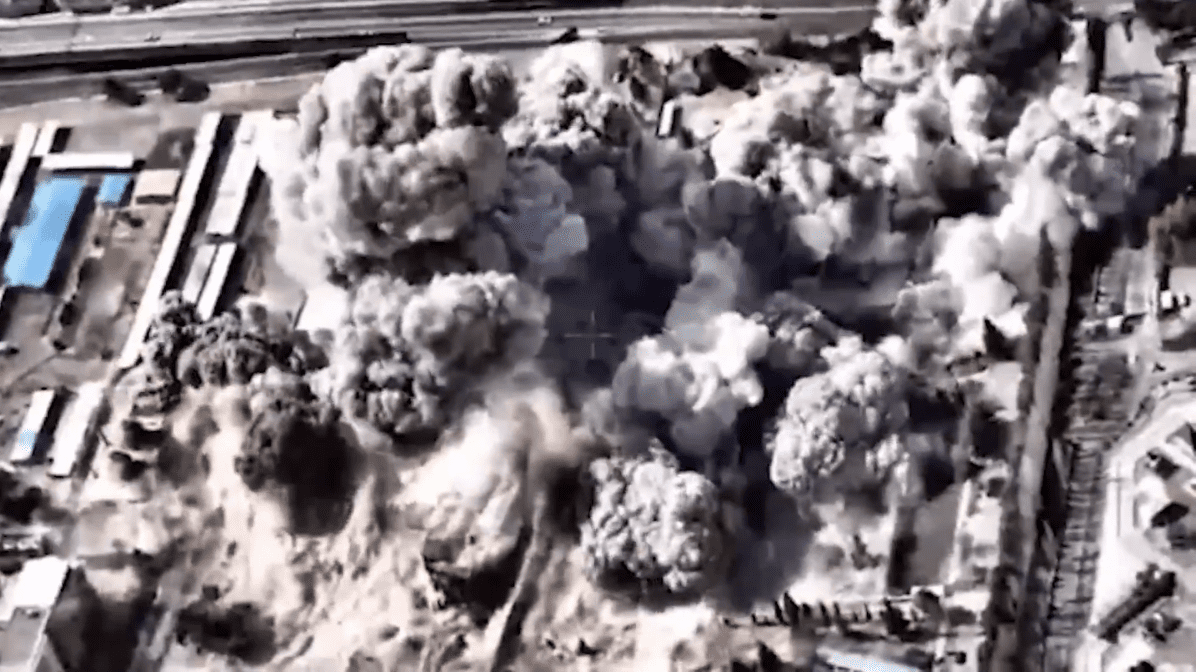
On Saturday, Feb. 28, 2026, the United States and Israel launched coordinated attacks on Iran under an operation known as “Operation Epic Fury.” During those attacks, Iran’s Supreme Leader, Ayatollah Ali Khamenei, was killed when his compound in Tehran was struck. Several senior Iranian military officials and members of the Supreme Leader’s family were also reported among the dead. On the same day, a strike in Minab, in southern Iran, hit a girls’ elementary school and killed hundreds of civilians, including many young students. Iran responded with a wide regional retaliation, striking Israel and multiple countries in the Gulf where U.S. allied infrastructure is located.

The United States is now engaged in direct military conflict with Iran, a country that sits at the center of one of the world’s most critical energy corridors. The Strait of Hormuz is a narrow maritime passage through which roughly one-fifth of the world’s oil supply normally passes. Tanker traffic declined after the recent escalations began, reminding us that conflict in the Middle East has implications that extend far beyond the region. Due to Iran’s military capacity and position within global fuel supply chains, instability there can reverberate through economies and societies around the world.
The cost of fuel is already rising. When fuel costs rise, the effects ripple outward. The costs of transportation, food, electricity, and healthcare tend to follow. For communities already navigating economic pressures, these shifts can be incredibly harmful.
War with Iran reflects a broader geopolitical climate marked by rising tensions and uncertainty. In recent years, the United States has taken a series of major actions abroad. These include the seizure of Venezuelan President Nicolás Maduro, President Trump’s threats to take Greenland, and the bombing of Nigeria. The United States also waged what it describes as a “narco-terrorist” war that resulted in the extrajudicial killing of hundreds of boaters in the Caribbean and the Pacific and joint strikes in Ecuador. Meanwhile, Cuba’s economy is buckling under the pressures of a U.S. oil blockade against the island nation. Taken together, these developments point to a period in which U.S. international relations are evolving rapidly and unpredictably.
Under such conditions, it is reasonable to expect fluctuations in costs, disruptions to shipping and logistics, and increased military activity in our region. Responsible leadership requires that we prepare for such possibilities and make decisions that reflect our values as a people.
For small island territories like the Virgin Islands, moments like this invite careful reflection. Our economy and daily life are closely tied to global systems of trade, energy, and transportation. When those systems experience disruption, the effects reach our shores. We know how fragile supply chains and essential services can become during times of crisis. The Virgin Islands currently imports more than 96 percent of its food. Our defunct oil refinery was once one of the largest in the Western Hemisphere. We face ongoing energy challenges at home. Our healthcare system is heavily dependent on imported supplies and off-island services. In periods of global instability, vulnerabilities like these need to be addressed.
Preparing the Virgin Islands for an uncertain global environment will require thoughtful planning, strategic investment in critical infrastructure, and cooperation across sectors. Government, local businesses, farmers, healthcare providers, and community organizations all have roles to play in strengthening the systems that sustain our territory.
Several priorities stand out. Expanding desalination capacity can ensure reliable access to water. Investing in local agriculture and reopening abattoirs can strengthen food security and reduce dependence on imported goods. Strengthening our healthcare system, including medical supply preparedness and strategic staffing, can facilitate continuity of care. Scaling up renewable energy and improving fuel security will also safeguard long-term stability.
At the community level, disaster preparedness must remain a priority. First responders and residents who are informed, organized, and ready to respond during emergencies can make a meaningful difference when systems are strained.
In the U.S. Virgin Islands, our economic strategy must reflect the realities of an uncertain world. Tourism, communications infrastructure, and financial markets are all sensitive to global instability. Diversifying the Virgin Islands economy must become an urgent priority. Investing in agriculture, renewable energy development, marine industries, and professional services will help ensure that our territory can withstand disruptions while continuing to grow. Importantly, many of the resources needed to support resilience initiatives already exist. Federal infrastructure funding, disaster resilience programs, territorial capital improvement budgets, and private grantmakers provide opportunities to invest in the systems that sustain our communities.
The challenge before us is not simply one of resources, but of planning, coordination, and leadership. In uncertain times, wisdom calls us to hope for the best while preparing for the worst. The world is changing. With foresight, coordination, integrity, and collective effort, Virgin Islanders are capable of navigating the uncertainties ahead.
— Dr. Hadiya Sewer is a strategist, philosopher, and President and Co-Founder of St. JanCo: the St. John Heritage Collective, a founding member of the Virgin Islands Studies Collective, and anEnvironment and Democracy Cross-Territorial Fellow at Right to Democracy. She was a Research Fellow in African and African American Studies at Stanford University and a Visiting Scholar at Brown University’ s Center for the Study of Slavery and Justice. A longtime advocate for decolonization, environmental justice and equitable development, she writes on governance, transparency, and the intersection of culture and public policy.
Editor’s Note: Opinion articles do not represent the views of the Virgin Islands Source newsroom and are the sole expressed opinion of the writer. Submissions can be made to visource@gmail.com.