

The Virgin Islands Department of Planning and Natural Resources (DPNR) is working with several environmental organizations to evaluate and ultimately help restore mangrove wetlands across the Virgin Islands. Restoration of wetlands will provide a haven for wildlife, including migratory bird species, who call the area home.
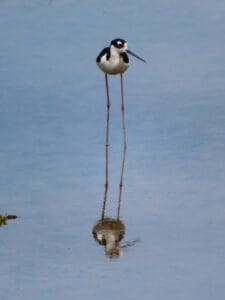
A press release from Horsley Witten Group (HWG), an environmental consulting firm working with DPNR, provided details about the project.
“Horsley Witten Group, a full-service environmental consulting firm providing sustainable and resilient design solutions, is leading a team of biologists, engineers, stormwater specialists, bird enthusiasts, artists, and others under a multi-faceted project with DPNR’s Division of Fish and Wildlife to evaluate and restore mangrove wetlands across the US Virgin Islands,” according to information in the HWG press release. “Funding was provided by the Wildlife and Sport Fish Restoration group, [and] the project team includes several local partners [at] wetlands on St. Croix, St. Thomas, St. John, and Water Island,” the press release continued.
“BirdsCaribbean, the St. Croix Environmental Association, Geographic Consulting, MJS Studios and [St. Croix-based] artist Barbara Gelardiall made valuable contributions,” the release said.
Mangrove Wetlands
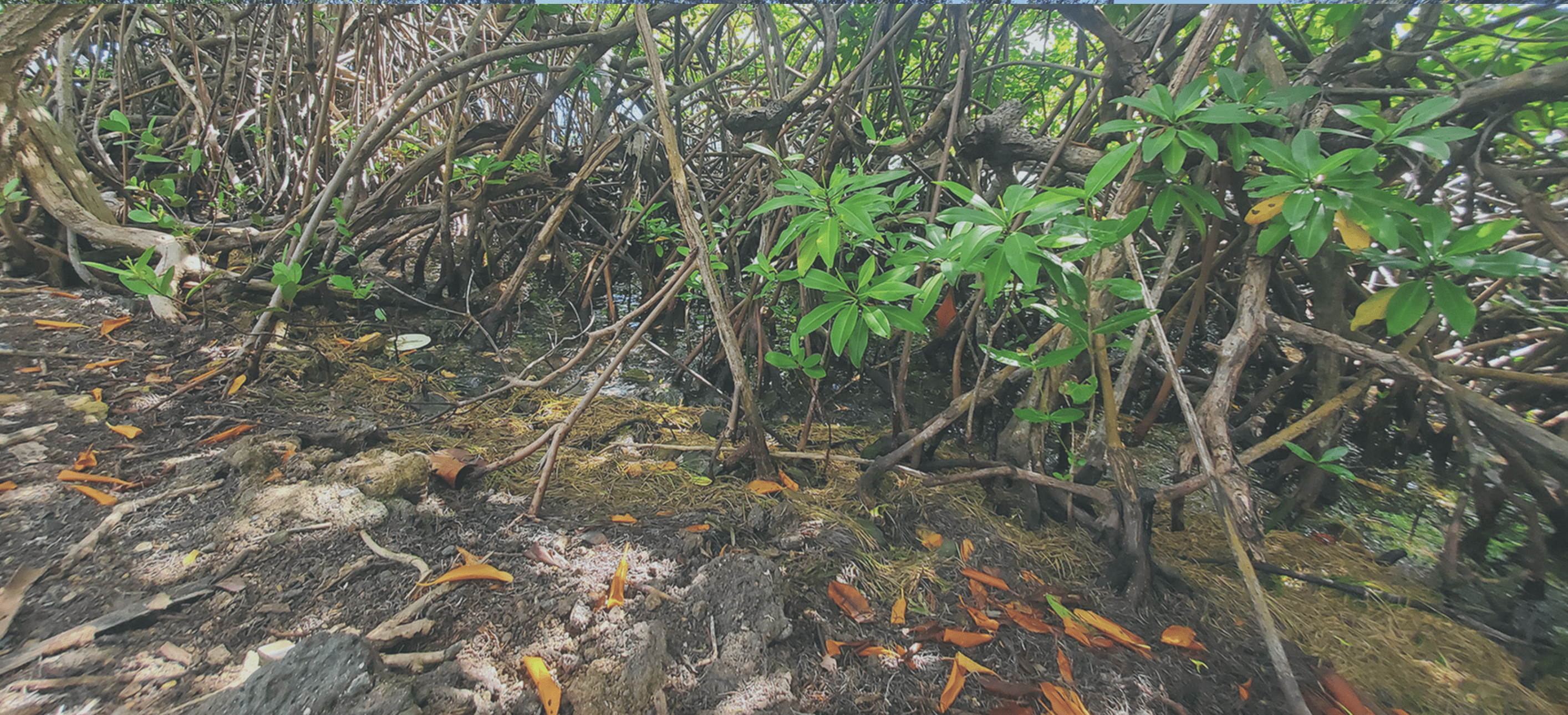
Wetlands, including mangrove forests across the Virgin Islands, provide a home for numerous species and wildlife, while also providing a natural barrier against flooding and storm surge. However, wetlands have sustained damage for years for various reasons, including natural disasters such as powerful hurricanes and human-created issues such as the construction and development of land.
HWG noted that 118 wetlands were located across the Virgin Islands, with mangrove forests making up most of the wetlands. Finally, 39 sites were chosen for evaluation and restoration.
“The primary goal of this project is to evaluate the conditions of important wetland bird habitats and develop restoration plans for those that need it most,” HWG explained. “Coastal wetlands in the U.S. Virgin Islands have been impacted for decades by agriculture, land development, pollution, and other human activities, [and] our coastlines were also severely damaged by Hurricanes Irma and Maria in 2017,” HWG said. “Sedimentation, poor water quality, and damaged mangrove forests are just a few of the factors that result in poor quality habitat for coastal birds and other wildlife.”
According to information from HWG, environmental teams have been assessing the current state of wetland sites across the islands and are developing plans to rebuild them.
“In early 2022, we began evaluating these sites in the field in a variety of ways,” stated HWG. “The goals were to measure bird diversity and density, identify the source and level of damage to each mangrove forest, gauge the level of natural forest regeneration, and identify the sites that would benefit from a restoration plan. Engineers and stormwater specialists from HWG evaluated roads, storm drains, culverts, and others,” HWG explained.
“Wetland ecologists and engineers are assessing post-hurricanes [Maria and Irma] mangrove health, mortality, and hydrologic condition in order to develop restoration design plans for impacted systems,” according to HWG’s website. “Local biologists are conducting bird surveys in key wetlands across the territory so we can evaluate changes and trends from 20 to 40 years ago,” HWG’s website indicated.
The Source contacted Brian Daley, a senior ecologist and project manager with HWG, who is part of a team evaluating the wetlands for restoration purposes. Daley explained the process involved with evaluating the mangrove wetlands and the plans for restoration.
Mangrove Forest Evaluations and Restoration Plans
“There are three primary steps in assessing the condition of the mangrove wetlands, [and] the first [step] is evaluating forest health,” Daley explained. “I am a forest ecologist, and [the work involves taking] traditional forestry measurements, such as tree height, species composition, percentage of trees that are dead or damaged, and the amount of regeneration,” Daley continued.
“[The second step involves surveying] the birds present at each of the wetlands in both the dry and rainy seasons with our partners at the St. Croix Environmental Association,” Daley said.
“[The third step in assessing the condition of the wetlands involves] a team of stormwater professionals and engineers [who] evaluate the infrastructure at each site, such as culverts and roads,” Daley stated. “Our team noted the types of damage present at each location and designed solutions,” he continued.
Regarding solutions for restoring mangrove swamps, Daley explained that the project is now in the “design phase,” in which restoration proposals are shared and reviewed through a series of meetings, including public hearings.
“Part of our design process is sharing the concepts with stakeholders and the public and getting their feedback [on ideas proposed for mangrove site revitalization],” Daley explained. “We hosted a series of meetings [to share plans] with environmental professionals and also have the designs available for review and comment,” Daley said.
Restoration Designs
Daley provided a link with information about restoration ideas and concepts for nine mangrove forest sites that have already been evaluated. He noted that 10 additional sites are being actively worked on, and results will be available soon.
Jen Valiulis, executive director of the St. Croix Environmental Association, one of the groups subcontracted by HWG, provided more insight into the intricacies of working at different wetland sites.
“[Regarding restoration of wetlands,] planting mangroves is one of the actions that can be taken. [However,] each site is a little different,” Valiulis said. “[For example,] some [of the sites] could use some cleaning up, [because] trash and pollution can be a problem, [and] some of the [sites] have reduced water flow due to buildup of debris,” she said.
“[Additionally, many] of the wetlands in the U.S. Virgin Islands are close to the ocean,” Valiulis stated. “With sea levels rising, [along with changing weather patterns, the wetlands] may become inundated and [become] part of the ocean,” she continued.
“All of those factors have to be taken into consideration when we assess a site for restoration,” Valiulis added.
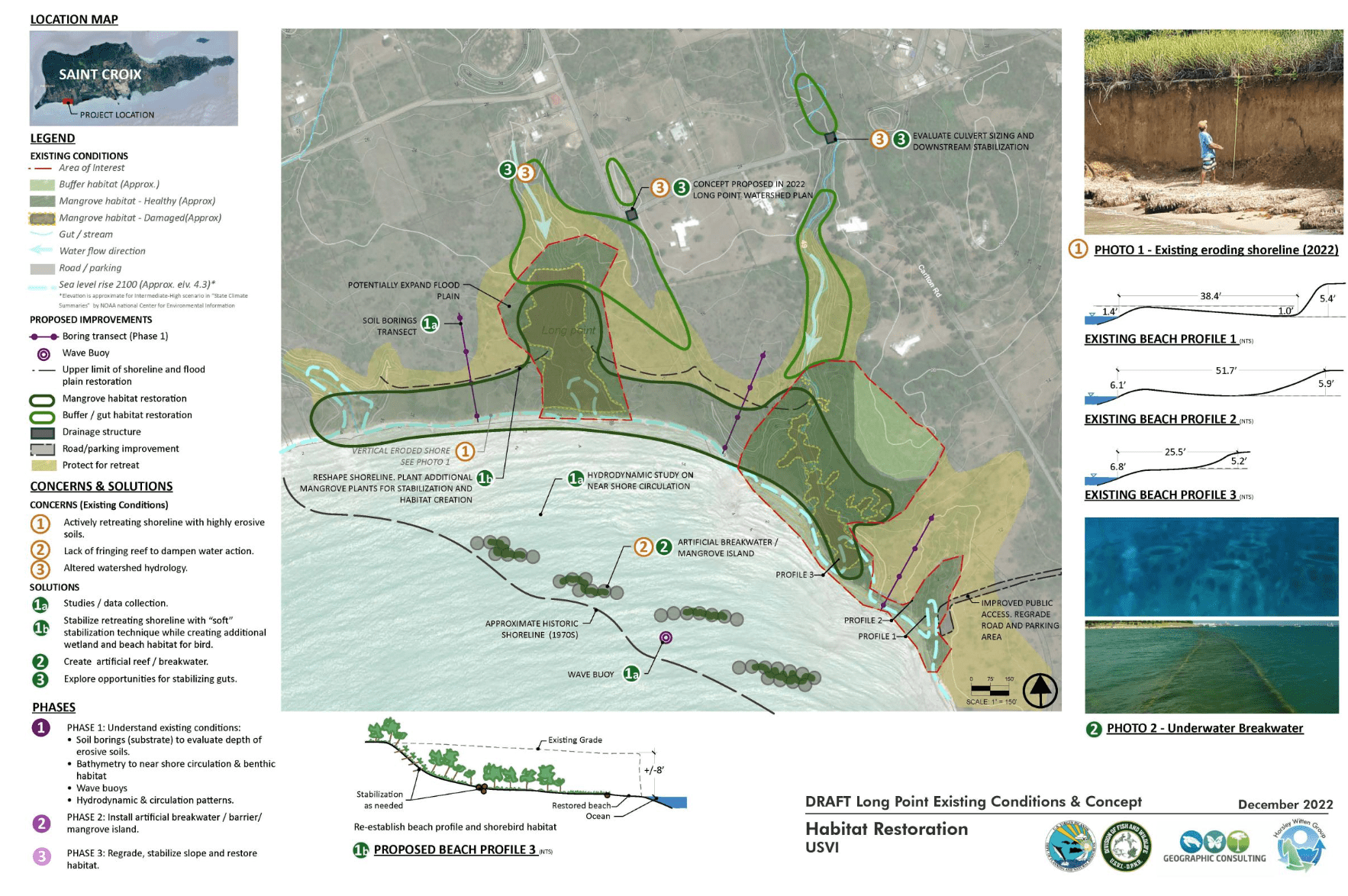
“Long Point” on the west end of St. Croix is an example of one of the wetland sites that has been evaluated, and restoration plans have been shared.
“Long Point has historically been a high-quality shorebird habitat and the location of decades of bird surveys,” according to details of the site evaluation shared by HWG.
“Severe erosion resulted in the loss of a forested berm and the series of interconnected ponds that it protected, [and] since 1971, the sea has moved inland over 400 linear feet and several acres of land have been lost,” HWG said. “Sheer vertical earthen walls stand at the site today and continue to collapse into the sea.”
Impacts and plans for rebuilding the Long Point site included the following information:
- Impacts: Massive habitat loss has occurred at this site. The once expansive area of mangrove wetlands has been actively eroding away. A combination of altered watershed hydrology, highly erosive soil, storm surge, and ocean currents are thought to be working together.
- Restoration: Stabilize the steep, retreating shoreline by decreasing the slope and planting trees. Create an artificial reef or breakwater to increase habitat area. Explore studies to better understand the oceanography and terrestrial flow interactions on the eroding soils.
Educational Outreach and Project Goals
Educating individuals about the wetlands and the species depending on them has been a priority of the revitalization efforts.
“Education and outreach are a big part of this project,” Daley declared. “We first completed teacher training [on St. Croix] in June 2022, and we completed another teacher training in St. Thomas and [again on] St. Croix in June 2024,” Daley added.
“[Also] in July, my colleague Ky Reale Munroe and I presented our restoration work at the Birds Caribbean Conference in the Dominican Republic,” he said.
Daley shared the overall goal of the work that he and his co-workers are hoping to achieve, and he expressed the importance of engaging and educating individuals across the local islands about the vital purposes that wetlands serve.
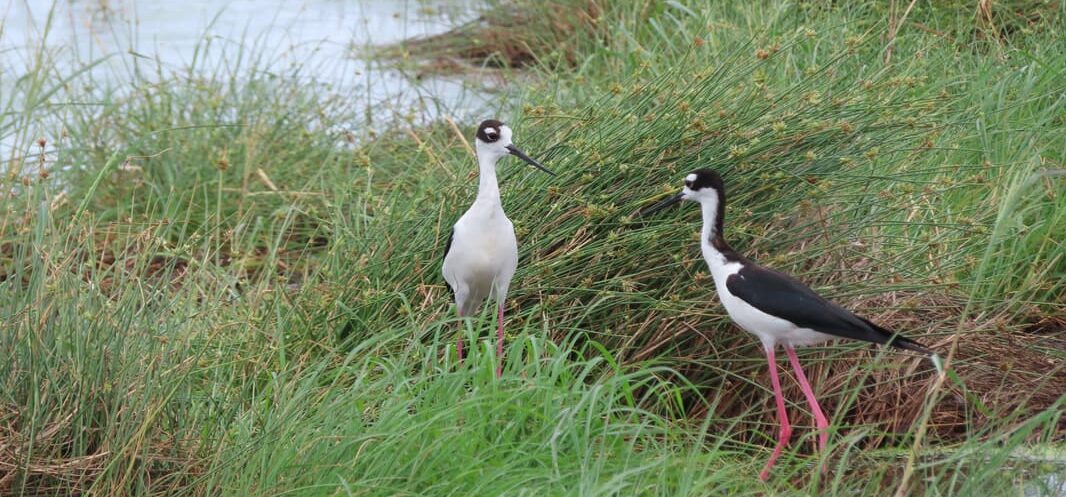
“Our goal is to have healthy mangrove systems for the birds and other wildlife that live in them, as well as the human communities that live next to them,” Daley concluded. “We want to help restore and improve the ecological services they provide. When people see how valuable and interesting wetlands are, they respect and value them more. That respect leads to people wanting to protect them.”