

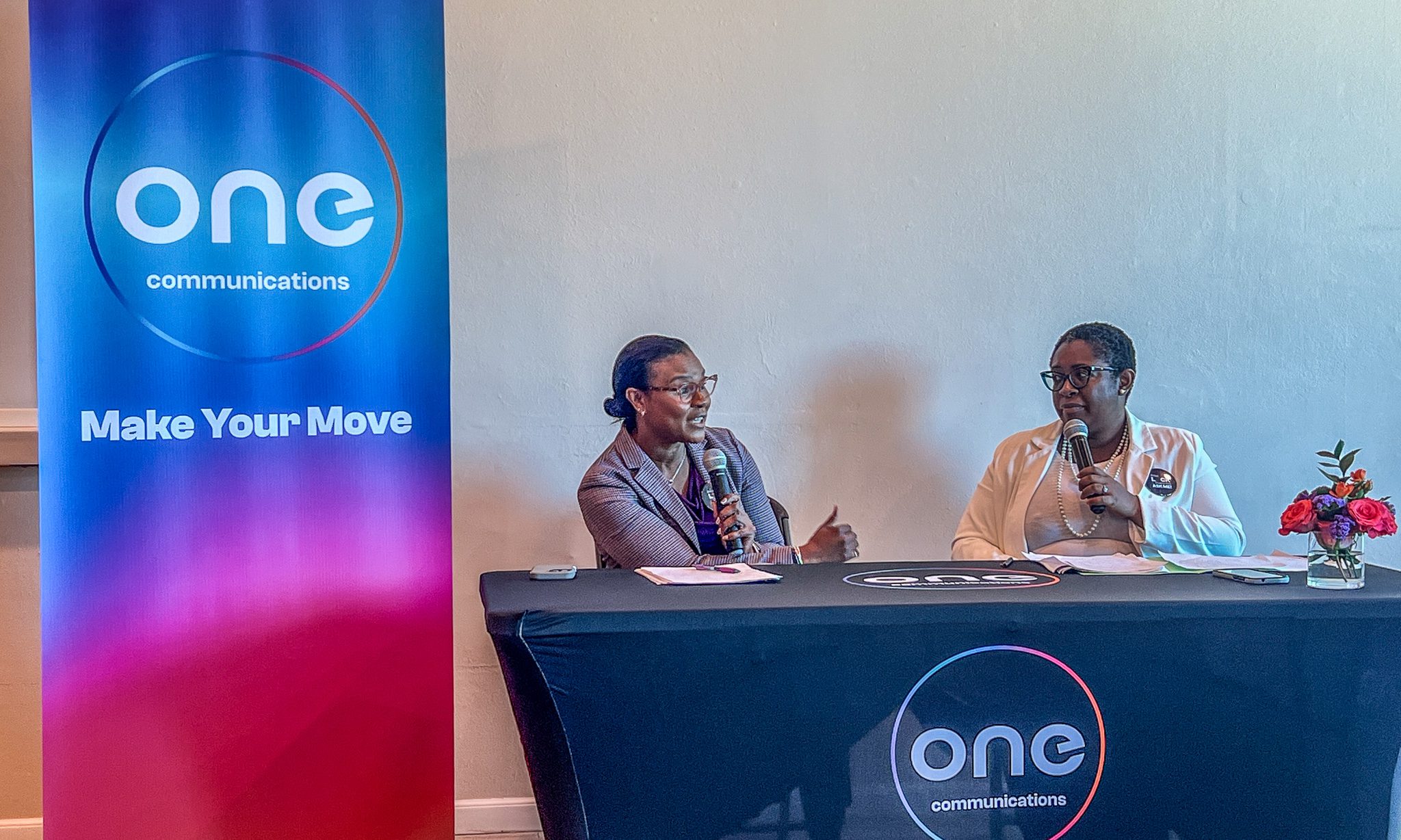
One Communications Chief Executive Officer Siobhan Paul-Alexander says the company’s recent restructuring — including the closure and regionalization of its call center — reflects a broader shift in how telecommunications companies operate, even as the changes have raised concerns locally about job losses and customer service.
Speaking during a small media roundtable last week alongside Communications Director Patria Aarons, Paul-Alexander said more than 60% of affected employees were retained and repositioned within the company, as operations moved away from a traditional call-center model toward a mix of digital support, field service, and multiskilled technical roles.
“We didn’t eliminate the work — we changed where and how it happens,” she said, pointing to evolving customer touchpoints and the need for employees who can handle multiple functions as technology shifts. The company has also rolled out training programs aimed at reskilling workers, allowing technicians and engineers to take on broader responsibilities across the network.
Still, the restructuring has not come without impact. Prior Virgin Islands Source reporting has highlighted concerns from employees and lawmakers about job displacement, reduced local presence, and customer frustration during the transition. The changes have also drawn formal review from regulators. In hearings last year, Public Services Commission members said they were seeking clarity on the scope of the restructuring, including how operational shifts could affect service standards and compliance with existing agreements in the territory.
That review has focused on whether current regulatory frameworks keep pace with how telecommunications companies now operate — particularly as functions move off-island — and what that means for oversight of both service delivery and workforce commitments going forward.
Paul-Alexander acknowledged that reality at last week’s panel, saying, “People’s lives were impacted — that’s real,” but added that the company must balance those outcomes with financial sustainability and its obligations as a private, shareholder-driven business.
At the same time, she pointed to pricing as one of the ways the company is trying to respond to those pressures. One Communications has introduced a five-year price lock on certain mobile and internet plans, which Paul-Alexander said is meant to provide stability for customers as the cost of living continues to rise. She noted that while operating costs have increased, the company made a decision not to raise base prices, framing the move as a direct response to customer feedback.
Beyond pricing, company leaders emphasized continued investment in network infrastructure, workforce training, and community initiatives, from youth programs to cultural events. But even as the company highlights those efforts, questions remain about how the restructuring will shape long-term service delivery and employment in the territory.
Paul-Alexander said the company plans to remain engaged with both customers and stakeholders as those changes continue, emphasizing transparency and ongoing dialogue, even as the transition continues to play out across the community.