

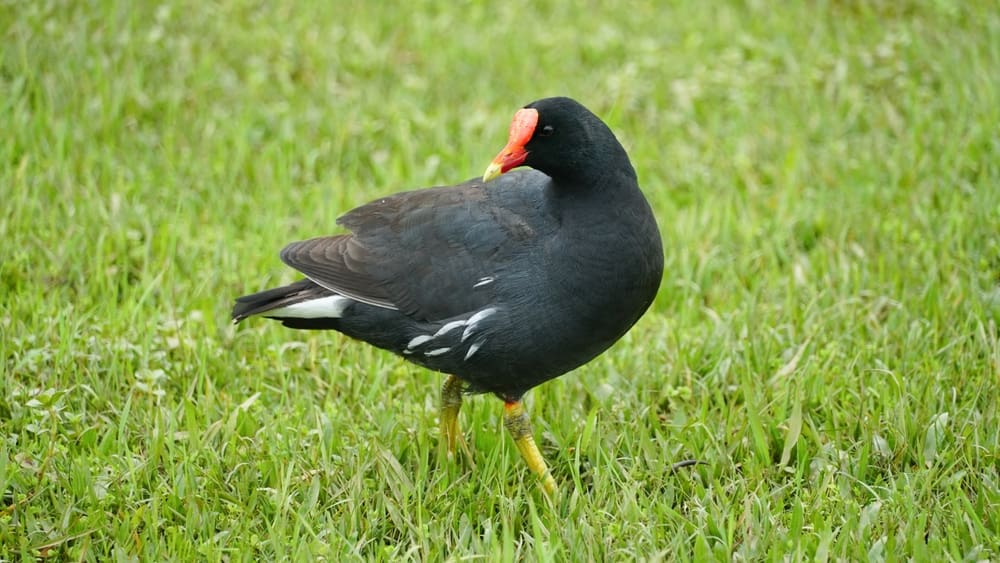
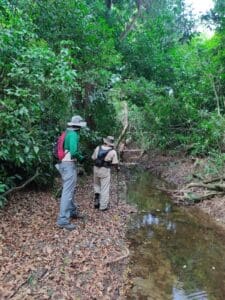
The other day I got a phone called from Cathy Prince, the President of the St. Croix hiking Association. She was giving me an update on the progress of the cleaning of Estate Adventure Nature Trail. Since last year’s rain, Adventure’s stream has been flowing. As the crew was cleaning along the banks of the streambed and trail paths, they came upon a duck in the middle of a natural freshwater pond setting on a nest.

“Oh my God!,” you thought you were watching a wildlife documentary on National Geographic. When I saw the duck for myself, I was dumbfounded. The duck paid us no attention and kept watching us as we stood from the shoreline of the pond taking photos with our android and smartphone cameras. Wildlife, especially birds, is a good indicator of a healthy environment. Historically, St. Croix was a wetter island with its flowing streams and freshwater ponds dotting the landscape of different forest ecosystems, marshlands, pastureland, and sugarcane plantations.
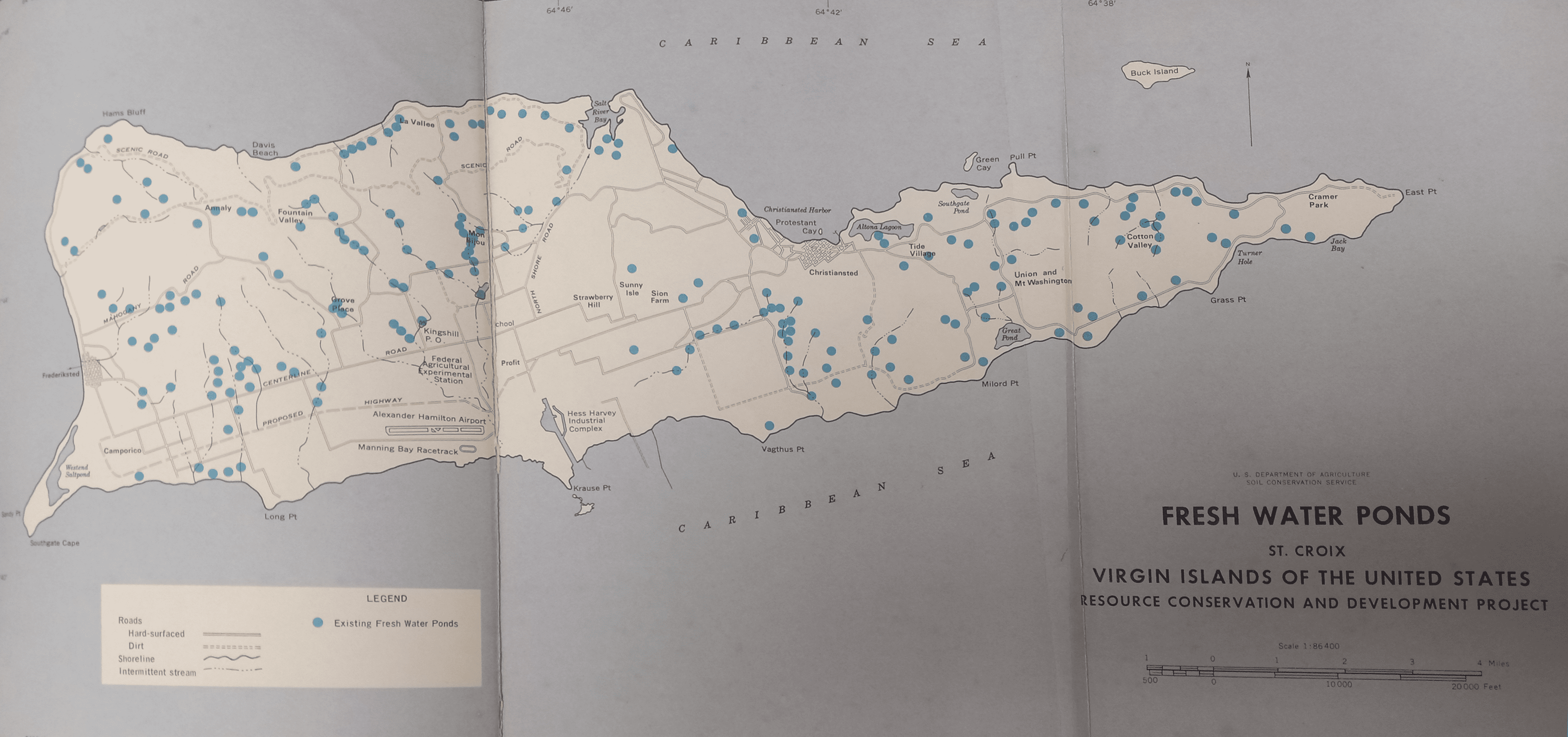
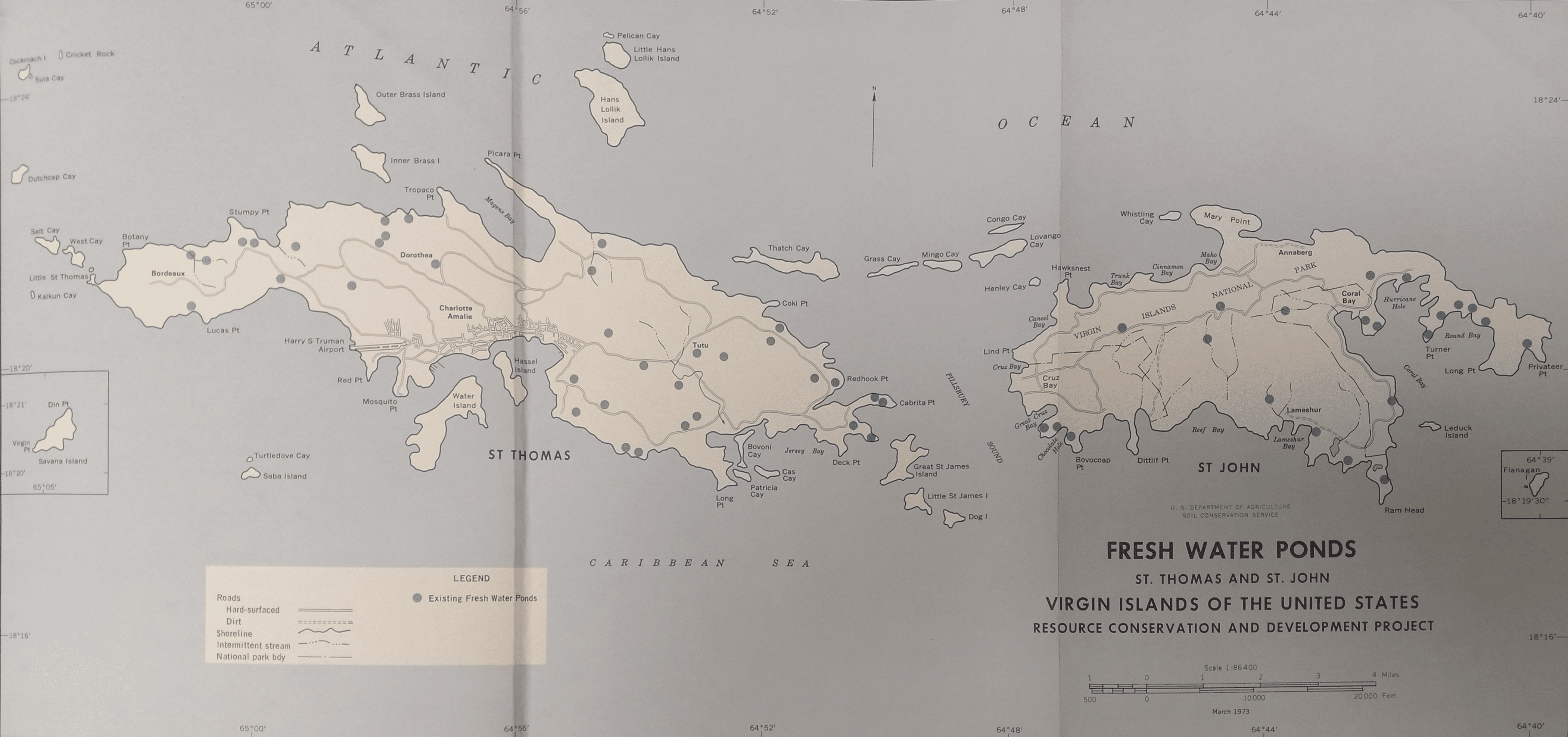
Although St. Croix was known historically for its sugar industry, it was also known for its wildlife and hunting season. In the early 1970s, there were more than 200 freshwater ponds on St. Croix. St. John and St. Thomas also had their fair share of freshwater ponds back in the day. The duck that we saw at Estate Adventure is locally known as “waterfowl” (Gallinula chloropus cerceris). It is a subspecies of the Common Moorhen, also known as the Common Gallinule. The term cerceris identifies a particular geographic variation of the bird, specifically found in the Caribbean region. This duck was once common but is now extremely rare on the islands.
The “waterfowl,” as we call it locally, has a blue and gray body with a white line on the side, and a bright red facial shield. It lives around well-vegetated marshland, ponds, and other wetlands of the islands. The local breeding ducks in the Virgin Islands consist of three species.
The Anas bahamensis, which is one of the native ducks, is known locally as “brass wing” or Bahamn pintail or sometimes referred as a white-cheeked pintail. It is still common, but not in great numbers as it used to be. It adapted well to freshwater ponds, saltwater ponds, lagoon and mangrove swamps. It was also found on many small offshore cays and inlets surrounding the Virgin Islands, particularly St. Thomas and St. John.
Our largest native ducks were the West Indian Whistling (Dendrocygna arboresa). It is very rare or just about disappeared or extinct from the Virgin Islands. However, two were sighted in October 2002 by Floyd E. Hayes at the Big Fountain Valley Estate freshwater pond, now known as Carambola Golf Course. This duck was commonly known as “Night duck” and “Whistler” during the Danish era and early American rule of the Virgin Islands.
In 1955, the late naturalist George A. Seaman mentioned in his wildlife report to then Gov. Archie Alexander about the Qxyura jamaicensis jamaicensis ducks, known locally as the Little “Diver.” When Seaman wrote this report, he said it was questionable if any are to be found on the islands of St. John and St. Thomas. In other words, these ducks were extremely rare in the wild. Seaman did mention, up until the 1950s and ‘60s, that the Little “Divers,” also known as Ruddy ducks, were occasionally sighted in farm ponds on St. Croix.
Nevertheless, in June 2002 and 2004, Ruddy ducks were sighted at the Estate Fredensborg freshwater pond in the central plain of St. Croix. The ducks were also spotted again in July at the Estate Granard freshwater pond on the south of St. Croix. During the winter months, particularly September through April, historically speaking, a number of migratory ducks appear in the Virgin Islands. One of the most common is the Blue-winged teal (Anas discors).
 Also, with this migration of ducks to the islands are Baldpates (Anas americana) and sometimes Pintail (Anas acuta) ducks. In his wildlife report, Seaman mentioned that Lesser scaups (Aythya affinis) were the second most abundant winter duck in the Virgin Islands. These ducks migrate from North America to as far south as Central America in the winter months. The Green-winged teal (Anas carolinensis), Mallard (Anas platyrhynchos), and Black-bellied tree ducks (Dendrocygna autumnalis) have been recorded from the Virgin Islands decades ago. Today these ducks probably no longer visit the islands due to lack of freshwater ponds and habitat destruction.
“I myself remember when both Slob and Clifton Hill had freshwater ponds and Rust-up-Twist was one of the richest and most extensive freshwater ponds on the island. This latter pond not alone supported gallinules, coots, grebes, and several species of ducks, but was a source of mudfish and eels,” noted George A. Seaman.
Historically, two coots were known from the Virgin Islands: (Fulica caribaea) and (Fulica americana americana). According to Seaman, the rapidly falling water table in the Virgin Islands resulted in the disappearance of many species of ducks that were once abundant on the islands. The only resident rails in the Virgin Islands that Seaman mentioned were (Rallus Longirostris caribaeus) and the Clapper Rail (Rallus crepitans).
These ducks were found in mangrove swamps like the Krause Lagoon, Mangrove Lagoon on St. Thomas, and other sustainable habitats. The Sora Rail (Porzana Carolina) was another winter resident waterfowl to the Virgin Islands. These waterfowl ducks were found in all Virgin Islands. Historians believe that the Moscovy (Cairina moschata) duck was once common on St. Croix. This duck is now extinct, but their bones appear in Indian kitchen middens of pre-Columbian times on St. Croix.
Nevertheless, the Virgin Islands today are much poorer in wildlife due to changes in the environment. However, most of the changes are mainly due to human destruction of the fragile ecosystem of these islands. We simply don’t care. So, when I saw the duck, it reminded me of the glorious days when these islands were a heaven for wildlife. Can you imagine the duck is so smart that it built its nest with sticks about 2 or 3 feet high above the water in the middle of the pond? One logical conclusion you might gather is that the mongoose wouldn’t be able to reach it eggs. Now, tell me, what an intelligent duck.
— Olasee Davis is a bush professor who lectures and writes about the culture, history, ecology and environment of the Virgin Islands when he is not leading hiking tours of the wild places and spaces of St. Croix and beyond.